















Menopause: natural remedies for sleep, stress and brain fog
By the Mush n Go editorial team - 11 October 2026
By the Mush n Go editorial teamPublished 11 October 202615 min read
Menopause
There is no natural menopause treatment that replaces medical advice, but lifestyle changes a lot: a cool bedroom, regular sleep times, physical activity, less alcohol and caffeine, and a calcium-rich diet. For troublesome symptoms, talk to your doctor: hormone therapy remains the most studied option.

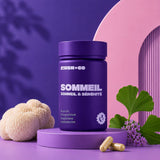
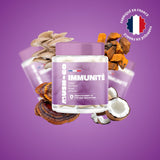
Sleep+
Our evening capsules: Reishi, Valerian, Magnesium bisglycinate, Melatonin and Acacia fibre. One capsule 30 minutes before bed.
Discover Sleep+ →
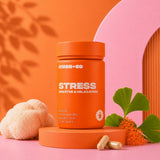
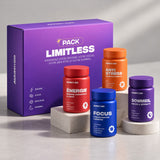
Relaxation Pack
Anti-Stress Complex in the morning (Ashwagandha, Reishi, Holy basil, Vitamin B6, Schisandra) and Sleep+ in the evening, together in one pack.
Discover the pack →What happens
Menopause, perimenopause: what are we talking about?
Menopause is the permanent end of ovarian function, and therefore of periods. You have reached menopause when you have had no periods for twelve consecutive months, with no other cause. It happens on average at around 51, most often between 45 and 55.
It doesn't happen overnight. It is preceded by a transition lasting several years, perimenopause. The ovaries produce hormones irregularly: cycles become erratic, and this is often when the first symptoms appear, sometimes as early as your early forties.
The two hormones involved are oestrogen and progesterone. They don't only act on the womb: they also play a role in temperature regulation, sleep, mood, skin, bones, blood vessels and the brain. This explains the wide range of symptoms, and why every woman experiences this time differently.
Menopause before 40 is called premature and always warrants medical advice, as does bleeding that returns after twelve months without periods.
The symptoms
Symptoms that vary widely from one woman to another.
Some women go through menopause barely noticing anything. Others see their daily life turned upside down for several years. Here are the most common symptoms, with a first lifestyle pointer for each.
| Symptom | What you notice | First step |
|---|---|---|
| Hot flushes | Waves of heat in the face and chest, flushing, sweating | Layered clothing, cool drinks, less alcohol |
| Night sweats | Waking up sweating, damp sheets | A cool bedroom, breathable bedding |
| Sleep problems | Difficulty falling asleep, frequent waking | Regular times, an evening routine |
| Irritability, anxiety | Changeable mood, nervousness | Physical activity, breathing, support |
| Brain fog | Forgetfulness, words that won't come, difficulty concentrating | Sleep first, lists, breaks |
| Tiredness | Lack of energy, often linked to broken nights | Daylight, walking, a blood test |
| Vaginal dryness | Discomfort, pain during sex | Vaginal moisturisers, medical advice |
| Weight gain around the middle | Fat redistributing towards the belly | Strength training, protein, vegetables |
| Joint pain | Stiffness, tender joints | Regular movement, stable weight |
These symptoms can have other causes, such as a thyroid disorder, anaemia or depression. That is one reason to talk things through with your doctor.
Your doctor and hormone therapy
Menopausal hormone therapy, without taboos.
Let's start with the essentials: for hot flushes and night sweats that really disrupt daily life, menopausal hormone therapy (HRT) is the most effective and most studied treatment. It isn't compulsory, and there's no reason to fear it on principle. It is a decision to make with your GP, gynaecologist or midwife, based on your symptoms and your medical history.
HRT provides oestrogen, combined with a progestogen in women who still have their womb, to protect the lining of the uterus. In many European countries, transdermal estradiol (gel or patch) is often used, combined with micronised progesterone. This is sometimes called "natural" hormone therapy or "body-identical", because these molecules are identical to those the body makes. They are nonetheless medicines, prescribed and monitored as such.
Its benefits are well established for hot flushes, night sweats and the prevention of bone loss. Its risks depend on age, time since menopause, the route of administration and medical history: breast cancer, blood clots, cardiovascular disease. Current guidelines recommend prescribing the lowest effective dose and reviewing it regularly, at least once a year.
It may be offered to you
If symptoms affect your quality of life, with no contraindication, especially in the first years after menopause.
It is generally ruled out
If you have a history of breast cancer, deep vein thrombosis or embolism, stroke, or active liver disease.
Medical alternatives
There are non-hormonal treatments for hot flushes, including a recent class of medicines, to discuss with your doctor.
Local treatments
For vaginal dryness, local treatments, hormonal or not, act where they are applied, with very little passing into the bloodstream.
The rest of this article is about lifestyle. It doesn't replace this conversation with a health professional: it goes alongside it, whether or not you take treatment.
What the studies say
Three studies that changed how we see menopause.
Menopause treatment has seen dramatic U-turns in twenty years. Here is the research that explains them, with its exact conditions.
Women's Health Initiative, 2002 · United States
More than 16,000 women aged 50 to 79, oral conjugated oestrogens and a synthetic progestogen versus placebo. The trial was stopped early because of an increased risk of breast cancer and cardiovascular events. Prescriptions collapsed worldwide. Later analyses nuanced this result: the risks are lower in women who start treatment before 60 or within ten years of menopause.
Avis et al., 2015 · United States
1,449 women followed in the large SWAN cohort. Frequent hot flushes lasted a median of 7.4 years, and longer in those whose symptoms had started early, before periods stopped.
Ayers et al., 2012 · United Kingdom
140 women bothered by hot flushes, in the MENOS 2 trial. Cognitive behavioural therapy, in a group or self-guided with a booklet, reduced the impact of hot flushes and night sweats compared with no intervention.
The takeaway: hormone therapy is neither a poison nor a universal solution, menopause can last longer than people think, and non-drug approaches have proved their worth in how symptoms are experienced. The full references are at the bottom of the page.
Hot flushes
Hot flushes: what helps.
They generally last from a few seconds to a few minutes, happen day or night, and are often triggered by heat, alcohol, spicy food, hot drinks or stress. Spotting them already means you can avoid some of them.
Keep a diary
For two weeks, note the time, the context and what you had just eaten or drunk. Your personal triggers quickly become clear.
Dress in layers
Natural fabrics, a cardigan you can take off easily, a fan or a facial mist in your bag.
Breathe slowly
As soon as a flush starts, slow, deep belly breathing helps many women get through it more calmly.
- Limit alcohol, especially in the evening, and very hot drinks.
- Keep a bottle of cool water within reach.
- Stop smoking: tobacco is associated with more frequent hot flushes.
- Aim for a stable weight: being overweight is also associated with more pronounced symptoms.
Getting your sleep back
Menopause and sleep: taking back control of your nights.
Sleep problems are among the most common complaints during menopause. Night sweats wake you up, anxiety stops you getting back to sleep, and broken nights take their toll the next day in tiredness, irritability and difficulty concentrating. It is often the first thing to work on.
The bedroom first : cool, around 18 °C, well aired, with a light duvet or two thin blankets you can remove. Cotton or linen nightwear, and a spare pillowcase on the bedside table for difficult nights.
Then regular times, weekends included. The body likes routine: getting up at the same time every day is the best way to fall asleep more easily at night. Avoid naps longer than twenty minutes, and switch off screens an hour before bed.
Finally, an evening routine, to tell your body the day is ending: dim lights, a lukewarm shower, reading, a few stretches. Some women add a capsule of Sleep+, 30 minutes before bed. It combines reishi, a mushroom long used in Asia, valerian, a traditional evening plant, magnesium bisglycinate and melatonin. To find out more, read our guide on mushrooms, adaptogenic plants and sleep.
Waking with snoring, pauses in breathing or daytime sleepiness should make you think of sleep apnoea, which is more common after menopause. Talk to your doctor.
Stress and mood
When your mood is on a rollercoaster.
Irritability, anxiety, tearfulness, feeling overwhelmed: hormonal changes affect mood, and they often come at a time of life that is already busy, between teenage children, ageing parents and work pressure. It isn't "all in your head", and it isn't inevitable.
Physical activity is the most solid lever. Brisk walking, cycling, swimming, dancing: the World Health Organization recommends at least 150 minutes of moderate activity a week, plus two strength sessions. Yoga and tai chi combine movement, breathing and relaxation.
Breathing and mindfulness help bring the tension down. Five minutes of paced breathing, three times a day, is easy to fit between two appointments. Cognitive behavioural therapy, for its part, has been studied specifically for menopause, with results on how hot flushes, sleep and mood are experienced.
On the plant side, some women add to their routine Anti-Stress Complex, which combines ashwagandha, reishi, holy basil, vitamin B6 and schisandra, to be taken in the morning. To understand the role of cortisol in all this, read our article on high cortisol.
Sadness that lasts more than two weeks, a loss of interest in everything, dark thoughts: these are not menopause symptoms to put up with in silence. See your doctor quickly. If you have suicidal thoughts, in the UK and Ireland Samaritans answer free on 116 123, 24 hours a day.
Brain fog
Brain fog: no, you're not losing your mind.
The word that won't come, walking into a room without knowing why, losing the thread of a meeting: many women describe a "fog" during perimenopause. It is a common complaint, and reassuring on one point: for most women, these difficulties are temporary and ease after the transition.
Sleep plays a major role: nights interrupted by sweats are enough to make attention more fragile. Stress and mental overload do the rest. Hence the value of starting with your nights before looking for other solutions. Also worth reading: Ashwagandha and sleep: what to know.
- A written to-do list, rather than keeping everything in your head.
- One task at a time, phone out of sight during important moments.
- Short breaks every hour, with a few minutes of walking.
- Regular meals, with protein in the morning to avoid energy slumps.
- Coffee in the morning rather than the afternoon, so as not to spoil the following night.
During busy weeks, some women also take Focus, our 30-day course with Lion's Mane, saffron, bacopa, ginkgo biloba and maritime pine. If forgetfulness gets worse or worries you, talk to your doctor: a deficiency, a thyroid disorder or chronic lack of sleep may also be the cause.
Diet
What matters on your plate.
After menopause, falling oestrogen speeds up bone loss and changes the cardiovascular profile. Diet doesn't make symptoms disappear, but it protects bones, heart and weight in the long term.
| Priority | Why | Where to find it |
|---|---|---|
| Calcium | Needed for the maintenance of normal bones | Dairy, calcium-rich water, sardines, cabbage, almonds |
| Vitamin D | Helps absorb calcium | Oily fish, eggs, sunlight, a supplement if needed |
| Protein | Preserves muscle mass | Fish, eggs, pulses, poultry, dairy |
| Fibre | Fullness, digestion, steadier blood sugar | Vegetables, fruit, pulses, wholegrains |
| Omega-3 | Cardiovascular health | Sardines, mackerel, walnuts, rapeseed oil |
| Less alcohol | Hot flushes, sleep, breast cancer risk | Alcohol-free days during the week |
What about soya? Its isoflavones are phytoestrogens, plant molecules whose structure resembles that of oestrogen. Their effect on hot flushes is debated and modest depending on the study. Eating soya as part of a varied diet poses no particular problem, but for women with a history of breast cancer, the European Food Safety Authority considers the data insufficient to establish the safety of concentrated isoflavone supplements, so they are not recommended.
Plants: what we know
Menopause plants, under the microscope.
Shelves are full of "menopause" products. Some plants have a long tradition of use, others have been tested in trials with mixed results. Here's what to know before taking them, always with the same rule: talk to your doctor if you are on medication.
| Plant | Traditional or studied use | Precaution |
|---|---|---|
| Sage | Traditional use for excessive sweating | Not long term at high doses, nor with epilepsy |
| Black cohosh | Studied for hot flushes, mixed results | Rare cases of liver damage reported: seek medical advice |
| Red clover, soya | Rich in isoflavones | Not recommended with a history of breast cancer |
| Hops | Traditional use for sleep | Also contains phytoestrogens |
| Valerian | Traditional evening plant | Can increase drowsiness, not before driving |
| Ashwagandha | Adaptogenic Ayurvedic plant | Not recommended with a thyroid disorder or during pregnancy |
| Saffron | Studied for mood | Follow supplement doses |
Plants aren't harmless just because they're natural. They can interact with medicines, including anticoagulants, antidepressants and hormone treatments.
A typical day
A day designed for menopause.
No perfect programme, just pointers that put the odds in your favour, from waking to bedtime.
7 am
Get up at a fixed time, open the curtains and, if possible, spend ten minutes outside in daylight. A capsule of Anti-Stress Complex with breakfast if it's part of your routine.
Morning
Breakfast with protein: eggs, yoghurt, fromage frais. Your coffee, ideally before noon, or a Brainstoorm with 20 mg of caffeine.
Midday
A plate of vegetables, protein and wholegrain starch. Thirty minutes of brisk walking if you can.
Late afternoon
Strength training or yoga twice a week. Five minutes of paced breathing after work.
In the evening
A light dinner, no alcohol, a cool bedroom. Screens off an hour before, a capsule of Sleep+ 30 minutes before bed.
Precautions
When to see a doctor without waiting.
Menopause isn't an illness, but it comes with useful medical follow-up: it's the right time to review your bone, cardiovascular and gynaecological health.
See your doctor, gynaecologist or midwife if:
- Bleeding returns after twelve months without periods.
- Your periods stop before 40.
- Symptoms affect your sleep, your work or your relationship.
- You feel lasting sadness, overwhelming anxiety or dark thoughts.
- You are considering a supplement while on medication, particularly hormonal, anticoagulant or antidepressant treatment.
- You have a history of breast cancer and want to try phytoestrogens.
Our formulas are food supplements: they don't replace treatment, medical advice or a varied, balanced diet. Follow the dose on the label.
Your questions
Everything people ask us about managing menopause naturally.
Is there a natural treatment for menopause?
There is no natural treatment with the same proven effect as hormone therapy. Lifestyle helps a lot: a cool bedroom, regular sleep, physical activity, less alcohol and a calcium-rich diet. Some plants have traditional uses, to discuss with your doctor.
What is natural hormone therapy for menopause?
The term is often used for treatment with estradiol and micronised progesterone, hormones identical to the body's own. They are prescription medicines. The phytoestrogens in soya or red clover are different plant molecules.
Is menopausal hormone therapy dangerous?
It carries risks that depend on age, medical history, time since menopause and route of administration. For a woman under 60 with no contraindication and troublesome symptoms, the benefits often outweigh the risks. The decision is made with your doctor and reviewed every year.
How long do hot flushes last?
Often longer than people think. In the American SWAN cohort, frequent hot flushes lasted a median of 7.4 years. For some women they last only a few months, for others more than ten years.
How can I sleep better during menopause?
A cool bedroom, light nightwear, regular times, no alcohol in the evening and a screen-free bedtime routine. If nights remain difficult, talk to your doctor: treating hot flushes often improves sleep.
Is menopause brain fog normal?
Yes, it is common during perimenopause and generally eases afterwards. Lack of sleep and stress make it worse. If the problems intensify or worry you, see a doctor to rule out another cause.
Why do you gain weight around the middle at menopause?
Falling oestrogen promotes fat storage around the belly, and muscle mass declines with age. Strength training, protein at every meal and a vegetable-rich diet are the best levers.
Can food supplements replace hormone therapy?
No. A food supplement can accompany a healthy routine, but it doesn't replace treatment or medical advice. If you are on medication, ask for advice before adding a supplement.
Sources
- Writing Group for the Women's Health Initiative Investigators (2002). Risks and benefits of estrogen plus progestin in healthy postmenopausal women. JAMA, 288(3).
- Avis N. E. et al. (2015). Duration of menopausal vasomotor symptoms over the menopause transition. JAMA Internal Medicine, 175(4).
- Ayers B. et al. (2012). Effectiveness of group and self-help cognitive behavior therapy in reducing problematic menopausal hot flushes and night sweats (MENOS 2): a randomized controlled trial. Menopause, 19(7).
Keep reading
Go further.
Sleep, stress and energy are the three fronts of menopause. Discover our other guides, or browse the guide to mushrooms and adaptogenic plants.

Discover our mushroom and adaptogenic plant supplements
Our vegan formulas, made in Toulouse by a French manufacturer.