

















Ashwagandha Benefits: What the Studies Really Show
By the Mush n Go editorial team - 30 October 2026
By the Mush n Go editorial teamPublished 30 October 202614 min read
Ashwagandha
The best-studied ashwagandha benefits concern perceived stress and sleep: in several placebo-controlled trials, 300 to 600 mg of root extract a day for 8 to 10 weeks did better than placebo. The effects remain modest, measured in small groups, mostly in India. Here is what each study shows, and what it does not.

Anti-Stress
Ashwagandha standardised for withanolides and reishi standardised for polysaccharides in the same capsule, with holy basil, schisandra and vitamin B6, which contributes to normal functioning of the nervous system.
Discover Anti-Stress →
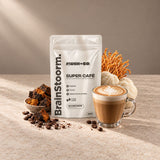
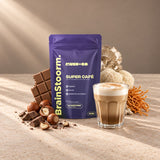
Brainstoorm
Our mushroom coffee: Lion's Mane, Cordyceps and Chaga at 1,000 mg each, plus maca and ashwagandha, on a base of roasted chicory and organic cacao. 20 mg of caffeine per cup.
Discover Brainstoorm →The plant in brief
Ashwagandha is a root, not a miracle plant.
Ashwagandha, known by its Latin name Withania somnifera, is a small shrub from the nightshade family, the same as tomatoes and aubergines. It grows in the dry regions of India, Nepal, the Middle East and parts of Africa. It is sometimes called “Indian ginseng”, although it has no botanical link with ginseng.
Its name comes from Sanskrit and roughly means “smell of horse”, a reference to the smell of the fresh root. It is this root that Ayurvedic medicine has used for centuries, dried and ground into powder, often mixed with warm milk. Ayurveda classes it among the so-called “rasayana” plants, believed to support general vitality.
The most studied molecules are withanolides. These are steroidal lactones, meaning molecules whose structure resembles that of certain hormones without being hormones. Their content is used as a yardstick to compare extracts: you will see an extract “standardised to 5% withanolides”, for example. It is a useful benchmark, but not a guarantee: two extracts with the same standardisation can have different profiles.
One last point, often misunderstood: ashwagandha is neither a stimulant nor a sedative in the strict sense. It contains no caffeine and does not knock you out like a sleeping pill. It belongs to the so-called adaptogenic plants, a traditional category more than a scientific definition. You will find it on our ashwagandha page.
The benefits studied
Ashwagandha benefits: what the research has really tested.
Online, ashwagandha is credited with dozens of virtues. In serious clinical trials, the list is much shorter. A few areas have been tested in humans, with a placebo group and randomisation. The rest relies on tradition, on animal studies or on test-tube studies.
Here is the honest picture, area by area. The “level of evidence” takes into account the number of trials, their size and their quality.
| Area studied | What the trials observed | Level of evidence |
|---|---|---|
| Perceived stress, anxiety | Lower stress and anxiety scores than with placebo after 8 to 10 weeks | Moderate: several consistent trials, but small |
| Sleep | Falling asleep slightly faster, sleep rated better, especially in people with insomnia | Moderate: a meta-analysis of five trials |
| Cortisol | Lower cortisol at the end of the trial in several studies | Low to moderate: indirect marker, variable measurements |
| Muscle strength | Slightly larger strength gains alongside training | Low: a few 8-week trials |
| Endurance (VO2max) | Slight rise in VO2max in athletes | Low: modest effects, heterogeneous trials |
| Memory, attention | Some cognitive tests improved in small trials | Very low: to be confirmed |
| Thyroid | Rise in thyroid hormones observed in one trial | To be treated as a point of caution |
Summary based on the trials and meta-analyses listed in the sources. None of these results makes ashwagandha a treatment: in Europe, no health claim is authorised for this plant.
This table already sets the tone: the most solid ashwagandha benefits come down to two words, stress and sleep. Everything else is promising at best, anecdotal at worst. Let's look at the trials up close.
Perceived stress and cortisol
What goes down in the trials is mostly a score.
Most stress trials use a questionnaire: Cohen's Perceived Stress Scale (PSS), or the Hamilton Anxiety Rating Scale (HAM-A), completed by a doctor. Participants answer questions such as “In the last month, how often have you felt overwhelmed?”. The score at the start is compared with the one at the end, then with the placebo group.
Some trials add a blood or saliva sample to measure cortisol, the hormone the adrenal glands release in response to stress. It is a useful addition, but an imperfect marker: its level varies enormously over the day, it is highest on waking, and a single measurement says little. So the four angles measured do not carry the same weight.
Perceived stress
A questionnaire completed by the participant. It is the main endpoint in most trials, and the one that moves most clearly.
Assessed anxiety
A scale completed by a doctor. Less sensitive to the expectation effect, so more interesting when it moves too.
Blood cortisol
Measured in the morning, at the start and end of the trial. It fell more than with placebo in several trials, without it being clear what difference this makes day to day.
How you feel day to day
Fatigue, mood, quality of life: measured unevenly from one study to the next, with less consistent results.
Remember one thing: when an article claims ashwagandha “slashes cortisol by 30%”, it is talking about a one-off measurement, in a small trial, in stressed adults. It is not a promise that applies to everyone. If cortisol interests you, our guide on how to lower cortisol ranks the levers by level of evidence, and sleep, physical activity and morning light carry more weight there than any plant.
What the studies say
The four trials behind ashwagandha's reputation.
These are the most cited studies, with their exact conditions and their limitations. Full references are at the bottom of the page.
Chandrasekhar et al., 2012 · India
64 adults who described themselves as stressed, randomised. 300 mg of root extract twice a day (600 mg) or a placebo, for 60 days. Perceived stress scores fell by 44% in the ashwagandha group, compared with 5.5% on placebo, and blood cortisol by 27.9% compared with 7.9%. Limitation: a single centre, an extract supplied by its manufacturer, and a placebo group that improved surprisingly little.
Langade et al., 2019 · India
60 adults with insomnia and anxiety. 300 mg of root extract twice a day or a placebo, for 10 weeks, with sleep measured by actigraphy. Faster sleep onset, longer and more efficient sleep than with placebo, lower anxiety. Limitation: small sample, patients selected for their insomnia.
Lopresti et al., 2019 · Australia and India
60 stressed adults, 240 mg a day of a different extract (root and leaves) or a placebo, for 60 days. Doctor-assessed anxiety and morning cortisol were lower than with placebo. However, the stress questionnaire completed by participants did not differ clearly between the groups. A more nuanced result than the previous trials.
Wankhede et al., 2015 · India
57 young men with little training experience, who followed an 8-week strength training programme with 600 mg of extract a day or a placebo. On the bench press, they gained 46 kg of load compared with 26.4 kg on placebo, with better-preserved muscle recovery. Limitation: beginners, small sample, a single team.
These trials all point in the same direction, but they are small, short, and often run with one manufacturer's extract. It is a serious basis for taking an interest in the plant, not definitive proof.
Ashwagandha and sleep
The Latin name says “somnifera”, the studies say “a little”.
The species name, somnifera, means “sleep-bringing”. Tradition uses it in the evening, in warm milk. Modern trials confirm an effect, but a more subtle one than the name suggests.
In 2021, a Malaysian team (Cheah et al.) pooled the five available controlled trials, totalling 400 participants. Result: a small but real effect on overall sleep, clearer in people with insomnia, with doses of at least 600 mg a day and durations of at least 8 weeks. In good sleepers, the difference from placebo was minimal.
- The effect observed mainly concerns falling asleep and perceived sleep quality.
- It appears after several weeks of regular use, not from the first evening.
- It is more marked in people with insomnia than in those who already sleep well.
- Participants were often anxious too: it is hard to say whether the plant acts on sleep or on the tension that prevents it.
- No trial seriously compares it with an insomnia treatment.
In practice, ashwagandha is not a sleeping pill. People who find it helpful for their nights take it as a course, often in the late afternoon or evening, and combine it with good habits: a regular bedtime, no late caffeine, fewer screens. Our guide to 15 evening habits is still the first thing to put in place.
Strength and recovery
For athletes, a modest boost.
Ashwagandha is popular in gyms. The results of Wankhede's 2015 trial have a lot to do with that. Here is what was measured after 8 weeks of training, in each group.
| Measure | Ashwagandha group | Placebo group |
|---|---|---|
| Load gained on the bench press | + 46 kg | + 26.4 kg |
| Arm cross-section | + 8.6 cm² | + 5.3 cm² |
| Blood testosterone | + 96.2 ng/dl | + 18 ng/dl |
| Body fat | − 3.5 points | − 1.5 points |
Wankhede et al. (2015), 57 men aged 18 to 50, beginners in strength training, 600 mg of root extract a day.
These figures are often quoted without their context: they concern beginners, who progress quickly anyway, and a single trial. On endurance, a 2020 Spanish meta-analysis (Pérez-Gómez et al.) found a slight rise in VO2max, the maximum capacity to use oxygen, in athletes. A modest effect, from few studies. As for testosterone, the rises observed stayed within normal ranges: ashwagandha is not a hormone in a capsule.
It is not on the World Anti-Doping Agency's list of prohibited substances. If you are looking for a pre-session routine without stimulants, our article on natural pre-workouts covers the options.
The limits of the studies
Encouraging results, to be read with caution.
A positive trial is not a universal truth. For ashwagandha, four weaknesses come up in almost every study, and scientific reviews all point them out.
Small sample sizes
50 to 130 participants in most cases. With so few people, a result can look clear by chance, and a rare side effect goes unnoticed.
Mostly Indian trials
The vast majority of trials were carried out in India, on young adults. The results do not necessarily apply to other populations.
Industry funding
Many trials were funded or supplied by the manufacturer of the extract tested. That does not invalidate them, but it means they need to be confirmed by independent teams.
Short durations
8 to 12 weeks in general. Little is known about continuous use over months, or years.
Add to this the placebo effect, which is very strong when stress is measured with a questionnaire. Believing you are taking something calming is calming in itself. That is why placebo-controlled trials matter so much, and why a testimonial, however sincere, proves nothing on its own.
Root, KSM-66, Sensoril
Not all extracts are equal.
On a label, “ashwagandha” can mean very different products. Clinical trials were run with specific extracts whose withanolide content is guaranteed. A raw root powder contains far fewer, and in variable amounts depending on the harvest.
| Form | Part of the plant | Stated standardisation | Doses studied |
|---|---|---|---|
| Root powder | Dried root | Not standardised, low content | Several grams a day (traditional use) |
| KSM-66 | Root only | At least 5% withanolides | 300 to 600 mg a day |
| Sensoril | Root and leaves | At least 10% withanolides | 125 to 500 mg a day |
| Shoden | Root and leaves | Around 35% withanolides | 120 to 240 mg a day |
Standardisation as stated by the manufacturers of these patented extracts. Testing methods differ from one extract to another: a higher percentage does not mean a “stronger” product.
What standardisation changes is reproducibility: a standardised extract delivers roughly the same thing from one batch to the next, which makes it possible to compare with the studies. To choose, check three things on the label: the part of the plant (root only matches traditional use), the withanolide standardisation, and the actual daily dose of extract, not just of “plant”.
Dose, duration, timing
An eight-week course, not an on-demand pill.
In the trials, ashwagandha is taken every day for 8 to 12 weeks, most often as two doses of 300 mg of root extract. A 2019 study (Salve et al.) compared 250 and 600 mg a day: effects at both doses, clearer at 600 mg. Nothing shows that going higher brings more.
Choose your timing
No study settles the morning versus evening question. For a tense day, the morning. For your nights, late afternoon or evening. Split into two doses, as in most trials, both.
Stick with it
Differences from placebo appear after 4 to 8 weeks. Take it with a meal, at the dose shown on the label, without doubling it.
Take a break
Beyond two to three months, in the absence of long-term data, many practitioners advise a break of a few weeks before starting again.
One last, very simple tip: before the course, note how you sleep and how you feel on a scale of 1 to 10. Do it again after six weeks. It is the only honest way to know whether the plant is doing anything for you, beyond how you feel in the moment.
Who should avoid it
Ashwagandha side effects and precautions: who should avoid it.
Well tolerated by most adults in the trials, ashwagandha is nevertheless not harmless. The most common side effects are digestive: nausea, loose stools, stomach ache, as well as drowsiness. Rare cases of liver damage have been reported, notably in Iceland and the United States, and Denmark has banned the plant in food supplements.
Avoid ashwagandha, or ask your doctor first, if:
- You are pregnant, planning a pregnancy or breastfeeding: the plant is traditionally advised against during pregnancy.
- You have a thyroid condition or take thyroid medication: one trial observed a rise in thyroid hormones.
- You have liver disease, or have already reacted to a herbal supplement.
- You have an autoimmune disease, or take immunosuppressants.
- You take sedatives, sleeping pills, anti-anxiety medication, or medication for diabetes or blood pressure.
- You have a hormone-sensitive cancer, particularly prostate cancer.
- You are due to have surgery: stop it two weeks beforehand as a precaution, because of its possible sedative effect.
Stop taking it and see a doctor if you notice unusual tiredness, dark urine, yellowing of the skin or eyes, or itching. These are signs of possible liver damage. For an overview, also read our guide to the risks of mushrooms and adaptogenic plants.
Finally, ashwagandha is no substitute for proper support when stress turns into exhaustion. If you recognise yourself in the signs of burnout, talk to your doctor. And if you are having dark thoughts, call Samaritans on 116 123, free and available 24 hours a day.
Reviews and testimonials
Ashwagandha reviews: what testimonials are worth.
On forums and social media, testimonials about ashwagandha range from “it changed my life” to “no effect at all”, via “it made me apathetic”. All of them may be sincere. Sensitivity varies from one person to another, products differ, and context matters: people often start a course during a difficult period, which ends up passing on its own.
At Mush n Go, we use ashwagandha in two formulas. In Anti-Stress, it is standardised for withanolides and combined with reishi, holy basil, schisandra and vitamin B6, which contributes to the reduction of tiredness and fatigue and to normal functioning of the nervous system. In Brainstoorm, our mushroom coffee, it accompanies Lion's Mane, Cordyceps and Chaga. The detailed composition is on each product page, and our laboratory analyses are public.
“I was sceptical and in the end I'm won over. Less caffeine and yet I'm full of energy and my mood is steady”
★★★★★ Maïté S. · 4 April 2026
“For the first few days I didn't feel anything […] then in the second week I started to feel motivated”
★★★★★ Lenny M. · 27 June 2025
Genuine Trustpilot reviews of Brainstoorm, which contains ashwagandha among other active ingredients, quoted as written.
These reviews concern a complete drink, not the plant alone: they say nothing about the specific effect of ashwagandha. To compare ashwagandha with another great relaxation classic, our comparison reishi or ashwagandha details both profiles.
Your questions
Ashwagandha: your questions.
What are the benefits of taking ashwagandha?
The best-studied ashwagandha benefits concern perceived stress and sleep: in several controlled trials, 300 to 600 mg of root extract a day for 8 to 10 weeks did better than a placebo. More modest effects have been observed on muscle strength and endurance. The studies remain small and need to be confirmed.
How long does ashwagandha take to work?
In the trials, differences from placebo generally appear after 4 to 8 weeks of daily use. It is not a plant with an immediate effect. The studies that found an effect on sleep lasted at least 8 weeks.
Should you take ashwagandha in the morning or at night?
No study shows that one time is better than the other. Most trials used two doses, morning and evening. If your goal is mainly sleep, taking it in the late afternoon or evening makes the most sense; for busy days, the morning.
How much ashwagandha should you take a day?
The trials mainly used 300 to 600 mg a day of a root extract standardised to around 5% withanolides. More concentrated extracts are used at lower doses. Always stick to the dose shown on the label of the product you take.
Does ashwagandha make you sleepy?
It does not knock you out like a sleeping pill. A meta-analysis of five trials observed a small but real effect on sleep quality, clearer in people with insomnia, after at least 8 weeks. Mild drowsiness is one of the possible side effects.
What are the side effects of ashwagandha?
The most common side effects are digestive, along with drowsiness. Rare cases of liver damage have been published, and the plant can alter thyroid hormones. It is not recommended during pregnancy and breastfeeding, and requires medical advice if you take any medication.
Who should not take ashwagandha?
Pregnant or breastfeeding women, people with a thyroid condition, liver disease or an autoimmune disease, and those with a hormone-sensitive cancer. If you take sedative, diabetes, blood pressure or immunosuppressant medication, ask your doctor for advice.
KSM-66 or Sensoril: what is the difference?
KSM-66 is an extract of the root only, standardised to at least 5% withanolides. Sensoril combines root and leaves, with a higher stated standardisation, and is used at a lower dose. Both have been tested in clinical trials, with no direct comparison between them.
Can you take ashwagandha with coffee?
No particular interaction has been described between ashwagandha and caffeine at usual doses. If you are trying to make your days calmer, though, it is better to go easy on coffee, especially in the afternoon.
Is ashwagandha banned in France?
No, ashwagandha is sold legally in France in food supplements. Denmark, however, has banned it, and several European health agencies are calling for caution for certain groups.
Sources
- Chandrasekhar K., Kapoor J., Anishetty S. (2012). A prospective, randomized double-blind, placebo-controlled study of safety and efficacy of a high-concentration full-spectrum extract of ashwagandha root in reducing stress and anxiety in adults. Indian Journal of Psychological Medicine, 34(3).
- Langade D., Kanchi S., Salve J., Debnath K., Ambegaokar D. (2019). Efficacy and safety of ashwagandha (Withania somnifera) root extract in insomnia and anxiety: a double-blind, randomized, placebo-controlled study. Cureus, 11(9).
- Lopresti A. L., Smith S. J., Malvi H., Kodgule R. (2019). An investigation into the stress-relieving and pharmacological actions of an ashwagandha (Withania somnifera) extract. Medicine, 98(37).
- Wankhede S., Langade D., Joshi K., Sinha S. R., Bhattacharyya S. (2015). Examining the effect of Withania somnifera supplementation on muscle strength and recovery: a randomized controlled trial. Journal of the International Society of Sports Nutrition, 12.
- Cheah K. L. et al. (2021). Effect of ashwagandha (Withania somnifera) extract on sleep: a systematic review and meta-analysis. PLoS One, 16(9).
- Salve J., Pate S., Debnath K., Langade D. (2019). Adaptogenic and anxiolytic effects of ashwagandha root extract in healthy adults: a double-blind, randomized, placebo-controlled clinical study. Cureus, 11(12).
- Pérez-Gómez J. et al. (2020). Effects of ashwagandha (Withania somnifera) on VO2max: a systematic review and meta-analysis. Nutrients, 12(4).
- Choudhary D., Bhattacharyya S., Bose S. (2017). Efficacy and safety of ashwagandha (Withania somnifera) root extract in improving memory and cognitive functions. Journal of Dietary Supplements, 14(6).
- Sharma A. K., Basu I., Singh S. (2018). Efficacy and safety of ashwagandha root extract in subclinical hypothyroid patients: a double-blind, randomized placebo-controlled trial. Journal of Alternative and Complementary Medicine, 24(3).
- Björnsson H. K. et al. (2020). Ashwagandha-induced liver injury: a case series from Iceland and the US Drug-Induced Liver Injury Network. Liver International, 40(4).
Keep reading
Further reading.
Ashwagandha is only one part of managing stress. Explore our other guides, or our Anti-Stress formula.

Discover our mushroom and adaptogenic plant supplements
Our vegan formulas, made in Toulouse by a French manufacturer.