














Menopause insomnia: night waking, night sweats and how to sleep better
By the Mush n Go editorial team - 10 November 2026
By the Mush n Go editorial teamNovember 202614 min read
Sleep and menopause
Menopause insomnia affects nearly four in ten women aged 40 to 55. It mostly takes the form of night-time waking, around 3 or 4am, often triggered by a hot flush or night sweats, then kept going by anxiety. A cool bedroom, regular hours and cognitive behavioural therapy for insomnia are the best-proven levers. Here is how to go about it.

Sleep+
Melatonin 1.9 mg, magnesium bisglycinate, valerian and Reishi. Melatonin contributes to the reduction of time taken to fall asleep. One capsule 30 minutes before bed.
Discover Sleep+ →
Anti-Stress
Ashwagandha, Reishi, holy basil and schisandra, with vitamin B6, which contributes to normal psychological function. For the days that keep you awake.
Discover Anti-Stress →Why you sleep badly
Menopause and insomnia: three causes that add up.
Many women tell the same story: they used to sleep well, then, somewhere between 42 and 50, their nights fell apart. Falling asleep is often still fine. It's the middle and end of the night that cause trouble, with repeated waking and difficulty getting back to sleep.
In the large American SWAN survey of more than 12,000 women aged 40 to 55, 38% reported sleep difficulties, more often in late perimenopause. Three mechanisms overlap, and it is their combination that explains why menopause is such a fragile time for sleep.
Hormones
Oestrogen and progesterone fluctuate, then fall. Progesterone tends to have a calming effect; oestrogen plays a part in regulating body temperature.
Vasomotor symptoms
A hot flush or a night sweat wakes you, or makes your sleep lighter. They often occur in the second half of the night.
Hyperarousal
After a few bad nights, you start dreading bedtime, checking the clock, ruminating. Eventually the insomnia keeps itself going.
The rest of life
Work stress, children, ageing parents, joint pain, needing to pass urine at night: all extra reasons to wake up.
This insomnia has consequences during the day: fatigue, irritability, difficulty concentrating. We cover them in two articles in the same series, on menopause fatigue and on menopause brain fog.
A perimenopause night
Broken nights follow a predictable pattern.
Understanding what happens hour by hour helps you stop panicking at every waking. Here, simplified, is the typical night many women in perimenopause describe, for a bedtime around 11pm.
11pm – 1am
Falling asleep is fairly easy, then deep sleep. The sleep pressure built up during the day protects this first part of the night.
1am – 3am
Deep sleep becomes scarcer. A first hot flush can cause a micro-awakening, often forgotten by morning.
3am – 5am
Lighter sleep, and cortisol beginning its morning rise. A sweat, needing the loo or a single thought is enough to wake you fully. This is the zone of 3 or 4am waking.
When you get up
The night was shorter than it seemed. Morning fatigue often comes from these early-hours awakenings.
Waking in the early hours is not unique to menopause. Our article waking up at 4am explains in detail the role of cortisol, alcohol and caffeine in these awakenings, at any age.
Hot flushes at night
Night sweats: what helps, and who to see.
Hot flushes at night, or night sweats, are one of the main reasons for waking in perimenopause. They last a long time: in the SWAN cohort, the median duration of vasomotor symptoms was 7.4 years. Let's be clear: we have no product that acts on hot flushes or night sweats, and none of our supplements claims to. For those, the person to talk to is your GP, your gynaecologist or your midwife.
| Option | What you need to know | With whom |
|---|---|---|
| Hormone therapy (HRT) | The most studied treatment for hot flushes and sweats. It is discussed according to your medical history, at the lowest effective dose | GP, gynaecologist, midwife |
| Non-hormonal treatments | A non-hormonal medicine, fezolinetant, has been authorised in Europe since late 2023; other medicines are sometimes prescribed | On prescription |
| Cognitive therapy | Reduces how bothersome they feel and improves sleep, without necessarily changing the number of flushes | Psychologist, online programmes |
| Night-time habits | Cool bedroom, layered bedding, cotton or linen nightwear, cold water on the bedside table | You, from tonight |
| Triggers | Alcohol, spicy food, hot drinks in the evening and overheated rooms are often mentioned; keeping a diary helps you spot yours | You |
Heavy night sweats with fever, unexplained weight loss or swollen glands are not signs of menopause: see a doctor without delay.
For all the options, hormonal or not, and the questions to ask your doctor, our guide to menopause and perimenopause covers the whole subject.
What the studies say
Sleep and menopause: four studies worth knowing.
Here are four pieces of research that shed light on menopause insomnia and what improves it, with their limits. Full references are at the bottom of the page.
Kravitz et al., 2003 · United States
This survey from the SWAN cohort questioned 12,603 women aged 40 to 55. 38% reported sleep difficulties, more often in late perimenopause and when they had hot flushes. A self-reported survey: it measures how sleep feels, not sleep recordings.
McCurry et al., 2016 · United States
106 women in peri- or post-menopause, with insomnia and bothered by hot flushes, followed 8 weeks of telephone-delivered cognitive behavioural therapy for insomnia, or an information programme. The CBT-I group saw their insomnia fall markedly more, and the effect held 6 months later.
Young et al., 2003 · United States
In the Wisconsin cohort, postmenopausal women had sleep apnoea more often than women who had not reached menopause, even at the same age and weight. Snoring after 50 is not trivial: it is worth checking.
Ferracioli-Oda et al., 2013 · United States
This meta-analysis of 19 trials and 1,683 participants measured the effect of melatonin on primary sleep disorders: falling asleep about 7 minutes faster, sleeping about 8 minutes longer. A real but modest effect, mainly on falling asleep.
The message is clear: the most solid method against menopause insomnia is not a capsule, it is CBT-I. Supplements come after, with realistic expectations.
The bedroom and the evening
Sleeping better during menopause starts with the bedroom.
These steps are simple, but they carry real weight when nights are fragile. They act both on heat-related waking and on hyperarousal.
- A cool bedroom, at around 18 °C, aired before bed. A fan on the bedside table can change a night.
- Layers rather than one heavy duvet: two light sheets you can take off and put back, a separate duvet if you share a bed.
- Breathable fabrics: cotton or linen nightwear, a spare pillowcase and a dry T-shirt within reach.
- A fixed wake-up time, weekends included, give or take an hour. It's the most powerful setting for your body clock.
- Morning light: about twenty minutes outdoors within an hour of getting up.
- Caffeine before 2pm. Our article on the coffee cut-off time explains why.
- Alcohol well before bed: it speeds up falling asleep but weakens the second half of the night.
- A light dinner, two to three hours before bed, without very spicy food if that is one of your triggers.
- Exercise during the day rather than late in the evening, and a lukewarm rather than very hot shower before bed.
For a complete list, see our 15 evening habits for better sleep.
Awake at 3am: what to do
Waking in the night: don't lie there fighting it.
What you do in the minutes after waking in the night often decides what happens next. Here is the method taken from CBT-I, adapted to heat-related waking.
Cool down
Push back the covers, take a sip of cold water, change your T-shirt if needed. Without switching on the main light.
Don't look at the time
Turn the clock round, keep your phone out of reach. Knowing it's 3:40 sets off the anxious count of the hours left.
Slow your breathing
Breathe out for longer than you breathe in, for example 4 seconds then 6, for a few minutes. Let your thoughts pass.
Get up if sleep won't come
After about twenty minutes, estimated without a watch, get up for a calm activity in dim light. Go back to bed when sleep returns.
The next day, get up at your usual time, even after a bad night, and avoid naps longer than 20 minutes. This is what rebuilds sleep pressure for the following night.
When to see a doctor
Ruined nights deserve an appointment.
Insomnia is called chronic when the difficulties occur at least three nights a week, for at least three months, with an impact on your day. At that stage, or earlier if your nights are weighing on you, talk about it: menopause is a reason to see a doctor in its own right.
See your doctor if:
- Your hot flushes or night sweats wake you several times a night: treatments exist.
- You snore loudly, the people around you notice pauses in your breathing, or you feel drowsy during the day, especially at the wheel.
- Your legs feel restless at bedtime with an irresistible urge to move them.
- Your early waking comes with sadness, loss of interest or dark thoughts. If you have suicidal thoughts, call 116 123, free, 24 hours a day.
- Your night sweats come with fever, weight loss or swollen glands.
Sleeping pills are not a long-term solution: they are reserved for short periods, on prescription. European guidelines place CBT-I as the first-line treatment, during menopause as at any age.
Supplements
Melatonin, magnesium, plants: what has evidence.
A natural treatment for menopause insomnia doesn't exist in the sense of a single remedy. Some supplements can, however, have a place in an evening routine, provided you know what they do, and what they don't.
| Supplement | What we know | On menopause night waking |
|---|---|---|
| Melatonin | Melatonin contributes to the reduction of time taken to fall asleep, an effect obtained with 1 mg taken shortly before bedtime | Acts on falling asleep, not on hot flushes or sweats |
| Magnesium | Magnesium contributes to normal functioning of the nervous system and to a reduction of tiredness and fatigue | No proven effect on menopause night waking |
| Valerian | Traditional evening plant; a 2006 meta-analysis suggests a possible effect on perceived sleep quality, with biases | Weak data |
| Reishi | Functional mushroom with a traditional use in Asia; no conclusive human trial on sleep | No evidence in humans |
| Sage, black cohosh (cimicifuga), soya | Studied for hot flushes, with variable results; some require medical advice | Target hot flushes, not sleep itself |
Melatonin is not recommended for pregnant or breastfeeding women and requires medical advice in case of epilepsy, asthma or mood disorders. It can cause drowsiness: do not drive after taking it.
To choose between the two most common evening options, read valerian or melatonin. Our pages on melatonin, valerian and magnesium bisglycinate go into each ingredient. And to see which brand targets which symptom, our menopause supplement comparison puts the labels side by side.
Our evening routine
Sleep+ and Anti-Stress, for your head and your nights.
Sleep+ combines in one capsule 1.9 mg of melatonin, 300 mg of magnesium bisglycinate, i.e. 60 mg of magnesium, 100 mg of valerian extract and 130 mg of Reishi extract from the fruiting body. It is aimed at falling asleep and at your evening routine. It does not act on hot flushes or night sweats, and we do not present it as doing so. Anti-Stress, melatonin-free, is taken during the day.
In the morning
Fixed wake-up time, daylight. One capsule of Anti-Stress with breakfast: ashwagandha, Reishi, holy basil, schisandra and vitamin B6, which contributes to normal functioning of the nervous system.
Around 2pm
Last regular coffee. After that, decaf, chicory or herbal tea.
At dinner
A light meal two to three hours before bed, with little or no alcohol.
30 minutes before bed
One capsule of Sleep+, bedroom aired, low light, screens put away.
If you wake up
Cool down, no clock, slow breathing, and get up if sleep doesn't return. No extra capsule in the middle of the night.
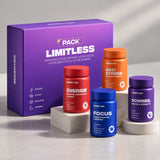
To cover morning, daytime and evening in a single order, our Perimenopause Pack brings together Brainstoorm, Anti-Stress and Sleep+.
Precautions:
- Sleep+ is not recommended for pregnant or breastfeeding women or for under-18s. Melatonin can cause drowsiness: do not drive or operate machinery after taking it.
- Ask your doctor's advice if you are on medication, particularly anticoagulants, anti-epileptics, sedatives or antidepressants, including an antidepressant prescribed for hot flushes.
- Anti-Stress is not recommended in case of thyroid, liver or heart problems, or if you take anticoagulant medication.
- A food supplement should not replace a varied and balanced diet. Do not exceed the stated daily dose.
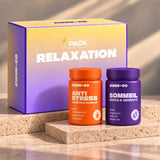
The Relaxation Pack combines Anti-Stress and Sleep+ for an all-day routine, with 60 days to change your mind, even on opened boxes. For the role of functional mushrooms in the evening, see our comparison of the best mushroom for sleep and our page on Reishi.

The Perimenopause Pack
Brainstoorm in the morning, Anti-Stress during the day, Sleep+ in the evening: all three products together in a 30-day ritual, cheaper than buying them separately, as a one-off purchase or a subscription.
Discover the Perimenopause Pack →Your questions
Menopause insomnia: your questions.
Why does menopause cause insomnia?
Because several causes add up: changes in oestrogen and progesterone, hot flushes and night sweats that wake you, and the anxiety that sets in after a few bad nights. The stress of this period and sleep apnoea, more common after menopause, can add to it.
Why do I wake up at 3 or 4am during menopause?
At the end of the night, sleep is lighter and cortisol begins its morning rise. A hot flush, a sweat or needing the loo is then enough to wake you fully. Anxiety from previous nights then makes it harder to get back to sleep.
How can I calm hot flushes at night?
A bedroom at around 18 °C, light layered bedding, cotton or linen nightwear and cold water within reach help in the moment. Identify your triggers, such as alcohol or spicy food in the evening. If hot flushes often wake you, talk to your doctor: hormonal and non-hormonal treatments exist.
Are menopause night sweats dangerous?
No, they are common and harmless, even if they ruin your nights. Do see a doctor, though, if they come with fever, unexplained weight loss or swollen glands, or if they appear outside the menopause years.
What is the natural treatment for menopause insomnia?
The most effective is cognitive behavioural therapy for insomnia, tested successfully in menopausal women. Add a cool bedroom, regular hours, morning light and less alcohol in the evening. Melatonin contributes to the reduction of time taken to fall asleep.
Does melatonin help you sleep during menopause?
It contributes to the reduction of time taken to fall asleep, an effect obtained with 1 mg taken shortly before bedtime. It does not act on hot flushes or night sweats. It is not recommended for pregnant or breastfeeding women and requires medical advice in case of epilepsy, asthma or mood disorders.
How long do menopause sleep problems last?
They often follow the duration of hot flushes, whose median is 7.4 years in the SWAN cohort. But insomnia can take hold on its own: that is why CBT-I is useful early, before bad sleep habits become ingrained.
Does hormone therapy improve sleep?
In women woken by hot flushes and sweats, it often improves sleep by reducing those symptoms. It is not decided on for sleep alone: your doctor weighs up the benefits and risks with you according to your medical history.
Menopause, sleep and fatigue: how do you break the cycle?
By starting with your nights: a fixed wake-up time, a cool bedroom, caffeine before 2pm, limited alcohol, physical activity during the day. Fatigue that persists despite this should prompt a check for iron deficiency, a thyroid problem or sleep apnoea.
Sources
- Kravitz H. M. et al. (2003). Sleep difficulty in women at midlife: a community survey of sleep and the menopausal transition. Menopause, 10(1), 19-28.
- Avis N. E. et al. (2015). Duration of menopausal vasomotor symptoms over the menopause transition. JAMA Internal Medicine, 175(4), 531-539.
- McCurry S. M. et al. (2016). Telephone-based cognitive behavioral therapy for insomnia in perimenopausal and postmenopausal women with vasomotor symptoms: a MsFLASH randomized clinical trial. JAMA Internal Medicine, 176(7), 913-920.
- Young T. et al. (2003). Menopausal status and sleep-disordered breathing in the Wisconsin Sleep Cohort Study. American Journal of Respiratory and Critical Care Medicine, 167(9), 1181-1185.
- Ferracioli-Oda E., Qawasmi A., Bloch M. H. (2013). Meta-analysis: melatonin for the treatment of primary sleep disorders. PLoS One, 8(5), e63773.
- Bent S. et al. (2006). Valerian for sleep: a systematic review and meta-analysis. The American Journal of Medicine, 119(12), 1005-1012.
- Ebrahim I. O. et al. (2013). Alcohol and sleep I: effects on normal sleep. Alcoholism: Clinical and Experimental Research, 37(4), 539-549.
- Riemann D. et al. (2017). European guideline for the diagnosis and treatment of insomnia. Journal of Sleep Research, 26(6), 675-700.
- European Medicines Agency. Veoza (fezolinetant): European public assessment report, 2023 authorisation.
- Anses, the French food safety agency (2018). Avis relatif aux risques liés à la consommation de compléments alimentaires contenant de la mélatonine (opinion on the risks of food supplements containing melatonin). Request No. 2016-SA-0209.
- Commission Regulation (EU) No 432/2012 establishing a list of permitted health claims made on foods (melatonin, magnesium, vitamin B6).
- Laboratoire FGnutra. Product technical data sheet “Formule sommeil V2” (Sleep+), 30 April 2026 edition; technical data sheet “Stress V5” (Anti-Stress), 12 May 2026 edition.
Keep reading
Further reading.
Menopause nights are repaired a little at a time. Our other guides in the series, or our formula Sleep+.

Discover our mushroom and adaptogenic plant supplements
Our vegan formulas, made in Toulouse by a French manufacturer.