





Scientific studies: what research says about our ingredients
The research behind our formulas
By the Mush n Go team · Updated on 19 September 2026
Every Mush n Go ingredient was chosen on the basis of studies published in peer-reviewed scientific journals. We have brought them together here, ingredient by ingredient : clinical trials, reviews, laboratory work, and even the studies that showed nothing. From studies on adaptogenic mushrooms and plants to those on ashwagandha or rhodiola, with the method for reading them.

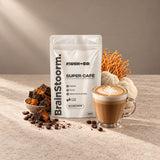
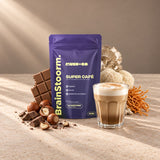
Brainstoorm
Our super mushroom coffee: 6,040 mg of actives per cup, including Lion's Mane, Cordyceps and Chaga at 1,000 mg each and 3,000 mg of maca. Only 20 mg of caffeine.
Discover Brainstoorm →
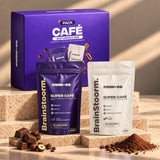
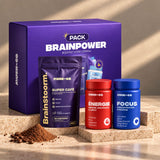
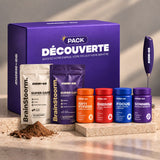
Discovery Pack
Our capsule courses and Brainstoorm together: the simplest way to find your routine.
Discover the pack →Our method
How we select the studies.
A single study proves little. What counts is the body of work. Our rules:
- Peer-reviewed journals only, findable on PubMed or at the publisher.
- Humans first, then reviews, then the laboratory and animal work, always flagged as such.
- For each trial: participants, dose and duration, when we know them with certainty.
- Negative or mixed results stay on the page.
- The studies concern the ingredients, not our finished formulas.
These references are informative and do not replace your doctor's advice.
The user manual
How to read a study in six questions.
Faced with a catchy headline, ask yourself these questions. They apply to any study, including the ones on this page.
Human or laboratory? An effect on cells or on mice is a lead, not a proof.
Randomised? Drawing lots avoids comparing groups that were already different to start with.
Placebo, double-blind? Neither the participants nor the researchers know who is receiving what.
How many participants? 30 people is a signal. Several hundred is solid.
What dose? A standardised extract at 600 mg is not a pinch of powder.
For how long? The effects studied often appear after 4 to 12 weeks.
A meta-analysis pools several trials and carries more weight than a single study, provided those trials are of good quality. In the tables below, the “Type” column gives you that level of evidence at a glance.
The doses
Why doses matter as much as the ingredient.
A study result holds for the dose, the form and the duration that were tested. A few examples:
| Ingredient | Dose studied | Duration |
|---|---|---|
| Lion's Mane | 3 g of powder a day | 16 weeks |
| Ashwagandha | 240 to 600 mg of extract a day | 60 days |
| Maca | 3 g a day | 12 weeks |
| Saffron | 28 to 30 mg a day | 4 weeks to 1 year |
| Ginkgo biloba | 240 mg of extract a day | 22 to 26 weeks |
| Rosemary | 750 mg of dried leaf | Single dose |
Two lessons. A formula without doses in milligrams cannot be compared with the studies: each product page therefore sets out its composition, for Focus, Energy, Anti-Stress Complex, Sleep+, Immunity and Muscle Recovery. And more is not always better: with rosemary, the smallest dose gave the best result.
Our Brainstoorm delivers 1,000 mg of Lion's Mane, of cordyceps and of chaga, and 3,000 mg of maca per cup: the dose of the reference trial on maca, and three times more actives than most mushroom coffees. Then there is regularity: the trials run for weeks, not one morning.
Mushroom · Hericium erinaceus
Lion's Mane: memory under study.
The Lion's Mane is the mushroom most studied in connection with cognition. It is in Focus and, at 1,000 mg per cup, in Brainstoorm.
Mori et al., 2009 · Randomised, double-blind trial
Mild cognitive impairment, 50 to 80 years old, 3 g a day, 16 weeks: better scores than on placebo, falling again after they stopped.
Saitsu et al., 2019 · Placebo-controlled trial
Cognitive functions improved after 12 weeks.
Nagano et al., 2010 · Placebo-controlled trial
30 women, 4 weeks: lower anxiety and depression scores.
Docherty et al., 2023 · Pilot trial, double-blind
41 young adults, 1.8 g a day, 28 days: faster attention, modest effects thereafter.
Li et al., 2018 · Review
Mycelium enriched with erinacines.
Szućko-Kociuba et al., 2023 · Review
Neurotrophic and neuroprotective effects.
Lai et al., 2013 · Laboratory
Growth of nerve projections, via NGF.
Preclinical study · Animal
Protection against induced memory loss.
Mushroom · Cordyceps militaris
Cordyceps: energy and effort.
The cordyceps is studied in connection with effort and fatigue. You will find it in Energy, Muscle Recovery and Brainstoorm. In athletes, the results are mixed.
| Study | Type | What it observes |
|---|---|---|
| Hirsch et al., 2017 | Placebo-controlled trial | Better tolerance of intense exercise, improved VO2max. |
| Parcell et al., 2004 | Placebo-controlled trial | Trained cyclists: no improvement in endurance. |
| Nakamura et al., 2024 | Trial in runners | Blood markers of anaemia. |
| Choi et al., 2020 | Experimental study | Effort and cellular energy. |
| Koh et al., 2003 | Animal | Anti-fatigue and anti-stress effects. |
| Review | Review | Nervous system, metabolism, immunity. |
| Study | Not specified | ATP production at cellular level. |
Mushroom · Ganoderma lucidum
Reishi: relaxation and immunity.
The reishi is in Anti-Stress Complex, Sleep+ and Immunity. A lot of laboratory work, a few human trials and a cautious Cochrane review.
| Study | Type | What it observes |
|---|---|---|
| Tang et al., 2005 | Randomised, double-blind trial | Neurasthenia: fatigue and well-being improved. |
| Zhang et al., 2008 | Trial in athletes | T lymphocytes in footballers. |
| Jin et al., 2016 | Cochrane review | Cancer: insufficient evidence for use on its own. |
| Sanodiya et al., 2009 | Review | Pharmacological properties of reishi. |
| Boh et al., 2007 | Review | Active compounds. |
| Study, 2021 | Not specified | Antidepressant, anxiolytic and analgesic effects. |
| Review | Review | Immunomodulation. |
| Study | Not specified | Sedative effects. |
| Study | Not specified | Antitumour properties. |
Mushroom · Inonotus obliquus
Chaga: mostly laboratory work.
The chaga is in Immunity, Muscle Recovery and Brainstoorm. Rich in antioxidants, it still lacks human trials.
| Study | Type | What it observes |
|---|---|---|
| Fordjour et al., 2023 | Review | Compounds and research leads. |
| Study, 2011 | Not specified | Polysaccharides and immunity. |
| Kikuchi et al., 2014 | Clinical case report | Kidney damage after massive and prolonged consumption. |
| Study | Not specified | Antioxidant potential. |
| Review | Review | Mechanisms on cancer cells. |
| Study | Not specified | Muscle regeneration. |
| Review | Review | Uses since the 16th century. |
| Review | Review | Leads in cancer and diabetes. |
Mushroom · Pleurotus ostreatus
Oyster mushroom: pleuran.
The oyster mushroom completes chaga and reishi in Immunity. Its beta-glucan, pleuran, has been the subject of real human trials.
| Study | Type | What it observes |
|---|---|---|
| Bergendiova et al., 2011 | Placebo-controlled trial | Athletes, 3 months: fewer respiratory infections. |
| Dicks and Ellinger, 2020 | Systematic review | 8 trials: blood sugar, cholesterol and triglycerides improved. |
| Spacek et al., 2022 | Clinical study | Patients in remission from breast cancer: lymphocytes up. |
| Review | Review | Nutritional and medicinal properties. |
| Study | Not specified | Lectins and immunomodulation. |
| Study | Not specified | Beta-glucans and the immune system. |
| Trial | Clinical study | Pleuran in patients undergoing chemotherapy. |
Adaptogenic plant · Rhodiola rosea
Rhodiola: fatigue and stress, solid trials.
The rhodiola is in Brainstoorm Chocolate hazelnut. It is one of the best documented adaptogenic plants in humans.
Shevtsov et al., 2003 · Randomised, placebo-controlled trial
161 military cadets: mental work under fatigue improved (p < 0.001).
Olsson et al., 2009 · Phase III trial, double-blind
60 people with burnout: less fatigue, better concentration, lower waking cortisol.
Darbinyan et al., 2000 · Crossover trial, double-blind
Doctors on night duty: reduced mental fatigue.
Ishaque et al., 2012 · Systematic review
Physical and mental fatigue: encouraging results, trials of variable quality.
Ivanova Stojcheva and Quintela, 2022 · Review
Stress-related symptoms.
Amsterdam and Panossian, 2016 · Review
Anti-stress effects and an antidepressant lead.
Adaptogenic plant · Withania somnifera
Ashwagandha: cortisol and sleep.
The ashwagandha is in Anti-Stress Complex and in Brainstoorm. The trials are numerous, often on standardised extracts.
Chandrasekhar et al., 2012 · Randomised, double-blind trial
64 stressed adults, 600 mg a day, 60 days: stress (p < 0.0001) and cortisol (p = 0.0006) down.
Lopresti et al., 2019 · Randomised, double-blind trial
60 adults, 240 mg a day, 60 days: lower anxiety and cortisol.
Deshpande et al., 2020 · Randomised, double-blind trial
Sleep and falling asleep improved.
Langade et al., 2021 · Double-blind trial
Sleep in healthy volunteers and in people with insomnia.
Della Porta et al., 2023 · Systematic review
Lower cortisol in stressed subjects.
Speers et al., 2021 · Review
Stress, anxiety, depression and insomnia.
Andean root · Lepidium meyenii
Maca: energy and mood.
The maca is dosed at 3,000 mg per cup of Brainstoorm, and present in Energy.
| Study | Type | What it observes |
|---|---|---|
| Gonzales-Arimborgo et al., 2016 | Randomised, placebo-controlled trial | 175 participants, 3 g a day, 12 weeks: mood, energy and quality of life improved. |
| Gonzales et al., 2002 | Placebo-controlled trial | Sexual desire improved in men, testosterone unchanged. |
| Gonzales et al., 2014 | Review | Biological properties. |
| Study | Not specified | Cellular oxidative stress. |
| Study | Not specified | Polysaccharides and immunity. |
| Study | Not specified | Polysaccharides and fatigue. |
Adaptogenic plant · Eleutherococcus senticosus
Siberian ginseng: mixed results.
The Siberian ginseng is the plant that gave birth to the word “adaptogen”. Its recent human trials are more nuanced than its reputation.
| Study | Type | What it observes |
|---|---|---|
| Bohn et al., 1987 | Double-blind trial | 36 healthy volunteers: T lymphocytes and cytotoxic cells up. |
| Hartz et al., 2004 | Randomised, placebo-controlled trial | Chronic fatigue: no significant overall effect. |
| Goulet and Dionne, 2005 | Review | Endurance: insufficient evidence. |
| Li et al., 2022 | Review | Effects studied on the nervous system. |
| Li et al., 2021 | Review | Polysaccharides and biological activities. |
| Graczyk et al., 2022 | Laboratory | Antioxidant activity. |
Botanical · Ginkgo biloba
Ginkgo biloba: memory and circulation.
The ginkgo is in Focus. Tested on thousands of people, with results that depend on the audience.
| Study | Type | What it observes |
|---|---|---|
| Tan et al., 2015 | Meta-analysis | 9 trials, 2,561 patients with dementia: 240 mg a day stabilise cognitive decline over 22 to 26 weeks. |
| Zhao et al., 2012 | Controlled trial | 120 patients, 6 months: episodic memory improved, 55% responders against 33%. |
| DeKosky et al., 2008 | Randomised, placebo-controlled trial | 3,069 people aged 75 and over: no prevention of dementia. |
| Diamond and Bailey, 2013 | Review | Indications, mechanisms and safety. |
| Study | Not specified | Neuroprotection. |
| Review | Review | Memory and attention. |
Botanical · Salvia rosmarinus
Rosemary: the herb of memory.
The rosemary has a long-standing reputation. The human studies are small, but well conducted.
| Study | Type | What it observes |
|---|---|---|
| Nematolahi et al., 2018 | Randomised trial | 68 students, 500 mg twice a day, one month: better memory, less anxiety. |
| Pengelly et al., 2012 | Crossover trial | 28 older adults: the lowest dose, 750 mg, gives the best result. |
| Moss et al., 2018 | Controlled trial | Rosemary water, cognition and cerebral circulation. |
| Habtemariam, 2016 | Review | Rosemary diterpenes and Alzheimer's disease. |
| de Oliveira et al., 2019 | Review | Therapeutic uses. |
| Faridzadeh et al., 2022 | Review | Rosemary, sage, lavender and neuroprotection. |
Botanical · Curcuma longa
Turmeric: joints and bioavailability.
The turmeric is in Muscle Recovery. Its curcumin is poorly absorbed: keep that in mind when reading its studies.
| Study | Type | What it observes |
|---|---|---|
| Small et al., 2018 | Randomised, double-blind trial | 40 adults, 18 months: memory and attention improved, fewer amyloid deposits. |
| Shoba et al., 1998 | Study in humans | Piperine from pepper multiplies absorption. |
| Zeng et al., 2021 | Meta-analysis | Osteoarthritis: pain and function improved. |
| Doyle et al., 2023 | Meta-analysis | Musculoskeletal health. |
| Review | Review | Effects on health. |
| Review | Review | Pharmacological aspects. |
| Review | Review | Chronic diseases. |
Botanical · Boswellia serrata
Boswellia: frankincense under study.
The boswellia accompanies turmeric in Muscle Recovery. Its boswellic acids are the target of the research.
| Study | Type | What it observes |
|---|---|---|
| Kimmatkar et al., 2003 | Randomised, double-blind trial | Osteoarthritic knee: less pain, better flexion. |
| Sengupta et al., 2008 | Randomised, placebo-controlled trial | Osteoarthritis: pain and function improved in 90 days. |
| Kirste et al., 2011 | Pilot trial, double-blind | 4,200 mg a day: cerebral oedema reduced by more than 75% in 60% of patients, 26% on placebo. |
| Taghizadeh et al., 2018 | Randomised trial | 70 older adults, boswellia and lemon balm: memory improved (p < 0.0001). |
| Study | Not specified | Inflammation. |
Botanical · Crocus sativus
Saffron: mood in a few milligrams.
The saffron is in Focus. It is the ingredient where the doses studied are the lowest: 28 to 30 mg.
Kell et al., 2017 · Randomised, double-blind trial
128 adults, 28 mg a day, 4 weeks: negative mood, stress and anxiety reduced (p < 0.001).
Farokhnia et al., 2014 · Double-blind trial
68 Alzheimer's patients, 30 mg a day, one year: comparable to memantine.
Lopresti and Drummond, 2014 · Systematic review
6 trials: effect comparable to fluoxetine.
Marx et al., 2019 · Meta-analysis
Symptoms of depression and anxiety reduced.
Lu et al., 2021 · Meta-review
19 meta-analyses: depression, cognition, sexual function.
Pitsikas, 2016 · Review
Saffron, safranal and anxiety.
Botanical · Pinus pinaster
Maritime pine: blood vessels and attention.
The bark of the maritime pine, in Focus, is studied above all in connection with circulation.
| Study | Type | What it observes |
|---|---|---|
| Luzzi et al., 2011 | Controlled study | 53 students, 8 weeks: attention, memory and exam results improved (+7.6%). |
| Hu et al., 2015 | Controlled study | 93 subjects, 150 mg a day, 12 weeks: blood vessel function improved. |
| Gulati, 2014 | Clinical review | Venous insufficiency: less swelling of the legs. |
| Rohdewald, 2002 | Review | Effects of the standardised extract. |
| Synthesis | Review | Anti-inflammatory and vascular effects. |
Botanical · Zingiber officinale
Ginger: nausea and joints.
The ginger is in Energy. It is a much studied spice, sometimes head to head with medicines.
| Study | Type | What it observes |
|---|---|---|
| Hu et al., 2022 | Meta-analysis | 13 trials, 1,174 pregnant women: nausea reduced (p < 0.001). |
| Altman and Marcussen, 2001 | Randomised, double-blind trial | 247 patients, osteoarthritis of the knee: pain reduced. |
| Drozdov et al., 2012 | Controlled trial | 43 patients: as effective as diclofenac, better tolerated by the stomach. |
| Heidari-Beni et al., 2020 | Double-blind trial | With turmeric and pepper: comparable to naproxen. |
| Aryaeian et al., 2019 | Randomised trial | 70 patients, 1,500 mg a day, 12 weeks: inflammation reduced. |
| Martins et al., 2019 | Randomised, double-blind trial | 60 migraine sufferers, 400 mg: better response at one hour (p = 0.04). |
Vitamin · Ascorbic acid
Vitamin C: documented immunity.
Vitamin C completes cordyceps, maca and ginger in Energy.
| Study | Type | What it observes |
|---|---|---|
| Hemilä and Chalker, 2013 | Cochrane meta-analysis | 29 trials, 11,306 participants: colds shortened by 8% in adults, 14% in children. |
| Sim et al., 2022 | Double-blind trial | 1,000 mg a day, 4 weeks: attention (p = 0.03) and motivation improved. |
| Žmitek et al., 2024 | Controlled trial | With collagen, 16 weeks: skin density improved. |
| Carr and Maggini, 2017 | Review | Role in innate and adaptive immunity. |
| Hemilä, 2017 | Review | Vitamin C and infections. |
And also
The other ingredients in our formulas.
Our courses also contain bacopa (Focus), valerian, melatonin and magnesium bisglycinate (Sleep+), holy basil and schisandra (Anti-Stress). Each has its own page, studies and precautions included. The chicory in Brainstoorm is there for the taste and the roundness. Overview on our active ingredients and our mushrooms.
Your questions
What we get asked about the studies.
Are adaptogenic mushrooms and plants scientifically proven?
In part. Lion's Mane, cordyceps, reishi and the oyster mushroom have been the subject of controlled human trials, often small ones. Chaga is still studied mainly in the laboratory. Encouraging results, not definitive ones.
What is the most solid study on Lion's Mane?
The trial by Mori and colleagues (2009): randomised, double-blind, against placebo, over 16 weeks. Cognitive scores improved, then fell again after they stopped, which argues for taking it regularly.
What do the studies on ashwagandha say?
Several randomised trials, at between 240 and 600 mg of extract a day for about two months, observe a fall in perceived stress and in cortisol, and better sleep.
Does a study in mice count?
It is a lead for understanding a mechanism, not a proof for humans. That is why we always state the type of study.
Have your products been tested in a clinical trial?
The studies cited concern the ingredients, not our finished formulas. We show our doses so that you can compare them with the studies yourself.
Why cite studies that show nothing?
Because they help you judge. Cordyceps did not improve the endurance of trained cyclists, ginkgo did not prevent dementia. Hiding them would be dishonest.
How long before you feel an effect?
Most trials run for 4 to 16 weeks. Allow at least three to four weeks of regular use before you judge. And you have a 60-day money-back guarantee.
Do these studies replace medical advice?
No. Pregnancy, breastfeeding, medication or illness: ask your doctor for advice before any course. Our FAQ sets out the precautions.
Sources
The 109 references, numbered.
In the order of the page. References without an author come from our earlier selection; most link through to PubMed.
- Mori et al. (2009). Phytother Res.
- Saitsu et al. (2019). Biomed Res.
- Nagano et al. (2010). Biomed Res.
- Docherty et al. (2023). Nutrients.
- Li et al. (2018). Behav Neurol.
- Szućko-Kociuba et al. (2023). Int J Mol Sci.
- Lai et al. (2013). Int J Med Mushrooms.
- Lion's Mane and memory loss in mice.
- Hirsch et al. (2017). J Diet Suppl.
- Parcell et al. (2004). Int J Sport Nutr Exerc Metab.
- Nakamura et al. (2024). Nutrients.
- Choi et al. (2020). Mycobiology.
- Koh et al. (2003). Biol Pharm Bull.
- Cordyceps, nervous system, metabolism and immunity.
- Cordyceps and ATP production.
- Tang et al. (2005). J Med Food.
- Zhang et al. (2008). Br J Sports Med.
- Jin et al. (2016). Cochrane Database Syst Rev.
- Sanodiya et al. (2009). Curr Pharm Biotechnol.
- Boh et al. (2007). Biotechnol Annu Rev.
- Antidepressant, anxiolytic and analgesic effects of Ganoderma (2021). Biochem Biophys Rep.
- Reishi and the immune system.
- Reishi triterpenes, neurosedative properties.
- Reishi, antitumour properties.
- Fordjour et al. (2023). Front Pharmacol.
- Immunostimulant effects of chaga polysaccharides (2011). Mol Cells.
- Kikuchi et al. (2014). Clin Nephrol.
- Chaga, antioxidant effects.
- Chaga and cancer cells.
- Chaga, muscle regeneration.
- Chaga, uses since the 16th century.
- Chaga, cancer and diabetes.
- Bergendiova et al. (2011). Eur J Appl Physiol.
- Dicks and Ellinger (2020). Nutrients.
- Spacek et al. (2022). Immunotherapy.
- Properties of the oyster mushroom.
- Oyster mushroom lectin.
- Oyster mushroom polysaccharides and immunity.
- Pleuran in oncology.
- Shevtsov et al. (2003). Phytomedicine.
- Olsson et al. (2009). Planta Med.
- Darbinyan et al. (2000). Phytomedicine.
- Ishaque et al. (2012). BMC Complement Altern Med.
- Ivanova Stojcheva and Quintela (2022). Molecules.
- Amsterdam and Panossian (2016). Phytomedicine.
- Chandrasekhar et al. (2012). Indian J Psychol Med.
- Lopresti et al. (2019). Medicine.
- Deshpande et al. (2020). Sleep Med.
- Langade et al. (2021). J Ethnopharmacol.
- Della Porta et al. (2023). Nutrients.
- Speers et al. (2021). Curr Neuropharmacol.
- Gonzales-Arimborgo et al. (2016). Pharmaceuticals.
- Gonzales et al. (2002). Andrologia.
- Gonzales et al. (2014). Rev Peru Med Exp Salud Publica.
- Maca and oxidative stress.
- Maca polysaccharides and immunity.
- Maca polysaccharides and fatigue.
- Bohn et al. (1987). Arzneimittelforschung.
- Hartz et al. (2004). Psychol Med.
- Goulet and Dionne (2005). Int J Sport Nutr Exerc Metab.
- Li et al. (2022). Phytother Res.
- Li et al. (2021). Front Pharmacol.
- Graczyk et al. (2022). Molecules.
- Tan et al. (2015). J Alzheimers Dis.
- Zhao et al. (2012). Zhong Xi Yi Jie He Xue Bao.
- DeKosky et al. (2008). JAMA.
- Diamond and Bailey (2013). Psychiatr Clin North Am.
- Ginkgo, neuroprotection and Alzheimer's.
- Ginkgo and cognitive function.
- Nematolahi et al. (2018). Complement Ther Clin Pract.
- Pengelly et al. (2012). J Med Food.
- Moss et al. (2018). J Psychopharmacol.
- Habtemariam (2016). Evid Based Complement Alternat Med.
- de Oliveira et al. (2019). J Biomed Sci.
- Faridzadeh et al. (2022). Front Neurosci.
- Small et al. (2018). Am J Geriatr Psychiatry.
- Shoba et al. (1998). Planta Med.
- Zeng et al. (2021). Biosci Rep.
- Doyle et al. (2023). Altern Ther Health Med.
- Curcumin and health.
- Curcumin, pharmacological aspects.
- Curcumin and chronic diseases.
- Kimmatkar et al. (2003). Phytomedicine.
- Sengupta et al. (2008). Arthritis Res Ther.
- Kirste et al. (2011). Cancer.
- Taghizadeh et al. (2018). Arch Gerontol Geriatr.
- Boswellic acids and inflammation.
- Kell et al. (2017). Complement Ther Med.
- Farokhnia et al. (2014). Hum Psychopharmacol.
- Lopresti and Drummond (2014). Hum Psychopharmacol.
- Marx et al. (2019). Nutr Rev.
- Lu et al. (2021). Phytomedicine.
- Pitsikas (2016). Molecules.
- Luzzi et al. (2011). Panminerva Med.
- Hu et al. (2015). Int Angiol.
- Gulati (2014). Phytother Res.
- Rohdewald (2002). Int J Clin Pharmacol Ther.
- Pycnogenol, anti-inflammatory effects.
- Hu et al. (2022). J Matern Fetal Neonatal Med.
- Altman and Marcussen (2001). Arthritis Rheum.
- Drozdov et al. (2012). J Altern Complement Med.
- Heidari-Beni et al. (2020). Phytother Res.
- Aryaeian et al. (2019). Gene.
- Martins et al. (2019). Cephalalgia.
- Hemilä and Chalker (2013). Cochrane Database Syst Rev.
- Sim et al. (2022). Eur J Nutr.
- Žmitek et al. (2024). Nutrients.
- Carr, Maggini (2017). Nutrients.
- Hemilä (2017). Nutrients.
Going further
Keep exploring.
Every ingredient has its own page: studied benefits, dosage, precautions. Or go straight to our products and our bundles.
