








Is Instant Coffee Bad for You? Acrylamide, Caffeine and the Facts
By the Mush n Go editorial team - 13 November 2026
By the Mush n Go editorial teamPublished 14 November 202613 min read
Instant coffee
Is instant coffee bad for you? No: it is real coffee, brewed and then dried, and it keeps most of its caffeine and antioxidants. It contains more acrylamide per gram than ground coffee, but you use far less of it per cup. The real trap is sugary “3-in-1” sachets. Here is what matters, with the figures to back it up.
The complete guide: is coffee a laxative? acid reflux and digestion →

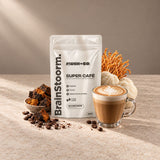
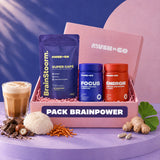
Brainstoorm
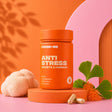
Lion's Mane, Cordyceps and Chaga at 1,000 mg each, maca and chicory: the powder dissolves in thirty seconds, in hot or cold water.
Discover Brainstoorm →
Brainstoorm Coffee
The same formula, in a properly coffee-flavoured version for anyone who doesn't want to give up the taste of their morning cup.
Discover Brainstoorm Coffee →How it is made
Instant coffee is coffee with the water taken out.
Instant coffee, or soluble coffee, starts from the same beans as ground coffee. They are roasted, ground, then brewed on an industrial scale in very hot water under pressure. The result is a highly concentrated liquid coffee, from which the water is then removed to leave only the dry extract. When you pour hot water onto the powder, you are simply reversing the process.
The industrial process follows four main stages, which explain both its strengths and its weaknesses.
Roasting and grinding
The green beans are roasted, just as for ordinary coffee. Instant coffee often uses a large share of robusta, which is richer in caffeine and cheaper than arabica.
Extraction
The ground coffee passes through columns where hot water under pressure draws out the soluble compounds. The volatile aromas are often captured separately, to be added back later.
Drying
The concentrated extract is dried, either by spraying it into hot air or by freeze-drying it. This is the stage that makes the difference in taste.
The result keeps for a long time, is ready in ten seconds and needs no machine. That is why it is still so widely drunk, particularly in the United Kingdom and Eastern Europe. But what is left of the coffee after these stages depends heavily on how it is dried.
Spray-dried or freeze-dried
Freeze-dried or spray-dried coffee: you can see the difference in the jar.
Just look at the powder to know how it was dried. A fine powder, or small clumped granules, has been spray-dried. Irregular, slightly shiny flakes have been freeze-dried.
| Spray-dried coffee | Freeze-dried coffee | |
|---|---|---|
| Process | The extract is sprayed into a tower of very hot air and the water evaporates in a few seconds | The extract is frozen, then the water is removed under vacuum, without passing through the liquid state |
| Appearance | Fine powder or granules | Flakes, irregular crystals |
| Aromas | Some are lost to the heat | Better preserved, taste closer to filter coffee |
| Cost | The cheapest to produce | More expensive, longer process |
| Health | No proven difference | No proven difference |
The drying method mainly changes the taste. Freeze-dried or spray-dried: choose the one you prefer in your cup.
If you drink instant coffee for its taste, freeze-dried is often worth the extra. If it is for convenience, spray-dried does the job. Either way, the caffeine and a good share of the coffee's antioxidants are still there.
Acrylamide
Acrylamide and instant coffee: more per gram, less per cup.
Acrylamide is a molecule that forms naturally when foods rich in starch and in an amino acid, asparagine, are heated strongly: chips, crisps, biscuits, toast, and roast coffee. The International Agency for Research on Cancer (IARC) classifies it as “probably carcinogenic” to humans, on the basis of animal studies. EFSA, the European Food Safety Authority, recommends limiting exposure to it.
Because it is highly concentrated, instant coffee contains more of it per gram than roast coffee. That is why the 2017 European regulation on acrylamide sets it a higher benchmark level: 850 µg per kilo of powder, against 400 µg for roast coffee. But you don't use the same amount for a cup.
| For one cup | Amount used | Acrylamide at the benchmark maximum |
|---|---|---|
| Filter coffee | About 10 g of ground coffee | About 4 µg |
| Instant coffee | About 2 g of powder | About 1.7 µg |
Simplified calculation, at the European benchmark level for each category. Actual levels are usually lower, and vary widely between products and roasts.
In other words, per cup, instant coffee does not expose you to more acrylamide than filter coffee, and often to less. What matters is the total amount you drink, and your diet as a whole: in adults, coffee is only one source, alongside fried foods and biscuits. A useful detail: acrylamide forms early in roasting, then part of it breaks down. Very light roasts often contain more than darker ones.
What the studies say
Instant coffee and health: four studies worth knowing.
Few studies look at instant coffee on its own. Here are the ones that really shed light on the question. Full references are at the bottom of the page.
Chieng et al., 2022 · United Kingdom and Australia
449,563 adults from the UK Biobank cohort, followed for 12.5 years on average. Drinkers of ground, decaffeinated and instant coffee all had a lower risk of cardiovascular disease and death than non-drinkers, with the lowest risk at around 2 to 3 cups a day. The association was slightly weaker for instant. Limitation: an observational study, which does not prove that coffee is the cause.
EFSA, 2015 · Europe
EFSA's scientific opinion on acrylamide concludes that current dietary exposure is a concern, because of its carcinogenic effects in animals. Coffee is among the main sources in adults. EFSA does not set a safe dose, and calls for overall exposure to be reduced.
Mojska and Gielecińska, 2013 · Poland
The researchers measured acrylamide in roast coffees, instant coffees and coffee substitutes sold in Poland. The instant coffees contained clearly more acrylamide per gram than the roast coffees, and substitutes made from cereals or chicory more still. Limitation: levels per gram of product, not per cup.
Urgert and Katan, 1997 · Netherlands
This review identified the culprits behind the rise in cholesterol linked to some coffees: two fatty molecules, cafestol and kahweol. They pass into the cup with boiled, Turkish or cafetière coffee, but hardly at all with filter or instant coffee.
In short: at equal intake, nothing suggests that instant coffee is worse for you than any other coffee. It even has an advantage over unfiltered coffees: it does not raise cholesterol.
Caffeine compared
Less caffeine than filter coffee, but not zero.
A cup of instant coffee generally contains a little less caffeine than a filter coffee, because you use little powder. But it all depends on the dose: two heaped spoonfuls double it. Here are benchmarks for a standard cup.
| Drink | Serving | Caffeine, approx. |
|---|---|---|
| Filter coffee | 200 ml | 90 mg |
| Espresso | 60 ml | 80 mg |
| Instant coffee | 1 cup, about 2 g of powder | 60 mg |
| Espresso capsule | 1 capsule | Varies, often close to an espresso |
| Decaf instant coffee | 1 cup | A few milligrams |
| Brainstoorm | 1 cup | 20 mg |
EFSA benchmarks (2015) for filter and espresso, USDA database for instant coffee. Brainstoorm: dose set by the recipe. Actual levels vary by brand and preparation.
EFSA's benchmarks are the same for all coffees: up to 400 mg of caffeine a day for a healthy adult, 200 mg in a single serving, and 200 mg a day during pregnancy. Our article on how long caffeine lasts explains what happens after the cup, and our guide to how many coffees a day helps you keep count.
Antioxidants and cholesterol
What instant coffee keeps, and what it loses.
Coffee is one of the main sources of polyphenols in adults' diets, mainly thanks to chlorogenic acids. A good share passes into the extract and survives drying. Levels vary widely from one product to another, depending on the roast and the share of robusta, but a cup of instant provides amounts of the same order as brewed coffee.
What it keeps
Caffeine, chlorogenic acids, some of the aromas. And the coffee's minerals, such as potassium, in small amounts.
What it loses
Some of the volatile aromas, especially with spray-drying. That is what sometimes gives it a flatter or more bitter taste.
What it barely has
Cafestol and kahweol, the molecules that raise cholesterol with boiled or cafetière coffee.
What it has extra
A little more acrylamide per gram, with no notable effect per cup, and sometimes added sugars and fats in the blends.
If you are watching your cholesterol, instant coffee is therefore a good choice, on a par with filter coffee. If it is your blood pressure that worries you, the issue is caffeine, whatever the coffee: our article on coffee and blood pressure sets out the facts.
The 3-in-1 trap
The problem isn't the coffee, it's what goes into it.
“3-in-1” sachets and instant cappuccinos are no longer really instant coffee. Coffee is often a minor ingredient. The rest is sugar and a “whitener”, a powder that imitates milk, made from glucose syrup and vegetable fats. The coffee itself is not to blame; it is the recipe that changes everything.
- Sugar as the first ingredient: it is common. Check the “of which sugars” line in the nutrition table, per sachet.
- Fats: palm or coconut oil, sometimes partially hydrogenated fats, which are best avoided.
- Glucose syrup: one more sugar, which provides the texture.
- Flavourings and additives: emulsifiers, thickeners, flavourings. Nothing dangerous in itself, but the sign of a highly processed product.
- The share of coffee: when it is not stated, it is rarely high.
A sachet now and then is not a problem. Three a day means several sugar cubes' worth of sugar and fats you would never have put in a black coffee. If you like it sweet, add a spoonful of sugar or a dash of milk yourself to a plain instant coffee: you will know what you are drinking.
How to choose
Instant coffee: three questions before you buy.
Not all instant coffees are equal, and the label tells you almost everything. Here is a simple checklist so you can choose without spending an hour in the aisle.
The ingredients list
A single ingredient, “instant coffee”, is ideal. If you see sugar, glucose syrup or fat, it is a blend.
The drying method
“Freeze-dried” for taste; otherwise spray-dried does the job. It is often stated on the jar.
Origin and species
“100% arabica” gives a milder taste and slightly less caffeine. Instant coffee with no such statement often contains robusta.
Caffeine
If you are sensitive, a decaf instant or a low-caffeine drink, especially in the afternoon.
Make it with water that is hot but not boiling, around 80 to 90 °C, and let it cool a little before drinking: the IARC classifies very hot drinks, above 65 °C, as probably carcinogenic to the oesophagus. For other ideas for your cup, our guide to what to drink instead of coffee covers the alternatives, chicory included.
Precautions
Instant coffee: the same precautions as for any coffee.
Instant coffee carries no risk of its own. Its precautions are those of caffeine, and those of sugary products when it comes to blends.
Cut down on instant coffee, or ask your doctor, if:
- You are pregnant or breastfeeding: EFSA recommends not exceeding 200 mg of caffeine a day, from all sources combined.
- You have high blood pressure, heart rhythm problems or palpitations after coffee.
- You suffer from reflux, gastritis or an ulcer: coffee, instant or not, can make heartburn worse.
- You have diabetes or are watching your weight: avoid 3-in-1 sachets and sweetened instant cappuccinos.
- You sleep badly: no coffee, not even instant, in the 8 to 9 hours before bedtime.
- For children and teenagers, caffeine should be kept to a strict minimum.
If coffee upsets your stomach or gut, whatever its form, read our articles on coffee on an empty stomach and on coffee and diarrhoea: when you drink your cup often matters more than the type of coffee.
Our instant powder
Why Brainstoorm is a powder you dissolve.
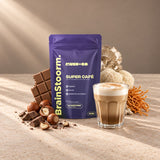
We chose the instant powder format for Brainstoorm, our mushroom coffee, for the same reasons as instant coffee: it is ready in thirty seconds, hot or cold, with no machine, at the office or on the road. But it is not a classic instant coffee. The base is roasted chicory, with Lion's Mane, Cordyceps and Chaga at 1,000 mg each, plus maca and ashwagandha, for 6,040 mg of active ingredients per cup in the coffee version.
As for caffeine, a cup contains 20 mg of NewCaff® microencapsulated caffeine, against about 60 mg for an instant coffee and 80 mg for an espresso. There are two flavours: Coffee, with Brainstoorm Coffee, and Chocolate-hazelnut. The recipe is vegan and blended in Toulouse.
“The coffee is really good, a bit different from a traditional coffee, it has a very gentle little roasted taste […]”
★★★★★ Nancy D. · 31 August 2026
“I love your coffee with that little chicory taste, I'm hooked on it now.”
★★★★★ Didier P. · 28 August 2026
Real Trustpilot reviews of Brainstoorm, quoted as written.
If you are torn between powder and capsules, our comparison mushroom coffee in capsules or powder sets out both formats. And to understand how coffee and chicory work together, read our article on coffee and chicory.
Your questions
Instant coffee: your questions.
Is instant coffee bad for you?
No. Instant coffee is real coffee, brewed and then dried, which keeps its caffeine and a good share of its antioxidants. In a large British study, its drinkers, like those of ground coffee, had a lower cardiovascular risk than non-drinkers. Sugary “3-in-1” blends, on the other hand, are best limited.
Instant coffee or filter coffee: which is healthier?
The two are broadly equal. Filter keeps more aroma, instant has slightly less caffeine per cup. Neither contains much cafestol, the molecule that raises cholesterol with unfiltered coffee.
Does instant coffee have more caffeine?
No, generally slightly less: about 60 mg per cup, against 90 mg for a 200 ml filter coffee according to EFSA's benchmarks. It all depends on how much powder you use: two heaped spoonfuls double the dose.
What is the difference between freeze-dried and spray-dried coffee?
Spray-dried coffee is dried by spraying it into hot air; freeze-dried coffee is frozen and then dried under vacuum. Freeze-dried keeps the aromas better and can be recognised by its flakes. No difference in health has been shown.
Does instant coffee contain acrylamide?
Yes, like all roast coffee, and slightly more per gram because it is concentrated. But you use about 2 g of powder per cup, against ten grams or so of ground coffee for a filter: per cup, exposure is no higher.
Does instant coffee raise cholesterol?
No. The molecules responsible, cafestol and kahweol, pass mainly into boiled, Turkish or cafetière coffee. Instant coffee, like filter coffee, contains almost none.
Is instant coffee real coffee?
Yes. It is an extract of roast coffee with the water removed. Plain instant coffee contains a single ingredient: coffee. “3-in-1” sachets and instant cappuccinos, on the other hand, add sugar, glucose syrup and fats.
How many cups of instant coffee can you drink a day?
EFSA's benchmarks apply: up to 400 mg of caffeine a day for a healthy adult, or about six cups of instant. During pregnancy, the limit is 200 mg a day, from all sources combined.
Can you make instant coffee with cold water?
Yes, most instant coffees dissolve in cold water, just a little more slowly. It makes a handy base for iced coffee or a frappé, stirred vigorously or shaken.
Sources
- Chieng D. et al. (2022). The impact of coffee subtypes on incident cardiovascular disease, arrhythmias, and mortality: long-term outcomes from the UK Biobank. European Journal of Preventive Cardiology, 29(17).
- EFSA CONTAM Panel (2015). Scientific opinion on acrylamide in food. EFSA Journal, 13(6):4104.
- Commission Regulation (EU) 2017/2158 of 20 November 2017 establishing mitigation measures and benchmark levels for the reduction of the presence of acrylamide in food. Official Journal of the European Union, L 304.
- Mojska H., Gielecińska I. (2013). Studies of acrylamide level in coffee and coffee substitutes: influence of raw material and manufacturing conditions. Roczniki Państwowego Zakładu Higieny, 64(3).
- Urgert R., Katan M. B. (1997). The cholesterol-raising factor from coffee beans. Annual Review of Nutrition, 17.
- EFSA NDA Panel (2015). Scientific opinion on the safety of caffeine. EFSA Journal, 13(5):4102.
- USDA, FoodData Central. Beverages, coffee, instant, regular, prepared with water.
- IARC (2018). Drinking coffee, mate, and very hot beverages. IARC Monographs, vol. 116.
Keep reading
Further reading.
Instant coffee is just one way of drinking coffee. Explore our other guides, or our powder Brainstoorm.

Discover our mushroom and adaptogenic plant supplements
Our vegan formulas, made in Toulouse by a French manufacturer.