









Coffee alternatives: what to replace coffee with
By Pixel Online - 11 February 2025

Alternatives
Coffee alternatives
what to replace coffee with
By the Mush n Go editorial teamUpdated 24 September 202613 min read
Alternatives
It all depends on what you want to keep. If it is the ritual, chicory and rooibos do the job, without a gram of caffeine. If it is the effect, you need caffeine: matcha, yerba mate or a low-dose mushroom coffee. And if your problem is your stomach rather than jitteriness, it is acidity you should target, not caffeine.
Why you want to stop
Four reasons, and they do not call for the same solution.
- Sleep. You sleep badly and suspect coffee. Look for a caffeine-free option, or move your last cup before 2 pm.
- Jitteriness. Palpitations, shaky hands, tension by late morning. The dose per cup needs to come down, not necessarily everything.
- The stomach. Heartburn, reflux, bloating. The culprit is often acidity as much as caffeine: a less acidic base changes more than a decaf.
- Dependence. You no longer drink for pleasure but to avoid a headache. Here the issue is gradual reduction — see our article on caffeine withdrawal.
Identifying which of the four applies to you avoids picking the wrong replacement: a herbal tea will not solve dependence, and a decaf will not fix an acidity problem.
The table of alternatives
Ten drinks and what they really contain.
| Drink | Caffeine per cup | What it brings | Who for |
|---|---|---|---|
| Espresso (30 ml) | 60 to 80 mg | The starting reference | — |
| Filter coffee (200 ml) | 80 to 120 mg | More caffeine than an espresso, contrary to popular belief | — |
| Decaf coffee | 2 to 5 mg | The taste and the ritual, without the effect — but the same acidity | Those bothered by caffeine |
| Black tea | 30 to 50 mg | A slower rise, tannins | A gentle transition |
| Green tea | 20 to 30 mg | L-theanine, which modulates the effect of caffeine | Jitteriness |
| Matcha (1 g) | 30 to 40 mg | The whole green tea leaf, so more L-theanine | Jitteriness, focus |
| Yerba mate | 30 to 60 mg | An effect reputed to be more gradual | Those who want to keep a stimulant |
| Chicory | 0 mg | The roasted, bitter taste, plus fibre (inulin) | The ritual without the caffeine |
| Rooibos, herbal teas | 0 mg | The gesture, the warmth, nothing else | The evening |
| Mushroom coffee | 20 to 90 mg depending on brand | A low-acid base and dosed extracts | Keeping the effect while dividing the dose |
Ranges vary with grind, brewing time and variety. These are orders of magnitude, not guaranteed values.
The caffeine-free options
When it is the ritual you want to keep.
Chicory
It is the closest to coffee in the mouth: roasted, bitter, dark. It brings inulin, a fibre. No caffeine, so no stimulant effect — that is the point to accept. We have given it a whole range.
Rooibos and herbal teas
No caffeine either, and a very different profile from coffee. They replace the afternoon or evening cup well, the morning one rarely.
Decaf
The taste and the gesture, without the effect. Be careful, though: it keeps the acidity of coffee. If your problem is your stomach rather than jitteriness, it will fix nothing — we cover this in is decaf coffee bad for you.
The options with caffeine
When it is the effect you want to keep.
No herbal tea reproduces the effect of coffee, for a simple reason: the effect comes from caffeine. If you want to keep it, you need a drink that contains some — the question then becomes the dose and the release speed.
Matcha is the most interesting option on this point. It brings 30 to 40 mg of caffeine per gram, but also L-theanine, an amino acid found in green tea. Haskell's trial shows that the caffeine + L-theanine combination changes the effect profile compared with caffeine alone. That is what explains matcha's reputation for "calm" alertness.
Yerba mate sits in the same zone, with a more vegetal taste profile and a less immediate preparation. Black tea, finally, is the simplest transition: two cups replace an espresso, with a slower rise.
What the studies say
Four reference points to decide.
On this subject the literature is solid: caffeine is one of the most studied substances in the world. Here is what genuinely helps you decide.
EFSA, 2015 · European Union
400 mg of caffeine a day for a healthy adult, 200 mg in a single intake, 200 mg a day during pregnancy. This is the reference in Europe. Five espressos reach the daily ceiling.
Drake et al., 2013 · United States
400 mg of caffeine taken 0, 3 or 6 hours before bed. Even six hours before, sleep time was cut by about an hour — and participants were not aware of it. This is the strongest argument for moving your last cup rather than stopping altogether.
Juliano & Griffiths, 2004 · United States
A critical review of caffeine withdrawal: headache, fatigue, reduced concentration and irritability appear 12 to 24 hours after the last intake, peak around 24 to 48 hours and last two to nine days. That is exactly what a gradual reduction avoids.
Haskell et al., 2008 · United Kingdom
The L-theanine and caffeine combination changes the effect profile on attention tasks compared with caffeine alone. This is the basis of green tea's and matcha's reputation.
In practical terms: the problem is almost never "coffee", it is the dose and the timing. References at the bottom of the page.
Mushroom coffee
Dividing the dose without giving up the cup.
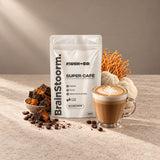
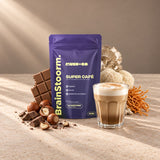
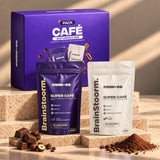
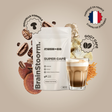
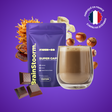
This is the least known compromise: keep the ritual, keep a little caffeine, but divide the load by four. A cup of Brainstoorm brings 20 mg of microencapsulated caffeine against roughly 80 mg for an espresso, in a far less acidic base — chicory, cocoa, maca — with 1,000 mg of lion's mane, 1,000 mg of cordyceps and 1,000 mg of chaga.
It is not the right answer if you want the punch of a double espresso before a meeting: that is not what it is for. It is the right answer if you drink four cups a day and want to replace two of them without changing anything else about your mornings.
We have set out how it works, the precautions and the selection criteria in our guide to mushroom coffee.
The three-week transition
Stopping overnight is the method that fails.
Week 1 — count
Change nothing, just count. Note every cup, tea and soft drink included. Most people underestimate their real dose by a third.
Week 2 — replace the last one
Replace the latest cup of the day, the one that weighs on sleep. Chicory, rooibos or decaf: at that hour the effect is no longer what you are after.
Week 3 — replace the morning one
This is the hardest, because it is the ritual. A mushroom coffee or a matcha keeps the gesture while dividing the dose. Keep one coffee if you are attached to it: the goal is total load, not abstinence.
This progression avoids the headaches described by Juliano and Griffiths. If you get them anyway, the reduction is too fast: go back up one step for three days.
A typical day
Four moments, four drinks.
On waking
A large glass of water. Coffee on an empty stomach is not dangerous, but it is less well tolerated by sensitive stomachs: see coffee on an empty stomach.
At breakfast
The cup that counts: matcha, mushroom coffee, or your usual coffee if you keep only one in the day.
Around 2 pm
The last caffeine source of the day. Beyond that, Drake's trial applies. It is also the time of the 4 pm slump, which a third coffee never solves for long.
Afternoon and evening
Chicory, rooibos, herbal tea. The gesture without the caffeine — and it is often the gesture that was missing.
The false friends
Three replacements that replace nothing.
- Energy drinks. They often contain as much caffeine as a filter coffee, plus sugar. That is not an alternative, it is the same thing but worse.
- Decaf for a stomach problem. It removes the caffeine, not the acidity. If the heartburn persists, the cause was elsewhere.
- Morning "detox" juices. Fruit juice brings fast sugar: the rise is short and the fall is real. Nothing to do with the effect you are looking for.
Precautions
Two situations that call for advice.
Ask your doctor if:
- You are pregnant or breastfeeding: EFSA sets 200 mg of caffeine a day during pregnancy, and mushrooms and adaptogenic plants are not advised.
- You have uncontrolled high blood pressure, a heart rhythm disorder or an anxiety disorder.
- You take an anticoagulant, an antidiabetic or an immunosuppressant and are considering a mushroom supplement.
- Your headaches persist beyond ten days after cutting caffeine: that is no longer withdrawal.
Our answer
Two ways to replace it, depending on what you want.

Brainstoorm
20 mg of microencapsulated caffeine instead of 80, in a low-acid chicory and cocoa base, with 6,040 mg of actives per cup.
Discover Brainstoorm →
Energy
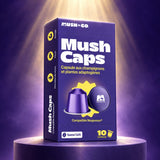
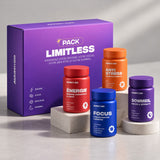
Cordyceps, maca, ginger and vitamin C in capsules, without a drop of caffeine. For those who want to stop entirely.
Discover Energy →« I was sceptical and in the end I am won over. Less caffeine and yet I have energy and a steady mood »
★★★★★ Maïté S. · 4 April 2026
« my stomach hurt with normal coffee, now the bloating is gone and I feel great »
★★★★★ Sonia L. · 27 August 2026
Real Trustpilot reviews of Brainstoorm, translated from French and left unedited.
Your questions
What you ask us about coffee alternatives.
What can replace coffee in the morning?
If you want to keep an effect: matcha (30 to 40 mg of caffeine), yerba mate, or a low-dose mushroom coffee. If you only want the ritual: chicory, which best reproduces the roasted taste, or decaf. The choice depends on what bothers you about coffee: the caffeine, the acidity or the dependence.
Which drink gives as much energy as coffee?
None, if it contains no caffeine: caffeine is what produces the effect. The closest are matcha and yerba mate. A mushroom coffee keeps a small caffeine dose in a less acidic base, which makes it a middle ground.
Is decaf a good alternative?
For a caffeine problem, yes: it contains only 2 to 5 mg per cup. For a stomach problem, no: it keeps the acidity of coffee, which is often the real cause of heartburn.
How long do the headaches last when you stop?
They appear 12 to 24 hours after the last intake, peak around 24 to 48 hours and last two to nine days according to Juliano and Griffiths' review. A gradual reduction over three weeks avoids them in most cases.
Does chicory contain caffeine?
No, none at all. It is a roasted root, not a coffee bean. It does bring inulin, a fibre, which can cause bloating in sensitive people in the first few days.
Does filter coffee contain less caffeine than an espresso?
No, it is the opposite: a 30 ml espresso brings 60 to 80 mg, a 200 ml cup of filter coffee brings 80 to 120. The concentration is higher in the espresso, but the volume is far smaller.
Until what time can you drink coffee?
2 pm is a cautious reference. Drake's trial shows that a dose taken six hours before bed still cuts sleep time by about an hour, without you noticing.
Can you mix classic coffee and mushroom coffee?
Yes, and it is even a good way to transition: start by replacing every other cup, while you get used to the taste and the lower dose.
Sources
The references cited in this article.
- EFSA NDA Panel (2015). Scientific Opinion on the safety of caffeine. EFSA Journal, 13(5):4102.
- Drake C. et al. (2013). Caffeine effects on sleep taken 0, 3, or 6 hours before going to bed. Journal of Clinical Sleep Medicine, 9(11), 1195-1200.
- Juliano L.M., Griffiths R.R. (2004). A critical review of caffeine withdrawal: empirical validation of symptoms and signs, incidence, severity, and associated features. Psychopharmacology, 176(1), 1-29.
- Haskell C.F. et al. (2008). The effects of L-theanine, caffeine and their combination on cognition and mood. Biological Psychology, 77(2), 113-122.
To go further
What to read next.

Discover our mushroom and adaptogenic plant supplements
Our vegan formulas, made in Toulouse by a French manufacturer.