


















Chicory Root Benefits, Side Effects and Dangers
By the Mush n Go editorial team - 05 November 2026
By the Mush n Go editorial teamPublished 5 November 202616 min read
Chicory root
Chicory root benefits come down mainly to two things: it is naturally caffeine-free, and the root is rich in inulin, a fibre that feeds certain gut bacteria. Its downsides are rare and dose-related: bloating above about ten grams of inulin a day, and allergy in people sensitive to the daisy family (Asteraceae). The acrylamide in instant chicory is worth knowing about, without panicking.
The complete guide: mushroom coffee, benefits and side effects →

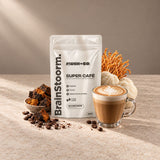
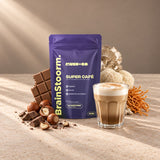
Brainstoorm
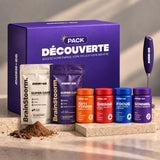
Our mushroom coffee: roasted chicory and organic cacao, Lion's Mane, Cordyceps and Chaga at 1,000 mg each, and just 20 mg of caffeine per cup.
Discover Brainstoorm →
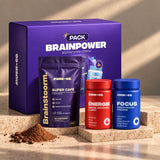
Energy
Cordyceps, maca, ginger and vitamin C in capsules, without a drop of caffeine. For those who want to give it up completely.
Discover Energy →What are we talking about
One plant, four ways to consume it.
Chicory, Cichorium intybus, is a plant in the Asteraceae (daisy) family, the same as dandelion, artichoke and chamomile. It grows wild along roadsides, with its pale blue flowers. But when people talk about “chicory” in France, they mostly mean the breakfast drink, made from its root.
The root is grown mainly in the north of France. It is washed, cut into chips, dried and then roasted, like a coffee bean. Roasting gives it its brown colour, its bitterness and its caramel notes. Chicory as a coffee substitute took hold in France in the early nineteenth century, during the Continental Blockade, when coffee was scarce. It has hardly left French cupboards since.
The roasted root
As granules or ground, to brew or to mix with coffee in the coffee maker. This is the form closest to the plant.
Instant chicory
An extract of roasted root, dried into a powder or granules. It dissolves in hot water or milk, like instant coffee.
Liquid chicory
A concentrated extract, sold in a bottle, measured by the spoonful into hot water or milk, or used in baking.
The salad
Belgian endive (chicon), radicchio and treviso are varieties of the same species. Frisée and escarole are cousins, Cichorium endivia.
This article is mainly about chicory as a drink, made from the root. The leaves and salads have a completely different profile: lots of water, a little fibre, some vitamins and very little inulin. You can eat them without a second thought.
Inulin
Chicory inulin, a well-studied fibre.
Chicory root stores its energy as inulin, a chain of fructose molecules that our small intestine cannot digest. In the fresh root, inulin makes up around 15 to 20% of the weight. In fact, chicory is where industry extracts most of the inulin used in foods and supplements.
Because it reaches the colon intact, inulin is fermented there by bacteria. Several trials have measured a rise in bifidobacteria in the stools of people who consume it every day. That is why it is classed among the so-called prebiotic fibres. It is also what explains its drawbacks: fermentation produces gas.
One important point that is often forgotten: roasting breaks down a good part of the inulin. So a cup of chicory drink is nothing like a fibre course. The amounts studied in trials, around ten grams a day, come from inulin powders, not from two spoonfuls of instant chicory.
The European Union has authorised a specific claim for native chicory inulin: chicory inulin contributes to normal bowel function by increasing stool frequency, provided at least 12 g is consumed per day. That benchmark shows the order of magnitude needed.
The real benefits
Chicory root benefits: what really holds up.
You read a lot about chicory: that it “detoxes the liver”, that it “helps you lose weight”, that it “protects against diabetes”. Most of these promises come from animal studies, or from concentrated extracts that have nothing to do with a cup. Here is what stands up when you stay honest.
- Zero caffeine. This is its strongest asset. A hot drink with a roasted taste that you can drink in the evening, when pregnant or when you are sensitive to caffeine.
- A natural source of inulin. Especially in lightly roasted root and extracted inulin. Trials show more regular stools from 12 g a day.
- A ritual that replaces coffee. Same gesture, same hot cup, same bitterness. For cutting down on caffeine, it is one of the easiest transitions.
- Few calories. A cup of instant chicory made with water provides very few. After that, it all depends on the milk and sugar you add.
- A low-acid drink. Many people who struggle to digest coffee tolerate chicory better. It is not a rule, but it is frequent feedback.
Other leads, such as an effect on blood sugar, cholesterol or fat digestion, have been the subject of small trials or laboratory work. They are interesting, but too fragile to be a reason to drink chicory. If your stomach is your main issue with coffee, our article on coffee and bloating explains the mechanisms.
What the studies say
Chicory inulin: four studies to know.
Research on chicory focuses mainly on its inulin, at doses far higher than those in a cup. Here are four solid references, with their exact conditions. Full references are at the bottom of the page.
Kleessen et al., 1997 · Germany
Constipated elderly people were given inulin, 20 g a day and then 40 g, for just under three weeks, compared with lactose. Bifidobacteria in the stools increased and bowel transit improved in the inulin group. Limitations: small sample, very high doses, a specific population.
Bonnema et al., 2010 · United States
This tolerance trial gave healthy adults 5 or 10 g a day of different chicory inulins. Native inulin was well tolerated up to 10 g; the shorter-chain forms caused more wind at the same dose. Limitation: a small trial, focused on tolerance rather than benefits.
Micka et al., 2017 · Germany
44 healthy but constipated adults took 12 g of native chicory inulin a day or a placebo, for four weeks. In the inulin group, stool frequency rose from about three to four a week, with softer stools. Limitation: the trial was funded by an inulin manufacturer.
EFSA, 2015 · Europe
In its opinion on native chicory inulin, the European authority considered the link between 12 g a day and increased stool frequency to be established. That is the basis on which the claim was authorised in the European Union. It concerns inulin only, not roasted chicory in general.
What this research does not say: that a cup of instant chicory would have the same effect. To reach 12 g of inulin, you would need an unrealistic amount of the drink, especially as roasting destroys some of it.
Wind and bloating
The main downside of chicory: a bloated stomach.
If chicory has one real drawback, this is it. Inulin ferments in the colon and produces gas. At low doses, most people feel nothing. At high doses, or in sensitive people, you see bloating, gurgling and sometimes looser stools.
People with irritable bowel syndrome are the most affected. Inulin is one of the fructans, a family of sugars that the low-FODMAP diet, often suggested for this syndrome, specifically limits. If you have been advised to follow this diet, large amounts of chicory are not a good idea. Coffee can also upset the stomach, but for other reasons: our article on coffee and diarrhoea explains them.
Start small
One teaspoon of instant chicory per cup, one cup a day, for a week.
Observe
No discomfort? Move up to two cups. Wind? Stay at the same level for a few days, while your gut adjusts.
Spread it out
Two light cups during the day are better than one large, very strong mug all at once. The same goes for inulin powders.
To put the amounts in perspective: a teaspoon of instant chicory weighs a few grams. Even if this powder were pure fibre, which it is not, two cups would stay below the 10 g a day that trials find well tolerated. The real excesses tend to come from inulin supplements and fibre-enriched foods, which add up without you noticing.
The dangers examined
Instant chicory dangers: fact and fiction.
Searches for “chicory dangers” and “instant chicory dangers” are among the most frequent on the subject. They mix real but small risks with rumours. Here is the overall picture, before the details.
| What you hear | What we know | What you can do |
|---|---|---|
| “Instant chicory causes cancer” | It contains acrylamide, like coffee, chips or biscuits. A cup provides little. | Stick to a few cups a day, vary your drinks |
| “Chicory damages the kidneys” | No data show this at the amounts in a drink. | If you have kidney disease, ask your nephrologist |
| “It gives you stomach ache” | True at high doses of inulin, especially with irritable bowel. | Increase gradually, spread it out |
| “It is dangerous when pregnant” | No risk data for the caffeine-free drink. Concentrated extracts are a different matter. | Drink yes, supplements not without advice |
| “You can be allergic to it” | True, but rare: allergy to the daisy family (Asteraceae). | Avoid if you react to ragweed or mugwort |
Summary based on EFSA opinions and the literature on inulin. It does not replace your doctor's advice if you have a chronic condition.
All in all, chicory is a very safe drink for the vast majority of adults. Its drawbacks are those of a fibre and a roasted food, nothing more. Still, let us look closely at the two topics that worry people most: acrylamide and the kidneys.
Acrylamide and cancer
Chicory and cancer: let's talk about acrylamide.
Acrylamide is a substance that forms naturally when foods rich in starch or sugars are heated strongly in the presence of an amino acid, asparagine. It is found in chips, crisps, toast, biscuits and roasted coffee. Chicory root, which is rich in sugars, forms a lot of it during roasting.
The International Agency for Research on Cancer classifies acrylamide as “probably carcinogenic to humans”, based on animal studies. In 2015, EFSA concluded that current dietary exposure was a concern to monitor, for the diet as a whole and not for any one product. European regulation has since set benchmark levels that manufacturers must aim for, higher for chicory than for coffee, because it forms more.
What is reassuring
A cup takes only a few grams of powder. The acrylamide is highly diluted in the mug. The main sources in our diet remain fried potato products and bakery products.
What calls for moderation
Instant chicory and very dark-roasted products contain the most. Drinking a litre of chicory a day would not carry the same weight as two cups.
There is no study showing that chicory drinkers get more cancers. Nor the reverse: no serious data allow us to say that chicory “protects” against cancer, despite what you sometimes read. The sensible approach is the same as for coffee: a few cups a day, a varied diet, no burnt toast or chips. To compare with coffee, our article on how many cups of coffee a day gives the EFSA benchmarks.
Kidneys, liver and stones
Chicory and the kidneys: no proven risk.
The question of “chicory and the kidneys” comes up often. Chicory has long been used traditionally as a “purifying”, mildly diuretic plant. Hence the idea, one way or the other, that it acts on the kidneys. In practice, no study shows any harmful effect of the drink on healthy kidneys.
You sometimes read that chicory is rich in oxalates, the compounds involved in some kidney stones. The foods richest in oxalates are mainly green leaves such as spinach or chard, cocoa and rhubarb. Roasted chicory root is not considered a major source, and we have found no study linking its consumption to stones.
- Healthy kidneys: no particular precautions at the amounts in a drink.
- Kidney failure: instant drinks, chicory and coffee alike, provide potassium. If you follow a controlled diet, ask your nephrologist.
- Gallstones: in Germany, Commission E advises against chicory preparations in case of gallstones without medical advice. A reasonable precaution.
- Liver: traditional use makes it a bitter digestive plant. Promises of a “liver detox” are not based on human trials.
Who should be careful
Pregnancy, allergy, gut: the real precautions.
Chicory is one of the easiest hot drinks to recommend, precisely because it has no caffeine. Still, there are a few situations where you should ease off or ask for advice.
It is best to limit chicory, or ask your doctor, if:
- You are allergic to plants in the daisy family (Asteraceae): ragweed, mugwort, chamomile, dandelion, arnica. Cross-reactions are possible.
- You have irritable bowel syndrome, or follow a low-FODMAP diet: inulin is one of the restricted fructans.
- You have gallstones: ask before consuming concentrated preparations.
- You are pregnant or breastfeeding: the caffeine-free drink poses no known problem at usual amounts. However, avoid concentrated root supplements without advice.
- You have kidney disease with a potassium-controlled diet: talk to your nephrologist.
For children, chicory with milk at breakfast is a family tradition in many French regions, and a good alternative to coffee for teenagers. Just stick to moderate amounts, for the sake of their stomachs.
The caffeine-free alternative
Who chicory can really replace coffee for.
Of all the drinks that claim to replace coffee, chicory is probably the most credible. It has the bitterness, the colour, the roasted character. You can drink it black, with milk, as a latte. You make it like coffee, in a coffee maker or as instant. And it contains no caffeine at all.
| Drink | Caffeine per cup, approx. | Taste |
|---|---|---|
| Espresso | 80 mg | Coffee |
| Black tea | 50 mg | Tea, tannic |
| Brainstoorm | 20 mg | Roasted, chicory and cacao |
| Decaf coffee | A few mg | Coffee |
| Chicory root | 0 mg | Roasted, bitter, caramel |
EFSA benchmarks for espresso and black tea. The Brainstoorm dose is set by the recipe. Contents vary with preparation.
Chicory is particularly useful if you are pregnant, if you sleep badly, if coffee makes you jittery or if you are looking for a hot drink for the evening. It is also valuable for cutting down coffee gradually, by first mixing it half and half with chicory. If you stop caffeine abruptly, expect a few days of headaches: our article on caffeine withdrawal explains why and how long it lasts.
When it comes to taste, let's be honest: chicory is not coffee. It is rounder, less acidic, more caramelised. Some people love it straight away, others need a few days. Our guide coffee alternatives compares the other options if it does not suit you.
Chicory and mushrooms
Why our coffee starts from a chicory base.
When we designed Brainstoorm, we were looking for a drink that keeps the taste and ritual of coffee, with much less caffeine. Roasted chicory was the obvious base: it brings bitterness and roundness, with no caffeine. Organic cacao completes the profile.
To this base, we add three mushrooms, Lion's Mane, Cordyceps and Chaga, at 1,000 mg each per cup, from the fruiting body, plus maca and ashwagandha. In total, 6,040 mg of active ingredients per cup, and 20 mg of NewCaff® microencapsulated caffeine, compared with around 80 mg for an espresso. It comes in Coffee and Chocolate hazelnut flavours, and it is vegan. To discover other drinks of this kind, see our mushroom coffee collection.
“I love your coffee with that little hint of chicory, I'm hooked now.”
★★★★★ Didier P. · 28 August 2026
“The coffee is really good, a bit different from traditional coffee, it has a very mild little roasted taste […]”
★★★★★ Nancy D. · 31 August 2026
Trustpilot reviews published about Brainstoorm, quoted as written.
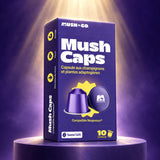
If you prefer pure chicory, our chicory page brings together what you need to know about the plant. And if you use a capsule machine, our article on Nespresso®-compatible chicory capsules explains how to choose the right one.
Your questions
Chicory: your questions.
What are the benefits of chicory root?
Its main asset is that it is a roasted drink with no caffeine. Its root also contains inulin, a fibre that feeds certain bacteria in the colon: from 12 g of native inulin a day, chicory inulin contributes to normal bowel function by increasing stool frequency. A cup of chicory drink, however, provides much less.
Is instant chicory dangerous?
No, for the vast majority of adults. Like coffee and toasted foods, it contains acrylamide formed during roasting, but a cup provides little. A few cups a day, as part of a varied diet, remain a reasonable intake.
What are the side effects of chicory?
The most common are digestive: wind and bloating at high doses of inulin, especially in people with irritable bowel. More rarely, an allergy in people sensitive to the daisy family (Asteraceae). Concentrated preparations are not advised in case of gallstones without medical advice.
Is chicory bad for your kidneys?
No study shows any harmful effect of chicory drink on healthy kidneys. In case of kidney failure with a potassium-controlled diet, instant drinks, chicory and coffee alike, should be discussed with your nephrologist.
Does chicory contain caffeine?
No. Chicory root is naturally caffeine-free. Only chicory and coffee blends contain any, in proportion to the share of coffee. Check the ingredients on the label.
Can you drink chicory when pregnant?
The caffeine-free drink poses no known problem at usual amounts and often replaces coffee during pregnancy. Concentrated chicory root supplements, however, should be avoided without advice from your doctor or midwife.
Does chicory give you wind?
It can, because of its inulin, which ferments in the colon. At one or two cups, most people feel nothing. If you are sensitive, start with one light cup a day and increase gradually.
How many cups of chicory a day?
There is no official limit. Two to three cups a day is a common and well-tolerated intake. Beyond that, keep an eye on your stomach, and bear in mind that the acrylamide adds to that from the rest of your diet.
Chicory or coffee: which is better for your health?
They do not play the same role. Coffee provides caffeine and polyphenols, well studied at moderate doses. Chicory offers a similar taste with no caffeine. For sensitive people, pregnant women or those who sleep badly, chicory is often the better choice in the afternoon and evening.
Sources
- Kleessen B., Sykura B., Zunft H. J., Blaut M. (1997). Effects of inulin and lactose on fecal microflora, microbial activity, and bowel habit in elderly constipated persons. American Journal of Clinical Nutrition, 65(5).
- Bonnema A. L., Kolberg L. W., Thomas W., Slavin J. L. (2010). Gastrointestinal tolerance of chicory inulin products. Journal of the American Dietetic Association, 110(6).
- Micka A., Siepelmeyer A., Holz A., Theis S., Schön C. (2017). Effect of consumption of chicory inulin on bowel function in healthy subjects with constipation: a randomized, double-blind, placebo-controlled trial. International Journal of Food Sciences and Nutrition, 68(1).
- EFSA NDA Panel (2015). Scientific opinion on the substantiation of a health claim related to native chicory inulin and maintenance of normal defecation by increasing stool frequency. EFSA Journal, 13(1):3951.
- Commission Regulation (EU) 2015/2314 authorising a health claim made on native chicory inulin.
- EFSA CONTAM Panel (2015). Scientific opinion on acrylamide in food. EFSA Journal, 13(6):4104.
- Commission Regulation (EU) 2017/2158 establishing mitigation measures and benchmark levels for the reduction of the presence of acrylamide in food.
- International Agency for Research on Cancer (1994). Acrylamide. IARC Monographs, vol. 60.
- EFSA NDA Panel (2015). Scientific opinion on the safety of caffeine. EFSA Journal, 13(5):4102.
Keep reading
Further reading.
Chicory is a gateway to gentler caffeine habits. Explore our other guides, or our mushroom coffee Brainstoorm.

Discover our mushroom and adaptogenic plant supplements
Our vegan formulas, made in Toulouse by a French manufacturer.