






Is decaf coffee bad for you? Dangers and benefits
By the Mush n Go editorial team - 21 September 2026

Coffee
Is decaf coffee bad for you? Dangers and benefits
By the Mush n Go editorial teamPublished 21 September 202615 min read
Coffee and caffeine
Decaffeinated coffee is not dangerous for a healthy adult. It keeps most of coffee's polyphenols, with only a few milligrams of caffeine per cup. The real question is the process: some decafs are treated with dichloromethane, a solvent regulated in Europe. Water and CO2 processes avoid it.

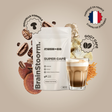
Brainstoorm
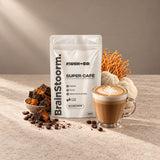
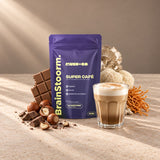
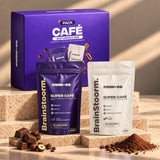
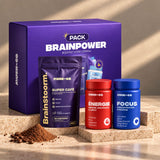
Our mushroom coffee: a roasted chicory base, 6,040 mg of actives per cup and only 20 mg of NewCaff® caffeine. No decaffeination, and therefore no solvent.
Discover Brainstoorm →
Energy
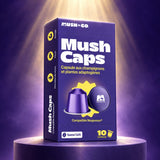
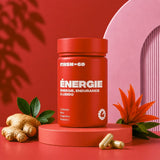
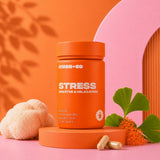
Cordyceps, maca, ginger and vitamin C in capsules, caffeine-free. Vitamin C contributes to the reduction of tiredness. A 30-day course.
Discover Energy →What decaf is
Real coffee, without (almost) its caffeine.
Decaffeinated coffee is coffee. The same beans, the same varieties, the same roast. The only difference happens before roasting: practically all of the caffeine is removed from the green bean, which is then dried and roasted like any other.
The phrase "caffeine-free" is therefore misleading. A decaf always contains some caffeine, in a low but real amount. And that is exactly what appeals to the people who look for it: keeping the taste and the ritual of coffee, without the effects of a classic cup on sleep, the heart or the nerves.
An arabica bean naturally contains around 1.2% caffeine, and a robusta almost twice that. Getting below 0.1% means removing close to 97% of the original caffeine, and more still in a robusta.
How it is made
Four ways to take out the caffeine.
Caffeine is soluble in water and in certain solvents. Every process rests on the same principle: swell the green beans with steam or in water, then draw the caffeine out of the bean without taking the rest with it. The difference lies in what does that work.
The first industrial process, developed by Ludwig Roselius around 1903, used benzene, a solvent long since abandoned for its toxicity. Four families of process coexist today.
| Process | What removes the caffeine | What to know |
|---|---|---|
| Direct solvent | Dichloromethane or ethyl acetate, in contact with the moistened beans | The most widespread and the cheapest. The solvent largely evaporates during drying and roasting. |
| Indirect solvent | Water, then a solvent that treats that water, away from the beans | The beans never touch the solvent directly. The water, now caffeine-free, returns to the beans with its aromas. |
| Water process | Water and an activated carbon filter | No chemical solvent. Developed in Switzerland and industrialised from the 1980s. |
| Supercritical CO2 | Carbon dioxide under high pressure | No chemical solvent, highly selective for caffeine. Developed in Germany in the 1970s. |
Ethyl acetate deserves a note. It is sometimes presented as a "natural" process, because the molecule occurs in fruit and can be obtained from sugar cane. But it is still a solvent. A coffee labelled "naturally decaffeinated" is not necessarily a solvent-free decaf.
Each process also has an effect on flavour: some of the aroma precursors leave with the caffeine, hence the decaf often judged flatter. Water and CO2 processes have a reputation for preserving flavour better, but the quality of the starting bean and the freshness of the roast count at least as much.
The solvent question
Dichloromethane: what is actually known.
When someone searches "decaf coffee dangers" or "is decaf bad for you", this is almost always what they mean. Dichloromethane, also called methylene chloride, is an industrial solvent that is very effective at extracting caffeine. It is also used in paint strippers and in chemistry. To read on, discover our mushroom drink recipes.
In 2014, the International Agency for Research on Cancer (IARC) classified it in group 2A, "probably carcinogenic to humans". That classification concerns the hazard of the molecule, studied above all in workers inhaling it at high doses. On its own it says nothing about the risk linked to traces in a cup of coffee.
And traces are what these are. Dichloromethane boils at around 40 °C, and roasting exceeds 200 °C: the bulk of it evaporates long before the coffee reaches your kitchen. To regulate the rest, European directive 2009/32/EC on extraction solvents limits residues to 2 mg per kilo of roasted coffee.
What to remember about solvents
- Dichloromethane is authorised for decaffeinating coffee in Europe, with a residue limit of 2 mg/kg in roasted coffee.
- Its classification as "probably carcinogenic" concerns mainly occupational exposure by inhalation, at doses beyond comparison with a cup of coffee.
- To date no study has shown a risk in decaf drinkers linked to those residues. The precautionary principle remains a legitimate personal choice.
- If you prefer to avoid it, simply choose a water or CO2 process, stated on the packaging.
Is decaf coffee bad for you?
What the large studies say about decaffeinated coffee.
The best way to judge whether decaf coffee is dangerous is to look at what happens to people who drink it for years. Several large cohorts have specifically separated classic coffee drinkers from decaf drinkers. Here are the most solid pieces of work.
Ding et al., 2014 · meta-analysis
28 prospective studies, more than a million participants. The higher the coffee intake, the lower the risk of type 2 diabetes, and that association also appeared with decaffeinated coffee.
Loftfield et al., 2018 · UK Biobank
Nearly 500,000 British adults followed for about ten years. Drinking coffee was associated with slightly lower mortality, decaffeinated coffee included, regardless of how fast each person clears caffeine.
McCusker et al., 2006 · laboratory analysis
Decafs bought in shops and restaurants, analysed one by one. Most contained caffeine, up to about 14 mg for a large cup. Not much, but not zero.
These are observational studies: they show associations, not causes. But they agree on one point. Nothing in that data flags decaffeinated coffee as dangerous for the general population. The precautions concern specific cases, which we set out below. Full references are at the end of the article.
The benefits of decaf
The benefits of decaffeinated coffee, without overstating them.
Coffee is not just caffeine. It contains hundreds of compounds, among them polyphenols called chlorogenic acids, which are among the most consumed antioxidants in the European diet. Decaffeination takes some of them away, but decaf remains a notable source.
Its most concrete benefit is simple: keeping the coffee ritual, without the effects of caffeine. Here is what changes.
| Criterion | Classic coffee | Decaffeinated coffee |
|---|---|---|
| Caffeine per cup | About 80 to 90 mg | A few milligrams |
| Polyphenols | Yes | Yes, slightly fewer |
| Sleep | Can disturb it, even taken six hours before | Far less effect, except in the most sensitive |
| Jitteriness, palpitations | Possible at high doses | Rare |
| Acidity, stomach | Can be uncomfortable | Can also be uncomfortable |
| Taste | Full | Often a little flatter |
Decaf is not a remedy. It is a coffee with less caffeine, which keeps coffee's qualities and coffee's limits.
The caffeine left behind
How much caffeine is in a decaf coffee?
The regulation sets a ceiling on the bean, not on the cup. In practice everything depends on the starting bean, the process, the amount of coffee used and the volume of the cup.
Published analyses give an order of magnitude: from 0 to about fifteen milligrams per cup, with most decafs at the low end of that range. To place those figures, here are some reference points taken from the values published by the European Food Safety Authority (EFSA).
| Drink | Caffeine | Serving |
|---|---|---|
| Decaffeinated coffee | 0 to about 14 mg | One cup |
| Brainstoorm | 20 mg | One cup (6 g serving) |
| Milk chocolate | 10 mg | 50 g |
| Tea | 50 mg | 220 ml |
| Espresso | 80 mg | 60 ml |
| Filter coffee | 90 mg | 200 ml |
Put another way, four or five decafs across the day still come in well below a single espresso. For the vast majority of people, the residual caffeine in decaf poses no problem at all.
Pregnancy, sleep, blood pressure…
Decaf according to your situation.
Pregnant, in the evening, with high blood pressure or a delicate stomach: here are the answers, situation by situation.
During pregnancy
EFSA recommends not exceeding 200 mg of caffeine a day during pregnancy and breastfeeding. Decaf lets you stay well below that, even with several cups. Discuss it with your midwife or doctor.
In the evening, for sleep
A decaf after dinner usually has no noticeable effect on sleep. In very sensitive people, those few milligrams can be enough: in that case, a drink with no caffeine at all is better in the evening.
Blood pressure and the heart
Caffeine can temporarily raise blood pressure in some people. Decaf contains far too little for that. If you are being monitored for hypertension, your doctor's opinion is the reference.
Stomach and reflux
Decaf is still coffee: it is acidic and stimulates gastric secretion. If it gives you heartburn or bloating, caffeine is not the only culprit.
Iron absorption
Coffee's polyphenols, decaf included, reduce the absorption of plant-source iron. If you are deficient, drink it away from meals, an hour before or after.
Cholesterol
Unfiltered coffee (French press, Turkish) brings compounds, cafestol and kahweol, that can raise LDL cholesterol. Caffeine has nothing to do with it: an unfiltered decaf is affected too.
One received idea worth dropping: decaf does not make you gain weight. A cup of black coffee, decaf or not, brings barely a few calories. It is the sugar, the milk and the syrups that make the difference.
Choosing a solvent-free decaf
Three steps to choose without going wrong.
There is no ideal brand of solvent-free decaf coffee: what counts is the process, and it should be written on the packet. Here is how to find it on the shelf or online, in under a minute.
Read the process
Look for "water decaffeinated", "Swiss Water process" or "CO2 process". With no mention, a solvent is likely.
Be wary of vagueness
"Naturally decaffeinated" can mean ethyl acetate, which is still a solvent. Only water and CO2 are free of them.
Look at the bean
A quality arabica, recently roasted, makes a far better decaf. Whole beans, or grinding just before brewing, preserve the aromas better.
For decaf coffee pods, the same rule: the process should appear on the box or the product page. And an organic label does not, on its own, guarantee the absence of solvent.
- The decaffeination process is clearly stated.
- It is water or CO2, if you want to avoid any solvent.
- The origin and variety of the coffee are specified.
- The roast date is recent, or the packet is well sealed.
- You like the taste: a decaf you do not enjoy will not last long.
The alternatives to decaf
Less caffeine, without decaffeination.
Some drinks never contained caffeine, and others carry a small dose chosen on purpose. They sidestep the process question, because nothing is removed.
Chicory. The roasted root of Cichorium intybus naturally contains no caffeine. Popularised in France in the early nineteenth century, when coffee was scarce, it has a round, slightly bitter taste reminiscent of coffee. It also brings inulin, a fibre. Everything about chicory and its uses.
Mushroom coffee. Brainstoorm starts from a roasted chicory base, to which we add lion's mane, cordyceps and chaga at 1,000 mg each, 3,000 mg of maca and ashwagandha — 6,040 mg of actives per cup. The caffeine is not removed: it is added, 20 mg per cup, in microencapsulated NewCaff® form. If you are new to the idea, read first what a mushroom coffee is.
Zero caffeine, in capsules. For anyone who wants to cut caffeine out completely, Energy brings together cordyceps, maca, ginger and vitamin C, caffeine-free. Vitamin C contributes to the reduction of tiredness.
« I was sceptical and I'm won over. Less caffeine and I still have energy and a steady mood »
★★★★★Maïté S., 4 April 2026 · Brainstoorm
« ordinary coffee gave me stomach ache, now the bloating is gone and I feel good »
★★★★★Sonia L., 27 August 2026 · Brainstoorm
Everyone is different: these reviews describe our customers' experience, translated from French without editing, not a guaranteed result. For a full survey of the options, see our guide on what to replace coffee with.
Decaf or mushroom coffee
Two ways to ease off the caffeine.
The first takes the caffeine out of a coffee. The second starts from another base and adds actives to it. Here is how they compare.
| Criterion | Decaffeinated coffee | Brainstoorm |
|---|---|---|
| Base | Decaffeinated coffee beans | Roasted chicory |
| Caffeine | 0 to about 14 mg, variable | 20 mg, dosed identically in every cup |
| Solvent | Depends on the process | None, nothing is decaffeinated |
| Added actives | None | Lion's mane, cordyceps, chaga, maca, ashwagandha: 6,040 mg |
| Taste | Coffee, often flatter | Coffee taste, with no mushroom taste at all |
| Preparation | Machine, filter, French press | A 6 g serving, hot or cold, with water or milk |
Brainstoorm is formulated in Toulouse. One-off purchase or monthly subscription (−30%), with 60 days' money-back satisfaction. The mushrooms are presented one by one in our guide to adaptogenic mushrooms and plants.
Should you switch to decaf?
Decaffeinated coffee is for you if…
There is no obligation to switch to decaf: for most adults, three or four classic coffees a day stay within EFSA's reference points. Decaf becomes interesting when caffeine starts costing you more than it gives you.
- You sleep worse on the days you have an afternoon coffee.
- You feel jittery, get palpitations or clammy hands after two cups.
- You are pregnant or breastfeeding and want to keep your cup without counting.
- You like the taste and the ritual of coffee, not necessarily its effect.
- You want to cut caffeine gradually, without stopping everything at once.
If it is the last point that rings true, a half coffee, half decaf blend for a few weeks is a good way to cut down without the headaches of withdrawal. And if you are wondering what a mushroom coffee is really worth in that role, we have written our honest opinion on its benefits and its limits.
Your questions
Everything you ask us about decaffeinated coffee.
Is decaf coffee bad for your health?
No, not for a healthy adult. The large observational studies flag no particular danger linked to decaffeinated coffee. The one debated point is the solvent traces from certain processes, regulated in Europe at 2 mg/kg of roasted coffee. Water and CO2 processes avoid them.
Does decaf coffee contain caffeine?
Yes, a little. The roasted bean may contain up to 0.1%, and published analyses have measured from 0 to about 14 mg per cup, against 80 to 90 mg for a classic coffee.
How is decaf coffee made?
The caffeine is removed from the green beans before roasting, using a solvent (dichloromethane or ethyl acetate), water and activated carbon, or CO2 under pressure. The beans are then dried and roasted as normal.
How do you know if a decaf is solvent-free?
The process should be on the packaging. Look for "water decaffeinated" or "CO2 process". The wording "naturally decaffeinated" is not enough: it can mean ethyl acetate, which is still a solvent.
Can you drink decaf coffee when pregnant?
Yes, in moderation. EFSA recommends not exceeding 200 mg of caffeine a day during pregnancy, and a decaf brings only a few milligrams. Ask your midwife or doctor about your own case.
Does decaf coffee keep you awake?
Generally no. Its residual caffeine is too low to bother most people. Very sensitive people can feel it in the evening: in that case, a drink with no caffeine at all is safer.
Is decaf coffee good for blood pressure?
It contains far too little caffeine to raise blood pressure, unlike classic coffee in some people. If you are being monitored for hypertension, your doctor's opinion is the reference.
Is decaf coffee a diuretic?
Very slightly. Coffee's diuretic effect comes mostly from caffeine, present in tiny amounts in decaf. A cup of decaf hydrates about as well as a glass of water.
What is the difference between caffeine-free coffee and decaf?
In everyday language they are the same. But a true "zero caffeine" only exists in drinks that never had any, such as chicory. A decaffeinated coffee always keeps a small amount of caffeine.
Is Brainstoorm a decaf coffee?
No. Brainstoorm goes through no decaffeination: its base is roasted chicory, and we add 20 mg of microencapsulated NewCaff® caffeine per cup, with 6,040 mg of actives from mushrooms and plants. It is a low-caffeine alternative, not a decaf.
Sources
- McCusker R. R., Fuehrlein B., Goldberger B. A., Gold M. S., Cone E. J. (2006). Caffeine content of decaffeinated coffee. Journal of Analytical Toxicology, 30(8).
- Ding M., Bhupathiraju S. N., Chen M., van Dam R. M., Hu F. B. (2014). Caffeinated and decaffeinated coffee consumption and risk of type 2 diabetes: a systematic review and a dose-response meta-analysis. Diabetes Care, 37(2).
- Loftfield E. et al. (2018). Association of coffee drinking with mortality by genetic variation in caffeine metabolism: findings from the UK Biobank. JAMA Internal Medicine, 178(8).
- International Agency for Research on Cancer (2017). IARC Monographs, volume 110: Some chemicals used as solvents and in polymer manufacture (dichloromethane, evaluated in 2014).
- EFSA NDA Panel (2015). Scientific opinion on the safety of caffeine. EFSA Journal, 13(5). Directive 2009/32/EC on extraction solvents.
Keep reading
To go further.
Cutting caffeine often opens up other questions: what to replace it with, and what mushroom coffees are really worth. Our guides to see clearly.

Discover our mushroom and adaptogenic plant supplements
Our vegan formulas, made in Toulouse by a French manufacturer.