












How to Lower Cortisol: 12 Levers Ranked by Strength of Evidence
By the Mush n Go editorial team - 29 October 2026
By the Mush n Go editorial teamPublished 29 October 202616 min read
Cortisol
How to lower cortisol? Start with what has the most evidence behind it: getting enough sleep, getting morning light and not drinking coffee late in the day. Cortisol follows a 24-hour rhythm, high when you wake up and low in the evening. The goal is not to crush it, but to get that evening dip back. Here are 12 levers, ranked by how solid the studies are.

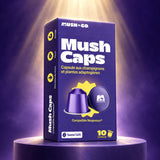
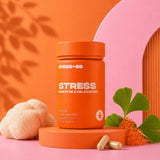
Anti-Stress
Ashwagandha and reishi, with holy basil, schisandra and vitamin B6, which contributes to the reduction of tiredness and fatigue and to normal functioning of the nervous system.
Discover Anti-Stress →
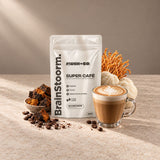
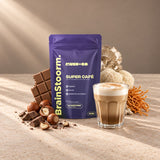
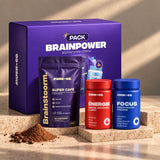
Brainstoorm
Our mushroom coffee: a base of roasted chicory and cacao, 6,040 mg of active ingredients per cup and only 20 mg of caffeine, four times less than an espresso.
Discover Brainstoorm →The cortisol rhythm
Cortisol is not the enemy, its curve is what matters.
Cortisol is a hormone made by the adrenal glands, two small glands sitting on top of the kidneys. It is called the “stress hormone”, but that is an oversimplification. Its first job is to wake you up, to mobilise the sugar your muscles and brain need, to regulate blood pressure and to calm inflammation. Without cortisol, you could not stand up.
Its secretion follows a very regular rhythm, driven by your internal clock. It rises towards the end of the night, peaks 30 to 45 minutes after waking, then falls gently throughout the day to reach its lowest point around midnight. That morning peak even has a name: the cortisol awakening response.
On waking
Cortisol rises sharply. This is normal and useful: it is what gets you going. “Lowering” it in the morning makes no sense.
During the day
It gradually comes down, with small peaks at every stress, heavy meal or intense effort. These peaks are normal as long as they settle.
In the evening
It needs to be low to let sleep come. This is where chronic stress, sleep debt or late coffee show up.
At night
The low point falls early in the night. The rise starts a few hours before waking, to prepare for the day.
So when people talk about “lowering cortisol”, they mostly mean two things: peaks that do not settle, and evening cortisol that stays too high. The problem is not the level at any given moment, it is a flattened curve that no longer rises enough in the morning or falls enough in the evening. The French research institute Inserm even devoted an episode of its Canal Détox series to this “cortisol regulation” trend, to remind people that it is a vital hormone.
If you first want to know whether your symptoms really come from cortisol, read our article on high cortisol and its symptoms. Here, we focus on what you can do.
The 12 levers in one table
How to lower cortisol: 12 levers, 3 levels of evidence.
Not every approach is equal. We ranked each lever by the type of study behind it. A controlled trial compares one group with a control group: it is the strongest level. An observational study shows a link in a population without proving cause. “Plausible” means the mechanism makes sense, but direct studies are missing.
| Lever | Level of evidence | Key takeaway |
|---|---|---|
| 1. Enough sleep | Controlled trial | A short night raises cortisol the following evening |
| 2. Morning light | Plausible, established mechanism | It sets the clock that fixes the peak and the dip |
| 3. Coffee later in the morning, never late in the evening | Controlled trial (caffeine) / plausible (delay) | Caffeine raises cortisol, especially in light drinkers |
| 4. Slow breathing | Controlled trial, small | A few minutes a day, over several weeks |
| 5. Walking, nature | Observational | 20 to 30 minutes outdoors, with no performance goal |
| 6. Training load | Controlled trial | Intense exercise raises cortisol; moderate exercise, much less |
| 7. Carbohydrates at dinner | Plausible | A very light dinner can disrupt some people's sleep |
| 8. Alcohol | Observational | Heavy drinkers have higher cortisol |
| 9. Screens in the evening | Plausible | Works mainly through sleep and mental arousal |
| 10. Ashwagandha | Controlled trials, small | Several 8-week trials, small sample sizes |
| 11. Rhodiola | Controlled trial, small | Few trials, results to be confirmed |
| 12. Magnesium | Plausible | Mainly useful if your intake is low |
Ranking by our editorial team, based on the studies listed at the bottom of the page. A “plausible” lever is not useless: it simply lacks direct trials on cortisol.
The three most solid levers cost nothing and are about your daily rhythm. Start with them, before any plant.
Sleep and light
Lowering your cortisol levels starts the night before.
Lever 1, sleep. This is the best documented. In the study by Leproult and her team, published in 1997, a single shortened night was enough to raise cortisol the following evening: by 37% after partial sleep, by 45% after a sleepless night. Cortisol also took longer to come back down. In other words, sleep debt wipes out the evening dip, which makes the next night harder.
The benchmarks are simple: seven hours of sleep or more, at roughly regular times, weekends included. A bedtime that shifts by two hours between the week and Sunday throws your clock off, a bit like a small dose of jet lag every Monday. Our guide to evening habits for better sleep explains the method.
Lever 2, morning light. Your internal clock is set first and foremost by light. Bright light on waking strengthens the morning peak, as another study by Leproult showed in 2001, and sets the rest of the curve: a clear peak in the morning means a clearer dip in the evening. Conversely, days spent in dim light and brightly lit evenings blur the signal.
- Within an hour of getting up, spend 10 to 20 minutes outside, even on a grey day: outdoor light is still far stronger than indoor lighting.
- Work near a window in the morning if you can.
- In the evening, dim the lights and choose low, warm lamps over the ceiling light.
- Keep a steady wake-up time: it anchors your rhythm more than your bedtime does.
The two reinforce each other: a bright morning helps you fall asleep, and a good night protects the next evening's dip.
When to drink coffee
Coffee does not create stress, but it adds to it.
Lever 3, caffeine. Caffeine stimulates cortisol secretion. Work by Lovallo at the University of Oklahoma showed this as early as 2005: in volunteers deprived of caffeine for a few days, repeated doses raised cortisol over the course of the day. In habitual heavy drinkers the response was blunted, but not always eliminated. Habit therefore protects you partly, not completely.
Two rules follow from this. The first is solid: no caffeine late in the day, because it adds to evening cortisol and delays sleep. Our article on coffee and sleep gives the cut-off time based on your bedtime. The second is more debated: waiting 60 to 90 minutes after waking before your first coffee, so as not to stack it on the natural morning peak. It makes sense, but no trial has really tested it. We covered it in detail in coffee and cortisol: should you wait before your first cup.
Quantity matters too. EFSA sets the safety benchmark at 400 mg of caffeine a day for an adult, and 200 mg in a single dose. If you are sensitive, jittery after coffee or sleep badly, staying well below that is more comfortable.
Cutting down does not mean giving up your cup. A cup of Brainstoorm contains 20 mg of caffeine, compared with around 80 mg for an espresso. This is what several customers describe after replacing some of their coffees.
“I was sceptical and in the end I'm won over. Less caffeine and yet I'm full of energy and my mood is steady”
★★★★★ Maïté S. · 4 April 2026
“I particularly appreciate the steadier energy it gives: no jitters and no slump.”
★★★★★ Nawel F. · 7 January 2026
Trustpilot reviews published about Brainstoorm, quoted as written. They describe a personal experience, not a cortisol measurement.
What the studies say
Cortisol: four studies worth knowing.
Here are four frequently cited studies, with their exact conditions and their limitations. Full references are at the bottom of the page.
Leproult et al., 1997 · Belgium
Healthy young men were monitored in a laboratory after a normal night, a partial night and a sleepless night. The following evening, their blood cortisol was 37% higher after the partial night and 45% higher after the sleepless night, and it came down later. Limitation: a small group of young men, over a very short period.
Lovallo et al., 2005 · United States
Volunteers, both light and heavy coffee drinkers, received caffeine or a placebo after a caffeine-free period. Caffeine raised cortisol over the course of the day, especially in those who drank little. In heavy drinkers the effect was blunted without disappearing completely. Limitation: high doses, given in a laboratory.
Ma et al., 2017 · China
40 adults split into two groups. One group did 20 sessions of slow abdominal breathing over 8 weeks, the other did not. In the breathing group, salivary cortisol fell and attention improved, unlike in the control group. Limitation: small sample, and no group doing another relaxation activity.
Chandrasekhar et al., 2012 · India
64 stressed adults took 300 mg of ashwagandha root extract twice a day, or a placebo, for 60 days. Blood cortisol in the ashwagandha group fell by 27.9%, clearly more than with placebo, and stress scores went down. Limitation: a single centre, a small sample, and one specific extract that does not apply to every powder.
These studies point in the same direction as the table: sleep and caffeine clearly affect cortisol, while breathing and plants show encouraging results based on small groups.
Breathing, walking
How to lower cortisol in the evening in five minutes.
Lever 4, slow breathing. Breathing slowly, from the belly, at around six breaths a minute activates the parasympathetic nervous system, the rest-and-digest one. Ma's 2017 trial observed a drop in salivary cortisol after eight weeks of practice. The sample was small, but the method is free, has no side effects and can be used anywhere.
Get comfortable
Sitting or lying down, one hand on your belly. Relax your shoulders and jaw.
Slow down
Breathe in through your nose for 4 seconds, filling your belly, then breathe out through your mouth for 6 seconds, slowly.
Repeat
Five minutes, once or twice a day, for example after work and before bed.
Breathing out for longer than you breathe in is the key point. What counts is regular practice over several weeks, not a one-off session.
Lever 5, walking and nature. In 2019, a team at the University of Michigan asked 36 city dwellers to regularly spend time in a natural setting of their choice, and measured their salivary cortisol before and after. The drop was most worthwhile between 20 and 30 minutes outside. It is a field study without a true control group, but it matches what many people feel: a quiet walk in the park, without your phone, brings the pressure down.
Training load
Exercise helps, as long as you recover.
Lever 6, training load. Physical exertion is a stress, and the body responds by producing cortisol. In the study by Hill and colleagues, published in 2008, exercise at 60% and 80% of maximum capacity raised cortisol, whereas light exercise at 40% did not. This acute peak is not a problem: it is part of adapting to training.
The problem arises when intensity piles up without recovery: hard sessions every day, short sleep, not enough food. That is the picture of overtraining.
What helps
Walking, easy cycling, swimming, yoga, moderate strength training, about 150 minutes a week, as recommended by the WHO.
In moderation
Intervals, HIIT, long and intense sessions: two to three a week, with easy days in between.
To avoid
Intense training late in the evening if you sleep badly: the cortisol peak and the alertness it triggers land just before bedtime.
The warning sign
A rising resting heart rate, restless nights, no motivation for anything: ease off for a week.
Evenings: food, alcohol, screens
Too much cortisol: what to do in the evening? Three habits to rethink.
Lever 7, carbohydrates at dinner. Some people eat very little in the evening, or even skip dinner, thinking they are doing the right thing. Yet a meal that is too light can make it harder for some people to fall asleep. A portion of wholegrain starches, pulses or potatoes at dinner is a logical approach, but direct studies on cortisol are rare: it is a plausible lever, worth testing on yourself.
Lever 8, alcohol. A drink relaxes you in the moment. But alcohol fragments the second half of the night, and observational studies, such as the one Badrick led on the British Whitehall II cohort in 2008, find higher cortisol in heavy drinkers. Cutting down on alcohol in the evening is one of the changes you feel fastest in your sleep quality.
Lever 9, screens. The problem is less about blue light than about what you do in front of the screen: emails, news, social media. The effect on cortisol works mainly through a later bedtime and a racing mind.
3 hours before bed
No more alcohol or very heavy meals. A simple dinner, with a portion of starchy food.
2 hours before
No more emails or work topics. A short walk if possible.
1 hour before
Dim lights, phone out of the bedroom, reading, a lukewarm shower.
At bedtime
Five minutes of slow breathing. If you follow a sleep routine, this is the time for your supplement.
If your mind keeps racing every evening despite these changes, and exhaustion is setting in, read our article on the signs of burnout and talk to your doctor. If you are in distress, Samaritans are available day and night on 116 123.
Ashwagandha, rhodiola, magnesium
Plants come afterwards, not instead.
Supplements do not make up for sleep debt or six coffees a day. But once your lifestyle is in place, some plants have been studied for cortisol, with interesting results and real limitations.
Lever 10, ashwagandha. Ashwagandha (Withania somnifera) is a root from Ayurvedic medicine. It is the most studied plant on this subject. Besides the Chandrasekhar trial, Lopresti's 2019 trial, in 60 adults taking 240 mg of extract a day for 60 days, observed a larger drop in morning cortisol than with placebo, while several stress questionnaires showed no clear difference. The trials are numerous but small, often short, and use different extracts.
Lever 11, rhodiola. Rhodiola (Rhodiola rosea) grows at altitude and in the far north. In Olsson's 2009 trial, 60 people with stress-related fatigue took a standardised extract or a placebo for 28 days: the rhodiola group saw their cortisol awakening response decrease and their fatigue scores fall. A single trial of this quality is not enough to draw conclusions.
Lever 12, magnesium. The link between stress and magnesium has mainly been studied in one direction: stress increases magnesium losses, and low magnesium status could make you more sensitive to stress, according to Pickering's 2020 review. Direct trials on cortisol are rare. If your intake is low, magnesium makes sense, in a well-tolerated form such as magnesium bisglycinate.
Our Anti-Stress formula combines ashwagandha, reishi, holy basil, schisandra and vitamin B6, which contributes to the reduction of tiredness and fatigue and to normal functioning of the nervous system. To compare the two main options, see reishi or ashwagandha.
Before taking ashwagandha or rhodiola, ask your doctor or pharmacist for advice if:
- You are pregnant or breastfeeding: ashwagandha is not recommended in these situations, and the French health agency ANSES has issued warnings about it.
- You have a thyroid condition or take thyroid medication.
- You have an autoimmune disease or liver disease, or take sedatives, antidepressants or medication for diabetes or high blood pressure.
- You are due to have surgery soon.
- You notice unusual tiredness, jaundice or dark urine: stop and see a doctor, as rare cases of liver damage have been reported with ashwagandha.
What doesn't work
Cortisol detox, blockers, cocktails: give them a miss.
Cortisol has become a social media trend, with its share of recipes that have no studies behind them.
- The “cortisol detox”. Cortisol is not a toxin that builds up. The liver and kidneys clear it all the time. No cure “cleanses” it.
- “Cortisol blockers”. Medicines that genuinely block cortisol do exist, but they are reserved for Cushing's disease, under hospital supervision. A supplement that claims to do the same thing is either mistaken or misleading you.
- The “adrenal cocktail”. Orange juice, coconut water and salt: a sweet and salty drink, with no studies on cortisol.
- “Adrenal fatigue”. This diagnosis is not recognised by endocrinologists. A 2016 systematic review concluded that there was no evidence it exists. Persistent fatigue deserves a proper consultation.
- Saliva tests sold online to “track” your cortisol. A single measurement tells you almost nothing, as cortisol varies so much from hour to hour.
The rule is simple: be wary of any product that promises to “slash” or “regulate” your cortisol. A forced drop would actually be dangerous: cortisol that is too low is a medical emergency.
When to see a doctor
Some signs have nothing to do with lifestyle.
In the vast majority of cases, a feeling of cortisol being “too high” reflects stress and sleep debt, not a disease. But two rare situations need to be recognised.
| Situation | Warning signs | Who to see |
|---|---|---|
| Genuine cortisol excess (Cushing's syndrome) | A face that becomes rounder, weight gain on the belly and upper back, wide purple stretch marks, easy bruising, weakening thigh muscles, rising blood pressure or blood sugar | Your GP, then an endocrinologist |
| Cortisol deficiency (adrenal insufficiency) | Overwhelming fatigue, weight loss, low blood pressure, dizziness when standing up, salt cravings, darkening skin | A doctor quickly; A&E if you feel faint, vomit or have abdominal pain |
| Corticosteroid treatment | Long-term use of cortisone, even inhaled or as a cream over large areas | The prescribing doctor, and never stop on your own |
The leading cause of cortisol excess is taking corticosteroid medicines. Never stop them abruptly without medical advice.
If your doctor thinks it is useful, they will order a cortisol test (a blood test at 8 am, late-night salivary cortisol or 24-hour urinary cortisol), not a one-off test at any time of day. If you have been feeling exhausted for several weeks, our article on persistent fatigue will help you prepare for that appointment.
Your questions
How to lower cortisol: your questions.
How can you lower cortisol naturally?
Start with the best-studied levers: seven hours of sleep at regular times, natural light in the morning and no caffeine late in the day. Add moderate physical activity, a few minutes of slow breathing and less alcohol. Plants such as ashwagandha come next, as a complement.
How long does it take to lower your cortisol?
A good night offers protection from the very next evening, and a session of slow breathing or a walk works in the moment. For your cortisol curve to rebalance for good, allow a few weeks of new habits. Trials on plants usually last 8 weeks.
How do you lower cortisol at night?
Avoid coffee after early afternoon, alcohol and late intense exercise. Dim the lights, put your phone down an hour before sleep and do five minutes of slow breathing. A simple dinner with a portion of starchy food can also help some people fall asleep more easily.
Too much cortisol: what should you do?
If you think you have too much cortisol because of stress, look first at your sleep, caffeine and workload. If you have marked physical signs, such as a face that becomes rounder, purple stretch marks or rising blood pressure, see your doctor. Only they can order a reliable test.
Does coffee raise cortisol?
Yes, caffeine stimulates cortisol secretion, especially in people who drink little of it. In heavy drinkers, the effect is blunted but not always eliminated. Limiting caffeine and avoiding it late in the day is therefore a simple lever.
Which herb lowers cortisol?
Ashwagandha is the most studied plant: several 8-week trials have observed a drop in blood cortisol, in small groups. Rhodiola has also been tested, with fewer trials. These plants are not suitable for everyone, particularly during pregnancy or if you have a thyroid condition.
Does exercise lower cortisol?
In the moment, intense exercise raises cortisol, which is normal. Moderate, regular activity such as walking does not trigger this peak and helps you sleep better. The risk comes from repeated intense training without recovery.
Does magnesium help lower cortisol?
Direct studies on cortisol are rare. Stress increases magnesium losses, and magnesium contributes to normal functioning of the nervous system. It mainly makes sense if your dietary intake is low.
How do you know if you have too much cortisol?
Stress symptoms, such as fatigue, irritability or waking in the night, are not enough to tell. Only a test ordered by a doctor, done at the right time of day, can tell you. A single afternoon blood test does not mean much.
Do “cortisol detox” supplements work?
No. Cortisol is not a toxin that builds up: it is continuously cleared by the liver and kidneys. No study supports these cures, and slashing cortisol would be dangerous.
Sources
- Clow A., Thorn L., Evans P., Hucklebridge F. (2004). The awakening cortisol response: methodological issues and significance. Stress, 7(1).
- Leproult R., Copinschi G., Buxton O., Van Cauter E. (1997). Sleep loss results in an elevation of cortisol levels the next evening. Sleep, 20(10).
- Leproult R., Colecchia E. F., L'Hermite-Balériaux M., Van Cauter E. (2001). Transition from dim to bright light in the morning induces an immediate elevation of cortisol levels. Journal of Clinical Endocrinology & Metabolism, 86(1).
- Lovallo W. R. et al. (2005). Caffeine stimulation of cortisol secretion across the waking hours in relation to caffeine intake levels. Psychosomatic Medicine, 67(5).
- Ma X. et al. (2017). The effect of diaphragmatic breathing on attention, negative affect and stress in healthy adults. Frontiers in Psychology, 8:874.
- Hunter M. R., Gillespie B. W., Chen S. Y.-P. (2019). Urban nature experiences reduce stress in the context of daily life based on salivary biomarkers. Frontiers in Psychology, 10:722.
- Hill E. E. et al. (2008). Exercise and circulating cortisol levels: the intensity threshold effect. Journal of Endocrinological Investigation, 31(7).
- Badrick E., Bobak M., Britton A. et al. (2008). The relationship between alcohol consumption and cortisol secretion in an aging cohort. Journal of Clinical Endocrinology & Metabolism, 93(3).
- Chandrasekhar K., Kapoor J., Anishetty S. (2012). A prospective, randomized double-blind, placebo-controlled study of safety and efficacy of a high-concentration full-spectrum extract of ashwagandha root in reducing stress and anxiety in adults. Indian Journal of Psychological Medicine, 34(3).
- Lopresti A. L. et al. (2019). An investigation into the stress-relieving and pharmacological actions of an ashwagandha (Withania somnifera) extract. Medicine, 98(37).
- Olsson E. M., von Schéele B., Panossian A. G. (2009). A randomised, double-blind, placebo-controlled, parallel-group study of the standardised extract SHR-5 of the roots of Rhodiola rosea in the treatment of subjects with stress-related fatigue. Planta Medica, 75(2).
- Pickering G. et al. (2020). Magnesium status and stress: the vicious circle concept revisited. Nutrients, 12(12).
- Cadegiani F. A., Kater C. E. (2016). Adrenal fatigue does not exist: a systematic review. BMC Endocrine Disorders, 16:48.
- EFSA NDA Panel (2015). Scientific opinion on the safety of caffeine. EFSA Journal, 13(5):4102.
- Inserm, Canal Détox. Faut-il vraiment « réguler son cortisol » ? (Do you really need to “regulate your cortisol”?)
Keep reading
Further reading.
Cortisol is linked to sleep, coffee and stress. Explore our other guides, or our Anti-Stress formula.

Discover our mushroom and adaptogenic plant supplements
Our vegan formulas, made in Toulouse by a French manufacturer.