






















Too Much Coffee: Symptoms and What to Do If You've Had Too Much
By the Mush n Go editorial team - 14 November 2026
By the Mush n Go editorial teamPublished 14 November 202611 min read
Too much coffee
You can tell you have had too much coffee from six signs: palpitations, shaky hands, jitters, a burning stomach, headaches and sleep that will not come. They most often appear beyond 200 mg of caffeine in one go or 400 mg over the day, the EFSA benchmarks. Within the hour: water, something to eat, a walk, and time.
This article deals with the emergency: recognising the excess, getting through it, knowing when to call. If your days regularly go over the limit, the logical next step is to cut down. For the full week-by-week method, see our guide to quitting coffee without the crash.

Brainstoorm
20 mg of microencapsulated caffeine instead of 80, in a chicory base, with 6,040 mg of active ingredients per cup in the coffee version. The coffee ritual, four times less caffeine.
Discover Brainstoorm →
Energy
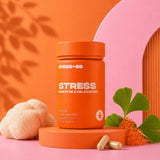
Cordyceps, Maca, Ginger and Vitamin C in capsules. Vitamin C contributes to the reduction of tiredness and fatigue: the 30-day course that supports your day, without a drop of coffee.
Discover Energy →The symptoms of too much coffee
Too much coffee: the symptoms that leave no doubt.
Caffeine blocks adenosine receptors, the molecule that signals tiredness, and stimulates the release of adrenaline. At a usual dose, you feel alert. When the dose goes beyond what your body handles well, the same mechanism runs away with itself: the heart, muscles, stomach and brain all receive the “speed up” signal.
The symptoms of too much caffeine generally arrive within the hour after the cup too many.
| What you feel | What is going on | The right move |
|---|---|---|
| Palpitations, a racing heart | Adrenaline speeds up the heart rate | Sit down, breathe slowly |
| Shaky hands | The nervous system is overstimulated | Eat something, walk for a few minutes |
| Jitters, restlessness, racing thoughts | The tiredness signal is cut off, alertness is pushed to the maximum | Slow breathing, a screen-free break |
| Heartburn, nausea, faster digestion | Coffee stimulates stomach acid and gut movement | A snack, water, no more coffee on an empty stomach |
| Headaches, dizziness | Caffeine acts on blood vessels and blood pressure | Water, rest sitting down, fresh air |
| Insomnia, light sleep | Caffeine is still in the blood at bedtime | Move your last coffee earlier |
The psychiatrists' reference manual, the DSM-5, describes this picture under the name caffeine intoxication: at least five signs from a list of twelve, after an intake that generally exceeds 250 mg. If jitters dominate in your case, our article on coffee and anxiety goes into this link. For the heart, see coffee and blood pressure.
How much is too much
Too much coffee, how many cups is that?
The European Food Safety Authority (EFSA) set three benchmarks for caffeine in 2015, all sources combined: coffee, tea, soft drinks, energy drinks, chocolate.
400 mg per day
The benchmark for a healthy adult. Roughly five 80 mg espressos, or four large 90 mg cups of filter coffee.
200 mg in one go
The benchmark for a single intake. Two espressos back to back are already there, and so is a big mug of strong filter coffee.
200 mg a day when pregnant
The benchmark during pregnancy and breastfeeding, all sources added together. Caffeine elimination slows as pregnancy goes on.
These figures are average benchmarks: depending on your genes and habits, signs may appear sooner. For the cup-by-cup detail, by type of coffee and your profile, our article how many coffees a day does the full calculation. And if two cups are enough to make you shake, the lead is more likely caffeine intolerance.
What to do within the hour
I've had too much coffee, what should I do? Five simple steps.
The caffeine already absorbed is cleared by the liver, at its own pace. These steps calm the signs one by one and make the wait more comfortable.
Stop the caffeine
No more coffee, tea, cola or energy drinks until tomorrow.
Water, in small sips
A big glass of water, then another within the hour. Enough to ease the dry mouth and the headache.
Something to eat
A banana, wholemeal bread, a yoghurt, a handful of almonds. A stomach that is working is less acidic, and shakiness often eases after a snack.
Ten minutes' walk
A gentle walk, outdoors if possible, gives the restlessness somewhere to go. Intense exercise can wait until tomorrow.
Breathe slowly
Sitting down, breathe in through your nose for four seconds, out through your mouth for six. Five minutes is enough to feel your heart rate come back down.
After that, let time do its work. The peak generally passes in one to two hours, and the signs fade as the caffeine is cleared. In the evening, have a light dinner and go to bed at your usual time.
What the studies say
Too much caffeine: three landmark studies.
The thresholds and durations quoted in this article come from these publications. The full references are at the bottom of the page.
EFSA, 2015 · European Union
EFSA's scientific opinion on the safety of caffeine sets 400 mg per day and 200 mg in one go for healthy adults, and 200 mg per day for pregnant or breastfeeding women.
Drake et al., 2013 · United States
12 adults who slept well were given 400 mg of caffeine at bedtime, three or six hours earlier. Even taken six hours before bed, caffeine shortened the night by more than an hour, without participants always realising.
Juliano and Griffiths, 2004 · United States
This landmark review of withdrawal describes what happens when you cut caffeine out all at once: headaches, tiredness and reduced concentration, starting 12 to 24 hours after the last cup, peaking between 20 and 51 hours and lasting two to nine days.
To remember: late-afternoon coffee weighs on the night, and cutting down works better in steps.
How long it lasts
The effects pass with the half-life of caffeine.
Caffeine peaks in the blood between 15 minutes and two hours after the cup. The liver then clears half of it in about five hours in an adult: this is the half-life. It varies from two to more than eight hours depending on the person.
Within the hour
The peak. Palpitations, shaky hands and jitters are at their strongest. This is the time for water, a snack and a walk.
After 2 to 3 hours
The heart slows, the hands steady. The stomach may stay sensitive: eat simply.
After 5 hours
About half the dose remains. Most signs have gone, but sleep remains fragile.
After 10 hours
About a quarter remains. Hence the rule: the cup too many at 4 pm is still being paid for at 2 am.
The full detail of caffeine's journey through the body is in our file caffeine: effects, duration and dose, and the bedtime question in coffee and sleep: the cut-off time.
When to call
Caffeine overdose: the signs that need medical advice.
With coffee in a cup, a serious caffeine overdose is very rare: discomfort arrives well before and makes you put the cup down. Serious cases mostly involve caffeine powder or tablets and energy drinks drunk in series. The American FDA places toxic effects, such as seizures, at around 1,200 mg swallowed quickly.
Call 112 without delay in case of:
- Chest pain or tightness, a very fast or irregular heartbeat that does not settle at rest.
- Difficulty breathing, feeling faint, loss of consciousness.
- Repeated vomiting, confusion, seizures.
Call a poison control centre (reachable 24 hours a day, contact details on the poison centres' website) if a child has drunk coffee or an energy drink in quantity, if caffeine powder or tablets have been swallowed, or if you are unsure about the dose. If you are pregnant, under heart follow-up or on treatment: ask your doctor for advice at the first signs.
Too much coffee every day
When the cup too many becomes a habit.
A one-off episode passes in a few hours. Day to day, four to six coffees a day leave more discreet signs.
- You take a long time to fall asleep, or you wake around 3 am.
- You need a coffee to get going, then another to get through the afternoon.
- Your hands tremble slightly late in the morning, your heart races in meetings.
- You get heartburn or reflux after the second cup.
- At the weekend, without coffee on waking, the headache arrives before noon.
That last sign is the craving: the body has got used to its dose. It is also why stopping everything overnight is rough. Our article on coffee withdrawal, its symptoms and how long it lasts describes those few days. By coming down in steps, you keep your energy and get full nights back.
Cutting down without the crash
Cut down coffee in three weeks, without losing the ritual.
The principle: you do not remove cups, you replace them. The gesture and the roasted taste stay, only the caffeine dose comes down.
| Week | What you change | Caffeine saved, about |
|---|---|---|
| 1 | Your last coffee of the day becomes a cup of Brainstoorm or a decaf | 60 mg per day |
| 2 | The after-lunch coffee follows the same path, no more regular coffee after 2 pm | 120 mg per day |
| 3 | The morning coffee switches to Brainstoorm; one regular coffee only, mid-morning if you really want it | 180 mg per day and more |
Calculation for an 80 mg espresso replaced by a 20 mg cup of Brainstoorm.
This is exactly the routine of the Adieu Café Pack: Brainstoorm in the morning to keep the cup, Energy during the day with its Cordyceps, maca and vitamin C, which contributes to the reduction of tiredness and fatigue, and Focus for working hours, with Lion's Mane, bacopa, ginkgo and saffron. Three products, a whole day covered. To compare all the stepping-stone drinks, from chicory to tea, see what to replace coffee with.
The 20 mg cup
Brainstoorm: the taste of coffee, four times less caffeine.
Brainstoorm is our mushroom coffee: a powder based on roasted chicory, to mix into hot water or milk. Each cup combines Lion's Mane, Cordyceps and Chaga at 1,000 mg each, plus maca and ashwagandha, for 6,040 mg of active ingredients, with 20 mg of NewCaff® microencapsulated caffeine, against about 80 mg for an espresso.
Do the sums: five cups of Brainstoorm provide 100 mg of caffeine, where five espressos reach the 400 mg EFSA benchmark. Two flavours, Coffee and Chocolate-Hazelnut, and 60 days to try it, with a money-back guarantee.
“I was sceptical and in the end I'm won over. Less caffeine and yet I have energy and a steady mood”
★★★★★ Maïté S. · 4 April 2026
“I particularly appreciate the steadier energy it gives: no jitters and no crash.”
★★★★★ Nawel F. · 7 January 2026
Real Trustpilot reviews of Brainstoorm, quoted as they are.
Your questions
Too much coffee: your questions.
What are the symptoms of drinking too much coffee?
The most common signs are palpitations, shaky hands, jitters, heartburn, headaches and insomnia. They generally appear within the hour after the cup too many and fade over a few hours, as the caffeine is cleared.
I've had too much coffee, what should I do?
Stop all caffeine until tomorrow, drink water in small sips, eat a snack, walk for ten minutes and breathe slowly. The peak passes in one to two hours. In case of chest pain, feeling faint or repeated vomiting, call 112.
Is it advisable to drink 5 coffees a day?
Five 80 mg espressos represent 400 mg of caffeine, exactly EFSA's daily benchmark for a healthy adult. Five large cups of filter coffee exceed it. Replace two or three with a drink containing 20 mg of caffeine or a decaf: you keep the ritual, with a margin.
Can coffee make you dizzy?
Yes, especially at a high dose or on an empty stomach. Caffeine speeds up the heart, acts on blood vessels and increases the urge to urinate: your head can spin, particularly if you have had little to drink and eat. Sit down, drink water, eat a little. Dizziness that lasts deserves medical advice.
What are the effects of coffee withdrawal on the body?
When a regular drinker stops all at once, they often feel headaches, tiredness, reduced concentration and a grumpy mood. According to the Juliano and Griffiths review (2004), these signs begin 12 to 24 hours after the last cup and last two to nine days. Cutting down in steps makes them much milder.
Can you overdose on caffeine from coffee?
With coffee in a cup, it is very rare: the signs of discomfort make you stop well before. The FDA places serious toxic effects at around 1,200 mg swallowed quickly, the equivalent of about fifteen espressos back to back. The risk mostly concerns caffeine powder, tablets and energy drinks in series.
Is drinking too much coffee a health danger?
Up to 400 mg of caffeine a day, EFSA sees no concern for healthy adults. Beyond that, or in a sensitive person, coffee first weighs on sleep, nerves and the stomach. Pregnant women and people under follow-up for the heart or blood pressure should talk to their doctor.
Is it better to drink tea or coffee?
It all depends on the caffeine dose you are aiming for. A cup of black tea contains about 50 mg according to EFSA, against 80 mg for an espresso and 90 mg for filter coffee. Tea is therefore a good first step down, and a cup of Brainstoorm mushroom coffee, at 20 mg, takes you down another notch.
Sources
- EFSA NDA Panel (2015). Scientific Opinion on the safety of caffeine. EFSA Journal, 13(5):4102.
- Drake C., Roehrs T., Shambroom J., Roth T. (2013). Caffeine effects on sleep taken 0, 3, or 6 hours before going to bed. Journal of Clinical Sleep Medicine, 9(11).
- Juliano L. M., Griffiths R. R. (2004). A critical review of caffeine withdrawal: empirical validation of symptoms and signs, incidence, severity, and associated features. Psychopharmacology, 176(1).
- Nehlig A. (2018). Interindividual differences in caffeine metabolism and factors driving caffeine consumption. Pharmacological Reviews, 70(2).
- American Psychiatric Association (2013). Diagnostic and Statistical Manual of Mental Disorders, 5th edition (DSM-5), caffeine intoxication.
- U.S. Food and Drug Administration. Spilling the Beans: How Much Caffeine Is Too Much? Consumer information.
Keep reading
Further reading.
One excess passes in a few hours; a habit changes in three weeks. The complete plan is in our guide to quitting coffee, and the ready-made routine in the Adieu Café Pack.

Discover our mushroom and adaptogenic plant supplements
Our vegan formulas, made in Toulouse by a French manufacturer.