




















How to Fall Asleep Fast: Proven Methods and When to See a Doctor
By the Mush n Go editorial team - 13 November 2026
By the Mush n Go editorial teamPublished on 14 November 202614 min read
Falling asleep
How to fall asleep fast? By working on the two engines of sleep: the tiredness you build up during the day and your body clock. The methods with the most evidence are simple: get up at a fixed time, never lie awake in bed for more than twenty minutes, get light in the morning, and keep the evening dim and cool. Slow breathing helps you switch off. And if the wait has been going on for months, it can be treated.
The complete guide: the best mushroom for sleep →
The complete guide: insomnia →

Sleep+
Reishi, valerian, magnesium bisglycinate and melatonin. Melatonin contributes to the reduction of time taken to fall asleep. One capsule thirty minutes before bedtime.
Discover Sleep+ →
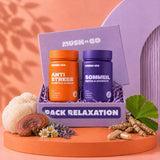
Relaxation Pack
Anti-Stress in the morning and Sleep+ in the evening, together in one pack. For the nights when what keeps you awake was set in motion during the day.
Discover the pack →The benchmarks
Falling asleep in twenty minutes is already a good score.
Before trying to fall asleep faster, you need to know where you are starting from. A healthy adult usually takes 10 to 20 minutes to fall asleep. Dropping off in two minutes every night is not necessarily an achievement: it is often the sign of a sleep debt, of a body that “crashes” because it is short of nights.
Conversely, specialists talk about difficulty falling asleep when it takes more than 30 minutes, several nights a week. If it has lasted more than three months, at least three nights a week, with an impact on your day, it meets the definition of chronic insomnia. According to the 2017 Health Barometer of the French public health agency Santé publique France, it affects 13.1% of adults aged 18 to 75, who sleep an average of 6 h 42 a night on weekdays.
| Time to fall asleep | What it suggests | What to do |
|---|---|---|
| Under 5 minutes, every night | Probable build-up of sleep debt | Sleep longer, check for daytime sleepiness |
| 10 to 20 minutes | Normal sleep onset | Nothing to change, keep your schedule |
| 20 to 30 minutes, now and then | A stressful evening, late coffee or screens | The methods in this article |
| Over 30 minutes, 3 nights a week or more | Established difficulty falling asleep | The methods, then a doctor if it lasts more than three months |
One last, reassuring benchmark: we almost always overestimate the time spent waiting for sleep. Laboratory studies show that people who sleep badly often estimate this delay well beyond what the recording measures. It is not imaginary: it is how the brain perceives minutes spent in the dark with the mind on alert.
The mechanisms
Two engines to fall asleep, and a brake called arousal.
Sleep comes when two mechanisms are aligned. Understanding which one is stuck for you lets you choose the right method, rather than trying everything at once.
Sleep pressure
The longer you stay awake, the more a molecule called adenosine builds up in the brain and pushes you towards sleep. A long nap, a lie-in or a day without activity lowers it. Caffeine, for its part, blocks its action.
The body clock
A clock of roughly 24 hours, set mainly by light, decides when melatonin rises in the evening. Going to bed before the clock has given the signal means waiting, even when you are tired.
The arousal brake
Stress, racing thoughts and the fear of not sleeping keep the brain on alert. This is often what blocks sleep, even when both engines are ready.
Hence a simple rule: go to bed when you feel sleepy, not when you “should” be asleep. And the practical consequence: most effective methods are not played out when you close your eyes, but in the morning, during the day and in the evening. If your brain stays on alert as soon as you turn off the light, our guide to the 15 evening habits for better sleep sets out the routine to put in place.
Breathing
The 4-7-8 method and relaxation: slow down to switch off.
The 4-7-8 method is the most widely shared technique on social media for falling asleep fast. It was popularised by the American doctor Andrew Weil, who drew on yoga breathing exercises. It has not been the subject of robust trials on sleep onset as such. On the other hand, slow breathing, at around six cycles per minute, is well studied: it slows the heart and activates the parasympathetic nervous system, the one in charge of rest.
Breathe in for 4 seconds
Through the nose, mouth closed, letting your belly rise rather than your chest. Lying on your back, a hand on your belly helps you feel the movement.
Hold for 7 seconds
Without forcing. If it feels uncomfortable, shorten the pause: what matters is that the out-breath is longer than the in-breath.
Breathe out for 8 seconds
Through the mouth, slowly, as if blowing through a straw. Repeat four cycles, then breathe normally and let sleep come.
And what about the famous “military method”, supposed to send you to sleep in two minutes? It combines two well-known methods: relaxing the muscles from face to feet, then a calming mental image. Both steps are easy to practise in bed with the lights off. Progressive muscle relaxation is also one of the techniques used in the treatment of insomnia.
- Muscle relaxation: tense a group of muscles for five seconds, release for ten seconds, working up from your feet to your face.
- Body scan: bring your attention to each part of your body without changing anything, noticing its weight on the mattress.
- Cognitive shuffling: choose a word, then picture objects that start with each of its letters. It keeps the mind busy without stimulating it.
- The evening notebook: an hour before bed, write down what is worrying you and the next action for each point. Thoughts have less need to go round in circles once they are written down.
When you can't sleep
What to do when you can't sleep: get out of bed.
It is the most counter-intuitive method, and one of the most robust. Lying in bed for hours waiting for sleep teaches the brain that bed is a place of wakefulness and frustration. Cognitive behavioural therapy for insomnia, or CBT-I, breaks this link with two tools. The 2017 European guideline and the 2016 American College of Physicians guideline make it the first-line treatment for chronic insomnia, ahead of medication.
Bed is for sleep only
No phone, series, work or meals in bed. The brain must associate bed with one thing only: sleeping.
The 20-minute rule
If you are not asleep after about twenty minutes, without checking the time, get up. Dim light, a calm and boring activity, back to bed when your eyelids start to droop.
A fixed wake-up time
Even after a bad night, even at the weekend. It is the anchor of your body clock, and it matters more than your bedtime.
Sleep restriction
You spend 8 hours in bed for 6 hours of sleep? Time in bed is cut to what you really sleep, never below 5 hours, then extended in steps of 15 minutes once your nights become unbroken.
Sleep restriction works, but it causes sleepiness in the first few weeks. It is best done with a doctor or a psychologist trained in CBT-I, and it is not recommended without supervision if you have epilepsy or bipolar disorder, or if you drive a lot. A sleep diary kept for two weeks, with your bedtime, wake-up time and an estimate of time slept, is the starting point.
Not checking the time is part of the method: looking at the clock at 1 am, then at 2 am, feeds the anxious calculation of the hours left.
Light
Morning light sets your evening sleep time.
The body clock resets itself every day using light. Bright light in the morning brings forward the time at which melatonin rises in the evening. Bright light in the evening delays it. If you struggle to fall asleep before midnight, it is often because your clock has drifted later, and this is the most effective lever.
- In the morning: 20 to 30 minutes of daylight within the hour after you get up, outdoors if possible. Even on an overcast day, outdoors is far brighter than an office.
- During the day: go out at lunchtime. In winter, it is often the only real light of the day.
- In the evening: dim the lights one to two hours before bed, and favour low, warm lamps over the ceiling light.
- Screens: switch them off an hour before sleep if you can, or turn their brightness right down. The content matters as much as the light: a news feed or a work message wakes you up.
- At night: a bedroom as dark as possible, and a sleep mask if the street lights shine in.
The effect of screens has been measured. In the trial by Chang and colleagues at Harvard (2015), reading on a light-emitting tablet in the evening rather than a paper book delayed sleep onset by around ten minutes, slowed the rise of melatonin and made waking up harder. The details are in the “studies” panel below.
Temperature
To fall asleep, your body needs to cool down.
Core body temperature falls naturally in the evening, and this drop goes hand in hand with falling asleep. For it to happen, heat has to leave the body, mainly through the hands and feet. Two habits help, and they seem contradictory: warming the skin before bed, and sleeping in a cool room.
| Habit | Why it works | How to do it |
|---|---|---|
| Warm bath or shower | Heat dilates the blood vessels in the skin; once you get out, the body sheds its heat and core temperature falls | Water at 40-42 °C, for at least 10 minutes, 1 to 2 hours before bed |
| Cool bedroom | A room that is too warm stops core temperature from falling | Around 18 °C, with a duvet suited to the season |
| Warm feet | Warm feet release body heat more effectively | Socks, a hot-water bottle at your feet, especially if you have cold hands and feet |
| Intense exercise late in the evening | Raises temperature and alertness for several hours | Ideally finish 2 to 3 hours before sleep |
Hot bath: not advised if you have a heart condition or low blood pressure, without medical advice. A warm to hot shower is still a good alternative.
Warm feet are not an old wives' tale: a study published in Nature in 1999 by Kräuchi and colleagues showed that warmth in the hands and feet, a sign that the body is shedding heat, was the best predictor of rapid sleep onset in their volunteers.
What the studies say
Falling asleep faster: four studies that matter.
These are among the most cited studies on sleep onset. They show real effects, but measured in minutes, not hours. The full references are at the bottom of the page.
Chang et al., 2015 · United States
12 adults read for four hours before bed, five evenings in a row, on a light-emitting tablet or a paper book, in a laboratory. With the tablet, falling asleep took about ten minutes longer, evening melatonin was lower and morning alertness was reduced. Limitation: small sample, four hours of reading, more than typical use.
Haghayegh et al., 2019 · United States
Systematic review and meta-analysis of studies on a warm bath or shower before bed. Water at 40-42.5 °C, taken 1 to 2 hours before sleep for at least 10 minutes, was associated with faster sleep onset and sleep rated as better. Limitation: small studies of uneven quality.
Drake et al., 2013 · United States
12 good sleepers took 400 mg of caffeine at bedtime, 3 hours or 6 hours before, or a placebo. Even taken 6 hours before, caffeine reduced measured sleep by more than an hour, without the participants noticing. Limitation: a high dose, the equivalent of four to five espressos.
Ferracioli-Oda et al., 2013 · meta-analysis
19 trials, 1,683 people with sleep disorders. Melatonin reduced the time taken to fall asleep by about 7 minutes and lengthened sleep by about 8 minutes compared with placebo. Limitation: a modest effect, varying with dose and profile.
The message is clear: no single habit will put you to sleep in a minute. It is the sum of several levers, light, schedules, coolness, caffeine kept in check, that saves time every night.
The evening
Coffee, alcohol, exercise, dinner: what delays sleep.
Much of the difficulty falling asleep is set up in the afternoon and evening. Here are the main suspects, and the margin to keep before bed.
| What you consume or do | Effect on falling asleep | Recommended margin |
|---|---|---|
| Coffee, tea, fizzy drinks, energy drinks | Caffeine blocks adenosine; its half-life is roughly 4 to 6 hours | No caffeine after 2 pm if you sleep badly |
| Alcohol | Helps you nod off faster, then fragments the second half of the night | The last drink at least 2 to 3 hours before |
| Large or very fatty dinner | Long digestion, possible reflux when lying down | Eat dinner 2 to 3 hours before bed |
| Intense exercise | Higher temperature and alertness | 2 to 3 hours before; an evening walk, however, is fine |
| Nicotine | A stimulant, and withdrawal can wake you at night | Avoid in the hours beforehand |
| Long nap late in the day | Lowers sleep pressure | Under 20 minutes, before 3 pm |
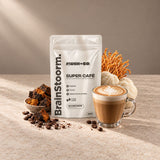
Caffeine is the most underestimated factor: it doesn't only come from coffee, and sensitivity to it varies greatly from one person to another. Our article coffee and sleep: what time to stop helps you set your cut-off time, and our guide to how long caffeine lasts sets out the doses. If you don't want to give up your afternoon cup, a cup of Brainstoorm contains 20 mg of caffeine, compared with around 80 mg for an espresso.
Music and sounds
Music to fall asleep fast: a real helping hand.
Music for sleep is one of the most frequent searches on the subject, and it has been studied. In the Cochrane review by Jespersen and colleagues, updated in 2022, covering 13 studies and just over 1,000 adults with insomnia, listening to music at bedtime improved perceived sleep quality compared with no intervention. The effects on other sleep measures remain more uncertain.
The right tempo
Most studies used slow music, around 60 to 80 beats per minute, without lyrics, at low volume, for 30 to 45 minutes.
White or pink noise
A continuous sound masks noise from the street or a neighbour. Useful in town, less proven as a sleep aid in itself.
Podcasts or audiobooks
A calm voice on a subject you already know keeps the mind busy without stimulating it. Set the sleep timer.
A practical tip: use a speaker or a music pillow rather than earphones all night, and play the music from a device placed away from the bed, so you are not tempted to scroll through videos.
Supplements
Melatonin and evening plants: the boost for your routine.
Melatonin is the hormone that tells the body night is beginning. As a food supplement, it is the only active ingredient with an official claim on falling asleep in Europe: melatonin contributes to the reduction of time taken to fall asleep, provided you take at least 1 mg shortly before bedtime. The measured effect is modest, a few minutes on average, and clearer when the body clock has drifted.
When it makes sense
Going to bed too late despite tiredness, a body clock thrown off after a holiday, jet lag, nights when you know sleep will be slow to come.
When it helps little
If the problem comes from caffeine, a bed that has become a place of wakefulness, waking during the night or an undiagnosed sleep disorder.
Melatonin is often sold combined with evening plants such as valerian, or with mushrooms such as reishi, long used in evening routines in Asia. These plants complement melatonin in the evening routine; our comparison valerian or melatonin reviews what the trials show, and our article on the benefits of reishi sets out what is known about this mushroom.
That is the thinking behind our evening formula, Sleep+: reishi, valerian, magnesium bisglycinate, acacia fibre and 1.9 mg of melatonin per capsule, to be taken 30 minutes before bed. It goes alongside the methods in this article, night after night. To learn all about the hormone itself, see our page on melatonin.
Melatonin is not recommended, or requires medical advice, if:
- You are pregnant or breastfeeding, or for a child or teenager.
- You have an inflammatory or autoimmune disease.
- You have epilepsy or asthma, or have mood, behavioural or personality disorders: seek medical advice before taking it.
- You are on medication, particularly anticoagulants, antidepressants or sleeping pills.
- You need to drive or stay alert: it can cause drowsiness.
These precautions follow those of the 2018 opinion of the French health agency ANSES on food supplements containing melatonin. As for prescription sleeping pills, they shorten the time taken to fall asleep but are prescribed for a few weeks at most in France, because of dependence and next-day drowsiness.
When to see a doctor
When difficulty falling asleep becomes a health problem.
Taking thirty minutes to fall asleep after a busy day is nothing to worry about. Some situations, however, are worth discussing with your doctor, who can refer you to a sleep clinic or for behavioural therapy.
Talk to your doctor if:
- You take more than 30 minutes to fall asleep at least three nights a week, for more than three months.
- You feel tingling or an irresistible urge to move your legs in the evening, which eases when you walk.
- You snore loudly, the people around you notice pauses in your breathing, or you wake up with a dry mouth and a heavy head.
- You feel drowsy at the wheel or during the day despite nights you think are long enough.
- The difficulties come with persistent sadness, loss of interest, or anxiety that takes over your day.
- You never fall asleep before 2 or 3 am, even on holiday: it may be delayed sleep phase, which can be treated.
If the stress of the day is what stops you switching off in the evening, our guide how to lower cortisol reviews the levers that have evidence behind them. And if you feel at the end of your tether, to the point of thinking everything would be simpler without you, call Samaritans on 116 123, free and open day and night.
Your questions
Falling asleep fast: your questions.
How do you fall asleep fast at night?
Only go to bed when you feel sleepy, in a cool, dark bedroom, after an hour without screens. In bed, practise slow breathing, with the out-breath longer than the in-breath. If sleep doesn't come after about twenty minutes, get up and come back when your eyelids droop. A fixed wake-up time every morning makes falling asleep easier as the days go by.
What to do when you can't sleep?
Don't stay in bed waiting: get up, go into another room with dim lighting and do something calm, such as reading a paper book. Go back to bed when you feel sleep coming. Avoid checking the time or picking up your phone. The next day, get up at your usual time, even after a bad night.
How to fall asleep in 60 seconds?
No serious method promises to put you to sleep in a minute. A healthy adult usually takes 10 to 20 minutes to fall asleep, and falling asleep instantly every night is often a sign of lack of sleep. 4-7-8 breathing or muscle relaxation help you switch off, with no guaranteed timing.
Does the 4-7-8 method work?
It relies on slow breathing with a long out-breath, which slows the heart and activates the resting nervous system. Many people find it useful to stop their thoughts racing. If holding your breath for seven seconds bothers you, shorten the pause.
How to fall asleep fast without medication?
Drug-free methods are the most effective in the long run: a fixed wake-up time, daylight in the morning, no caffeine after early afternoon, a warm shower one to two hours before bed, a cool bedroom and the twenty-minute rule. For chronic insomnia, cognitive behavioural therapy is the recommended first-line treatment.
What music helps you fall asleep fast?
Studies have mainly used slow music without lyrics, at around 60 to 80 beats per minute, listened to at low volume for 30 to 45 minutes. A 2022 Cochrane review concludes that music improves perceived sleep quality in adults who sleep badly. Choose whatever calms you, and set the sleep timer.
Does melatonin help you fall asleep faster?
Yes, to a degree: melatonin contributes to the reduction of time taken to fall asleep, with at least 1 mg taken shortly before bedtime. The average effect measured in trials is modest, a few minutes, and more marked when the body clock has drifted. It is not recommended during pregnancy or breastfeeding, or for children.
Why can't I fall asleep when I'm tired?
Often because your body clock has not yet given the signal for sleep, or because your brain stays on alert due to stress or screens. Tiredness is not enough: your biological time also has to be right and your mind has to switch off. Caffeine taken in the afternoon can also blur the signals.
How long should it take to fall asleep?
Generally between 10 and 20 minutes for an adult. Beyond 30 minutes, several nights a week, it counts as difficulty falling asleep. If it lasts more than three months with daytime tiredness, it is chronic insomnia, which is worth discussing with your doctor.
Sources
- Léger D., Zeghnoun A., Faraut B., Richard J.-B. (2019). Sleep time, sleep debt, sleep restriction and chronic insomnia in 18-75-year-olds: results from the 2017 Santé publique France Health Barometer. Bulletin épidémiologique hebdomadaire, no. 8-9.
- Riemann D. et al. (2017). European guideline for the diagnosis and treatment of insomnia. Journal of Sleep Research, 26(6), 675-700.
- Qaseem A. et al. (2016). Management of chronic insomnia disorder in adults: a clinical practice guideline from the American College of Physicians. Annals of Internal Medicine, 165(2), 125-133.
- Chang A.-M., Aeschbach D., Duffy J. F., Czeisler C. A. (2015). Evening use of light-emitting eReaders negatively affects sleep, circadian timing, and next-morning alertness. PNAS, 112(4), 1232-1237.
- Haghayegh S., Khoshnevis S., Smolensky M. H., Diller K. R., Castriotta R. J. (2019). Before-bedtime passive body heating by warm shower or bath to improve sleep: a systematic review and meta-analysis. Sleep Medicine Reviews, 46, 124-135.
- Kräuchi K., Cajochen C., Werth E., Wirz-Justice A. (1999). Warm feet promote the rapid onset of sleep. Nature, 401, 36-37.
- Drake C., Roehrs T., Shambroom J., Roth T. (2013). Caffeine effects on sleep taken 0, 3, or 6 hours before going to bed. Journal of Clinical Sleep Medicine, 9(11), 1195-1200.
- Ferracioli-Oda E., Qawasmi A., Bloch M. H. (2013). Meta-analysis: melatonin for the treatment of primary sleep disorders. PLoS One, 8(5), e63773.
- Jespersen K. V., Pando-Naude V., Koenig J., Jennum P., Vuust P. (2022). Listening to music for insomnia in adults. Cochrane Database of Systematic Reviews, CD010459.
- ANSES (2018). Opinion on the risks associated with the consumption of food supplements containing melatonin.
- Commission Regulation (EU) No 432/2012 establishing a list of permitted health claims made on foods.
Keep reading
Go further.
Sleep is built over the whole day. Our guides to help you, and our evening formula Sleep+.

Discover our mushroom and adaptogenic plant supplements
Our vegan formulas, made in Toulouse by a French manufacturer.