







Reishi Benefits: What the Studies Show and How to Take It
By the Mush n Go editorial team - 10 November 2026
By the Mush n Go editorial teamPublished 10 November 202614 min read
Reishi
Reishi (Ganoderma lucidum) is a medicinal mushroom used in China for more than 2,000 years, and its benefits are attributed to its triterpenes and polysaccharides. Its supposed effects on sleep, fatigue and immunity still rest on small trials, and no human trial has measured its effect on cortisol. Here is what is established, what is not, and how to take it.
The complete guide: the best mushroom for sleep →

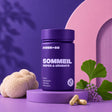
Sleep+
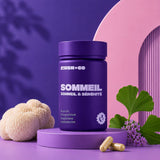
Reishi, valerian, magnesium bisglycinate, acacia fibre and melatonin. Melatonin contributes to the reduction of time taken to fall asleep. 1 to 2 capsules 30 minutes before bed.
Discover Sleep+ →
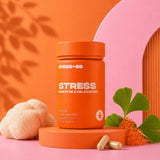
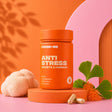
Anti-Stress
Reishi standardised for polysaccharides and ashwagandha standardised for withanolides, with holy basil, schisandra and vitamin B6, which contributes to normal functioning of the nervous system.
Discover Anti-Stress →What is reishi
A mushroom as hard as wood, and very bitter.
Reishi is nothing like a cooking mushroom. It is a polypore: it grows on wood, often at the base of weakened broadleaf trees, and forms a fan-shaped cap, glossy as if varnished, in a deep reddish brown. Its flesh is hard, almost woody, and very bitter. It is not eaten: it is boiled for a long time, or its compounds are extracted.
The Chinese call it lingzhi, the Japanese reishi. In English, it is sometimes called the varnished conk. Ancient Chinese medical texts rank it among the top-tier remedies, and tradition credits it with a long list of virtues. It is this reputation, far more than the studies, that explains its current popularity.
A useful botanical point: a 2012 study showed that most of the “lingzhi” grown and sold in China actually belongs to a closely related species, Ganoderma lingzhi, and not to the European Ganoderma lucidum. The two are very similar, but it is a reminder that a reishi product depends a great deal on the strain and the extraction. To place reishi among the other species, our list of 12 medicinal mushrooms worth knowing covers them all.
The molecules
Two families of molecules, two different promises.
When people talk about reishi benefits, they are really talking about two large families of compounds. They are not extracted in the same way, are not found in the same proportions from one product to another, and are not studied for the same uses.
Triterpenes
Ganoderic acids give reishi its bitterness. They are mainly extracted with alcohol. In the laboratory, they are studied for their effects on inflammation, the liver or the nervous system, mostly in cells and animals. Human data remain very thin.
Polysaccharides
These are large sugars, including beta-glucans, found in the mushroom's cell wall. They are extracted with hot water. This is the most studied family for immunity, and the one found in most standardised extracts, including the one in Anti-Stress.
This has a practical consequence: a water extract, rich in polysaccharides, and an alcohol extract, rich in triterpenes, are not the same product. A reishi powder that is simply ground contains both, but in low concentration, and part of it remains poorly accessible because the mushroom's cell wall is very hard. That is why serious manufacturers state the type of extract and its standardisation. We publish the lab tests of our raw materials on our lab analyses page.
The level of evidence
Reishi benefits, use by use.
Reishi has been the subject of hundreds of studies, but the vast majority were carried out on cells or animals. In humans, trials are few, often small, and sometimes of poor methodological quality. Here is where the research stands for each use.
| Use | What exists | Level of evidence in humans |
|---|---|---|
| Fatigue | One controlled trial in patients with neurasthenia | Weak: a single notable trial |
| Sleep | Animal studies, traditional use | Very weak: no solid trial in humans |
| Stress, cortisol | Traditional use, hypotheses | No human trial measuring cortisol |
| Immunity | Small trials, mostly in cancer patients | Weak, according to the 2016 Cochrane review |
| Blood pressure, cholesterol, blood sugar | Cochrane review of 5 trials in 2015 | No clear effect demonstrated |
Summary based on the Cochrane reviews by Klupp (2015) and Jin (2016) and the trials cited below. Full references are at the bottom of the page.
This table does not mean that reishi is useless. It means that, today, no demonstrated effect in humans can be attributed to it. That is also why no health claim is authorised in Europe for this mushroom. So we talk about uses and routines, not promises.
Reishi and sleep
Reishi and sleep: a traditional use, few trials.
This is the question we are asked most. In traditional Chinese medicine, lingzhi is associated with calming the mind, and it is often taken in the evening. Modern research has looked into it, but mainly in animals.
In 2012, a Chinese team showed that a reishi extract prolonged sleep time in rats, with a supposed action on inflammatory messengers involved in regulating sleep. That is interesting, but a rat is not a human, and the doses cannot be transposed. In humans, the most frequently cited trial was not about sleep but about fatigue (see below).
- What we know: in animals, some extracts lengthen sleep.
- What we do not know: whether reishi alone improves falling asleep or the quality of the night in humans. No large controlled trial has shown it.
- What people do in practice: many include it in an evening routine, with other, better-documented ingredients.
- The only ingredient in an evening formula with an authorised claim is melatonin: it contributes to the reduction of time taken to fall asleep.
That is the logic behind Sleep+: reishi sits alongside valerian, magnesium bisglycinate and melatonin, in a capsule taken 30 minutes before bed. To compare reishi with other evening mushrooms, read our comparison of the best mushroom for sleep, and our article on valerian or melatonin for the two most studied ingredients.
Reishi and cortisol
Does reishi lower cortisol? Nobody has measured it.
You read everywhere that reishi “regulates cortisol”. We looked: we found no controlled human trial that measured cortisol before and after taking reishi. The claim rests on traditional use, animal studies and a confusion with ashwagandha, which has been studied on this point.
That does not mean reishi has no place in a routine designed for stressful periods. It means no effect on this hormone can be attributed to it. If this is your concern, the levers with evidence lie elsewhere: sleep, physical activity, managing caffeine, social connection. Our guide on how to lower cortisol ranks them by level of evidence.
Ashwagandha and reishi are often combined, as in Anti-Stress. To understand what sets them apart, see our reishi or ashwagandha comparison.
The key studies
Ganoderma lucidum: four studies to know.
Here are the most solid, or most cited, human studies on reishi. Full references are at the bottom of the page.
Tang et al., 2005 · China
Just over 120 patients with neurasthenia, a chronic fatigue diagnosis common in China, took 5.4 g a day of a reishi polysaccharide extract or a placebo for 8 weeks. The reishi group saw greater improvements in fatigue and well-being scores. Limitation: a single trial, an extract from a single manufacturer, a diagnosis rarely used in Europe.
Wachtel-Galor et al., 2004 · Hong Kong
18 healthy adults took 1.44 g a day of a reishi extract or a placebo for 4 weeks, in alternation. The researchers observed no toxicity to the liver or kidneys, no notable effect on blood lipids, and only slight changes in antioxidant markers. Limitation: a very small sample and a short duration.
Klupp et al., 2015 · Australia
This Cochrane review pooled 5 trials and 398 participants to assess reishi for cardiovascular risk factors. Result: no significant effect on blood sugar, blood pressure or cholesterol. The authors do not recommend its use for these indications.
Jin et al., 2016 · China and Australia
A Cochrane review of 5 trials and 373 participants, all with cancer, who received reishi alongside their treatment. Some immune markers changed favourably, but the trials were of low quality. The authors conclude that reishi cannot be recommended as a first-line treatment and that it does not replace any treatment.
The verdict is honest but thin: use that is fairly well tolerated in short trials, leads on fatigue, and no evidence of an effect on cardiovascular risk factors.
Reishi and immunity
Immunity: why we remain cautious.
Reishi's beta-glucans are recognised by certain cells of the immune system. In the laboratory, they change their activity. That is where reishi's reputation for natural defences comes from. But going from a cell in culture to an effect on a person's health is a long road, and that road has not been travelled.
The 2016 Cochrane review is often cited as proof. In reality it says something else: in cancer patients already being treated, a few immune markers changed favourably in trials judged to be of low quality. Nothing can be drawn from this for a healthy person who wants to “boost their defences” before winter. And anyone who is ill should talk to their doctor about any supplement before taking it.
What is solid
Sleep, a varied diet, physical activity and vitamin D in case of deficiency support the body's defences. Vitamin C contributes to the normal function of the immune system.
What remains to be proven
The effect of reishi, alone or combined with other mushrooms, on the number or duration of infections in healthy people.
Reishi goes into our Immunity formula, alongside chaga and oyster mushroom, as part of a winter routine. Our guide to preparing your immune defences before winter puts these mushrooms in their rightful place, behind the habits that matter most.
Extract, powder, coffee
Reishi powder or extract: the form changes everything.
Reishi is sold in very different forms. The price per gram tells you nothing about the amount of compounds you actually get. Here is how to find your way.
| Form | What it is | Good to know |
|---|---|---|
| Dried mushroom slices | The fruiting body, sliced | Boiled for one to two hours as a decoction. Very bitter. |
| Reishi powder | The fruiting body, finely ground | Low concentration, cell wall hard to digest. The least effective per gram. |
| Water extract | Hot-water extraction | Concentrates the polysaccharides. Look for a stated standardisation. |
| Dual extract | Hot water then alcohol | Combines polysaccharides and triterpenes. More bitter. |
| Mycelium on grain | The underground network grown on grain | Often contains a lot of starch from the substrate. Less comparable to the studies. |
| Reishi coffee | Instant coffee with added reishi | Dose rarely stated, often low. Contains the caffeine from the coffee. |
Ganoderma coffees, very widespread in Eastern Europe, are a separate case: we have detailed the composition of one of the best known in our article on DXN Lingzhi Coffee.
For daily use, a standardised extract in a capsule remains the simplest form: the dose is fixed, the bitterness disappears, and the standardisation tells you what you are taking. You will find our reishi ingredients on our reishi page.
What dose
How much reishi should you take per day?
There is no official dose. Trials have used very different amounts: 1.44 g of extract a day in the Wachtel-Galor study, 5.4 g of polysaccharide extract in the Tang study. Commercial supplements most often offer around 1 to 1.5 g of extract a day. The right dose is the one stated on the label of the product you choose, because it depends on the concentration of the extract.
Sleep+
Reishi, valerian, magnesium bisglycinate, acacia fibre and melatonin. 1 to 2 capsules 30 minutes before bed, without exceeding the stated dose.
Anti-Stress
Reishi standardised for polysaccharides, ashwagandha standardised for withanolides, holy basil, schisandra and vitamin B6. One capsule in the morning, with a glass of water.
Immunity
Chaga, reishi and oyster mushroom, as a 30-day course. One capsule in the morning.
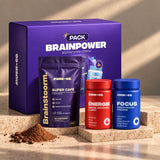
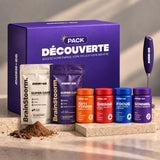
Our mushroom coffee, Brainstoorm, does not contain reishi: it combines Lion's Mane, Cordyceps and Chaga. If you are looking for daily reishi, it is our capsules that contain it. The amounts per capsule are on the label of each product.
How to take it
How to take reishi, morning or evening.
Tradition favours the evening, and that is also when most people take it. But the timing mainly depends on the formula: reishi combined with melatonin is taken at bedtime, while reishi combined with ashwagandha can be taken in the morning.
In the morning
If your formula is designed for the daytime, like Anti-Stress, take it at breakfast, with a glass of water.
At dinner
A light meal, no regular coffee since early afternoon, screens winding down.
30 minutes before bed
If your formula is designed for the night, like Sleep+, this is the right time. No driving or activities requiring alertness afterwards.
Over time
A 30-day course, then a break to take stock. Note your sleep and energy before and during the course so you can judge honestly.
Do not expect an overnight effect, or a spectacular one. Reishi is neither a sleeping pill nor a sedative. If you notice nothing after a month, that is useful information, not a failure.
Precautions
Reishi: who should avoid it?
In short trials, reishi is generally well tolerated. The adverse effects reported are mainly digestive: discomfort, loose stools, dry mouth, sometimes skin rashes. But a few cases of serious liver damage have been published with reishi powders, and the mushroom could enhance the effect of certain medicines. We will devote a full article to its side effects.
Avoid reishi, or ask your doctor, if:
- You are pregnant or breastfeeding: safety data are lacking.
- You take an anticoagulant or antiplatelet drug, or have surgery planned: reishi could increase the risk of bleeding.
- You are being treated for high blood pressure or diabetes: an additive effect cannot be ruled out.
- You are on immunosuppressant treatment, or have an autoimmune disease.
- You have liver disease, or you experience intense fatigue, jaundice or dark urine during a course: stop and see a doctor.
- You have cancer: talk to your care team about any supplement. Reishi does not replace any treatment.
Always stick to the dose stated on the label and do not combine several reishi products. For the broader question of medicinal mushroom safety, our article on the risks of mushrooms and adaptogenic plants sets out the facts.
Your questions
Reishi benefits: your questions.
What are the benefits of reishi?
Reishi is traditionally used for fatigue, sleep and natural defences. In humans, the evidence remains weak: one trial on fatigue, small trials on immune markers, and no demonstrated effect on blood pressure, cholesterol or blood sugar. No health claim is authorised in Europe for this mushroom.
Does reishi help you sleep?
Animal studies suggest so, but no large controlled trial has shown it in humans. It is often taken in the evening, in a routine that combines other ingredients, such as melatonin, which contributes to the reduction of time taken to fall asleep.
When should you take reishi, morning or evening?
Traditionally in the evening. In practice, it depends on the formula: an evening product combined with melatonin is taken 30 minutes before bed, while a product combined with ashwagandha can be taken in the morning. Follow the label.
How much reishi per day?
There is no official dose. Trials have used 1.44 g to 5.4 g of extract a day, and supplements often offer around 1 to 1.5 g of extract. The right dose is the manufacturer's, because it depends on the concentration of the extract.
Does reishi lower cortisol?
We do not know. No controlled human trial has measured cortisol before and after taking reishi. The claim rests on traditional use and animal studies.
How long does reishi take to work?
The available trials lasted 4 to 8 weeks. It is reasonable to take a one-month course, noting your sleep and energy, before judging. Do not expect an immediate effect.
Reishi powder or extract: which should you choose?
A standardised extract is more concentrated and more reliable than a simply ground powder, whose cell wall is hard to digest. A water extract concentrates the polysaccharides, an alcohol extract the triterpenes. Look for a standardisation stated on the label.
What are the downsides of reishi?
It is generally well tolerated in short trials, mainly with digestive problems. A few cases of liver damage have been published with reishi powders. It is not recommended during pregnancy and requires medical advice if you take anticoagulant, diabetes, blood pressure or immunosuppressant treatment.
What is the difference between reishi and ganoderma lucidum?
None: reishi is the Japanese name for ganoderma lucidum, called lingzhi in China and varnished conk in English. A large part of the lingzhi grown in China, however, belongs to a very closely related species, ganoderma lingzhi.
Can you take reishi every day?
Trials have looked at daily use over a few weeks. Beyond that, data are lacking. The safest approach is to take it in one-month courses, with breaks, and to ask your doctor for advice if you are on treatment.
Sources
- Tang W., Gao Y., Chen G. et al. (2005). A randomized, double-blind and placebo-controlled study of a Ganoderma lucidum polysaccharide extract in neurasthenia. Journal of Medicinal Food, 8(1).
- Wachtel-Galor S., Tomlinson B., Benzie I. F. F. (2004). Ganoderma lucidum ("Lingzhi"), a Chinese medicinal mushroom: biomarker responses in a controlled human supplementation study. British Journal of Nutrition, 91(2).
- Klupp N. L., Chang D., Hawke F. et al. (2015). Ganoderma lucidum mushroom for the treatment of cardiovascular risk factors. Cochrane Database of Systematic Reviews, CD007259.
- Jin X., Ruiz Beguerie J., Sze D. M., Chan G. C. (2016). Ganoderma lucidum (Reishi mushroom) for cancer treatment. Cochrane Database of Systematic Reviews, CD007731.
- Wachtel-Galor S., Yuen J., Buswell J. A., Benzie I. F. F. (2011). Ganoderma lucidum (Lingzhi or Reishi): a medicinal mushroom. In Herbal Medicine: Biomolecular and Clinical Aspects, 2nd ed., chapter 9. CRC Press.
- Cao Y., Wu S. H., Dai Y. C. (2012). Species clarification of the prize medicinal Ganoderma mushroom "Lingzhi". Fungal Diversity, 56.
- Cui X. Y., Cui S. Y., Zhang J. et al. (2012). Extract of Ganoderma lucidum prolongs sleep time in rats. Journal of Ethnopharmacology, 139(3).
- Wanmuang H., Leopairut J., Kositchaiwat C. et al. (2007). Fatal fulminant hepatitis associated with Ganoderma lucidum (Lingzhi) mushroom powder. Journal of the Medical Association of Thailand, 90(1).
Keep reading
Further reading.
Reishi is only one of the medicinal mushrooms. Explore our other guides, or our reishi page.

Discover our mushroom and adaptogenic plant supplements
Our vegan formulas, made in Toulouse by a French manufacturer.