








Herbs for Sleep: Which Ones Have Evidence, as Tea or Capsules
By the Mush n Go editorial team - 14 November 2026
By the Mush n Go editorial teamPublished 14 November 202611 min read
Herbs and sleep
The herbs for sleep with the best evidence are valerian, passionflower, lemon balm, chamomile and lavender: each has been tested in clinical trials on sleep. Hops, California poppy, linden and lemon verbena complete the evening tea tray. As a tea for the ritual, as a capsule for the precise dose: here is the herb-by-herb table.
This article focuses on the herbs, their doses and their forms. For the complete method, from tonight's habits to a three-week plan, see our guide insomnia: what to do when you can't sleep any more.

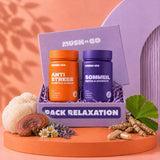
Sleep+
Valerian, reishi, magnesium bisglycinate and melatonin in a single capsule. Melatonin contributes to the reduction of time taken to fall asleep. One capsule thirty minutes before bed.
Discover Sleep+ →
Anti-Stress
Ashwagandha and reishi, with holy basil, schisandra and vitamin B6: the daytime capsule, for those whose night starts being prepared in the morning.
Discover Anti-Stress →Herbs for sleep
Herbs for sleep: nine names, two families.
When you look for herbs for sleep, the same names come up on tea boxes and capsule bottles. They do not all play the same role. They can be sorted into two families, according to what research has published on each.
The five herbs with clinical trials
Valerian, passionflower, lemon balm, chamomile and lavender. Each has been tested in humans, with a dose, a duration and a sleep measure. These are the ones found in capsule formulas.
The four herbs of the tea tray
Hops, California poppy, linden and lemon verbena. Their evening use is recognised by the European Medicines Agency (EMA) as traditional use, and several have been studied in combination.
Two things to keep in mind before the details. First, the form matters as much as the herb: valerian root is dosed as an extract, linden flower is infused. Second, regularity matters as much as the dose: in most trials the herbs are taken every evening for two to four weeks, and it is over that period that participants describe their nights.
The table of the five studied herbs
Form, dose, timing: the herb-by-herb table.
Here, for each herb, is the form used in the trials, the dose studied, the time of intake and what the researchers observed. Full references are at the bottom of the page.
| Herb | Form | Dose studied | Timing | What the trials observed |
|---|---|---|---|---|
|
Valerian Valeriana officinalis |
Root extract in capsules, or root as an infusion | About 400 to 600 mg of dry extract (EMA reference) | 30 minutes to 1 hour before bed | In Bent's meta-analysis (16 trials, 1,093 patients), participants on valerian more often reported better sleep quality. |
|
Passionflower Passiflora incarnata |
Aerial parts as tea, or extract | One cup per evening for 7 days; EMA reference: 1 to 2 g per cup | In the hour before bed | In the Ngan and Conduit trial (41 adults), the sleep quality rated in the sleep diary was better in the “passionflower” weeks. |
|
Lemon balm Melissa officinalis |
Leaves as tea, or leaf extract | 600 mg of extract per day for 15 days | Morning and evening in the trial; as tea after dinner | In Cases's pilot trial (20 volunteers), the insomnia score fell by 42% in fifteen days. |
|
Chamomile Matricaria chamomilla |
Flower heads as tea, or capsule extract | 200 mg of extract twice a day for 28 days | Daytime and evening in the trial; as tea at bedtime | In the Adib-Hajbaghery and Mousavi trial (60 older adults), sleep quality was better in the chamomile group. |
|
Lavender Lavandula angustifolia |
Essential oil in an oral capsule, or flowers as tea | 80 mg of oil per day for 10 weeks | One dose per day | In Kasper's trial (221 adults), the sleep quality score improved more on lavender than on placebo. |
Doses taken from the trials cited or from EMA monographs. For any given product, always follow the dose on the label.
Valerian takes the first row for a simple reason: it is the most studied sleep herb, with around sixty studies pooled in Shinjyo's 2020 review. It is also the one we chose for our evening formula. To learn everything about its root and extracts, see our page valerian. And if you are torn between it and melatonin, the match-up is detailed in our comparison valerian or melatonin.
Hops, California poppy, linden, lemon verbena
The four herbs that complete the evening tea tray.
These four herbs are the classic companions of valerian and passionflower in “calm night” blends. The EMA recognises their traditional evening use, and some have been studied in combination.
| Herb | Form | Dose reference and timing | What we know |
|---|---|---|---|
|
Hops Humulus lupulus |
Cones as an infusion, or extract combined with valerian | 0.5 to 1 g of cones per cup, 30 to 60 minutes before bed | In Koetter's trial (30 patients, 4 weeks), the valerian-hops combination shortened the time to fall asleep measured in the laboratory. |
|
California poppy Eschscholzia californica |
Aerial parts as powder or extract, in capsules | As per the label, at bedtime | Traditional use recognised by the EMA to help sleep. Studied with hawthorn and magnesium in 264 patients over three months (Hanus). |
|
Linden Tilia cordata |
Flowers (bracts) as an infusion | About 1.5 g per cup, after dinner | Traditional use recognised by the EMA for mild nervous tension. The evening tea par excellence, gentle and without bitterness. |
|
Lemon verbena Aloysia citrodora |
Leaves as an infusion, or syrup | One cup after dinner; 10 ml of syrup at bedtime in the trial | In the Afrasiabian trial (100 patients, 4 weeks), sleep scores improved more in the verbena group. |
California poppy, another name for eschscholtzia, is mostly taken in capsules: its taste as an infusion is very bitter. Linden and lemon verbena, by contrast, are cup herbs. They give the blend its roundness and turn the ritual into a real pleasure.
What the studies say
Herbs and sleep: four trials worth knowing.
Four pieces of work, with their exact conditions: sample size, dose, duration, observed result.
Shinjyo et al., 2020 · United Kingdom
This systematic review pooled 60 studies on valerian root, covering 6,894 participants. Its authors describe valerian as a safe herb to support sleep, with more consistent results when the whole root is used repeatedly, evening after evening.
Ngan and Conduit, 2011 · Australia
41 adults aged 18 to 35 drank a cup of passionflower tea every evening for one week, then a placebo tea, in a randomised order. In their sleep diary, the quality of the night was rated significantly higher during the passionflower week.
Cases et al., 2011 · France
20 stressed volunteers with disturbed sleep took 600 mg a day of a lemon balm leaf extract for 15 days, in an open pilot trial. At the end of the study, the insomnia score had fallen by 42%.
Kasper et al., 2010 · Germany
221 adults received 80 mg a day of lavender essential oil in a capsule or a placebo for ten weeks, double-blind. The sleep quality score (Pittsburgh index) improved more in the lavender group.
One thing these four trials have in common: the herb is taken daily, and nights are assessed after one to ten weeks. Full references are at the bottom of the page.
Tea or capsule
Herbal tea for sleep or capsule: each has its role.
Herbal tea for sleep and capsules are not opposites: they complement each other. The first sets up the ritual, the second delivers a constant dose. Many good sleepers use both.
Tea, for the ritual
A hot cup, ten minutes of infusion, screens off: tea marks the end of the day. Ideal for passionflower, lemon balm, chamomile, linden and lemon verbena, whose aerial parts infuse well.
The capsule, for the dose
A standardised extract gives the same amount every evening, with no taste and no preparation. It is the form used in the valerian trials, whose root has a very strong smell as an infusion.
The right timing
Drink your cup an hour before bed rather than at the foot of the bed: you enjoy the warmth of the tea, and the night passes without a trip to the toilet.
Both together
A tea after dinner, a capsule thirty minutes before switching off the light: the ritual and the dose, in the same evening.
Three steps are enough for a good cup of herbal tea.
Measure
One to two teaspoons of dried herb per cup, i.e. 1 to 2 g, the reference in European monographs for passionflower or lavender.
Cover
Pour in water just off the boil, then place a saucer on the cup: the aromatic compounds of lemon balm, chamomile and verbena stay in the infusion.
Wait
Leave to steep for ten minutes. That is also the time to dim the lights and get the bedroom ready.
An evening tea also replaces the last coffee very well. If you still drink some after lunch, our article coffee and sleep: the cut-off time will help you set yours.
Choosing for your night
Which herb for which night?
The best herb is the one that fits your evening. Here is how readers of this blog most often combine them.
- You take a long time to fall asleep: valerian capsule thirty minutes before bed, combined with melatonin. Our techniques for falling asleep quickly complement it.
- Your mind is still racing in bed: passionflower or lemon balm tea after dinner, the two herbs studied in stressed adults.
- You wake up around 3 or 4 a.m.: a regular routine, every evening at the same time, and our article on waking up at 4am.
- You like the ritual of a cup: chamomile, linden and lemon verbena, alone or blended, an hour before bed.
- You want a single step: a capsule formula combining herb, mineral and melatonin, like Sleep+.
Herbs are not alone in the evening natural pharmacy. Reishi, Ganoderma lucidum, is the functional mushroom associated with rest for centuries in Asia: our guide reishi: benefits and uses and our comparison of the best mushroom for sleep are devoted to it.
The evening routine
The evening routine, with Sleep+.
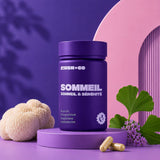
We built Sleep+ around the most studied herb in this table. Each capsule contains 100 mg of valerian root extract (the equivalent of 600 mg of herb), 130 mg of reishi extract, 300 mg of magnesium bisglycinate and 1.9 mg of melatonin. And the claim is official: melatonin contributes to the reduction of time taken to fall asleep.
A single capsule, thirty minutes before bed: the same timing as in the valerian trials. Here is how it fits into a typical evening.
In the morning
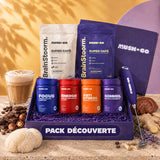
A cup of Brainstoorm, our mushroom coffee with 20 mg of caffeine per cup: four times less than an espresso, for a day that already prepares the night.
During the day
A capsule of Anti-Stress: ashwagandha, reishi, holy basil, schisandra and vitamin B6, which contributes to the normal functioning of the nervous system.
After dinner
Your tea: passionflower, lemon balm, chamomile, linden or lemon verbena. Low lights, phone left in another room.
30 minutes before bed
One Sleep+ capsule with a glass of water. Then a book, and a cool bedroom.
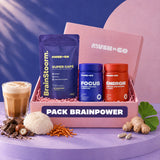
These three products make up the Nuits Paisibles Pack: Brainstoorm in the morning, Anti-Stress during the day, Sleep+ in the evening. It is the complete routine from the guide, delivered in one go, with the 60-day money-back guarantee. Give it three to four weeks, the length of the trials: that is the time it takes for a ritual to become a reflex. The other pillars of the evening are detailed in our evening habits for sleeping well.
Food supplement, to be used as part of a varied and balanced diet and a healthy lifestyle. Do not exceed the stated daily dose.
Precautions
Precautions for use, in brief.
Evening herbs are well tolerated in the trials cited. A few simple rules frame their use.
Ask your doctor or pharmacist for advice if:
- You are pregnant or breastfeeding. Sleep+ is not recommended for pregnant or breastfeeding women or for children under 12.
- You are taking medication, in particular a sleeping pill, an anxiolytic or an antidepressant.
- You need to drive or operate machinery after taking it: keep evening herbs for the evening.
- You are planning an anaesthetic: tell them which herbs you take.
When to see a doctor. If your sleep difficulties come back at least three nights a week for more than three months, or if they weigh on your days, talk to your doctor: there is a reference treatment, described in our guide. If you are in distress or having dark thoughts, 116 123 answers day and night.
Your questions
Herbs and teas for sleep: your questions.
What are the best herbs for sleep?
The herbs for sleep with the best evidence are valerian, passionflower, lemon balm, chamomile and lavender: each has been tested in clinical trials on sleep. Hops, California poppy, linden and lemon verbena complete the list, with a traditional evening use recognised by the European Medicines Agency.
What is the most effective herb for sleep?
Valerian is the most studied sleep herb: a 2020 review pooled 60 studies and nearly 7,000 participants. In Bent's meta-analysis, people on valerian more often reported better sleep quality. It is taken as a root extract, thirty minutes to an hour before bed.
What is the most effective herbal tea for sleep?
Passionflower tea is the one tested most directly: in an Australian trial, one cup a night for a week improved the sleep quality rated by 41 adults. Lemon balm, chamomile, linden and lemon verbena make up the classic evening blends alongside it. Allow 1 to 2 g of herb per cup and ten minutes of covered infusion.
What is the best natural sleep aid?
Among natural options, valerian and melatonin are the two best documented. Melatonin has an official claim in Europe: it contributes to the reduction of time taken to fall asleep. A formula combining the two, like Sleep+, is taken thirty minutes before bed.
What drink helps you sleep at night?
A hot tea of passionflower, lemon balm, chamomile, linden or lemon verbena, drunk an hour before bed, is the evening drink par excellence. It is caffeine-free and sets up an end-of-day ritual. Hot milk and orange blossom infusions are also classics.
What is the best natural product for sleep?
The most complete one combines a studied herb, a mineral and melatonin. Sleep+ brings together valerian, reishi, magnesium bisglycinate and 1.9 mg of melatonin in one capsule, which contributes to the reduction of time taken to fall asleep. One capsule thirty minutes before bed is enough.
Herbal tea or capsule: which should you choose for sleep?
The two complement each other. Tea sets up the evening ritual and suits leaf and flower herbs such as passionflower, lemon balm or linden. The capsule delivers a constant dose of extract, the form used in the valerian trials. Many people drink a tea after dinner and take their capsule thirty minutes before bed.
How long do herbs for sleep take to work?
In the trials, the herbs are taken every evening and sleep is assessed after one to four weeks: seven days for passionflower tea, fifteen days for lemon balm, twenty-eight days for chamomile. Melatonin, for its part, is taken thirty minutes before bed and acts that same evening on falling asleep. Regularity is the key: same time, same gesture, every evening.
Sources
References for this article.
- Shinjyo N., Waddell G., Green J. (2020). Valerian root in treating sleep problems and associated disorders: a systematic review and meta-analysis. Journal of Evidence-Based Integrative Medicine, 25.
- Bent S. et al. (2006). Valerian for sleep: a systematic review and meta-analysis. The American Journal of Medicine, 119(12):1005-1012.
- Ngan A., Conduit R. (2011). A double-blind, placebo-controlled investigation of the effects of Passiflora incarnata (passionflower) herbal tea on subjective sleep quality. Phytotherapy Research, 25(8):1153-1159.
- Cases J. et al. (2011). Pilot trial of Melissa officinalis L. leaf extract in the treatment of volunteers suffering from mild-to-moderate anxiety disorders and sleep disturbances. Mediterranean Journal of Nutrition and Metabolism, 4(3):211-218.
- Adib-Hajbaghery M., Mousavi S.N. (2017). The effects of chamomile extract on sleep quality among elderly people: a clinical trial. Complementary Therapies in Medicine, 35:109-114.
- Kasper S. et al. (2010). Silexan, an orally administered Lavandula oil preparation, is effective in the treatment of "subsyndromal" anxiety disorder. International Clinical Psychopharmacology, 25(5):277-287.
- Koetter U. et al. (2007). A randomized, double blind, placebo-controlled, prospective clinical study to demonstrate clinical efficacy of a fixed valerian hops extract combination (Ze 91019) in patients suffering from non-organic sleep disorder. Phytotherapy Research, 21(9):847-851.
- Hanus M., Lafon J., Mathieu M. (2004). Double-blind, randomised, placebo-controlled study of a fixed combination containing Crataegus oxyacantha, Eschscholtzia californica and magnesium in mild-to-moderate anxiety disorders. Current Medical Research and Opinion, 20(1):63-71.
- Afrasiabian F. et al. (2019). Aloysia citriodora Palau (lemon verbena) for insomnia patients: a randomized, double-blind, placebo-controlled clinical trial. Phytotherapy Research, 33(2):350-359.
- European Medicines Agency (EMA), Committee on Herbal Medicinal Products (HMPC). European Union monographs: Valerianae radix, Passiflorae herba, Melissae folium, Lavandulae flos, Lupuli flos, Eschscholziae herba, Tiliae flos.
- Commission Regulation (EU) No 432/2012: claim “melatonin contributes to the reduction of time taken to fall asleep”.
- Sleep+ (Mush n Go) technical data sheet: composition per capsule.

Discover our mushroom and adaptogenic plant supplements
Our vegan formulas, made in Toulouse by a French manufacturer.