


















Rhodiola Rosea Benefits, Side Effects and the Liver Question
By the Mush n Go editorial team - 13 November 2026
By the Mush n Go editorial teamPublished 14 November 202613 min read
Rhodiola
Rhodiola (Rhodiola rosea) is a plant from cold regions whose root has mainly been tested on stress-related fatigue: in small trials, extracts standardised for rosavins and salidroside did slightly better than a placebo over 2 to 4 weeks. It is generally well tolerated; a risk to the liver is not documented, but the interactions are real.

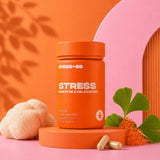
Anti-Stress
Ashwagandha and reishi, with holy basil, schisandra and vitamin B6, which contributes to the reduction of tiredness and fatigue. A different approach from rhodiola, for tense days.
Discover Anti-Stress →
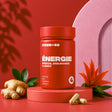
Energy
Cordyceps, maca, ginger and vitamin C in capsules, caffeine-free. Vitamin C contributes to the reduction of tiredness and fatigue. A 30-day course.
Discover Energy →The plant in brief
Rhodiola, a root from the cold.
Rhodiola, or Rhodiola rosea, is a succulent in the stonecrop family (Crassulaceae), like the stonecrops of our rock gardens. It grows in cold regions and at altitude: Scandinavia, Siberia, the Arctic, but also the Alps and the Pyrenees. It is known as roseroot, golden root or arctic root. When cut fresh, its root gives off a scent of roses, hence its name.
It has a long history of folk use in Scandinavia and Russia, against the fatigue of long winters. From the 1960s onwards, Soviet researchers studied it extensively, often in work that is hard to access. More recent trials, notably in Sweden, have revisited the question with modern methods.
The European Medicines Agency (EMA) has published a monograph on rhodiola root under traditional use: a use recognised because of its long history, not an efficacy demonstrated by trials. That sums up its status well. Our page devoted to rhodiola presents the plant in more detail.
Rosavins and salidroside
Standardised to 3% and 1%: why it matters.
Two families of molecules serve as markers for rhodiola. Rosavins (rosavin, rosin and rosarin) are specific to Rhodiola rosea: they are not found in other rhodiola species. Salidroside, on the other hand, also occurs in other species, notably cheaper Chinese rhodiolas.
Most commercial extracts are standardised to about 3% rosavins and 1% salidroside, a ratio close to that of the natural root. This dual standardisation has three advantages.
- It confirms the right species: a product with no rosavins is probably not Rhodiola rosea.
- It allows comparison with the trials, which almost all used standardised extracts.
- It ensures a roughly consistent content from one batch to the next, which raw root powder does not.
This is far from a detail. An analysis of products sold in the UK (Booker et al., 2016) showed that some of them contained no rosavins, or contained species other than the one stated. Reading the standardisation on the label is your first line of protection.
The benefits studied
Rhodiola benefits: fatigue first, the rest second.
Rhodiola has been tested in three main areas: stress-related fatigue, mood and physical performance. The results are more solid for the first, and much weaker for the other two.
| Area studied | What the trials observed | Level of evidence |
|---|---|---|
| Stress-related fatigue | Mental fatigue and attention slightly better than with placebo, over 2 to 4 weeks | Low to moderate: a few small trials |
| Mood | Lower depression scores in adults with mild to moderate depression | Low: few trials, less effective than an antidepressant |
| Sport, endurance | Conflicting results from one trial to another | Low: uncertain effects |
| Memory, learning | A few results in students during exam periods | Very low: old trials, uneven methods |
Summary based on the trials and the systematic review listed in the sources. In Europe, no health claim is authorised for rhodiola.
A 2012 systematic review (Ishaque et al.) sifted through eleven controlled trials on physical and mental fatigue. Its authors judged the results encouraging but inconsistent, and the quality of the studies too variable to draw conclusions. They called for larger trials. That still holds today.
What the studies say
Four trials to understand rhodiola.
The most cited studies, with their exact conditions. Full references are at the bottom of the page.
Darbinyan et al., 2000 · Armenia
56 young doctors on night duty took 170 mg of extract a day or a placebo for 2 weeks, then the groups swapped. A mental fatigue index, based on arithmetic, memory and attention tests, improved with rhodiola. Limitation: the effect was no longer clear in the second period of the trial.
Olsson et al., 2009 · Sweden
60 adults aged 20 to 55 with stress-related fatigue took 576 mg of extract a day or a placebo for 28 days. Fatigue and attention were better than with placebo, and the cortisol awakening response was lower. Limitation: short duration, extract supplied by its manufacturer.
Darbinyan et al., 2007 · Armenia
89 adults with mild to moderate depression took 340 or 680 mg of extract a day or a placebo for 6 weeks. Depressive symptoms fell more with rhodiola. Limitation: small sample, no comparison with a standard treatment.
Mao et al., 2015 · United States
57 adults with depression took rhodiola, sertraline (an antidepressant) or a placebo for 12 weeks. Sertraline did slightly better, rhodiola less well but with half as many adverse effects. No clear difference from placebo. Limitation: a pilot trial, few participants.
The overall picture: a real signal on short-term mental fatigue, observed within 2 to 4 weeks. For mood, talk to your doctor first.
Side effects
Rhodiola side effects: rare, and often linked to timing.
In trials, rhodiola was well tolerated, with adverse effects that were infrequent and mild. The most commonly reported ones are explained by its rather stimulating profile: they mainly appear when it is taken too late or at a high dose.
Sleep
Difficulty falling asleep if it is taken in the afternoon or evening. The solution: take it in the morning.
Jitters
Restlessness, irritability, a feeling of being “on edge”, especially in anxious people or those who drink a lot of coffee.
Dizziness
Dizziness and dry mouth, reported in a few trials, usually short-lived.
Digestion
Nausea or discomfort, rarer, often avoided by taking it with breakfast.
If you are sensitive to caffeine, watch out for the combined effect: rhodiola and coffee taken together can make you jittery. Our article on coffee and anxiety explains why some people react more strongly than others.
Rhodiola and the liver
Rhodiola and liver damage: where does the fear come from?
“Rhodiola liver damage” is one of the most common searches about this plant. Yet clinical trials have not found any liver injury, and rhodiola is not among the plants whose liver toxicity is well established. The fear has several origins, which are worth knowing.
- Confusion with other plants: ashwagandha, high-dose turmeric and black cohosh have been the subject of published cases of liver injury. They are sold on the same shelf, and often in the same blends.
- Drug metabolism: in the lab, rhodiola extracts slow down certain liver enzymes, the cytochromes, which clear many medicines. That is a risk of interaction, not direct toxicity.
- Product quality: an adulterated or contaminated product may contain something other than what is stated.
- Blends: a supplement combining five or six plants makes it hard to identify which one is responsible for an effect.
In practice: if you have liver disease, or take several medicines, ask your doctor's advice before starting a course. And with any supplement, stop and see a doctor if you notice unusual fatigue, dark urine or jaundice. Our guide to the dangers of ashwagandha details these warning signs.
Contraindications
Rhodiola contraindications: who should avoid it.
The EMA monograph advises against rhodiola for under 18s and during pregnancy and breastfeeding, for lack of data. Other situations call for caution, because of its effect on mood and on drug metabolism.
Avoid rhodiola, or ask your doctor's advice first, if:
- You are pregnant or breastfeeding, or under 18.
- You have bipolar disorder: its stimulating effect on mood could trigger a manic episode.
- You take an antidepressant (SSRI, MAOI or other): the combination has not been studied and could add up the effects.
- You take stimulants, ADHD medication or a lot of caffeine.
- You are on anticoagulant, diabetes or blood pressure treatment, or several long-term medicines.
- You have liver disease, or are due to have surgery soon.
If your fatigue has lasted for weeks, rhodiola is not the first answer: anaemia, a thyroid problem or burnout may be the cause. Our article on persistent fatigue tells you when to see a doctor, and the one on the signs of burnout helps you take stock. If you have dark thoughts, call the Samaritans helpline on 116 123, free and open 24 hours a day.
Dose and timing
200 to 400 mg in the morning, not in the evening.
The trials used very variable doses, from 170 to 680 mg of standardised extract a day. Most products offer 200 to 400 mg of standardised extract, to be taken in the morning. Here is a sensible way to go about it.
At breakfast
A single dose, with a little food. This is when its energising profile disturbs sleep the least.
By midday at the latest
If you take two doses, have the second before lunch. Avoid the afternoon if you sleep badly.
For 2 to 4 weeks
The length of most trials. This is the time frame for judging whether the plant does anything for you.
Then a break
With no data beyond a few months, many practitioners advise alternating periods of use with breaks.
Start with the lowest dose offered, especially if you are sensitive to stimulants. More is not better: in the Olsson trial, 576 mg was enough, and higher doses showed no clear advantage. For revision periods, our 10 habits to stay focused count for more than any plant.
Saffron, griffonia, ashwagandha
Rhodiola and saffron, griffonia and rhodiola: are the combinations worth it?
In pharmacies, rhodiola is rarely sold on its own. It is often combined with saffron, griffonia or ashwagandha. Each combination has its logic, and its limits.
| Combination | The logic | What you need to know |
|---|---|---|
| Rhodiola and saffron | Saffron has been tested on mood in several small trials, at about 30 mg a day | A few open trials of the combination, with no placebo: weak evidence |
| Griffonia and rhodiola | Griffonia seeds provide 5-HTP, a precursor of serotonin | Never with an antidepressant: risk of excess serotonin |
| Rhodiola and ashwagandha | An energising plant in the morning and a calming one, each offsetting the other | Two opposite profiles: when you take them matters more than the blend |
A combination is not necessarily more effective than each plant on its own: it is rarely tested as such. And it multiplies the risk of interactions.
Rhodiola or ashwagandha? Both are classed as adaptogenic plants, but their profiles are almost opposite: rhodiola rather in the morning for fatigue, ashwagandha rather for tension and sleep. Our guide to ashwagandha benefits details its trials, and our guide to the levers for lowering cortisol puts these plants in their proper place.
Choosing it well
Rhodiola reviews: what to read on the label.
Reviews of rhodiola are very mixed: some people describe a real boost in the morning, others feel nothing, and others still become jittery. Individual sensitivity matters, but so does product quality. Before you buy, check the following points.
The species
“Rhodiola rosea” spelled out in full, root or rhizome. Other species have not been tested in the same trials.
Standardisation
Rosavins and salidroside stated, ideally around 3% and 1%. Standardisation for salidroside alone does not guarantee the species.
The formula
Rhodiola on its own, or few ingredients, lets you find out what suits you. Be wary of blends with endless ingredient lists.
For your days, Mush n Go has put together two formulas: Energy combines cordyceps, maca, ginger and vitamin C, which contributes to the reduction of tiredness and fatigue, and Anti-Stress brings together ashwagandha, reishi, holy basil, schisandra and vitamin B6. To compare other energising plants, read our guide to panax, red ginseng or Siberian ginseng.
Your questions
Rhodiola: your questions.
What are the benefits of rhodiola?
Rhodiola has mainly been tested on stress-related fatigue: in small trials, standardised extracts improved mental fatigue and attention slightly more than a placebo, over 2 to 4 weeks. The results on mood and sport are weaker. No health claim is authorised for this plant in Europe.
Is rhodiola bad for the liver?
Clinical trials have not found any liver injury, and rhodiola is not one of the plants with established liver toxicity. It can, however, slow down the liver enzymes that clear certain medicines. If you have liver disease or are on treatment, ask your doctor's advice.
What are the side effects of rhodiola?
They are rare and mild in trials: difficulty falling asleep if it is taken late, jitters, irritability, dizziness or dry mouth. Taking it in the morning and starting with a low dose avoids most of them.
What are the contraindications for rhodiola?
It is not advised during pregnancy and breastfeeding, under the age of 18, or for people with bipolar disorder. Medical advice is needed if you take an antidepressant, a stimulant, an anticoagulant or several long-term medicines.
When should you take rhodiola, morning or evening?
In the morning, at breakfast, or by midday at the latest. Its rather energising profile can make it harder to fall asleep if it is taken in the afternoon or evening.
How long does rhodiola take to work?
The trials lasted from 2 to 6 weeks, and the first effects on fatigue were measured by the end of those periods. If you notice nothing after four weeks of regular use, the plant probably does not suit you.
Can you combine rhodiola and saffron?
It is a common combination in pharmacies. Saffron has been studied for mood, but the combination itself has only been the subject of a few trials with no placebo. It calls for the same precautions as each plant, especially with an antidepressant.
Griffonia and rhodiola: is it safe?
Griffonia provides 5-HTP, a precursor of serotonin. With an antidepressant, it exposes you to excess serotonin: the combination must then be avoided. If you are not on treatment, ask your pharmacist for advice.
Can you take rhodiola with coffee?
Yes, for most people, but both have a stimulating effect that can add up. If you become jittery or sleep badly, cut down on coffee or switch to a drink with less caffeine.
Sources
- Darbinyan V. et al. (2000). Rhodiola rosea in stress induced fatigue: a double blind cross-over study of a standardized extract SHR-5 with a repeated low-dose regimen on the mental performance of healthy physicians during night duty. Phytomedicine, 7(5).
- Olsson E. M., von Schéele B., Panossian A. G. (2009). A randomised, double-blind, placebo-controlled, parallel-group study of the standardised extract SHR-5 of the roots of Rhodiola rosea in the treatment of subjects with stress-related fatigue. Planta Medica, 75(2).
- Darbinyan V. et al. (2007). Clinical trial of Rhodiola rosea L. extract SHR-5 in the treatment of mild to moderate depression. Nordic Journal of Psychiatry, 61(5).
- Mao J. J. et al. (2015). Rhodiola rosea versus sertraline for major depressive disorder: a randomized placebo-controlled trial. Phytomedicine, 22(3).
- Ishaque S. et al. (2012). Rhodiola rosea for physical and mental fatigue: a systematic review. BMC Complementary and Alternative Medicine, 12.
- Booker A. et al. (2016). From traceability to quality: a comparative study of commercial Rhodiola rosea products. Phytomedicine, 23.
- European Medicines Agency, HMPC. Community herbal monograph on Rhodiola rosea L., rhizoma et radix.
Keep reading
Further reading.
Rhodiola is one of the plants used for fatigue and stress. Discover our other guides, or take a look at Energy.

Discover our mushroom and adaptogenic plant supplements
Our vegan formulas, made in Toulouse by a French manufacturer.