
















Ashwagandha Side Effects, Dangers and Contraindications
By the Mush n Go editorial team - 04 November 2026
By the Mush n Go editorial teamPublished 4 November 202613 min read
Ashwagandha and safety
The most serious of the ashwagandha side effects is rare but documented: liver injury, which usually appears 2 to 12 weeks after starting to take it. For most adults, side effects stay mild (digestion, drowsiness). Pregnancy, breastfeeding, under 18s, thyroid or liver disease: avoid it.

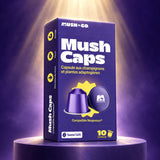
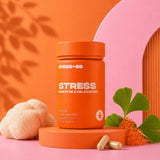
Anti-Stress
Ashwagandha standardised for withanolides and reishi, with holy basil, schisandra and vitamin B6, which contributes to normal functioning of the nervous system. For adults with no contraindications.
Discover Anti-Stress →
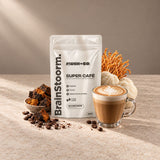
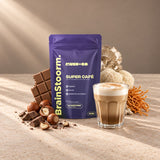
Brainstoorm
Our mushroom coffee: Lion's Mane, Cordyceps and Chaga at 1,000 mg each, plus maca and ashwagandha, on a base of chicory and organic cacao, with 20 mg of caffeine per cup.
Discover Brainstoorm →The verdict in brief
Ashwagandha is well tolerated, but not by everyone.
Ashwagandha (Withania somnifera) is a plant from Ayurvedic medicine, in the nightshade family, like tomatoes and deadly nightshade. The root is the part mostly used, rich in withanolides, molecules similar to steroids. It is one of the best-studied plants in its category: several dozen controlled trials in adults, lasting from a few weeks to a few months. If you first want to know what those trials observed, our guide ashwagandha benefits: what the studies really show covers it.
In these trials, adverse effects are rare, mild, and often just as frequent in the placebo group. But an eight-week trial on a few dozen healthy volunteers cannot pick up an effect that affects one person in several thousand. That is exactly the profile of liver injury: rare, unpredictable, and discovered through reports after the product reached the market.
What is common
Digestive discomfort, nausea, loose stools, drowsiness, a heavy feeling in the morning. Usually linked to the dose or the time you take it.
What is rare
Liver injury with jaundice, changes in thyroid tests, allergic reactions. Unpredictable, which is why it pays to know the signs.
What is not advised
Pregnancy, breastfeeding, under 18s, thyroid, liver or heart disease, hyperandrogenism, sedative medication.
What remains unknown
The effects of taking it continuously over several years: trials rarely go beyond three months.
So remember two things. For a healthy adult who sticks to the dose, the risk is low. And that risk is not zero: it justifies a few simple precautions, set out below.
Common side effects
Ashwagandha side effects: digestion and sleep first.
The ashwagandha side effects reported in trials are almost always benign. They generally appear in the first few days, and go away when you lower the dose or change the time you take it.
| What you feel | Likely cause | What you can do |
|---|---|---|
| Nausea, heartburn, bloating | Taken on an empty stomach, too high a dose from the start | Take the capsule with a meal |
| Loose stools, diarrhoea | Digestive sensitivity, large amounts of root powder | Lower the dose, choose an extract over a raw powder |
| Daytime drowsiness | Calming effect in some people | Move the dose to the end of the day, avoid driving at first |
| Groggy on waking | Taken late or a high dose in the evening | Take it earlier, at dinner, or switch to the morning |
| Headaches | Rare, often temporary | Stay well hydrated, stop if it persists |
Summary of adverse effects reported in clinical trials in adults. Any symptom that lasts or gets worse means you should stop and talk to a doctor.
The morning “hangover” that many people describe on forums is mostly explained by a high dose taken just before bed. The plant was named somnifera for a reason: in some people, it causes drowsiness. That is not dangerous in itself, but take it seriously before driving or if you already take a medicine that makes you sleepy.
So the time you take it matters as much as the dose. Our article on how to lower cortisol puts ashwagandha in context alongside other levers, many of which have nothing to do with a supplement.
The liver: the real risk
Ashwagandha and the liver: rare, but worth knowing about.
Since the late 2010s, liver specialists have described patients whose liver was damaged after taking ashwagandha supplements. The first major series came from Iceland and the US DILIN network, which specialises in liver injury caused by medicines and supplements. Other cases followed, in Europe, India and the United States, between 2020 and 2024. The LiverTox database, run by the US National Institutes of Health, now lists ashwagandha among the possible, but rare, causes of liver injury.
The picture described is fairly consistent. Most often it is a so-called cholestatic or mixed hepatitis: bile does not flow properly, causing jaundice and sometimes intense itching. Symptoms appear after a few weeks of use. In the vast majority of cases, everything returns to normal once the supplement is stopped, within one to several months. Severe forms have been reported, mainly in people who already had liver disease.
How often does it happen? Nobody can give a precise figure, because the exact number of users is unknown. Set against the millions of people who take it worldwide, the number of published cases remains very low. But most supplement-related liver injuries are never published, and many cases involve several plants: so it is hard to put the blame on ashwagandha alone.
Stop ashwagandha and see a doctor promptly if you notice:
- Yellowing of the skin or the whites of the eyes.
- Dark, tea-coloured urine, or unusually pale stools.
- Itching all over the body, with no rash or spots.
- Unusual tiredness, loss of appetite, nausea or pain under the ribs on the right side.
- Tell your doctor about every supplement you take, even those that seem harmless: it is often the key to the diagnosis.
These signs are not specific to ashwagandha: they apply to any supplement, and to many medicines. Knowing them is enough to turn a rare risk into a managed one, because liver injury spotted early and followed by prompt withdrawal usually heals without lasting damage. Our article on the risks of mushrooms and adaptogenic plants applies the same logic to the other ingredients in the category.
What the studies say
Ashwagandha: four publications to know.
Two case series on the liver, one trial on the thyroid, one trial on tolerability. Full references are at the bottom of the page.
Björnsson et al., 2020 · Iceland and United States
Five patients who developed liver injury after supplements containing ashwagandha: three in Iceland, two in the US DILIN network. Symptoms appeared after 2 to 12 weeks, with jaundice and itching. None had liver failure, and their tests returned to normal within 1 to 5 months. Limitation: four patients were taking other supplements.
Philips et al., 2023 · India
A series from three hospitals, from 2019 to 2022. Out of 23 liver injuries linked to products containing ashwagandha, the authors kept only 8 cases with an ashwagandha-only formula. The injury was mainly cholestatic and long-lasting, but reversible in most. Limitation: a retrospective series, with no systematic analysis of the products.
Sharma et al., 2018 · India
50 adults with subclinical hypothyroidism, 600 mg a day of root extract or placebo, for 8 weeks. In the ashwagandha group, T3 and T4 hormones rose and TSH fell. Limitation: a small, short trial in a very specific population. But it confirms that the plant acts on the thyroid.
Chandrasekhar et al., 2012 · India
64 stressed adults, 300 mg of root extract twice a day or placebo, for 60 days. The adverse effects reported were mild (nasal congestion, constipation, drowsiness, reduced appetite) and just as frequent on placebo. Limitation: small sample, short duration, a single commercial extract tested.
The trials are reassuring in the short term and for most people. The case series are a reminder that a rare, idiosyncratic reaction can happen to anyone. Both are true at the same time.
Ashwagandha and the thyroid
A plant that shifts thyroid hormones.
Ashwagandha and the thyroid is the question many readers ask, often after reading that it “helps” with hypothyroidism. The starting point is the Sharma trial: in people whose thyroid was running slightly slow, eight weeks of extract raised T4 and lowered TSH. Cases of hyperthyroidism, and even thyrotoxicosis, have also been described in people taking ashwagandha.
This action on the thyroid is not good news for self-medication. If you are treated with levothyroxine, a plant that also raises T4 can upset a dose adjusted to the microgram. If you have hyperthyroidism or Graves' disease, it can make things worse. And if you take an antithyroid drug, it can work against the treatment.
- Treated hypothyroidism: no ashwagandha without your doctor's agreement, so they can monitor your TSH.
- Hyperthyroidism, Graves' disease, toxic nodule: avoid it.
- Hashimoto's: ANSES advises against the plant for any thyroid disease, whatever the type.
- Thyroid test coming up: tell your doctor you take it, as it can change the results.
- Palpitations, tremors, unexplained weight loss on ashwagandha: stop and see a doctor.
This is one of the reasons why the ANSES opinion explicitly lists thyroid conditions among the at-risk situations. The plant is not a thyroid treatment, and it should not be used as one.
Who should avoid it
Pregnancy, breastfeeding, children: the answer is no.
In 2024, the French health agency ANSES published an opinion on food supplements containing ashwagandha, following reports received through its nutrivigilance scheme. The agency does not ban the plant, but it advises several groups against taking it, because of a lack of safety data, effects observed in animals and humans, and a traditional use to induce miscarriage.
According to ANSES, ashwagandha is not recommended for the following people:
- Pregnant or breastfeeding women.
- Children and teenagers under 18.
- People with thyroid disease or hyperandrogenism (such as some forms of polycystic ovary syndrome).
- People with liver or heart disease.
- People taking medicines that act on the central nervous system, such as sleeping pills or anti-anxiety drugs.
To be on the safe side, add to this list people with an autoimmune disease (lupus, rheumatoid arthritis, multiple sclerosis), because ashwagandha seems to stimulate certain immune functions, and anyone due to have surgery: stop at least two weeks beforehand, because of the sedative effect that can add to the anaesthetic.
Men on hormone treatment, particularly for the prostate, should also talk to their doctor: a few trials have observed a rise in testosterone with ashwagandha. Finally, the plant belongs to the nightshade family: a known allergy to this family is one more reason to avoid it.
Interactions
Medicines not to combine without medical advice.
Most of ashwagandha's interactions are theoretical: they follow from what the plant does in the body, not from well-documented incidents. That is no reason to ignore them. Here are the families of medicines concerned.
| Medicine | Why caution is needed | Examples |
|---|---|---|
| Sedatives, sleeping pills, anti-anxiety drugs | The calming effects add up: drowsiness, reduced alertness | Benzodiazepines, zolpidem, some antihistamines |
| Hormones and thyroid treatments | The plant changes T4 and TSH | Levothyroxine, antithyroid drugs |
| Immunosuppressants | The plant could stimulate immunity, the opposite of the treatment | After a transplant, in autoimmune diseases |
| Diabetes medicines | A few trials show a drop in blood sugar: risk of hypoglycaemia | Insulin, sulphonylureas, metformin |
| Blood pressure medicines | Possible drop in blood pressure, adding to the treatment | All blood pressure treatments |
Not an exhaustive list. If you are on long-term treatment, show the supplement label to your pharmacist before you start.
The same logic applies to combining plants: mixing several calming plants, such as ashwagandha, valerian or melatonin, increases drowsiness. That is often the point in the evening, much less so behind the wheel.
Status in France and Europe
Allowed in France, banned in Denmark.
In France, ashwagandha is not banned in food supplements. The 2024 ANSES opinion recommends restrictions by group and calls for better consumer information, without changing the legal framework for healthy adults. We will devote a full article to the question “is ashwagandha banned in France?”, because it comes up very often.
Denmark made a different choice. The Technical University of Denmark (DTU) issued an assessment in 2020 concluding that it could not set a risk-free dose, notably because of possible effects on sex hormones, the thyroid and pregnancy. On that basis, the Danish authorities banned the plant in supplements in 2023. The assessment was criticised, in particular because it did not distinguish the root from the leaves, but the ban was applied. Other Nordic countries have since looked into the question.
France
Allowed. ANSES opinion in 2024: not recommended for several groups, warnings recommended.
Denmark
Banned in supplements since 2023, based on a 2020 DTU assessment.
European Union
No harmonised list of plants: each country decides, hence very different statuses.
What this changes
For you, if you are in France: respect the contraindications and choose a traceable, tested product.
These differences do not mean one country is right and the other wrong. They reflect the same uncertainty, handled with more or less caution. If you are hesitant, other plants in the same category exist, such as rhodiola or holy basil, each with its own precautions. Our reishi or ashwagandha comparison can also help you choose.
Choosing a safe product
Choosing your ashwagandha, in four checks.
Part of the risk lies in the product itself: a poorly identified powder, root mixed with leaves, heavy metal contamination or a fanciful dose. A few checks are enough to rule out bad products.
The part of the plant
Choose a root extract, the most studied part. The leaves have a different withanolide profile and are less documented in humans.
The stated standardisation
A serious extract states its withanolide content. Without that figure, there is no way of knowing what you are really taking.
Lab tests
Heavy metals, pesticides, microbial contaminants: a serious brand can show its lab results, batch by batch.
The fourth check, and the simplest: the dose and what the label says. A product that does not mention the contraindications (pregnancy, thyroid, under 18s) is not playing fair. At Mush n Go, ashwagandha goes into Anti-Stress, as an extract standardised for withanolides, and into Brainstoorm. Our laboratory analyses are available to view, and that is something some customers point out.
“[…] being able to access the mushrooms' laboratory analyses and actually check the stated doses”
★★★★★ Axel B. · 27 August 2026
Real Trustpilot review, quoted as is. Our products containing ashwagandha are not recommended for the same groups as those listed above.
And a common-sense rule on duration: take it in courses of a few weeks, as in the trials, followed by a break, rather than continuously for years. To find out all about the plant itself, see our ashwagandha page.
Your questions
Ashwagandha side effects: your questions.
Is ashwagandha dangerous?
For most healthy adults, at the doses studied and over a few weeks, it is well tolerated. The main danger is rare: liver injury, reversible in the vast majority of cases once stopped. It is not recommended during pregnancy and breastfeeding, under 18, or with thyroid or liver disease.
What are the side effects of ashwagandha?
The most common are digestive: nausea, loose stools, bloating. Next come drowsiness and a groggy feeling in the morning, especially with a high dose taken in the evening. They usually go away when you lower the dose or take the capsule with a meal.
Is ashwagandha bad for your liver?
For the vast majority of users, no. But cases of hepatitis have been published since 2020, appearing after 2 to 12 weeks of use. Jaundice, dark urine or itching mean you should stop immediately and see a doctor. People who already have liver disease should avoid it.
Can you take ashwagandha with hypothyroidism?
Not without your doctor's agreement. One trial showed a rise in T4 and a fall in TSH with ashwagandha, which can upset levothyroxine treatment. ANSES advises against the plant in thyroid disease.
Is ashwagandha banned in France?
No. It remains allowed in food supplements. In 2024, ANSES published an opinion advising certain groups against it, without banning it. Denmark, on the other hand, banned it in 2023.
Why does ashwagandha make you sleepy?
The plant has a calming effect in some people, hence its Latin name, somnifera. If it makes you drowsy during the day, take it towards the end of the day instead, and avoid driving until you know how it affects you.
Can you take ashwagandha when pregnant or breastfeeding?
No. ANSES advises against it during pregnancy and breastfeeding, because of a lack of safety data and a traditional use to induce abortion. This applies to all products containing it, supplements and drinks alike.
What should you never mix with ashwagandha?
Without medical advice, avoid combining it with sedatives and sleeping pills, thyroid treatments, immunosuppressants, diabetes medicines and blood pressure medicines. Show the label to your pharmacist if you are on long-term treatment.
How long can you take ashwagandha for?
Trials usually last 8 to 12 weeks. Beyond that, data are lacking. The safest approach is to take it in courses of a few weeks, followed by a break, and to stop at the slightest unusual sign.
Sources
- Björnsson H. K., Björnsson E. S., Avula B. et al. (2020). Ashwagandha-induced liver injury: a case series from Iceland and the US Drug-Induced Liver Injury Network. Liver International, 40(4), 825-829.
- Philips C. A., Valsan A., Theruvath A. H. et al. (2023). Ashwagandha-induced liver injury: a case series from India and literature review. Hepatology Communications, 7(10), e0270.
- Sharma A. K., Basu I., Singh S. (2018). Efficacy and safety of ashwagandha root extract in subclinical hypothyroid patients: a double-blind, randomized placebo-controlled trial. Journal of Alternative and Complementary Medicine, 24(3), 243-248.
- Chandrasekhar K., Kapoor J., Anishetty S. (2012). A prospective, randomized double-blind, placebo-controlled study of safety and efficacy of a high-concentration full-spectrum extract of ashwagandha root in reducing stress and anxiety in adults. Indian Journal of Psychological Medicine, 34(3), 255-262.
- ANSES (2024). Opinion on the risks associated with the consumption of food supplements containing ashwagandha (Withania somnifera). Request no. 2021-SA-0077.
- DTU Fødevareinstituttet (2020). Risk assessment of Withania somnifera (ashwagandha), report for the Danish Veterinary and Food Administration. Technical University of Denmark.
- LiverTox: Clinical and Research Information on Drug-Induced Liver Injury. Ashwagandha. National Institute of Diabetes and Digestive and Kidney Diseases, Bethesda.
Keep reading
Further reading.
Ashwagandha is only one of the options for dealing with stress. Explore our other guides, or our page dedicated to the plant.

Discover our mushroom and adaptogenic plant supplements
Our vegan formulas, made in Toulouse by a French manufacturer.