


















Maca Root Benefits, Dangers and How Long It Takes to Work
By the Mush n Go editorial team - 07 November 2026
By the Mush n Go editorial teamPublished 7 November 202613 min read
Maca
The best-documented maca root benefits concern sexual desire and mood: in small trials, 1.5 to 3.5 g of powder a day did better than placebo, with effects visible after 6 to 12 weeks. Maca is not a stimulant and does not alter hormones in these studies. It remains a food, with a few real precautions.
The complete guide: mushroom coffee, benefits and side effects →

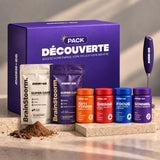
Brainstoorm
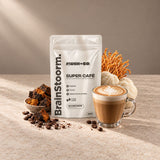
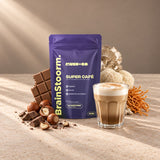
Lion's Mane, Cordyceps and Chaga at 1,000 mg each, maca, ashwagandha, organic cacao and chicory, and just 20 mg of caffeine per cup.
Discover Brainstoorm →
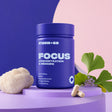
Energy
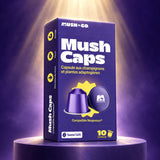
Cordyceps, maca, ginger and vitamin C in capsules. Vitamin C contributes to the reduction of tiredness and fatigue. A 30-day course, without a drop of coffee.
Discover Energy →What maca is
Maca is a root from the Andes, not a stimulant.
Maca, Latin name Lepidium meyenii, is a plant in the crucifer family, the family of radish, turnip and cabbage. The part eaten is the swollen section between the root and the stem, which looks like a big round radish. It grows on the high plateaus of central Peru, between 3,500 and 4,500 metres above sea level, where almost no other crop can withstand the cold and wind.
Locally, it is first and foremost a food. It is dried in the sun, then cooked, ground into flour, and made into porridges, drinks and desserts. It is rich in carbohydrates and contains protein, fibre and minerals. It is this dried, ground root that you find in Europe as a powder or in capsules.
What it is not matters just as much. Maca contains neither caffeine nor hormones. It does not give you a jolt like an espresso, and studies in men have not shown a rise in testosterone or oestrogens. Its own molecules, the macamides and macaenes, are found in no other plant, and their exact role is still poorly understood. To find out more about the plant, see our maca page.
Yellow, red, black
Black, red or yellow maca: does the colour make any difference?
A single variety of maca produces roots of different colours: creamy yellow, purplish red, black or grey. Yellow is by far the most common. Peruvians attribute different uses to them, and the team of Gustavo Gonzales, at Cayetano Heredia University in Lima, set out to test these differences, mainly in animals.
| Colour | What has been observed | Level of evidence in humans |
|---|---|---|
| Yellow | The most common, used in most human trials, often without specifying the colour | The one the existing trials are based on |
| Red | In rats, an effect on prostate size, absent with the other colours | Very weak: mainly animal data |
| Black | In rats, more marked effects on sperm production and memory | Very weak: mainly animal data |
Summary of the work by Gonzales et al. on maca ecotypes. Colour reflects different levels of certain compounds, but no serious human trial compares the three colours with each other.
Black maca is often sold at a higher price and presented as “maca for men”. This is an extrapolation from animal studies. If in doubt, yellow maca, or a blend of all three colours, matches what has been tested in humans.
The benefits studied
Maca root benefits: real effects, but modest ones.
Maca is credited with many things: energy, fertility, hormonal balance, endurance. Controlled trials in humans are few, and almost all small. Yet they point to a fairly consistent trend, which comes down to a few points.
- Sexual desire: the most studied area. Several small trials find higher reported desire than with placebo, in men and women, with no hormonal change.
- Mood: slightly lower anxiety and low-mood scores have been observed in postmenopausal women.
- Male fertility: a few studies show improved sperm parameters, in very small groups.
- Energy and sport: a trial in cyclists observed a better time over 40 km, with only eight participants.
- The rest: memory, bone density and prostate rely mainly on animal studies.
A 2010 Korean review (Shin et al.) pooled the trials on sexual function and concluded the evidence was “limited”: positive results, but too few trials, too small, for a firm conclusion. That is the state of the science today, and it is already more than for many plants sold with greater confidence.
What the studies say
Four trials to judge maca on the evidence.
The most cited studies, with their exact conditions. Full references are at the bottom of the page.
Gonzales et al., 2002 · Peru
57 men aged 21 to 56, 1.5 g or 3 g of maca a day or a placebo, for 12 weeks. Reported sexual desire increased from the 8th week in the maca groups. Testosterone and the other hormones measured did not change. Limitation: self-reported questionnaire, small sample.
Brooks et al., 2008 · Australia
14 postmenopausal women, 3.5 g of maca a day then a placebo, for 6 weeks each. Lower anxiety, low-mood and sexual dysfunction scores on maca. Oestradiol, FSH and LH remained stable. Limitation: very small group, short duration.
Dording et al., 2008 · United States
20 adults with sexual problems linked to their antidepressant, 1.5 g or 3 g a day for 12 weeks. Only the 3 g dose improved libido. A 2015 trial by the same team, in 45 women, found a similar trend. Limitation: small groups.
Stone et al., 2009 · United Kingdom
8 trained cyclists, 2 g of maca extract a day or a placebo for 14 days. Time in a 40 km time trial improved on maca, as did reported desire. Limitation: eight participants, a single trial.
The common thread: effects on how people feel, at doses of a few grams, with no measurable effect on hormones. That is what sets maca apart from a hormonal product, and what explains why it is well tolerated.
For men, for women
Maca for men, maca for women: what really changes.
Searches for “maca for men” and “maca for women” are among the most frequent. In reality, the plant is the same, and the trials were carried out in both sexes. It is the expectations that differ.
In men
Higher reported sexual desire after 8 to 12 weeks in the Gonzales trial, with no rise in testosterone. Some data on sperm quality, in very small groups.
In women
After the menopause, slightly lower anxiety and low-mood scores in two small trials, in Australia and China. In women on antidepressants, slightly better libido.
What they share
Doses of 1.5 to 3.5 g a day, a slow effect, and no change in the hormones measured in human trials.
What is missing
Large independent trials, and data on use over several months or years.
During the menopause, maca is one of the options often mentioned, alongside other plants and lifestyle. Our guide to natural menopause remedies reviews them. And if fatigue is weighing you down, man or woman, start by ruling out a medical cause: our article on persistent fatigue explains when to see a doctor.
How long it takes
How long does maca take to work? Allow several weeks.
Maca does not work like coffee. You will not feel anything in particular an hour after the first dose. In trials, the differences from placebo appear after several weeks of daily use, with timings that vary depending on what is being measured.
First week
Usually nothing noticeable, except sometimes mild digestive discomfort with raw powder. This is the time to start with a small dose.
Around 2 weeks
The timing of the cyclist trial, the shortest published. A single small trial, to be taken as an indication.
Around 6 weeks
The length of the trials in postmenopausal women, where mood scores began to differ from placebo.
From 8 to 12 weeks
The timing observed for sexual desire in the Gonzales trial, and the length of most trials. This is the right horizon to judge by.
In practice, a course of maca should be judged over two to three months, not a few days. Note how you feel before you start, then after six and twelve weeks: it is more reliable than your impression in the moment.
The real dangers
Maca dangers: rare, but not non-existent.
Maca has been eaten as a food for centuries in the Andes, and trials have not found any serious adverse effect at the doses studied. That does not mean it suits everyone. Three points deserve your attention.
First, the thyroid. Like cabbage or turnip, maca contains glucosinolates, compounds that can interfere with the thyroid's use of iodine when eaten raw and in large amounts. In Peru, in fact, it is never eaten raw: it is cooked. Next, hormones: human trials show no hormonal effect, but some laboratory work has found oestrogen-like activity with certain extracts. Finally, digestion: raw powder, rich in starch, can cause bloating.
Avoid maca, or ask your doctor first, if:
- You have thyroid disease, especially hypothyroidism or a goitre, or take thyroid medication.
- You have or have had a hormone-sensitive cancer (breast, uterus, ovary, prostate), endometriosis or fibroids.
- You are pregnant or breastfeeding: the data are insufficient.
- You are on hormone treatment, or treatment for mood.
- You have a sensitive gut: in that case choose gelatinised maca, and start small.
- You have poorly controlled high blood pressure: to be safe, talk to your doctor before any course of a plant.
As with any plant, buy maca whose origin and testing are stated: heavy metals and contamination are a risk linked to the product, not to the plant itself. For an overview, also read our guide to the risks of mushrooms and adaptogenic plants.
Powder, gelatinised, capsules
Maca powder or gelatinised maca: which should you choose?
In shops, maca comes in three forms. The name “gelatinised” is misleading: there is no gelatine. The root is heated and pressed, which transforms its starch, like cooking. It is the modern version of the cooked maca of the Andes.
| Form | What it is | Who it's for |
|---|---|---|
| Raw maca powder | Dried, ground root, uncooked. Nutty, malty taste. | Those who digest it well, in small amounts in a smoothie |
| Gelatinised maca | Root cooked under pressure, starch pre-digested, gentler on the gut | Sensitive guts, long courses |
| Extract in capsules | Concentrated extract, dose reduced to a few hundred milligrams | Those who dislike the taste, or combine it with other plants |
Human trials mainly used root powder or tablets, at 1.5-3.5 g a day. A concentrated extract is not directly comparable to these doses.
As for taste, maca has a mild, slightly malty flavour that goes well with cacao, banana or coffee. That is why it often turns up in hot drinks: our article on maca coffee gives a simple recipe.
Dose and timing
What dose of maca, and when?
Trials used 1.5 to 3.5 g of powder a day, roughly one level teaspoon to one tablespoon. The Dording trial suggests that 3 g works better than 1.5 g for libido. Beyond that, nothing shows any extra benefit.
Start small
Half a teaspoon a day in the first week, to check your digestive tolerance. Then increase up to the dose on the label.
Morning or midday
Maca contains no caffeine, but many people take it in the morning, in a drink or a bowl, out of habit. No study compares timings.
Keep going for three months
Judge it over 8 to 12 weeks, then take a break of a few weeks. That is the length of the trials, as there are no data beyond it.
Maca is often combined with other plants and mushrooms in “energy” formulas, for example with cordyceps or ginger. If cordyceps interests you, our article on cordyceps benefits reviews the studies. And to compare with another great classic, read our guide to ashwagandha benefits.
Maca at Mush n Go
Two formulas, two ways to take it.
We use maca in two products, each time with other ingredients. In Energy, it is combined with cordyceps, ginger and vitamin C, which contributes to the reduction of tiredness and fatigue. The formula comes in capsules and contains no caffeine. In Brainstoorm, our powdered mushroom coffee, it accompanies Lion's Mane, Cordyceps and Chaga at 1,000 mg each, ashwagandha, organic cacao and roasted chicory, with 20 mg of caffeine per cup, compared with around 80 mg for an espresso.
“I love your coffee with that little hint of chicory, I'm hooked now.”
★★★★★ Didier P. · 28 August 2026
“I particularly appreciate the steadier energy it gives: no jitters and no slump.”
★★★★★ Nawel F. · 7 January 2026
Real Trustpilot reviews of Brainstoorm, which contains maca among other active ingredients, quoted as written.
These reviews concern a complete drink, not maca alone. The detailed composition is on each product page, and our laboratory analyses are public. Our recipes are blended in Toulouse.
Your questions
Maca: your questions.
What are the benefits of maca root?
The best-studied maca root benefits concern sexual desire and mood. In small trials, 1.5 to 3.5 g of powder a day for 6 to 12 weeks did better than placebo, without altering hormones. The evidence remains limited, for lack of large trials.
How long does maca take to work?
Allow several weeks. In trials, effects on mood appear at around 6 weeks and those on sexual desire from 8 weeks. So a course should be judged over two to three months.
Is maca dangerous?
Trials have not found any serious adverse effect at usual doses. Caution is needed with thyroid disease, hormone-sensitive cancer, pregnancy or breastfeeding. Raw powder can also cause bloating.
What is the difference between black, red and yellow maca?
They are root colours of the same plant. In animals, black maca showed more effects on sperm production and memory, red maca on the prostate. In humans, no serious trial compares them.
Is maca good for men?
In a 12-week trial in 57 men, 1.5 or 3 g of maca a day increased reported sexual desire from the 8th week, without changing testosterone. A few small studies also look at sperm quality, with no firm conclusion.
Is maca good for women?
Two small trials in postmenopausal women observed lower anxiety and low-mood scores, with no hormonal change. Other work looks at libido in women on antidepressants. Pregnant or breastfeeding women should avoid it.
Does maca make you gain weight?
No, at usual doses. A few grams of powder provide few calories, the equivalent of a spoonful of flour. Maca has no known effect on weight in trials.
When should you take maca, morning or evening?
No study compares timings. Maca contains no caffeine, but most people take it in the morning or at midday, in a drink or a bowl. What matters is consistency.
How much maca powder per day?
Trials used 1.5 to 3.5 g a day, roughly one level teaspoon to one tablespoon. Start with half a teaspoon to test your tolerance, then follow the dose on the label.
Does maca contain caffeine?
No. Maca contains no caffeine and is not a stimulant. Its effect, when there is one, is slow and should be judged over several weeks, not in the hour after taking it.
Sources
- Gonzales G. F. (2012). Ethnobiology and ethnopharmacology of Lepidium meyenii (maca), a plant from the Peruvian highlands. Evidence-Based Complementary and Alternative Medicine, 2012.
- Gonzales G. F. et al. (2002). Effect of Lepidium meyenii (maca) on sexual desire and its absent relationship with serum testosterone levels in adult healthy men. Andrologia, 34(6).
- Brooks N. A. et al. (2008). Beneficial effects of Lepidium meyenii (maca) on psychological symptoms and measures of sexual dysfunction in postmenopausal women are not related to estrogen or androgen content. Menopause, 15(6).
- Dording C. M. et al. (2008). A double-blind, randomized, pilot dose-finding study of maca root (L. meyenii) for the management of SSRI-induced sexual dysfunction. CNS Neuroscience & Therapeutics, 14(3).
- Dording C. M. et al. (2015). A double-blind placebo-controlled trial of maca root as treatment for antidepressant-induced sexual dysfunction in women. Evidence-Based Complementary and Alternative Medicine, 2015.
- Stone M. et al. (2009). A pilot investigation into the effect of maca supplementation on physical activity and sexual desire in sportsmen. Journal of Ethnopharmacology, 126(3).
- Stojanovska L. et al. (2015). Maca reduces blood pressure and depression, in a pilot study in postmenopausal women. Climacteric, 18(1).
- Shin B. C., Lee M. S., Yang E. J., Lim H. S., Ernst E. (2010). Maca (L. meyenii) for improving sexual function: a systematic review. BMC Complementary and Alternative Medicine, 10.
Keep reading
Further reading.
Maca is one of the plants for everyday energy. Explore our other guides, or our Energy formula.

Discover our mushroom and adaptogenic plant supplements
Our vegan formulas, made in Toulouse by a French manufacturer.