



















Food Supplement for Tiredness and Fatigue: How to Choose the Right One
By the Mush n Go editorial team - 14 November 2026
By the Mush n Go editorial teamPublished 14 November 202611 min read
Buying guide
A good food supplement for tiredness is chosen from its label: a nutrient with an authorised “contributes to the reduction of tiredness and fatigue” claim (vitamin C, B6, magnesium, iron), a stated dose per serving, standardised plant or mushroom extracts, and a clear choice between caffeine and caffeine-free. Here is the method, criterion by criterion.

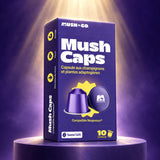
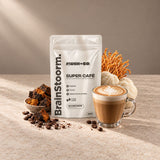
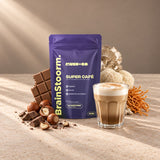
Brainstoorm
Our mushroom coffee: Lion's Mane, Cordyceps and Chaga at 1,000 mg each, maca and chicory. 6,040 mg of actives in the coffee version and 20 mg of microencapsulated caffeine per cup.
Discover Brainstoorm →
Energy
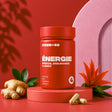
Cordyceps, maca, ginger and vitamin C, which contributes to the reduction of tiredness and fatigue. One capsule a day, a 30-day course, without a drop of caffeine.
Discover Energy →The three families
Food supplements for tiredness: three families to know.
The shelf is huge, but it falls into three families. Recognising them is already half of reading a label. This guide helps you choose the product. For the complete method (sleep, check-up, daily rhythm), see our guide persistent fatigue: what to do when it sets in.
Vitamins and minerals
Vitamin C, B vitamins, magnesium, iron. These are the only ingredients to carry an official claim on tiredness, validated at European level.
Plants and mushrooms
Cordyceps, maca, ginseng, rhodiola. Centuries of traditional use, standardised extracts, and clinical trials that we detail below.
Caffeine
Coffee, guarana, green tea, maté. The effect is felt within half an hour. The whole question is the dose, and the time of the last intake.
The best formulas cross two families: a nutrient with an authorised claim, plus well-dosed plant or mushroom extracts. That is the principle behind Energy, our capsule formula: cordyceps, maca, ginger and vitamin C.
Vitamins and minerals
Vitamin C, B6, magnesium, iron: the authorised claims.
In Europe, a brand cannot write whatever it likes on a box. Regulation (EU) No 432/2012 sets the list of authorised health claims. Nine nutrients appear on it with the wording “contributes to the reduction of tiredness and fatigue”: vitamins C, B2, B3, B5, B6, B9 and B12, magnesium and iron.
The condition: the product must supply at least 15% of the reference intake (RI) per serving. The higher the percentage shown, the more serious the dose. Here are the four nutrients most often found in an anti-fatigue food supplement, and what to look at for each.
| Nutrient | Authorised claim | Reference intake | What to look at on the label |
|---|---|---|---|
| Vitamin C | Contributes to the reduction of tiredness and fatigue; to the normal function of the immune system | 80 mg | The dose per capsule: 80 mg covers 100% of the RI |
| Vitamin B6 | Contributes to the reduction of tiredness and fatigue; to the normal functioning of the nervous system | 1.4 mg | The form: P5P is the active form |
| Magnesium | Contributes to the reduction of tiredness and fatigue; to normal energy-yielding metabolism | 375 mg | The salt: bisglycinate or citrate, and the amount of elemental magnesium |
| Iron | Contributes to the reduction of tiredness and fatigue; to normal formation of red blood cells | 14 mg | To be taken after a ferritin test |
Claims from Regulation (EU) No 432/2012; reference intakes from Regulation (EU) No 1169/2011.
Iron deserves a word of its own. Low stores are common in women who have periods, and the Vaucher trial, detailed below, shows what a course changes when ferritin is low. It is taken on the basis of a blood test. For the vitamin-by-vitamin detail, read our article which vitamin to choose for winter tiredness.
Plants and mushrooms
Cordyceps, maca, ginseng, rhodiola: the four great classics.
The second family is that of mushrooms and adaptogenic plants. The same four names always come up, all from ancient traditions: Chinese medicine for cordyceps and ginseng, the Andes for maca, Scandinavia and Siberia for rhodiola.
| Ingredient | Latin name | Traditional use | The right label reference |
|---|---|---|---|
| Cordyceps | Cordyceps militaris | Tonic for endurance and breath | Fruiting body, polysaccharides and adenosine quantified |
| Maca | Lepidium meyenii | Root of vitality from the Peruvian highlands | Concentrated extract, macamides quantified |
| Ginseng | Panax ginseng | Tonic root from Asia, for body and mind | Ginsenosides quantified |
| Rhodiola | Rhodiola rosea | Root for periods of heavy load and cold | Rosavins and salidroside quantified |
Each has its complete guide on the blog: the benefits of cordyceps, maca, its benefits and precautions, Panax ginseng, red or Siberian and rhodiola and its effects. The ginger, a warming, tonic root, often completes these formulas.
Our house choice: cordyceps and maca, combined in Energy as in Brainstoorm. They are the two ingredients of physical vitality, the ones you take in the morning to get through the day.
What the studies say
Supplements and tiredness: four trials worth knowing.
Four clinical trials, one per ingredient, with their exact conditions. Full references are at the bottom of the page.
Vaucher et al., 2012 · Switzerland
198 tired women who have periods, without anaemia but with low ferritin, received 80 mg of iron a day or a placebo for 12 weeks. The fatigue score dropped by nearly 48% in the iron group, against 29% on placebo.
Hirsch et al., 2017 · United States
28 active adults took 4 g a day of a mushroom blend based on Cordyceps militaris, or a placebo. After three weeks, VO2max, which measures endurance capacity, had improved in the cordyceps group.
Olsson et al., 2009 · Sweden
60 adults with stress-related fatigue took 576 mg a day of a rhodiola extract, or a placebo, for 28 days. The rhodiola group scored better on the fatigue scale and on attention tests.
Reay et al., 2005 · United Kingdom
30 young adults were given a single 200 mg dose of Panax ginseng extract before a series of prolonged mental arithmetic tasks. They reported less mental fatigue during the effort than with the placebo.
On the maca side, Stone's team (2009) followed eight trained cyclists: after 14 days of extract, their time on a 40 km time trial had improved. Note the durations: from two to twelve weeks. A course is judged over a month, not over three days.
With or without caffeine
Energy food supplements: with or without caffeine?
This is the first sort to make. Many “energy” supplements owe their immediate effect to caffeine, sometimes under another name: guarana, green tea, maté, kola nut. EFSA, the European Food Safety Authority, gives two reference points for an adult: 400 mg a day, and 200 mg in a single intake. Everything therefore depends on the sum with your coffees during the day.
| What you take | Caffeine per serving | The right time |
|---|---|---|
| An espresso | About 80 mg | In the morning |
| A cup of Brainstoorm | 20 mg, microencapsulated | In the morning, or early afternoon |
| An Energy capsule | 0 mg | Any time, including after 2 p.m. |
Two good options, then. A light, steady dose: that is Brainstoorm, with its 20 mg of slow-release NewCaff® caffeine. Or zero caffeine: that is Energy, which can even be taken late in the day without touching your night. To understand how long a cup stays in the blood, read caffeine: its effects, duration and dose.
The selection criteria
The best food supplement for tiredness: six criteria to recognise it.
The best food supplement for tiredness is the one that ticks these six boxes. Keep the list handy when comparing two boxes.
- The dose per serving. It is written in milligrams, ingredient by ingredient, for the daily portion. A formula that shows everything is a formula that stands by its doses.
- The extract form. An extract concentrates the plant: 240 mg of extract can be worth nearly a gram of raw material. For a mushroom, look for the words “fruiting body”.
- The standardisation. This is the guaranteed amount of active molecules: polysaccharides, macamides, ginsenosides, rosavins. A number, not an adjective.
- Caffeine or not. To be chosen according to your coffees during the day and your sleep. Without caffeine, you keep freedom over timing.
- The length of the course. A box should cover 30 days. That is the length that lets you judge, and the length of most trials.
- Origin and lab tests. Place of manufacture stated, batches tested, results available to view. Ours are published on our lab results page.
Reading a label
A label can be read in thirty seconds.
Let us take a real example: the nutrition table of an Energy capsule. Each line gives the amount of extract, its plant equivalent and the standardisation. This is exactly what you should find on any serious box.
Three reflexes are enough to read this table, like that of any other product.
The serving
Do the figures apply to one capsule or to three? Always bring the dose back to what you will actually swallow each day.
The ratio
“10:1” means ten grams of plant for one gram of extract. The plant equivalent lets you compare two formulas with each other.
The percentage of RI
For vitamins and minerals, this is what opens the right to the claim. At 100%, the capsule covers the day's reference intake.
By profile
Supplements for tiredness in women, athletes, office work: a formula for everyone.
Tiredness does not have the same face at 25 before a half-marathon and at 50 in the middle of perimenopause. The right supplement depends on your day.
Supplement for tiredness in women
Have your ferritin tested, especially if your periods are heavy. Combine vitamin C and magnesium. Around fifty, read our guide tiredness and menopause.
You play sport
Cordyceps is the mushroom of endurance athletes. Energy is taken in the morning, or before the session. See our natural pre-workout.
The office slump
Replace the second or third coffee with a cup of Brainstoorm. Our complete method is in the 4 p.m. slump.
You are sensitive to caffeine
Palpitations, jitters, light nights: switch to caffeine-free. One Energy capsule in the morning, and the day goes by without jolts.
The routine
Anti-fatigue course: the routine over a day.
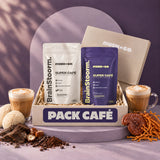
A supplement gives its best when it fits into a well-organised day. Here is ours, that of the Énergie Durable Pack: Brainstoorm in the morning, Energy during the day, Sleep+ in the evening. Three habits, thirty days.
On waking
A big glass of water, daylight, then a cup of Brainstoorm: the taste of coffee (6,040 mg of actives) or chocolate-hazelnut, 20 mg of caffeine.
Late morning
One Energy capsule with a glass of water: cordyceps, maca, ginger and 80 mg of vitamin C, which contributes to the reduction of tiredness and fatigue.
After lunch
Ten minutes of walking outside. Fancy a cup? A second Brainstoorm replaces the 3 p.m. espresso.
30 min before bed
One capsule of Sleep+: reishi, valerian, magnesium and melatonin, which contributes to the reduction of time taken to fall asleep.
The logic is simple: tomorrow's energy is prepared the evening before. By keeping to the three moments for a month, you set up a rhythm. And you know exactly what you are taking, at what dose and at what time.
Precautions
Useful precautions, and when to see a doctor.
Ask your doctor or pharmacist for advice before a course if:
- You are pregnant or breastfeeding.
- You are on long-term treatment: anticoagulant, antidiabetic, antihypertensive, thyroid treatment.
- You are considering an iron course: it is decided on a blood test.
- You combine several sources of caffeine during the day.
Respect the stated daily dose. A food supplement is added to a varied diet and a healthy lifestyle. Tiredness that lasts more than three to four weeks despite good nights, or that comes with breathlessness, weight loss or sadness, deserves a check-up with your doctor. Our article thyroid and tiredness explains the most common tests.
Your questions
Food supplements and tiredness: your questions.
What is the best food supplement for tiredness?
The one that combines a nutrient with an authorised claim, such as vitamin C, vitamin B6, magnesium or iron, and standardised plant or mushroom extracts, at stated doses per serving. Energy follows this principle: cordyceps, maca, ginger and 80 mg of vitamin C per capsule, caffeine-free.
Which food supplement should I take for energy?
For the morning, a lightly caffeinated drink like Brainstoorm, at 20 mg of caffeine per cup, with cordyceps and maca. For the day, a caffeine-free formula based on cordyceps, maca and vitamin C, which contributes to normal energy-yielding metabolism.
Which anti-fatigue food supplement should a woman choose?
Start by having your ferritin tested: iron contributes to the reduction of tiredness and fatigue, and stores are often low in women who have periods. Vitamin C and magnesium complement the course well. Maca, a traditional root from the Andes, is much appreciated around menopause.
How long does an anti-fatigue course last?
One month at least, often renewed once or twice. That is the length of a box of 30 capsules, and of many clinical trials, which run from two to twelve weeks. Seasonal changes, in autumn and at the end of winter, are the most popular times.
When should you take a supplement for tiredness: morning or evening?
In the morning or late morning, with a glass of water, to support the day. Caffeine-free formulas like Energy can also be taken in the afternoon. The evening is reserved for sleep formulas, 30 minutes before bed.
Is there a caffeine-free supplement for tiredness?
Yes. Vitamins C and B6, magnesium, cordyceps, maca and ginger contain no caffeine. Energy brings together four of them in a capsule with 0 mg of caffeine, to be taken at whatever time suits you.
How long does an anti-fatigue supplement take to work?
Caffeine is felt within 30 to 60 minutes. For vitamins, minerals, plants and mushrooms, clinical trials measure changes after two to four weeks of daily intake. Regularity matters more than the exact time.
Can you combine several supplements for tiredness?
Yes, provided you spread them over the day and add up the doses of each ingredient. The simplest routine comes down to three moments: Brainstoorm in the morning, Energy during the day, Sleep+ in the evening. Just check the total caffeine, which should stay under the EFSA reference of 400 mg a day.
Sources
- Commission Regulation (EU) No 432/2012 of 16 May 2012 establishing a list of permitted health claims made on foods.
- Regulation (EU) No 1169/2011 of the European Parliament and of the Council of 25 October 2011 on the provision of food information to consumers, Annex XIII (reference intakes).
- EFSA NDA Panel (2015). Scientific opinion on the safety of caffeine. EFSA Journal, 13(5):4102.
- Vaucher P., Druais P. L., Waldvogel S., Favrat B. (2012). Effect of iron supplementation on fatigue in nonanemic menstruating women with low ferritin: a randomized controlled trial. CMAJ, 184(11), 1247-1254.
- Hirsch K. R., Smith-Ryan A. E., Roelofs E. J., Trexler E. T., Mock M. G. (2017). Cordyceps militaris improves tolerance to high-intensity exercise after acute and chronic supplementation. Journal of Dietary Supplements, 14(1), 42-53.
- Olsson E. M., von Schéele B., Panossian A. G. (2009). A randomised, double-blind, placebo-controlled, parallel-group study of the standardised extract SHR-5 of the roots of Rhodiola rosea in the treatment of subjects with stress-related fatigue. Planta Medica, 75(2), 105-112.
- Reay J. L., Kennedy D. O., Scholey A. B. (2005). Single doses of Panax ginseng (G115) reduce blood glucose levels and improve cognitive performance during sustained mental activity. Journal of Psychopharmacology, 19(4), 357-365.
- Stone M., Ibarra A., Roller M., Zangara A., Stevenson E. (2009). A pilot investigation into the effect of maca supplementation on physical activity and sexual desire in sportsmen. Journal of Ethnopharmacology, 126(3), 574-576.
Keep reading
Further reading.
You now know how to read a label and build your day. For the overall method, from check-up to sleep, go back to our guide persistent and chronic fatigue: what to do, or go straight to the routine with the Énergie Durable Pack.

Discover our mushroom and adaptogenic plant supplements
Our vegan formulas, made in Toulouse by a French manufacturer.