

















Vitamins for Tiredness in Winter: Plants and Habits That Really Help
By the Mush n Go editorial team - 13 November 2026
By the Mush n Go editorial teamPublished 14 November 202614 min read
Winter tiredness
What vitamin is good for tiredness? Under European regulations, B vitamins, vitamin C, iron and magnesium are the only nutrients that “contribute to the reduction of tiredness and fatigue”. Vitamin D, for its part, relates to immunity. But in winter, light, sleep and an undiagnosed deficiency often matter more than a supplement. Here is where to start.
The complete guide: thyroid fatigue →
The complete guide: morning routine →

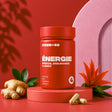
Energy
Cordyceps, maca, ginger and vitamin C, which contributes to the reduction of tiredness and fatigue. A 30-day course in capsules, caffeine-free.
Discover Energy →
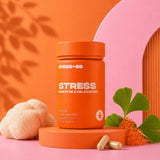
Anti-Stress
Ashwagandha and reishi, holy basil, schisandra and vitamin B6, which contributes to the reduction of tiredness and fatigue and to normal functioning of the nervous system.
Discover Anti-Stress →Why winter makes you tired
Winter tiredness: why we drag ourselves from November to March.
You sleep as much as in summer, and yet you find it harder to get up, you nod off at 4pm and you feel less like doing anything. This winter tiredness is not just in your head. It has concrete causes, which often add up.
- The light fades. The days get shorter, and we spend most of the remaining daylight indoors. Yet morning light is the main signal that sets our internal clock and our alertness.
- The clock shifts. With less light in the morning, melatonin, the sleep hormone, tends to linger. You wake up in a fog.
- We move less. Cold, rain, dark by 5pm: physical activity drops, even though it is part of what keeps your energy up.
- Infections are going round. Colds, flu, stomach bugs: each episode leaves a few days, sometimes a few weeks, of tiredness behind it.
- The pace speeds up. End of the year, parties, reviews: we sleep less and eat less well just when the body needs the opposite.
In some people, this slump takes a more marked form: seasonal affective disorder. It combines tiredness, a need to sleep much more, sugar cravings and low mood, every winter, for several weeks. It can be treated, notably with light, and is worth discussing with your doctor.
For everyone else, the good news is that most of these causes can be corrected. So before looking for the right vitamin, you need to understand what it does.
The vitamins for tiredness
What vitamin is good for tiredness: what the regulations say.
In Europe, a supplement cannot say just anything. Regulation (EU) No 432/2012 lists the authorised health claims, after evaluation by EFSA. For tiredness, the official wording is “contributes to the reduction of tiredness and fatigue”. It is authorised for only nine nutrients. Here they are, and where to find them on your plate.
| Nutrient | Authorised claim related to tiredness | Where to find it |
|---|---|---|
| Vitamins B2, B3, B5 | Contribute to the reduction of tiredness and fatigue | Dairy products, eggs, meat, wholegrains |
| Vitamin B6 | Contributes to the reduction of tiredness and fatigue | Fish, poultry, potatoes, bananas |
| Vitamin B9 (folate) | Contributes to the reduction of tiredness and fatigue | Leafy green vegetables, pulses |
| Vitamin B12 | Contributes to the reduction of tiredness and fatigue | Animal products only, or fortified foods |
| Vitamin C | Contributes to the reduction of tiredness and fatigue | Citrus fruit, kiwi, peppers, cabbage |
| Iron | Contributes to the reduction of tiredness and fatigue | Red meat, black pudding, lentils, tofu |
| Magnesium | Contributes to the reduction of tiredness and fatigue | Nuts and seeds, dark chocolate, wholegrains, mineral-rich waters |
| Vitamin D | None for tiredness; contributes to the normal function of the immune system | Oily fish, eggs, and above all sunlight on the skin |
Regulation (EU) No 432/2012.
These nutrients play a part in normal metabolism. If you are lacking them, correcting the deficiency helps.
That is why the real question is not “which vitamins for tiredness?” but “what am I lacking?”. And for some nutrients, the answer lies in a blood test.
The deficiencies to check
Iron, B12, thyroid: check them before buying anything.
Tiredness that sets in can hide a deficiency or a disorder that is easy to detect. Here are the four avenues your doctor can explore with a blood test.
Iron
This is the most common deficiency, especially in women with heavy periods, during pregnancy, in vegetarians and in endurance athletes. It is measured through ferritin, the body's iron store. Low ferritin can cause tiredness even without anaemia.
Vitamin B12
It is only found in animal products. Vegans, people over 60 and those who have been taking metformin or antacids such as omeprazole for a long time are more at risk of deficiency.
The thyroid
An underactive thyroid, hypothyroidism, causes tiredness, feeling the cold, weight gain and dry skin. A simple TSH test can detect it. It mainly affects women, and becomes more common with age.
Vitamin D
Levels almost always fall in winter. The French National Authority for Health (HAS) does not recommend testing everyone, but your doctor may suggest suitable supplementation, especially if you rarely go outside.
An important safety point: never take iron “just in case”. Excess iron is toxic, and haemochromatosis, a genetic disease that causes iron to build up, is not rare in France. Iron should be taken on the basis of a blood test, and on medical advice.
If your tiredness has already lasted for weeks, our guide persistent fatigue: when to worry and what to do details the tests and the causes to consider.
What the studies say
Winter tiredness: four studies worth knowing.
Each of these four trials sheds light on a different lead: iron, light, and two plants often suggested in winter. The full references are at the bottom of the page.
Vaucher et al., 2012 · Switzerland
198 menstruating women with tiredness, no anaemia but ferritin below 50 µg/l, received 80 mg of iron a day or a placebo for 12 weeks. Their fatigue score fell by nearly 48% with iron, compared with about 29% with placebo. Limitation: women only, with low iron stores at the start.
Lam et al., 2006 · Canada
96 adults with seasonal affective disorder were treated for eight weeks, either with a 10,000 lux lamp for thirty minutes every morning or with an antidepressant. Both approaches gave comparable results. Limitation: these were diagnosed patients, not people with ordinary winter tiredness.
Olsson et al., 2009 · Sweden
60 adults with stress-related fatigue took a rhodiola extract, 576 mg a day, or a placebo for 28 days. The rhodiola group scored better on a fatigue scale and on some attention tests. Limitation: a single extract, a short duration, a modest sample.
Hartz et al., 2004 · United States
96 people with chronic fatigue took Siberian ginseng or a placebo for two months. Overall, no clear difference was observed. Only a subgroup with less severe fatigue seemed to benefit. Limitation: a subgroup result, yet to be confirmed.
The underlying message is clear: correcting a real deficiency, such as iron, and getting morning light back have clear, documented effects. Plants, on the other hand, have more modest results that vary more from one study to another.
Light and vitamin D
Morning light, your first free lever.
Our internal clock is set mainly by the light that reaches our eyes in the morning. In winter, we get much less of it, and indoor light is far weaker than we think. Even a grey sky provides much more light than a well-lit office.
| Light source | Intensity, order of magnitude | What it changes |
|---|---|---|
| Lit living room or office | A few hundred lux | Too little to set the clock properly |
| Outdoors, overcast winter sky | A few thousand lux | A real wake-up signal, even without sun |
| Light therapy lamp | 10,000 lux at the right distance | The protocol studied: thirty minutes in the morning |
| Outdoors, winter sun | Several tens of thousands of lux | The strongest signal |
Indicative orders of magnitude, which vary greatly with the time of day, the weather and orientation. Choose a light therapy lamp with a medical device marking and use it according to its instructions.
In practice: twenty to thirty minutes outdoors within two hours of waking, even when it is grey, are worth more than any indoor lamp. Walking to work, having your coffee on the balcony, popping out to the bakery: it all counts. If that is impossible, light therapy is a serious alternative, though it should be avoided without medical advice if you have an eye condition or bipolar disorder.
Vitamin D is another matter. At European latitudes, from October to March, the sun is too low for the skin to make enough of it. It contributes to the normal function of the immune system, but no claim links it to tiredness. For the immune side, our article on preparing your immune defences before winter covers the subject in detail. High doses in ampoules should be taken on prescription.
Sleep, caffeine, screens
In winter, you protect your sleep from the morning onwards.
The National Sleep Foundation recommends seven to nine hours of sleep a night for adults. In winter, many people sleep as long but less well: a shifted clock, afternoon coffee to keep going, screens late at night. Here is a day that puts things back in order.
On waking
A fixed time to get up, including at weekends. Curtains open, then daylight as soon as possible.
In the morning
Your coffee, preferably after breakfast. This is the right time for caffeine.
After lunch
If needed, a 10 to 20-minute nap, before 3pm. Any longer and it may leave you groggy and disturb your night.
Around 2pm
Your last regular coffee. After that, a drink with little or no caffeine.
In the evening
Dimmed lights, screens put away an hour before bed, a cool bedroom. The body needs darkness to start producing melatonin.
Coffee deserves particular attention in winter. The more tired you are, the more you drink, and the more a late coffee damages the following night. Caffeine has a half-life of about five hours: our guide to coffee and sleep helps you set your cut-off time.
The afternoon slump
The afternoon slump, winter edition.
The early-afternoon dip is natural: our alertness falls a little between 1pm and 4pm, whatever the season. In winter, it is often more marked, because the night was worse and light is lacking. Several habits ease it better than a third espresso.
- A lighter lunch, with vegetables and protein, rather than a big plate of refined starches and a sugary dessert.
- Ten minutes' walk outdoors after your meal: light and movement at the same time.
- A large glass of water: mild dehydration feels like tiredness, and we drink less when it is cold.
- A drink with little caffeine rather than an espresso, so as not to damage the following night.
- A real break, without a screen, rather than scrolling on your phone.
Our article on the 4pm slump details the causes and solutions. If you want to keep your afternoon cup without an espresso's caffeine, a cup of Brainstoorm contains 20 mg, about four times less.
Plants
Cordyceps, Siberian ginseng, rhodiola: the level of evidence.
Three plants and mushrooms come up whenever tiredness is mentioned. Their traditional uses go back a long way, but studies in humans remain limited. Here is what they show, with no promises. None of these plants has an authorised health claim in Europe.
| Plant or mushroom | What has been studied | Level of evidence on tiredness |
|---|---|---|
| Rhodiola (Rhodiola rosea) | Stress-related fatigue, over four weeks | Moderate: a few encouraging trials, various extracts |
| Siberian ginseng (Eleutherococcus senticosus) | Chronic fatigue, over two months | Low: no clear difference in the main trial |
| Cordyceps (Cordyceps militaris) | Exercise tolerance, in young adults | Low for everyday tiredness: mainly studied during exercise |
Summary of the trials cited in this article. The results depend heavily on the extract, the dose and the people studied.
Rhodiola is the best documented of the three, with trials on mental fatigue and stress. Its precautions matter: our article on rhodiola benefits and side effects details them. Siberian ginseng disappointed in the main trial on chronic fatigue: do not confuse it with panax ginseng, which is a different plant.
Cordyceps has mainly been studied in athletes, with a few small trials on intense exercise. You will find it in Energy, alongside maca, ginger and vitamin C, which contributes to the reduction of tiredness and fatigue. For details of the studies, see our article cordyceps benefits and studies.
The two-week plan
Two weeks to get your momentum back.
There is no need to change everything at once. This plan moves forward in stages, so that each habit has time to settle in. Each evening, rate your energy level out of 10: you will see more clearly what works for you.
Days 1 to 4: your clock
A fixed time to get up, twenty minutes of daylight in the morning, your last regular coffee around 2pm, screens put away an hour before bed.
Days 5 to 9: your plate and your body
A fruit or vegetable rich in vitamin C every day, pulses two to three times a week, nuts and seeds. Thirty minutes of brisk walking a day.
Days 10 to 14: taking stock
If your energy is picking up, keep up the rhythm. If not, make an appointment with your doctor for a blood test: iron, B12, thyroid.
A supplement fits naturally into this plan. If you choose one, go for a formula with a clear composition, stick to the dose on the label and avoid combining several products that contain the same vitamins. Stress is tiring too: if that applies to you, our guide on how to lower cortisol ranks the levers by level of evidence.
When to see a doctor
When winter tiredness is no longer just that.
Seasonal tiredness stays moderate, improves with light and rest, and disappears in spring. Some signs, however, should prompt you to see a doctor, without waiting for the end of winter.
See your doctor if:
- Your tiredness lasts more than a few weeks despite rest, or gets worse.
- It comes with weight loss, fever, night sweats, breathlessness or palpitations.
- You have very heavy periods, or you are pale and out of breath on exertion.
- You feel low most of the time and no longer feel like doing anything: seasonal depression can be treated.
- You are pregnant, breastfeeding or on treatment, before taking a plant or a supplement.
- You are considering iron or high doses of vitamin D: these should be taken on the basis of a blood test and on medical advice.
If your tiredness comes with dark or suicidal thoughts, call Samaritans on 116 123, free and open day and night. And if you have felt at the end of your tether for months, at work as well as at home, our article burnout: recognising the signs can help you take stock.
Your questions
Winter tiredness: your questions.
What vitamin is good for tiredness?
In Europe, only nine nutrients carry the claim “contributes to the reduction of tiredness and fatigue”: vitamins B2, B3, B5, B6, B9, B12, vitamin C, iron and magnesium. They help if you are lacking them. The most effective approach is to check for deficiencies with your doctor first.
What vitamins should you take for tiredness in winter?
Start with your plate: fruit rich in vitamin C, green vegetables, pulses, nuts and seeds. Vitamin D falls in winter, but it relates to immunity and bones, not tiredness. Iron and vitamin B12 should only be taken after a blood test.
Why are we more tired in winter?
Because morning light, which sets our internal clock, drops sharply. On top of that come less physical activity, more infections and a busy end-of-year schedule. These causes add up, and most of them can be corrected.
Does vitamin D help with tiredness?
Vitamin D contributes to the normal function of the immune system, bones and muscles. For tiredness, vitamin C and vitamin B6 contribute to its reduction. Vitamin D supplementation in winter can be useful, on your doctor's advice, especially if you rarely go outside.
Is magnesium effective against tiredness?
Magnesium contributes to the reduction of tiredness and fatigue, according to the authorised claim. It helps if your intake is insufficient, which happens with a diet low in nuts and seeds, pulses and wholegrains. Bisglycinate forms are often better tolerated by the digestive system.
How can you avoid the afternoon slump in winter?
Get some daylight in the morning, eat a lighter lunch, walk for ten minutes after your meal and drink water. Avoid coffee after 2pm, which damages the following night. A 10 to 20-minute nap before 3pm also helps.
Does light therapy work?
For seasonal affective disorder, yes: in the Lam trial (2006), thirty minutes of light at 10,000 lux in the morning gave results comparable to an antidepressant. For ordinary winter tiredness, going outside in the morning is often enough. Ask for medical advice if you have an eye condition or bipolar disorder.
What plant helps with tiredness?
Rhodiola is the best-studied plant for stress-related fatigue, with modest results. Siberian ginseng showed no clear difference in the main trial, and cordyceps has mainly been studied during exercise. None has an authorised health claim in Europe.
Tiredness in winter: when should you worry?
When it lasts more than a few weeks despite rest, gets worse or comes with weight loss, fever, breathlessness or very low mood. Your doctor can check your iron, vitamin B12 and thyroid with a blood test.
Sources
- Commission Regulation (EU) No 432/2012 of 16 May 2012 establishing a list of permitted health claims made on foods.
- Vaucher P., Druais P. L., Waldvogel S., Favrat B. (2012). Effect of iron supplementation on fatigue in nonanemic menstruating women with low ferritin: a randomized controlled trial. CMAJ, 184(11), 1247-1254.
- Lam R. W. et al. (2006). The Can-SAD study: a randomized controlled trial of the effectiveness of light therapy and fluoxetine in patients with winter seasonal affective disorder. American Journal of Psychiatry, 163(5), 805-812.
- Olsson E. M., von Schéele B., Panossian A. G. (2009). A randomised, double-blind, placebo-controlled, parallel-group study of the standardised extract SHR-5 of the roots of Rhodiola rosea in the treatment of subjects with stress-related fatigue. Planta Medica, 75(2), 105-112.
- Hartz A. J. et al. (2004). Randomized controlled trial of Siberian ginseng for chronic fatigue. Psychological Medicine, 34(1), 51-61.
- Hirshkowitz M. et al. (2015). National Sleep Foundation's sleep time duration recommendations: methodology and results summary. Sleep Health, 1(1), 40-43.
- Haute Autorité de santé (2013). Clinical usefulness of vitamin D testing. Health technology assessment report.
Keep reading
Further reading.
Tiredness has many faces. Discover our other guides, or take a look at Energy.

Discover our mushroom and adaptogenic plant supplements
Our vegan formulas, made in Toulouse by a French manufacturer.