










Cordyceps Benefits: Studies on Energy and Exercise, Dosage
By the Mush n Go editorial team - 03 November 2026
By the Mush n Go editorial teamPublished 3 November 202614 min read
Cordyceps
Cordyceps is a medicinal mushroom used for centuries in China and Tibet, and its benefits have mainly been studied for energy and endurance. Human trials are few and their effects modest: a slightly higher exercise threshold in older adults after 12 weeks, nothing clear in trained athletes. Here is what is solid, and what is not.
The complete guide: mushroom coffee, benefits and side effects →

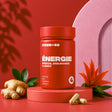
Energy
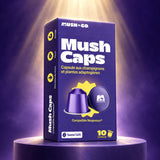
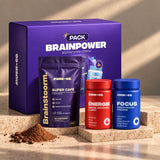
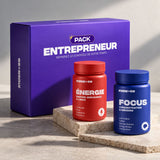
Cordyceps, maca, ginger and vitamin C, caffeine-free. Vitamin C contributes to the reduction of tiredness and fatigue. A 30-day course.
Discover Energy →
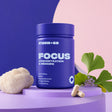
Brainstoorm
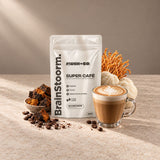
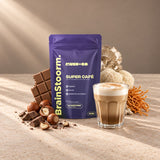
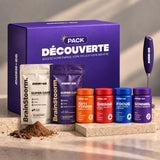
Lion's Mane, Cordyceps and Chaga at 1,000 mg each per cup, on a base of roasted chicory and organic cacao, with only 20 mg of caffeine.
Discover Brainstoorm →What cordyceps is
A mushroom that grows on a caterpillar.
The most famous cordyceps looks like no mushroom in our forests. On the high plateaus of Tibet and the Himalayas, above 3,000 metres, it parasitises the larvae of a moth buried in the soil. It invades them over the winter, then in spring sends up a small brown stalk that pokes out of the ground. Tibetans call it yartsa gunbu, “summer grass, winter worm”.
Traditional Tibetan and Chinese medicine has used it for centuries, mainly as a tonic: against fatigue, for breathing, and for the vitality of older people. Its very difficult harvest has made it one of the most expensive natural products in the world.
It became famous in the West in 1993, when the coach of Chinese women runners who had just smashed several world records attributed their performances, among other things, to this mushroom. Doping was later widely suspected. The anecdote says it all: cordyceps' reputation was born before the studies. To place cordyceps among the other species, see our list of 12 medicinal mushrooms worth knowing.
Sinensis or militaris
The cordyceps in your capsules is almost never wild.
Behind the word “cordyceps” there are in fact several organisms. Wild Tibetan cordyceps was reclassified in 2007 under the name Ophiocordyceps sinensis, after a genetic revision of the whole family. It is rare, expensive and almost impossible to cultivate on a large scale. It is practically never found in supplements sold in Europe.
What you buy is, in the vast majority of cases, one of these two things:
| Form | What it is | Good to know |
|---|---|---|
| Cordyceps militaris | A related, bright orange species whose fruiting bodies are cultivated on cereal substrates | Richer in cordycepin than the wild form, according to most analyses |
| “Cs-4” mycelium | A strain isolated from wild cordyceps, grown in a fermenter, with no fruiting body | This is the form tested in several Chinese and American trials |
| Wild Ophiocordyceps sinensis | The mushroom harvested from larvae in Tibet | Very expensive, rarely sold as a supplement, risk of contaminants |
A label that only says “cordyceps sinensis” without specifying “mycelium” or “fruiting body” does not tell you much. Both cultivated forms are legitimate, but they are not the same products.
So the studies are not all about the same material. Chen's 2010 trial used Cs-4 mycelium. Hirsch's 2017 trial used a mushroom blend dominated by Cordyceps militaris. Bear this in mind before comparing results: we are talking about cousins, not twins. Our cordyceps page brings together what we use and why.
Cordyceps and humans
No, cordyceps cannot infect humans.
Since the series The Last of Us, one question keeps coming up: can cordyceps infect a human being? The answer is no. Cordyceps are highly specialised parasites. Each species attacks a specific group of insects, and their life cycle is tuned to the bodies of those insects.
The fungus that turns ants into “zombies”, Ophiocordyceps unilateralis, only parasitises certain tropical ants. The cordyceps in supplements is cultivated, dried, and ground into powder or made into an extract: it is no longer alive when you consume it. And the temperature of the human body, around 37 °C, is far too high for most of these fungi, which are adapted to cold-blooded insects.
- No human infection by a cordyceps has been described in the medical literature.
- Cordyceps is not hallucinogenic: it contains no psilocybin.
- It has no known potential for dependence.
- Its real risks lie elsewhere: interactions, product quality, people who should avoid it (see below).
Cordycepin and adenosine
A molecule that mimics a cell fuel.
The chemical signature of cordyceps is cordycepin, or 3'-deoxyadenosine. Its name says it all: it is a molecule almost identical to adenosine, a building block of ATP, the molecule that stores energy in our cells. Cordyceps also contains adenosine itself, polysaccharides (including beta-glucans), mannitol and sterols.
From this resemblance came the idea that cordyceps “helps produce ATP”, and therefore energy. It is a hypothesis, not a demonstration. Here is where knowledge really stands.
What is established
The structure of cordycepin, its presence in cordyceps, especially in C. militaris, and its many effects on cultured cells.
What is suggested
Effects on energy metabolism, oxygen use and fatigue, observed in rats and mice.
What is missing
Proof that cordycepin swallowed by a human reaches their tissues in sufficient quantities to change anything.
What is false
The idea that cordyceps is a stimulant like caffeine. It contains none and does not work in the same way.
Keep this framework in mind when you read a product page. A mechanism observed in the laboratory does not always translate into an effect in humans. That is precisely why you need to look at the clinical trials, which are few but instructive.
The human trials
Cordyceps and exercise: three trials worth knowing.
Human trials can be counted on the fingers of a few hands, with small samples. Here are the three most cited, with their exact conditions. Full references are at the bottom of the page.
Chen et al., 2010 · United States
20 sedentary adults aged 50 to 75 took 1 g a day of Cs-4 mycelium or a placebo for 12 weeks. In the cordyceps group, the metabolic threshold rose by about 10.5% and the ventilatory threshold by 8.5%, with no change on placebo. VO2max, however, did not change significantly. Limitation: only 20 people.
Parcell et al., 2004 · United States
22 trained male cyclists took 3 g a day of Cs-4 or a placebo for 5 weeks. No difference in VO2max, thresholds or a time trial. In athletes who were already very fit, cordyceps made no measurable difference.
Hirsch et al., 2017 · United States
28 young adults took 4 g a day of a mushroom blend dominated by Cordyceps militaris, or a placebo. After one week, nothing clear. After three weeks, VO2max and time to exhaustion at high intensity had improved in the supplemented group. Limitation: a blend of several species, a short trial, funded by the manufacturer.
The picture is consistent: possible effects in people with little training, after several weeks, and nothing spectacular. None of these studies allows us to say that cordyceps “increases endurance” in general.
The benefits, clearly
Cordyceps benefits: what holds up, what remains to be proven.
Search for “cordyceps benefits” and you will find lists of fifteen promises: energy, libido, immunity, kidneys, lungs, blood sugar, ageing. They mix traditional uses, animal results and a few human trials. To see clearly, you have to sort them by level of evidence.
| Use put forward | Level of evidence in humans | What we know |
|---|---|---|
| Exercise and endurance | Low to moderate | A few small trials, modest effects in untrained people, none in trained athletes |
| Everyday fatigue | Low | Long-standing traditional use, few well-conducted trials |
| Libido | Very low | Mainly animal studies and traditional uses |
| Blood sugar | Very low | Results in animals, no conclusive human trial |
| Natural defences | Very low | Effects of polysaccharides on cells and in animals |
| Kidneys, lungs | Insufficient | Uses in Chinese medicine, studies of low methodological quality |
This table summarises the state of published research. These are not claims: in Europe, no health claim is authorised for cordyceps.
This sorting takes nothing away from the mushroom's appeal. It explains why most people who take it build it into an overall routine, with sleep, diet and training, rather than expecting an isolated effect. This is also the case for many athletes looking for a natural pre-workout without the caffeine doses of boosters.
Cordyceps is often combined with other ingredients in the same formula. In Energy, it is combined with maca, ginger and vitamin C, which contributes to the reduction of tiredness and fatigue. Only the latter has an authorised claim.
Dosage and timing
Cordyceps: what dose, and when?
There is no official dose for cordyceps. The benchmarks come from clinical trials and common use. They depend mainly on the form: a fruiting body powder is less concentrated than an extract.
| Form | Usual daily range | Benchmark in the trials |
|---|---|---|
| Fruiting body powder | 1 to 3 g | 3 g of Cs-4 in Parcell (2004) |
| Concentrated extract | 500 mg to 1 g | 1 g of Cs-4 in Chen (2010) |
| Mushroom blend | As per the label | 4 g of blend in Hirsch (2017) |
| Brainstoorm | 1,000 mg per cup | Fruiting body, with Lion's Mane and Chaga |
Always stick to the dose shown on the label of the product you take. The ranges above are benchmarks taken from the literature, not a prescription.
Timing. Most people take cordyceps in the morning or early in the day, with breakfast or coffee. It contains no caffeine, but some people find it slightly stimulating and prefer to avoid it in the evening. Before exercise, trials show no effect from a single dose: what counts is consistency over several weeks.
Duration. The positive trials lasted from three to twelve weeks. A four- to eight-week course, followed by an honest review, is a reasonable way to see whether cordyceps suits you. If you notice nothing after two months, there is no point carrying on out of principle.
Choosing well
Controlled cultivation rather than wild, and a readable label.
Wild cordyceps poses two problems. It is very often counterfeited, given its price. And it can contain contaminants: in 2016, the Chinese food and drug authority warned against excessive arsenic levels in products made from wild cordyceps. Cultivated cordyceps, on substrate or in a fermenter, makes it possible to control what goes into the product.
The species and the form
The label should say whether it is Cordyceps militaris or a mycelium, and whether you are dealing with a powder or an extract.
The actual dose
An amount in milligrams per serving, not just “cordyceps” buried in a list. A “proprietary blend” with no detailed dose makes comparison impossible.
Lab tests
Heavy metals, pesticides, microbiology: a serious brand publishes or provides its batch test results.
At Mush n Go, our recipes are blended in Toulouse and made in France, from mushrooms grown outside France. A cup of Brainstoorm provides 1,000 mg of fruiting body cordyceps, with 1,000 mg of Lion's Mane and 1,000 mg of Chaga, making 6,040 mg of active ingredients per cup with the maca and ashwagandha. For Energy, the detailed composition is on the product label. Our batch results can be viewed on our lab analyses page.
“For the first few days I didn't feel anything […] then in the second week I started to feel motivated”
★★★★★ Lenny M. · 27 June 2025
“[…] being able to access the mushrooms' laboratory analyses and actually check the stated doses”
★★★★★ Axel B. · 27 August 2026
Genuine Trustpilot reviews of Brainstoorm, which contains 1,000 mg of cordyceps per cup, quoted as written.
A training routine
Where cordyceps fits in a training week.
Cordyceps is not a last-minute product before a session. The trials suggest a background effect instead, over several weeks. Here is a simple routine for someone who trains three to four times a week.
In the morning
Your dose of cordyceps with breakfast: a cup of Brainstoorm or the serving of Energy shown on the label, every day, training or not.
Before the session
If you take caffeine, keep it reasonable. Our article coffee before a workout details the doses and timing.
After the session
Protein, carbohydrates, water. Some people add Muscle Recovery, which combines cordyceps, chaga, turmeric and boswellia.
After 6 to 8 weeks
Take stock: breathlessness, perceived effort, consistency. Compare with your starting point, not with a marketing promise.
For focus during the day, cordyceps is often paired with lion's mane, which has also been studied in humans. Our guide lion's mane: benefits and dosage covers it in full. And if your fatigue persists despite everything, read our guide on persistent fatigue before piling on supplements.
Precautions
Who should avoid cordyceps?
Cordyceps is generally well tolerated in trials, mostly with mild digestive upsets: nausea, bloating, dry mouth. But its presumed action on blood clotting, blood sugar and the immune system calls for caution in several situations.
Ask your doctor or pharmacist for advice before taking cordyceps if:
- You take an anticoagulant or antiplatelet drug, or have surgery planned within the next two weeks.
- You have diabetes and are being treated for it: an effect on blood sugar has been observed in animals.
- You have an autoimmune disease or take immunosuppressant medication, for example after a transplant.
- You are pregnant or breastfeeding: in the absence of data, it is not recommended.
- You are on hormone treatment or have a hormone-sensitive cancer.
- It is for a child or teenager.
These precautions apply to most medicinal mushrooms. Our article on the risks of mushrooms and adaptogenic plants details them species by species. And if you want to discover all the species we use, see our mushrooms.
Your questions
Cordyceps: your questions.
What are the benefits of cordyceps?
Cordyceps has mainly been studied for exercise and energy. In a few small trials, people with little training saw their exercise thresholds improve after three to twelve weeks, while trained cyclists noticed nothing measurable. Other uses, such as libido or blood sugar, rely mainly on animal studies.
Cordyceps sinensis or militaris: what is the difference?
Wild cordyceps sinensis, now called Ophiocordyceps sinensis, grows on larvae in Tibet and remains rare. Cordyceps militaris is a related species that is easy to cultivate, and is generally richer in cordycepin. Most supplements use militaris or a cultivated mycelium.
How long does cordyceps take to work?
Not a few days. In Hirsch's trial, nothing clear after one week, changes after three weeks. Chen's trial lasted twelve weeks. Allow at least four to eight weeks of regular use before judging.
Should you take cordyceps in the morning or at night?
Preferably in the morning or early in the day, with a meal or your coffee. It contains no caffeine, but some people find it slightly stimulating. The most important thing is consistency, not the exact time.
How much cordyceps should you take a day?
There is no official dose. Trials have used 1 to 3 g of powder or mycelium a day, and concentrated extracts are often taken at between 500 mg and 1 g. Always follow the dose shown on your product's label.
Can cordyceps infect humans?
No. Each cordyceps species specialises in one group of insects, and no human infection has been described. The cordyceps in supplements is dried and processed; it is no longer alive when you consume it.
What are the side effects of taking cordyceps?
It is generally well tolerated, mostly with mild digestive upsets. It is not recommended during pregnancy and breastfeeding, and requires medical advice if you take an anticoagulant, have treated diabetes or an autoimmune disease, or have surgery scheduled.
Does cordyceps contain caffeine?
No. Cordyceps contains no caffeine and does not act as a stimulant. If you take it as a mushroom coffee, the caffeine comes from the coffee or an addition: 20 mg per cup of Brainstoorm, compared with around 80 mg for an espresso.
Can you take cordyceps every day?
Yes, the trials gave it daily for three to twelve weeks. Beyond that, long-term data are lacking. Many people do a two-month course, then take a break, and start again if the review is positive.
Sources
- Chen S., Li Z., Krochmal R., Abrazado M., Kim W., Cooper C. B. (2010). Effect of Cs-4 (Cordyceps sinensis) on exercise performance in healthy older subjects: a double-blind, placebo-controlled trial. Journal of Alternative and Complementary Medicine, 16(5), 585-590.
- Parcell A. C., Smith J. M., Schulthies S. S., Myrer J. W., Fellingham G. (2004). Cordyceps sinensis (CordyMax Cs-4) supplementation does not improve endurance exercise performance. International Journal of Sport Nutrition and Exercise Metabolism, 14(2), 236-242.
- Hirsch K. R., Smith-Ryan A. E., Roelofs E. J., Trexler E. T., Mock M. G. (2017). Cordyceps militaris improves tolerance to high-intensity exercise after acute and chronic supplementation. Journal of Dietary Supplements, 14(1), 42-53.
- Sung G. H. et al. (2007). Phylogenetic classification of Cordyceps and the clavicipitaceous fungi. Studies in Mycology, 57, 5-59.
- Tuli H. S., Sharma A. K., Sandhu S. S., Kashyap D. (2013). Cordycepin: a bioactive metabolite with therapeutic potential. Life Sciences, 93(23), 863-869.
- China Food and Drug Administration (2016). Warning on the consumption of Cordyceps sinensis products (arsenic content).
Keep reading
Further reading.
Cordyceps is just one of the mushrooms studied for energy and focus. Explore our other guides, or our Energy formula.

Discover our mushroom and adaptogenic plant supplements
Our vegan formulas, made in Toulouse by a French manufacturer.