











Cordyceps Side Effects, Contraindications and Drug Interactions
By the Mush n Go editorial team - 20 November 2026
By the Mush n Go editorial teamPublished 20 November 202611 min read
Cordyceps and safety
Cordyceps side effects are rare and mild at usual doses: digestive upsets, dry mouth, and more rarely nausea. The real risk lies in quality (lead and arsenic in some wild cordyceps) and in a few specific situations: autoimmune disease, anticoagulants, treated diabetes, surgery, pregnancy and breastfeeding.
The complete guide: mushroom coffee, benefits and side effects →

Muscle Recovery
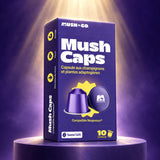
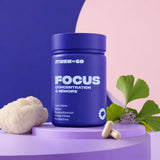
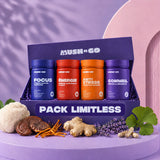
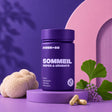
Cordyceps, Chaga, Turmeric and Boswellia: our capsule formula for active people, caffeine-free. One capsule after training, for adults with no contraindication.
Discover Muscle Recovery →
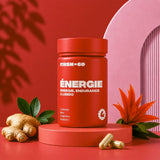
Energy
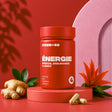
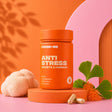
Cordyceps, maca, ginger and vitamin C, which contributes to the reduction of tiredness and fatigue. A 30-day course in capsules, without a drop of coffee.
Discover Energy →The verdict in brief
A well-tolerated mushroom, with clear exceptions.
Cordyceps has been used for centuries in Tibetan and Chinese medicine, and it has been the subject of modern clinical trials for some thirty years, mainly on exercise and fatigue. In these trials, run over a few weeks to three months, side effects remain rare and mild. No serious signal has emerged at the usual doses of 1 to 3 g a day.
That does not mean “safe for everyone”. Cordyceps acts on the immune system, and possibly on blood sugar and blood clotting: that is precisely what makes it interesting, and what calls for caution in certain situations. And its quality varies enormously from one product to another. If you first want to know what studies have observed on energy and sport, our article cordyceps: benefits, studies and dosage has the details.
What is common
Nothing really common. When effects are reported, they are mild digestive upsets and a dry mouth.
What calls for caution
Autoimmune disease, immunosuppressants, anticoagulants, diabetes medication, planned surgery.
What is not recommended
Pregnancy, breastfeeding and children, for lack of data, and a known allergy to mushrooms or moulds.
The real trap
A dubious wild cordyceps or a product with no test results: lead, arsenic, counterfeits.
Which cordyceps
Sinensis, militaris, Cs-4: not the same product.
The word “cordyceps” covers several different things. Wild cordyceps from the Tibetan plateau, Ophiocordyceps sinensis, grows on a caterpillar that it parasitises. It is rare, very expensive and often counterfeited. The vast majority of supplements use something else: Cordyceps militaris, cultivated on a substrate and rich in cordycepin, or a tank-fermented strain called Cs-4, derived from a related fungus.
| Form | Origin | What to know about safety |
|---|---|---|
| Ophiocordyceps sinensis wild | Harvested in Tibet, Nepal, Bhutan | Lead and arsenic contamination reported, frequent fraud |
| Cs-4 (fermented mycelium) | Tank fermentation | The form most studied in older trials, more consistent quality |
| Cordyceps militaris cultivated | Grown on a substrate, fruiting | Rich in cordycepin, contamination can be controlled through testing |
Safety data from trials apply to the form tested. A wild cordyceps bought at a market does not come with the same guarantees.
Why this matters here: most reported incidents do not come from the mushroom itself, but from what surrounds it, or replaces it. We will compare the two species in detail in a future article. To place cordyceps among other species, see our list of medicinal mushrooms worth knowing.
Side effects
Cordyceps side effects: the real list.
Here is what clinical trials and reports describe, ranked from most common to rarest. Most of these effects disappear when you reduce the dose or take the supplement with a meal.
| Effect | Frequency | What to do |
|---|---|---|
| Digestive discomfort, bloating, loose stools | Uncommon | Take with a meal, reduce the dose |
| Dry mouth | Uncommon | Stay well hydrated, often temporary |
| Nausea | Rare | Don't take on an empty stomach |
| Restlessness, lighter sleep | Rare, if taken in the evening | Keep it to the morning or lunchtime |
| Allergic reaction (itching, rash) | Very rare | Stop and see a doctor |
Summary of trials in adults, at usual doses. Any effect that persists or worsens means stopping and seeking medical advice.
Cordyceps is not a stimulant: it contains no caffeine. But as it is often taken for energy and exercise, some people find it too stimulating in the evening. The simplest approach is to take it in the morning or before a workout, as suggested in our guide to the natural pre-workout.
What the studies say
Cordyceps: four publications worth knowing.
Three clinical trials, which tell us about tolerance at usual doses, and a case report that illustrates the risk of contamination. Full references are at the bottom of the page.
Chen et al., 2010 · United States
20 adults aged 50 to 75 took 1 g a day of Cs-4 or a placebo for 12 weeks. Metabolic threshold and ventilatory threshold improved in the cordyceps group, and no serious side effects were reported. Limitation: very small sample.
Parcell et al., 2004 · United States
22 trained cyclists took 3 g a day of Cs-4 or a placebo for 5 weeks. No improvement in endurance performance was observed, and the supplement was well tolerated. Limitation: a population of athletes who were already highly trained.
Hirsch et al., 2017 · United States
28 adults took 4 g a day of a mushroom blend rich in Cordyceps militaris, or a placebo, for 1 and then 3 weeks. After 3 weeks, maximal oxygen uptake and time to exhaustion improved. Limitation: a blend of several mushrooms, so the effect of cordyceps alone cannot be isolated.
Wu et al., 1996 · Taiwan
Two cases of lead poisoning in people who were taking wild cordyceps. The lead came from the product, probably added to increase its selling weight. Limitation: a case report, but it illustrates the main risk of unchecked products.
The trials are reassuring on the tolerance of cultivated or fermented cordyceps over a few weeks. They say nothing about continuous use over several years, or about people who are ill or on medication, who are generally excluded from them.
Autoimmunity
Autoimmune diseases: caution with good reason.
Cordyceps is studied for its action on immunity. In the laboratory and in animals, its polysaccharides and cordycepin alter the activity of several immune cells, such as macrophages and NK cells. In a healthy person, this is nothing to worry about. In someone whose immune system is already attacking their own tissues, it is another matter.
Autoimmune diseases, such as lupus, rheumatoid arthritis, multiple sclerosis, Crohn's disease or Hashimoto's thyroiditis, are treated by damping down immunity. A mushroom that might stimulate it pulls in the opposite direction. There is no well-documented case of a flare-up on cordyceps, but there is no trial showing an absence of risk either. When in doubt, the rule is to abstain.
- Known autoimmune disease: no cordyceps without your specialist's agreement.
- Immunosuppressant treatment, after a transplant or for an inflammatory disease: avoid it.
- Biologic therapy: talk to the team treating you first.
- A flare-up, fever or unusual joint pain while taking cordyceps: stop and see a doctor.
This rule applies to most mushrooms studied for immunity, including reishi and chaga. Our article on the dangers of mushrooms and adaptogenic plants applies it to the whole family.
Interactions
Anticoagulants, diabetes medication, surgery.
Cordyceps interactions are mostly theoretical: they are based on effects observed in the laboratory or in animals, not on incidents in humans. They do, however, involve medicines where a small variation can matter.
| Situation | Why caution is needed | What to do |
|---|---|---|
| Anticoagulants, antiplatelets | Cordycepin slows platelet aggregation in the laboratory | Medical advice before starting |
| Diabetes medication, insulin | Effect on blood sugar observed in animals: risk of hypoglycaemia | Monitor blood sugar, talk to your doctor |
| Immunosuppressants | Possible effect on immunity, the opposite of the treatment | Avoid |
| Surgery | Theoretical risk of bleeding and blood sugar changes | Stop two weeks beforehand |
| Hormone treatments | Effects on sex hormones observed in animals | Medical advice |
Not an exhaustive list. If you are on long-term treatment, show the supplement label to your pharmacist.
Cordyceps is often combined with other ingredients: maca, ginseng, caffeine in some boosters. Each addition brings its own precautions. That is the case with maca: see our article on its benefits and dangers.
Who should avoid it
Who should avoid cordyceps: the contraindications.
Avoid cordyceps, or ask your doctor first, if:
- You are pregnant or breastfeeding: there is no safety data, so abstain.
- It is for a child or teenager: there is no data here either.
- You have an autoimmune disease or take an immunosuppressant.
- You take an anticoagulant, an antiplatelet drug or diabetes treatment.
- You are due to have surgery within the next two weeks.
- You have a hormone-dependent cancer or are on hormone treatment.
- You are allergic to mushrooms or moulds.
For all other adults, cordyceps can be taken as a course, sticking to the dose on the label. The Mush n Go products that contain it, Energy, Muscle Recovery and Brainstoorm, are not recommended for the same groups.
The quality risk
Lead, arsenic, counterfeits: the real risk.
Wild cordyceps is sold by weight, at prices that sometimes exceed that of gold. That attracts fraud. Batches have been laced with lead to make them heavier, others mixed with fake moulded caterpillars or related species. The two cases of lead poisoning published in Taiwan in 1996 are the best-known illustration.
Arsenic poses a different problem, a natural one this time. In 2016, the China Food and Drug Administration found 4.4 to 9.9 mg of arsenic per kilo in products made from wild cordyceps, when the limit set for supplements in China is 1 mg per kilo. The agency ended the pilot programme that allowed this cordyceps in health foods and warned against long-term consumption.
Species and form
Choose a cultivated Cordyceps militaris or an identified fermented mycelium, rather than a “wild” cordyceps of unverifiable origin.
Test results
Heavy metals (lead, arsenic, cadmium, mercury), pesticides, contaminants: ask to see the lab results.
The label
Part used, dose per serving, precautions for use. A product that mentions no contraindications is not playing fair.
Our recipes are blended in Toulouse, from imported mushrooms, and our lab analyses are available online. To find out more about the species, see our cordyceps page.
Taking it properly
Dose, timing, duration: when to stop.
Timing
In the morning or before exercise, with a meal. Avoid the evening if your sleep becomes lighter.
Dose
The one on the label. Trials use 1 to 3 g of mushroom a day; there is no proven benefit in going higher.
Duration
Courses of a few weeks, as in the trials, followed by a break. Data are lacking beyond three months.
When to stop
Persistent digestive upsets, rash, unusual bleeding, feeling unwell: stop and talk to your doctor.
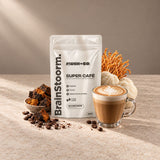
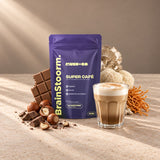
If you prefer your cordyceps in a cup, one cup of Brainstoorm provides 1,000 mg, with Lion's Mane and Chaga, and only 20 mg of caffeine. The same precautions apply.
Your questions
Cordyceps side effects: your questions.
What are the side effects of taking Cordyceps?
They are rare and mild at usual doses: digestive discomfort, loose stools, dry mouth, and more rarely nausea. Taken in the evening, it can also make sleep lighter in some people. These effects usually disappear when you reduce the dose or take it with a meal.
Is cordyceps dangerous?
Not for most healthy adults, at usual doses and over a few weeks. The main danger lies in quality: lead and arsenic have been found in some wild cordyceps. It is also not recommended with autoimmune disease, or during pregnancy or breastfeeding.
Who should avoid Cordyceps?
Pregnant and breastfeeding women, children, and people with autoimmune diseases or on immunosuppressant treatment. Also ask your doctor if you take an anticoagulant or diabetes medication, or before surgery.
Is cordyceps bad for your liver or kidneys?
Clinical trials have not shown any liver or kidney damage at usual doses. If you have liver or kidney disease, however, ask your doctor before any course, as with any supplement.
Can you take cordyceps with anticoagulants?
Not without medical advice. In the laboratory, cordycepin slows platelet aggregation, which could add to the effect of an anticoagulant or antiplatelet drug. The risk is theoretical, but it justifies caution.
Can you take cordyceps when pregnant?
No. There is no safety data for pregnancy or breastfeeding. The rule is to abstain, for cordyceps as for most mushrooms and plants taken as supplements.
Does cordyceps keep you awake?
It contains no caffeine, but some people find it stimulating. Taken in the morning or before exercise, it does not disturb sleep in the vast majority of cases. Simply avoid taking it in the evening.
How long can you take cordyceps for?
Trials last from a few weeks to three months. Beyond that, data are lacking. The most cautious approach is to take it in courses, followed by a break, and to stop at the slightest unusual effect.
How do you choose a safe cordyceps?
Choose a cultivated Cordyceps militaris or an identified fermented mycelium, with heavy metal test results available. Be wary of cheap “wild” cordyceps: it is often counterfeit or contaminated.
Sources
- Chen S., Li Z., Krochmal R. et al. (2010). Effect of Cs-4 (Cordyceps sinensis) on exercise performance in healthy older subjects: a double-blind, placebo-controlled trial. Journal of Alternative and Complementary Medicine, 16(5), 585-590.
- Parcell A. C., Smith J. M., Schulthies S. S. et al. (2004). Cordyceps sinensis (CordyMax Cs-4) supplementation does not improve endurance exercise performance. International Journal of Sport Nutrition and Exercise Metabolism, 14(2), 236-242.
- Hirsch K. R., Smith-Ryan A. E., Roelofs E. J. et al. (2017). Cordyceps militaris improves tolerance to high-intensity exercise after acute and chronic supplementation. Journal of Dietary Supplements, 14(1), 42-53.
- Wu T. N., Yang K. C., Wang C. M. et al. (1996). Lead poisoning caused by contaminated Cordyceps, a Chinese herbal medicine: two case reports. Science of the Total Environment, 182(1-3), 193-195.
- China Food and Drug Administration (2016). Consumer warning on products made from Cordyceps sinensis and end of the pilot programme for the use of cordyceps in health foods.
Keep reading
Further reading.
Cordyceps is just one of the mushrooms in an energy routine. Explore our other guides, or our page dedicated to the species.

Discover our mushroom and adaptogenic plant supplements
Our vegan formulas, made in Toulouse by a French manufacturer.