






















Lion's Mane Side Effects: Dangers of the Mushroom and Who Should Avoid It
By the Mush n Go editorial team - 08 November 2026
By the Mush n Go editorial teamPublished 8 November 202611 min read
Lion's mane
Lion's mane, the mushroom, poses little danger at the doses used in trials, 1 to 3 g a day: reported lion's mane side effects are rare and mostly digestive. The real points to watch are mushroom allergy, certain treatments such as anticoagulants, pregnancy and product quality. Here is what the studies say, case by case.

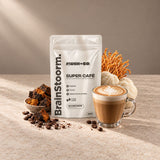
Brainstoorm
Lion's Mane, Cordyceps and Chaga at 1,000 mg each per cup, from the fruiting body, with maca, organic cacao and chicory, and 20 mg of caffeine.
Discover Brainstoorm →
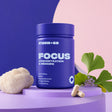
Focus
Lion's Mane, saffron, bacopa monnieri, ginkgo biloba and maritime pine. The thirty-day course, without a drop of caffeine.
Discover Focus →The verdict in brief
Lion's mane dangers: a reassuring profile, not a blank cheque.
Lion's mane is an edible mushroom: Hericium erinaceus. In Japan and China it has been cooked for centuries, and it is sold fresh in some European markets. This culinary history is a useful first marker. It does not tell the whole story, because a supplement sometimes concentrates far more mushroom than a plateful, but it sets the scene: we are not talking about a plant with known toxicity.
Clinical trials in humans, at doses of 1 to 3 g a day of powder or extract, for a few weeks to almost a year, have not shown any toxicity. Literature reviews, such as Mendel Friedman's in 2015, reach the same conclusion. That does not mean “zero risk”. Here is what to bear in mind before taking it.
- The side effects reported are rare, and mostly digestive: abdominal discomfort, nausea, looser stools.
- Allergy exists, as with any mushroom. It remains exceptional, but it means you must stop.
- Interactions with anticoagulants and diabetes medicines are theoretical, based on laboratory studies. They justify medical advice if you are on treatment.
- Pregnancy, breastfeeding and children: no data, so no lion's mane supplements.
- Quality matters as much as dose: origin, part used, contaminant testing.
For the benefits studied, the dosage and the history of the mushroom, our reference article on lion's mane benefits and dosage covers everything. Here, we focus on the question of safety.
Side effects
Lion's mane side effects: rare, and mostly digestive.
In published trials, the vast majority of participants reported no troublesome effects. When effects do appear, they are almost always the same ones, and they go away when you stop. Here is how to recognise them and what to do.
| What you feel | Frequency observed | What you can do |
|---|---|---|
| Bloating, abdominal discomfort | Uncommon | Take the product with a meal, reduce the dose for a few days |
| Nausea | Uncommon | Never take it on an empty stomach, split the dose |
| Looser stools | Uncommon | Reduce the dose, check the product's other ingredients |
| Itching, skin rash | Rare | Stop and seek medical advice: possible allergy |
| Breathing difficulty, facial swelling | Exceptional | Stop and call 112 straight away |
Summary of effects described in clinical trials and published cases. Frequencies are qualitative: the trials are small and cannot put a precise figure on rare effects.
Watch out for a common trap: many lion's mane supplements contain other ingredients. A blend with caffeine, ginkgo or fibre can cause an effect that you wrongly attribute to the mushroom. Always read the full list.
The mushroom's own fibres, including beta-glucans, can also cause a little wind at first in sensitive guts. If your stomach reacts, the rule is the same as for any fibre: start low and go up slowly.
What the trials say
Lion's mane: three trials and their tolerability.
These trials were primarily designed to measure effects on memory or mood. What interests us here is what they say about tolerability. Full references are at the bottom of the page.
Mori et al., 2009 · Japan
30 adults aged 50 to 80 with mild cognitive decline took 3 g a day of fruiting body powder in tablets, or a placebo, for 16 weeks. Blood tests showed no adverse effect linked to the mushroom. Limitation: a small sample, a duration of four months.
Li et al., 2020 · Taiwan
Patients with early-stage Alzheimer's disease took three capsules a day of mycelium enriched in erinacine A, or a placebo, for 49 weeks. It is one of the longest follow-ups. A few participants in the mushroom group stopped because of abdominal discomfort, nausea or skin rash. Limitation: a very specific mycelium extract, in older people who were ill.
Docherty et al., 2023 · United Kingdom
41 adults aged 18 to 45 took 1.8 g a day of lion's mane or a placebo for 28 days. The study looked at cognition, stress and mood. The authors did not report any notable tolerability problem. Limitation: a short pilot study, in young, healthy people.
The overall picture is consistent: no toxicity observed, few and benign adverse effects. But none of these trials was designed to detect rare effects, or to follow thousands of people for years.
Allergy and asthma
Mushroom allergy, asthma: the real cases to know about.
This is the best-documented risk, even though it remains exceptional. Like any mushroom, lion's mane contains proteins that can trigger a reaction in a sensitised person. Two published cases are regularly cited in reviews of its safety.
The skin case
In 1999, a Dutch team described allergic contact dermatitis in a person who handled this mushroom at work. An allergy linked to repeated contact, not to eating it.
The respiratory case
In 2003, Japanese doctors published the case of a man who developed serious respiratory damage, attributed to eating this mushroom. It is an isolated case, but it is a reminder that allergy can affect the lungs.
People with allergies
If you already react to button mushrooms, shiitake or moulds, caution is needed: ask your allergist before trying it.
People with asthma
Asthma linked to moulds or spores does not rule out lion's mane, but it justifies a first trial at a low dose and stopping immediately at the slightest respiratory symptom.
Two published cases for a mushroom eaten for centuries by millions of people is very few. But it is the reason why it is always recommended to introduce a new supplement on its own, at a reduced dose, for a few days, so you know what to blame for any reaction.
Interactions
Anticoagulants, diabetes medicines: interactions that are mostly theoretical.
No serious interaction with a medicine has been demonstrated in humans. But laboratory and animal studies have observed effects that, in theory, could add to those of certain treatments. In the absence of human data, the right approach is simple: talk to your doctor or pharmacist.
| Treatment | What has been observed | What you can do |
|---|---|---|
| Anticoagulants and antiplatelet drugs | In the laboratory, a molecule from the mushroom, hericenone B, slows platelet aggregation | Medical advice before starting, watch for bleeding |
| Diabetes medicines | In animals, extracts lowered blood sugar | Medical advice, blood sugar monitoring in the first few weeks |
| Immunosuppressants | Mushroom polysaccharides act on immune cells, in the laboratory | No self-medication, advice from the doctor overseeing the treatment |
| Planned surgery | As a precaution, because of the theoretical effect on platelets | Tell the team about the supplement, stop on their advice |
“Theoretical” means: observed in vitro or in animals, never demonstrated in treated patients. It is no reason to panic, but it is a reason to tell your doctor.
Autoimmune diseases follow the same logic. Medicinal mushrooms act on certain cells of the immune system in laboratory studies. If you are being treated for a disease of this kind, do not start anything without discussing it first. For an overview, our article on the risks of mushrooms and adaptogenic plants reviews them species by species.
Pregnancy and children
Pregnancy, breastfeeding, children: no data, so avoid it.
No trial has assessed lion's mane supplements in pregnant women, breastfeeding women or children. That is not a danger signal: it is an absence of information. But in health, an absence of data calls for caution, especially when simple alternatives exist.
- Pregnant: no lion's mane supplements, whatever the form. The mushroom cooked occasionally, and cooked well, is not concerned in the same way.
- Breastfeeding: the same rule, as we do not know whether its compounds pass into breast milk.
- Children and teenagers: no supplements, for lack of data on growth and development.
- Planning a pregnancy: discuss all your supplements with your doctor or midwife.
For drinks that combine lion's mane with caffeine, such as mushroom coffees, there is another benchmark: EFSA recommends that pregnant women do not exceed 200 mg of caffeine a day, from all sources combined.
Quality and contaminants
The real risk often lies in the product, not the mushroom.
Mushrooms have one particular feature: they absorb what is in their substrate, including heavy metals such as lead, cadmium or mercury. A mushroom grown on a contaminated substrate can therefore concentrate them. That is why the European Union sets maximum levels of heavy metals for food supplements, and why lab tests matter.
Fruiting body or mycelium
The fruiting body is the visible part of the mushroom. The mycelium is its underground network, often grown on grain: the final product can then contain a lot of starch from the grain. Both have been studied, but they are not the same thing.
Lab tests
A serious brand has its batches tested: heavy metals, microbiological contaminants, sometimes beta-glucan content. Ask for these results, or look for them on its website.
The full label
Part used, type of extract, dose per serving, other ingredients, directions for use and precautions: everything should be legible. A vague label is a bad sign.
The promises
A product that promises to “cure” a disease or “regenerate neurons” does not comply with European regulations. Steer clear.
At Mush n Go, the Lion's Mane in Brainstoorm comes from the fruiting body, at 1,000 mg per cup, and our recipes are blended in Toulouse. The lab results for our mushrooms can be viewed on our lab tests page, something some customers point out.
“[…] being able to access the mushrooms' laboratory analyses and actually check the stated doses”
★★★★★ Axel B. · 27 August 2026
Trustpilot review published about Mush n Go, quoted as written.
Dose and when to stop
The right dose, and the signs that mean you should stop.
Human trials used 1 to 3 g a day of fruiting body powder, or lower doses of concentrated extracts. There is no official dose. The safest rule is to stick to the dose stated on the label of the product you buy, without exceeding it or combining several lion's mane products. For detailed guidance, see our lion's mane page.
Start alone and low
Introduce lion's mane without any other new supplement, at half the dose for three to five days, with a meal.
Move up to the planned dose
If all goes well, switch to the dose on the label. Keep it steady during the course, generally four to eight weeks.
Take stock
After the course, take a break of a few weeks and observe. Stop at any time at the slightest sign of allergy.
Stop immediately in case of itching, skin rash, swelling, breathing difficulty, unusual bleeding or feeling faint. For mild digestive problems, reducing the dose and taking it with a meal is usually enough.
If you are mainly looking for support during periods of intense work, remember that sleep, physical activity and breaks carry far more weight than a supplement. Our guide to natural nootropics puts each option in its place.
Who should avoid
Situations where you should avoid it, or ask first.
For the vast majority of healthy adults, lion's mane taken at a usual dose poses no known problem. Here, however, are the cases where it is better to avoid it, or to ask a health professional.
Avoid lion's mane supplements, or ask your doctor, if:
- You are pregnant or breastfeeding, or it is for a child or teenager.
- You are allergic to mushrooms or moulds, or have already reacted to a mushroom.
- You take an anticoagulant, an antiplatelet drug or a diabetes treatment.
- You are being treated for an autoimmune disease or are on immunosuppressant treatment.
- You are due to have surgery in the coming weeks.
- You are on any long-term treatment: a word with your pharmacist is often enough.
A food supplement does not replace treatment or medical advice. If you have memory or concentration problems that worry you, talk to your doctor first: they often have causes that are simple to identify. And if you are comparing several species, our list of medicinal mushrooms presents the twelve most studied.
Your questions
Lion's mane side effects: your questions.
Is lion's mane dangerous?
Not at the doses used in trials, 1 to 3 g a day for a few weeks to almost a year: no toxicity was observed. Side effects are rare and mostly digestive. The precautions concern mushroom allergy, certain treatments and pregnancy.
What are the side effects of lion's mane?
The most common are digestive: abdominal discomfort, nausea, looser stools. More rarely, itching or a skin rash, which can signal an allergy and mean you must stop. These effects go away when you stop.
Is lion's mane bad for your liver?
No case of liver injury linked to lion's mane has been described in published trials, and blood tests in the 2009 Japanese trial showed no abnormality. If you have liver disease, however, ask your doctor before taking any supplement.
Can you take lion's mane with an anticoagulant?
Not without medical advice. In the laboratory, a molecule from the mushroom slows platelet aggregation. This effect has never been demonstrated in patients, but in theory it could add to that of an anticoagulant or antiplatelet drug.
Should people with diabetes avoid lion's mane?
It is not forbidden, but animal studies have observed a drop in blood sugar. If you take diabetes treatment, talk to your doctor and monitor your blood sugar in the first few weeks.
Can you take lion's mane when pregnant or breastfeeding?
No, as a precaution. No study has assessed lion's mane supplements during pregnancy or breastfeeding. The absence of data means avoiding it, as with most plant- or mushroom-based supplements.
Can you be allergic to lion's mane?
Yes, as with any mushroom, though it is exceptional. Cases of contact dermatitis and one case of respiratory damage have been published. If you already react to other mushrooms or to moulds, ask an allergist.
Can you take lion's mane every day?
Yes, in trials it was taken every day, for up to 49 weeks in a Taiwanese study. The most common use remains a course of four to eight weeks, followed by a break, sticking to the dose on the label.
Hericium: what is the verdict on its safety?
Scientific reviews consider it well tolerated at usual doses, with very few adverse effects reported. The main reservation is the lack of long, large studies. Product quality, with contaminant testing, remains an essential criterion.
Is lion's mane addictive?
No. Lion's mane is not a hallucinogenic mushroom and no dependence has been described. Nor is there any withdrawal effect when you stop.
Sources
- Mori K., Inatomi S., Ouchi K., Azumi Y., Tuchida T. (2009). Improving effects of the mushroom Yamabushitake (Hericium erinaceus) on mild cognitive impairment: a double-blind placebo-controlled clinical trial. Phytotherapy Research, 23(3), 367-372.
- Li I. C. et al. (2020). Prevention of early Alzheimer's disease by erinacine A-enriched Hericium erinaceus mycelia pilot double-blind placebo-controlled study. Frontiers in Aging Neuroscience, 12, 155.
- Docherty S. et al. (2023). The acute and chronic effects of lion's mane mushroom supplementation on cognitive function, stress and mood in young adults: a double-blind, parallel groups, pilot study. Nutrients, 15(22), 4842.
- Friedman M. (2015). Chemistry, nutrition, and health-promoting properties of Hericium erinaceus (lion's mane) mushroom fruiting bodies and mycelia and their bioactive compounds. Journal of Agricultural and Food Chemistry, 63(32), 7108-7123.
- Maes M. F., van Baar H. M., van Ginkel C. J. (1999). Occupational allergic contact dermatitis from the mushroom White Pom Pom (Hericium erinaceum). Contact Dermatitis, 40(5), 289-290.
- Nakatsugawa M. et al. (2003). Hericium erinaceum (yamabushitake) mushroom-induced acute respiratory distress syndrome. Nihon Kokyuki Gakkai Zasshi (Journal of the Japanese Respiratory Society).
- Mori K. et al. (2010). Inhibitory effect of hericenone B from Hericium erinaceus on collagen-induced platelet aggregation. Phytomedicine, 17(14).
- Regulation (EU) 2023/915 on maximum levels for certain contaminants in food.
- EFSA NDA Panel (2015). Scientific opinion on the safety of caffeine. EFSA Journal, 13(5):4102.
Keep reading
Further reading.
Safety is only part of the story. Explore our other guides on lion's mane, or our mushroom coffee Brainstoorm.

Discover our mushroom and adaptogenic plant supplements
Our vegan formulas, made in Toulouse by a French manufacturer.