








Is Ashwagandha Banned in France? The Facts and What ANSES Says
By the Mush n Go editorial team - 11 November 2026
By the Mush n Go editorial teamPublished 11 November 202613 min read
Ashwagandha and regulation
No, ashwagandha is not banned in France: it is still permitted in food supplements. The confusion comes from Denmark, which bans its sale, and from the opinion issued on 19 April 2024 by the French health agency ANSES, which advises several groups against it without banning it: pregnant or breastfeeding women, under 18s, people with thyroid, liver or heart conditions, and anyone on sedative medication.

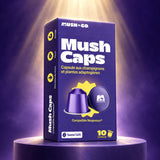
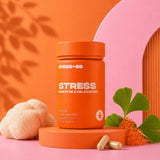
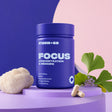
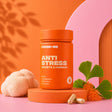
Anti-Stress
Ashwagandha standardised for withanolides, reishi, holy basil, schisandra and vitamin B6, which contributes to normal functioning of the nervous system.
Discover Anti-Stress →
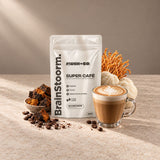
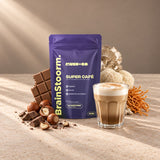
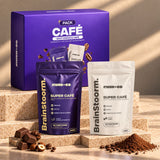
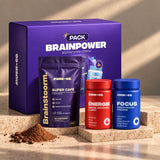
Brainstoorm
Our mushroom coffee: Lion's Mane, Cordyceps and Chaga at 1,000 mg each, plus maca and ashwagandha, on a base of chicory and organic cacao.
Discover Brainstoorm →The short answer
Is ashwagandha banned in France? No, but it is regulated.
If you have read that ashwagandha is “banned in France”, you are not alone. The claim has been circulating on social media and in blog posts since 2023. It is false. As of November 2026, ashwagandha, known by its Latin name Withania somnifera, can be sold in France in food supplements that have been declared to the authorities.
What is true, however, is that health authorities are keeping a close eye on this plant. Here, in a few lines, is what to remember before we get into the detail.
- Ashwagandha is permitted in food supplements in France. No legal text bans it.
- Denmark, on the other hand, bans the sale of food products that contain it. That is the main source of the rumour.
- On 19 April 2024, ANSES published an opinion advising several groups of people against ashwagandha, without calling for it to be banned.
- No health claim is authorised for ashwagandha in Europe: a product that promises to “reduce stress” is breaking the rules.
- The debate continues at European level, but to our knowledge no common ban had been decided as of the end of October 2026.
To learn about the plant itself, its uses and the trials on it, read our guide ashwagandha benefits: what the studies really show. Here, we stick to the regulatory question.
The legal framework in France
A permitted plant, through a particular route.
In France, the plants that may be used in food supplements are governed by Decree No. 2006-352 of 20 March 2006 and by the order of 24 June 2014, known as the “plants order” (arrêté plantes). This order lists the plants, other than fungi, that are permitted and their conditions of use.
Ashwagandha does not appear in the annex to this order. It entered the French market by another door: mutual recognition. Because it is permitted with no particular restriction in Belgium and Italy, manufacturers were able to apply to market it in France under Article 16 of the 2006 decree. The authorities agreed, in the absence of solid evidence of a risk.
According to the ANSES opinion, more than 250 products containing ashwagandha were declared to the DGCCRF, the French consumer protection authority, between April 2016 and March 2021 via Téléicare, the online service for declaring food supplements. That figure shows the size of the market, well before the social media wave.
The presence of the root on List B of the French Pharmacopoeia often comes as a surprise. This list brings together medicinal plants whose potential adverse effects are judged to outweigh the expected therapeutic benefits, in a pharmaceutical context. It does not amount to a ban in food, but it explains why the authorities are cautious.
Where the rumour comes from
Denmark bans, France advises.
The rumour of a French ban mixes up several real events, which happened in different countries, a few years apart. Put back in order, they tell a different story.
2012 · Germany
The German Federal Institute for Risk Assessment, the BfR, evaluates the plant and recommends adding the root to a European list of substances under scrutiny for suspected harmfulness.
2020 · Denmark
The Technical University of Denmark (DTU) publishes a risk assessment: it finds it impossible to set a safe dose. The Danish authorities conclude that the plant should not be used in food.
2023 · Media
The Danish ban is widely reported across Europe. Many articles wrongly conclude from it that there is a European or French ban.
2024 · Netherlands and France
The Dutch institute RIVM advises the whole population against the plant. On 19 April, ANSES publishes its opinion, which advises specific groups against it. Headlines saying “ANSES issues a warning” turn into “banned in France”.
2026 · Europe
The question of a review at European level is being discussed between authorities and industry. To our knowledge, no common decision had been taken by the end of October 2026.
On top of this come occasional recalls of non-compliant products, notably in Denmark, where the food authority regularly publishes warnings about supplements sold online that contain ashwagandha. These recalls concern Danish law: they say nothing about French law.
The official assessments
Four assessments that fed the debate.
These are the documents that European authorities cite. They do not bring any new clinical trial: they review the existing literature and reports of adverse effects. The full references are at the bottom of the page.
BfR, 2012 · Germany
The German institute recommends adding the root of Withania somnifera to List C of Annex III of Regulation (EC) No 1925/2006, the list of substances placed under EU scrutiny for suspected harmfulness. This recommendation was not followed by a European decision.
DTU, 2020 · Denmark
The Danish assessment concludes that the root and its extracts can cause adverse effects, and that it is not possible to set a safe level of consumption. Denmark relies on this report to ban its sale. Industry disputes its methodology.
RIVM, 2024 · Netherlands
The Dutch institute cites liver injury, cases of thyrotoxicosis and effects on the adrenal glands in susceptible people, and does not rule out a risk of miscarriage. It recommends that the entire population avoid it, whether in supplements or herbal teas.
ANSES, 2024 · France
The DGCCRF referred the question to the agency on 22 April 2021, and it delivered its opinion on 19 April 2024. It lists eight reports of adverse effects in nutrivigilance since 2009, judges the data insufficient to set a safe dose, and advises several groups against the plant, without calling for a ban.
The four agencies agree on one point: the available data are not good enough to guarantee the plant's safety. They differ on what to conclude from that: ban it, cap it or inform the public.
What ANSES recommends
Ashwagandha and ANSES: who should avoid it.
The ANSES opinion does not say “ban it”. It says “these people should avoid it”. It is based on suspected effects on the thyroid, liver, heart, central nervous system, fertility and foetal development, and on the plant's traditional use as an abortifacient.
ANSES recommends not taking food supplements containing ashwagandha if:
- You are pregnant.
- You are breastfeeding, as a precaution, given the lack of data.
- You are under 18, also as a precaution.
- You have a thyroid condition.
- You have a liver or heart condition.
- You have hyperandrogenism, meaning an excess of male hormones, for example in some forms of polycystic ovary syndrome.
- You are taking a sedative medication or one that depresses the central nervous system: sleeping pills, anti-anxiety drugs, some anti-epileptics.
The opinion adds two more general recommendations. First, avoid ashwagandha before driving or operating machinery, because of the drowsiness observed in clinical trials. Second, tell your doctor about any supplement you take, given the possible interactions with some medicines, and avoid taking several supplements at the same time.
For details of the adverse effects reported, how often they occur and the interactions, our article ashwagandha side effects, dangers and contraindications covers it all. And if stress is weighing on you to the point of considering a supplement, our guide on how to lower cortisol starts with the levers that need no supplement at all.
Why the agencies are concerned
Thyroid, liver, sedation: the signals to know about.
The agencies' concerns do not come out of nowhere. They are based on published clinical cases, animal studies and uncertainty about what products actually contain. None of them shows a danger for everyone, but all of them justify caution in certain people.
The thyroid
Cases of thyrotoxicosis, an excess of thyroid hormones, have been reported after taking ashwagandha. Trials have also observed changes in thyroid hormone levels.
The liver
In 2020, a case series from Iceland and the United States described five cases of liver injury with jaundice attributed to ashwagandha. The patients recovered after stopping. These cases remain rare.
Drowsiness
The sedative effect, which some people look for, becomes a risk at the wheel or when combined with medicines that slow down the nervous system.
Quality
Products supposed to contain root have been cut with leaves, which are richer in alkaloids, or with other plants. Withanolide content is rarely stated.
This last point is crucial. ANSES notes that manufacturers very rarely state the doses of withanolides, the plant's main compounds. Two products labelled “ashwagandha” can therefore have very different compositions, which complicates any assessment. The agency recommends systematic checks on the part of the plant used.
Status elsewhere in Europe
Ashwagandha in Denmark, Poland and Belgium: different rules.
Lists of plants permitted in food supplements are not harmonised across the European Union. Each country applies its own, which explains why the same product can be legal in Brussels and banned in Copenhagen.
| Country | Status in supplements | On what basis |
|---|---|---|
| France | Permitted, not advised for some groups | Mutual recognition, 2024 ANSES opinion |
| Denmark | Sale banned | 2020 DTU assessment, Fødevarestyrelsen |
| Poland | Permitted with a ceiling | Less than 3 g of root per day, no more than 10 mg of withanolides, adults excluding pregnancy and breastfeeding (2020) |
| Belgium, Italy | Permitted | National plant lists, with no particular restriction |
| Netherlands | Advised against for everyone by RIVM | 2024 opinion; a national restriction is being prepared |
| Germany | On sale, but advised against by the BfR | BfR risk assessment in 2012 |
Situation as described in the ANSES opinion and by the national authorities, checked at the end of October 2026. The rules change: if in doubt, the authority of the country concerned remains the reference.
ANSES also calls for European harmonisation of plant lists, doses and warnings. Article 8 of Regulation (EC) No 1925/2006 provides a procedure that allows the EU to restrict or ban a substance. In 2024, national agencies argued for it to be opened for ashwagandha. Until it has been completed, the status remains set country by country.
Checking a product
Three checks before buying ashwagandha.
The useful question is not “is it banned?” but “is this product reliable?”. Here is what you can check yourself, on the label or the product page, in a few minutes.
The part of the plant
“Root” or “root extract” should be written on it. A product that does not specify the part used, or that mentions leaves, calls for caution.
The dose and standardisation
An amount in milligrams per serving and, ideally, the withanolide content. A “proprietary blend” with no detail does not tell you what you are taking.
Lab tests
Heavy metals, pesticides, plant identity checks: a serious brand publishes its batch test results or provides them on request.
- A label in the local language (French for a product sold in France), with the mandatory information: daily dose, a warning not to exceed it, keep out of reach of children.
- Precautions for use that list the groups ANSES advises not to take it.
- No promise to cure, treat or “reduce stress”: such wording is prohibited.
- An identifiable seller established in the European Union, rather than an online shop with no address.
At Mush n Go, the test results for our batches can be viewed on our lab analyses page, and the list of our ingredients is on our active ingredients page.
What a label can say
No health claim is authorised.
Another misunderstanding feeds the confusion. Many ashwagandha products display promises that have no right to be there. The health claim applications submitted for the plant, on stress, sleep, energy or the heart, are among the 1,548 plant applications put on hold by the European Commission. None has been approved.
| Wording | Allowed? | Why |
|---|---|---|
| “Reduces stress”, “lowers cortisol” | No | Unauthorised health claim for ashwagandha |
| “Cures anxiety”, “treats insomnia” | No | A food can never claim to treat a disease |
| “Vitamin B6 contributes to the reduction of tiredness and fatigue” | Yes | Claim authorised for vitamin B6, not for the plant |
| “Root extract standardised for withanolides” | Yes | Factual information about the composition |
Framework set by Regulation (EC) No 1924/2006 on nutrition and health claims. The rules apply to all supplements sold in France, including online.
That is why, in our articles as on our product pages, we talk about studies, uses and routines, never guaranteed effects. If you are comparing ashwagandha with other plants and mushrooms used in the same routines, our comparison of reishi and ashwagandha and our page on holy basil can help.
Our position
What we do, and what we do not know.
We use ashwagandha in two products. Anti-Stress contains an ashwagandha extract standardised for withanolides, combined with reishi, holy basil, schisandra, vitamin B6 and acacia fibre. Brainstoorm, our mushroom coffee, also contains it, along with maca, Lion's Mane, Cordyceps and Chaga.
These products are legal in France. But being legal does not mean suiting everyone. The ANSES recommendations apply to our products as they do to any others: if you are pregnant or breastfeeding, under 18, have a thyroid, liver or heart condition, or take a sedative medication, do not take Anti-Stress or Brainstoorm without your doctor's advice.
What we publish
The composition of each product, and the test results for our batches, available online.
Where it is made
Our recipes are blended in Toulouse and made in France. The plants and mushrooms themselves do not come from France.
What we do not say
That ashwagandha reduces stress or cortisol. That would be a prohibited claim, and the trials do not allow us to guarantee it.
If the rules change
If a French or European restriction were adopted, we would adapt our formulas and say so here.
Want an evening routine without ashwagandha? Sleep+ contains none: it combines reishi, valerian, magnesium bisglycinate and melatonin. You will find all our information on the plant on our ashwagandha page.
Your questions
Ashwagandha and regulation: your questions.
Why is ashwagandha banned in France?
It is not. Ashwagandha is permitted in food supplements in France. The rumour comes from the Danish ban and from the ANSES opinion of April 2024, which advises some groups against it without calling for a ban.
Is ashwagandha banned in Europe?
No. There is no common European ban. Each country sets its own list of permitted plants: Denmark bans its sale, Poland imposes a ceiling, and France, Belgium and Italy permit it. A European review procedure is under discussion, with no decision to our knowledge at the end of October 2026.
Why is ashwagandha banned in Denmark?
Because the Danish food authority relies on an assessment by the Technical University of Denmark published in 2020. It concludes that no safe dose can be set, because of possible effects on sex hormones, reproduction, metabolism, immunity and the nervous system. The sale of food products containing it is therefore banned there.
What does the ANSES opinion say about ashwagandha?
Published on 19 April 2024, it recommends that pregnant women and people with a thyroid, liver or heart condition, hyperandrogenism or a sedative treatment avoid it. As a precaution, it also advises breastfeeding women and under 18s against the plant, and advises against taking it before driving.
Can you buy ashwagandha in pharmacies in France?
Yes, ashwagandha food supplements are sold in pharmacies, parapharmacies, organic shops and online. However, there is no ashwagandha-based medicine authorised in France.
What dose of ashwagandha is allowed in France?
No official maximum dose has been set in France. ANSES considers that the data do not make it possible to define a safe level of consumption. As a benchmark, Poland limits the root to less than 3 g per day and withanolides to 10 mg per day.
Is ashwagandha dangerous for the thyroid?
Cases of excess thyroid hormones have been reported, and trials have observed changes in these hormones. That is why ANSES advises people with a thyroid condition or on thyroid treatment against the plant. Talk to your doctor before taking any.
Will ashwagandha be banned in France?
Nothing points to it so far. A change is possible if the European Union opens and concludes a restriction procedure, or if France changes its list of plants. In the meantime, the plant remains permitted, with the ANSES recommendations.
How can you tell if an ashwagandha supplement is compliant?
Check that the label states the part of the plant, preferably the root, the dose per serving and, ideally, the withanolide content. The product must not promise any effect on stress or on a disease, and the manufacturer must be able to provide its test results.
Sources
- ANSES (2024). Opinion on the risks associated with the use of Withania somnifera (L.) Dunal preparations in food supplements. Request No. 2021-SA-0077, Maisons-Alfort, 19 April 2024.
- Decree No. 2006-352 of 20 March 2006 on food supplements. Journal officiel de la République française.
- Order of 24 June 2014 establishing the list of plants, other than fungi, permitted in food supplements and their conditions of use. Journal officiel de la République française.
- DGCCRF (2019). List of plants that may be used in food supplements, consolidated version of January 2019.
- DTU Fødevareinstituttet (2020). Risikovurdering af roden fra Withania somnifera. Danmarks Tekniske Universitet.
- Fødevarestyrelsen. Ashwagandha i kosttilskud og drikkevarer. Accessed 28 October 2026.
- Bundesinstitut für Risikobewertung (2012). Risk assessment of Withania somnifera, cited in ANSES opinion No. 2021-SA-0077.
- Rijksinstituut voor Volksgezondheid en Milieu (2024). Risk assessment of Withania somnifera, RIVM report 2024-0029.
- Björnsson H. K. et al. (2020). Ashwagandha-induced liver injury: a case series from Iceland and the US Drug-Induced Liver Injury Network. Liver International, 40(4), 825-829.
- Regulation (EC) No 1925/2006 on the addition of vitamins, minerals and certain other substances to foods, Article 8. Regulation (EC) No 1924/2006 on nutrition and health claims made on foods.
Keep reading
Further reading.
Regulation is only part of the question. Discover our other guides on ashwagandha, or take a look at Anti-Stress.

Discover our mushroom and adaptogenic plant supplements
Our vegan formulas, made in Toulouse by a French manufacturer.