














Hashimoto's Diet: What to Eat and What to Avoid
By the Mush n Go editorial team - 14 November 2026
By the Mush n Go editorial teamPublished 14 November 202611 min read
Thyroid
On a Hashimoto's diet, the foods to avoid can be counted on one hand: mainly seaweed and iodine-rich supplements taken without medical advice. The rest is a matter of dose and timing: enough iodine and selenium on the plate, and coffee, calcium, iron and soy kept apart from your tablet.
The short answer
Hashimoto's diet: very few foods are banned, when you eat matters more.
Hashimoto's thyroiditis is an autoimmune disease: the immune system attacks the thyroid, which gradually produces less hormone. It is the leading cause of an underactive thyroid in countries where iodine is not lacking. The treatment, levothyroxine, replaces the missing hormone. Diet works on two fronts: giving the gland its raw materials and letting the tablet be absorbed properly. For the complete method, from adjusting your treatment to the 21-day plan, see our guide thyroid fatigue: why you stay exhausted even on treatment.
The good news: the Hashimoto's diet comes down to three simple habits, and it looks a lot like a varied Mediterranean plate.
Eat more of
Fish, seafood, eggs, dairy, pulses, cooked vegetables, one or two Brazil nuts: they provide iodine, selenium, iron and zinc.
Space out
Coffee, calcium, iron, soy and large amounts of fibre: take them apart from your tablet, not at the same time.
Know about
Seaweed, iodine supplements, large amounts of raw cruciferous vegetables, gluten: topics to dose and to discuss with your doctor.
If you first want to recognise the signs of the condition, our article on underactive thyroid symptoms covers them system by system.
The table
Underactive thyroid and diet: the table to keep handy.
Here are the foods for an underactive thyroid sorted by nutrient, with the right habit for each. The middle column is the one to remember.
| Food or nutrient | The right habit | Why |
|---|---|---|
| Fish, seafood, eggs, dairy, iodised salt | Eat more: several times a week | Iodine contributes to the normal production of thyroid hormones and to normal thyroid function |
| Brazil nuts, fish, eggs | Eat more: one or two nuts a day is enough | Selenium contributes to normal thyroid function |
| Meat, pulses, pumpkin seeds | Eat more, with vitamin C at the same meal | Iron and zinc: iron contributes to the reduction of tiredness and fatigue |
| Oily fish, sunshine, prescribed supplement | Check by blood test in winter | Vitamin D contributes to the normal function of the immune system |
| Coffee, tea | Space out: 30 to 60 minutes after the tablet | Coffee taken with the tablet slows its absorption |
| Dairy, calcium-rich waters, calcium and iron supplements | Space out: several hours after the tablet | Calcium and iron bind to levothyroxine in the gut |
| Soy (milk, tofu, yoghurts) | Space out from the tablet, in a regular amount | Soy can change how your treatment is absorbed |
| Cabbage, broccoli, turnip, radish | Good to know: cooked, they keep their place | Cooking greatly reduces their goitrogenic compounds |
| Seaweed, iodine supplements | Good to know: only on medical advice | Their iodine content can far exceed what you need |
Claims authorised under Regulation (EU) No 432/2012 for iodine, selenium, iron and vitamin D.
And the “top 5 foods for the thyroid” people often search for? It follows from the table: a sea fish, eggs, a dairy product, a Brazil nut and pulses. Five simple families, easy to rotate through the week.
Iodine
Iodine and an underactive thyroid: not too much, not too little.
Iodine is the raw material of thyroid hormones. The European Food Safety Authority (EFSA) sets the adequate intake at 150 µg a day for adults, 200 µg during pregnancy, and the tolerable upper intake level at 600 µg a day. Between the two, the thyroid works comfortably.
With Hashimoto's, it is excess that deserves attention. Large population studies show that autoimmune thyroid disease is more common where iodine intakes are very high. An ordinary plate stays in the right zone: it is with seaweed and concentrated supplements that the scale changes.
- Sea fish twice a week, eggs, one or two dairy products a day: your daily intake is covered.
- Iodised salt at home, in the usual amount: a simple, regular top-up.
- Seaweed (kombu, wakame, nori, enriched spirulina): the content varies hugely from one product to another. The French health agency ANSES recommends that people with a thyroid condition talk to their doctor before eating it.
- “Thyroid” supplements based on iodine or fucus: only if your doctor prescribes them, after tests.
- Pregnancy or planning a pregnancy: needs increase, and supplementation is decided with your doctor or midwife.
Selenium, iron, zinc, vitamin D
The Brazil nut and the others, allies on your plate.
The thyroid is the organ richest in selenium in the body: this mineral is part of the enzymes that convert T4 into T3, the active form of the hormone. Selenium contributes to normal thyroid function, and EFSA puts the adequate intake at 70 µg a day for adults.
The Brazil nut is the most concentrated source. In the trial by Thomson and colleagues (2008), 59 New Zealand adults ate two Brazil nuts a day for twelve weeks: their blood selenium rose as much as in the group taking 100 µg of selenium as a tablet. A good rule of thumb is therefore one or two nuts a day, not a handful: content varies with the soil of origin, and EFSA sets the upper limit at 255 µg a day.
These four nutrients can be checked with a blood test when fatigue lasts. Our article on winter fatigue and vitamins gives the useful benchmarks, and the one on persistent fatigue sets out the steps to follow.
What the studies say
Thyroid and diet: four studies worth knowing.
Iodine, selenium, coffee, calcium: these are the studies behind the benchmarks in this article. Full references are at the bottom of the page.
Teng et al., 2006 · China
3,018 residents of three regions with different iodine intakes, followed for five years. Subclinical hypothyroidism and autoimmune thyroiditis were more common in regions where iodine intake was more than adequate or excessive.
Gärtner et al., 2002 · Germany
70 women with autoimmune thyroiditis, on levothyroxine. After three months of 200 µg of selenium a day, anti-TPO antibody levels had fallen by about 36%, versus 12% on placebo.
Benvenga et al., 2008 · Italy
In patients whose TSH stayed high and in volunteers, levothyroxine swallowed with an espresso, or just before it, was absorbed less well than when taken with water. An hour's gap was enough to restore absorption.
Singh et al., 2000 · United States
20 patients on levothyroxine took 1,200 mg of calcium a day at the same time as their tablet for three months. Mean TSH rose from 1.6 to 2.7 mIU/L, then returned to its starting level when the calcium was stopped.
The foods people talk about
Soy, cruciferous vegetables, gluten: what we really know.
Three families come up in every list of “thyroid forbidden foods”. The available data suggest dosing them rather than cutting them out.
Soy
The review by Messina and Redmond (2006), covering 14 trials, concludes that soy has little effect on thyroid function in adults with adequate iodine intake. On treatment, it can slow absorption of the tablet: space it a few hours apart and keep your intake regular.
Cruciferous vegetables
Cabbage, broccoli, cauliflower, turnip and radish contain compounds called goitrogens, which interfere with iodine uptake when eaten raw, in very large amounts, with a low iodine intake. Cooked and in normal portions, they remain excellent vegetables.
Gluten
Coeliac disease is more common in people with Hashimoto's: a blood screening test is worth discussing if you have digestive problems or iron deficiency. In a Polish pilot study (Krysiak, 2019), 34 women were followed for six months: thyroid antibodies fell in the gluten-free group.
Before cutting out gluten, get screened: the test is only reliable if you are still eating it. A dietitian can then help you keep a complete plate, whichever option you choose.
Sugar deserves a mention. The fatigue of an underactive thyroid pushes you towards snacking, and complete meals, with protein from the morning, space out cravings. Our guide to quitting sugar gives the method step by step.
The treatment
Levothyroxine, coffee, calcium, iron: the rule of distances.
Levothyroxine is absorbed in the small intestine, and it is absorbed better on its own. That is why the leaflet asks you to take it on an empty stomach with a glass of water. Three benchmarks are enough.
The tablet, on an empty stomach
On waking, with a big glass of water, at a regular time. Some doctors suggest taking it at bedtime, away from dinner: what matters is regularity.
Coffee, 30 to 60 minutes later
The leaflet asks for at least thirty minutes before breakfast; US guidelines advise sixty. Tea and fruit juice follow the same rule.
Iron and calcium, 4 hours later
Iron and calcium supplements, antacids: at lunch or dinner. In the study by Campbell (1992), iron taken with the tablet raised TSH from 1.6 to 5.4 mIU/L in 14 patients.
Dairy, very calcium-rich waters, soy and very high-fibre meals should also be kept away from the tablet: in practice, from lunch onwards. If you change your habits lastingly, for example by switching to soy milk every morning, tell your doctor: a TSH check six to eight weeks later lets the dose be adjusted.
Coffee itself keeps its place in the morning. If your stomach tolerates it badly on empty, our article on coffee on an empty stomach explains how to fit it in after breakfast.
In practice
Hashimoto's diet: a typical day on the plate.
Here is what a day combining all these benchmarks looks like. It can be varied endlessly, with seasonal produce and your own tastes.
On waking
The tablet with a big glass of water. Then the shower, daylight, a few steps: thirty to sixty minutes pass quickly.
Breakfast
Coffee or tea, two eggs or a fresh cheese, wholemeal bread, a fruit rich in vitamin C. Protein from the morning, for steady energy.
Lunch
A sea fish or meat, cooked vegetables (broccoli is welcome), lentils or a wholegrain starch, a yoghurt. This is the time for an iron or calcium supplement if prescribed.
Snack
One or two Brazil nuts, a piece of fruit, a hot drink.
Dinner
A vegetable soup, chickpeas or an omelette, a salad dressed with rapeseed or walnut oil. A light meal, two to three hours before bed.
Add twenty to thirty minutes of walking and a regular bedtime: energy is built as much in the rhythm of the day as on the plate. When your head stays in cotton wool despite balanced treatment, our feature on brain fog goes through the other avenues.
The right reflex
When to talk to your doctor or a dietitian.
Diet supports treatment, and medical follow-up remains the guiding thread. A registered dietitian-nutritionist builds menus with you suited to your tastes, your budget and your test results.
Book an appointment if:
- Tiredness, feeling cold or weight gain persist even though you take your treatment regularly.
- You want to start an iodine, seaweed, selenium, iron or calcium supplement.
- You have lasting digestive problems, bloating or an iron deficiency: screening for coeliac disease may be useful.
- You are pregnant, breastfeeding or planning a pregnancy: iodine needs and the treatment dose change.
- You feel unusual palpitations, nervousness or weight loss: the dose may need reviewing.
Our formula
For everyday tiredness: our Energy formula.
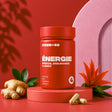
Your treatment and your plate lay the foundations. For everyday tiredness, we designed Energy: cordyceps, maca, ginger and vitamin C, which contributes to the reduction of tiredness and fatigue. A caffeine-free capsule formula that fits into the typical day described above: the tablet on an empty stomach first, the capsule at breakfast afterwards. Talk to your doctor if you are on thyroid treatment.

Energy
Cordyceps, maca, ginger and vitamin C in capsules. Vitamin C contributes to the reduction of tiredness and fatigue. A 30-day course, crafted in France, with a 60-day money-back guarantee.
Discover Energy →
Thyroid fatigue
Why fatigue sometimes persists on treatment, the five avenues to check with your doctor, taking the tablet correctly and a 21-day plan.
Read the guide →Food supplement, to be used as part of a varied and balanced diet and a healthy lifestyle. If you are on thyroid treatment, talk to your doctor before starting a supplement.
Your questions
Hashimoto's diet: your questions.
What are the forbidden foods with Hashimoto's?
With Hashimoto's, very few foods are truly forbidden: mainly seaweed and iodine-rich supplements, which should be reserved for medical advice. Coffee, calcium, iron and soy remain allowed, kept apart from the levothyroxine tablet. The rest of the plate can be varied, Mediterranean-style.
What food should you avoid with Hashimoto's?
The food to avoid first is very iodine-rich seaweed, such as kombu, along with iodine supplements taken without tests. Raw cruciferous vegetables in very large amounts should be moderated; cooked, they keep their place. Soy and dairy are simply taken apart from the tablet.
Are Brazil nuts good for the thyroid?
Yes, they are the most concentrated food source of selenium, and selenium contributes to normal thyroid function. One or two nuts a day are enough to cover the 70 µg benchmark set by EFSA. Since content varies with origin, it is best to stick to this small daily amount.
Can you be cured of Hashimoto's?
Hashimoto's is a chronic condition: it stays with the person long term. It is very treatable: levothyroxine replaces the missing hormone, TSH returns to the normal range and the great majority of patients lead an entirely normal life. Regular blood tests let the dose be adjusted over the years.
What triggers Hashimoto's?
Hashimoto's is triggered on a genetic background: the disease is more common in some families and mainly affects women. Environmental factors add to it, such as a very high iodine intake, pregnancy and its aftermath, certain infections or certain medicines. The immune system then produces anti-TPO antibodies directed against the thyroid.
What is the link between coenzyme Q10 and the thyroid?
Coenzyme Q10 takes part in energy production in the mitochondria, whose activity is regulated by thyroid hormones. Studies have measured lower blood levels of coenzyme Q10 in an overactive thyroid and higher levels in an underactive one. It is found in oily fish, meat and nuts and seeds; a supplement is something to discuss with your doctor.
Which diet should you follow with Hashimoto's?
The most solid Hashimoto's diet is a varied Mediterranean-style way of eating: fish, eggs, cooked vegetables, pulses, fruit, good-quality oils, dairy kept apart from the tablet. It covers iodine, selenium, iron and zinc. A dietitian can adapt it to your test results, and screening for coeliac disease comes before any gluten-free trial.
How long should you wait between Levothyrox and coffee?
Wait thirty to sixty minutes between the levothyroxine tablet and coffee. The leaflet asks for a dose on an empty stomach at least thirty minutes before breakfast; US guidelines advise an hour. For iron and calcium supplements, the recommended gap is four hours.
Sources
- Haute Autorité de santé (2023). Prise en charge des hypothyroïdies chez l'adulte. Recommandation de bonne pratique.
- EFSA NDA Panel (2014). Scientific Opinion on Dietary Reference Values for iodine. EFSA Journal, 12(5):3660.
- EFSA NDA Panel (2014). Scientific Opinion on Dietary Reference Values for selenium. EFSA Journal, 12(10):3846.
- EFSA NDA Panel (2023). Scientific opinion on the tolerable upper intake level for selenium. EFSA Journal, 21(1):7704.
- Scientific Committee on Food (2002). Opinion on the tolerable upper intake level of iodine. European Commission.
- ANSES (2018). Avis relatif au risque d'excès d'apport en iode lié à la consommation d'algues dans les denrées alimentaires.
- Jonklaas J. et al. (2014). Guidelines for the treatment of hypothyroidism: prepared by the American Thyroid Association task force on thyroid hormone replacement. Thyroid, 24(12), 1670-1751.
- Teng W. et al. (2006). Effect of iodine intake on thyroid diseases in China. The New England Journal of Medicine, 354(26), 2783-2793.
- Gärtner R. et al. (2002). Selenium supplementation in patients with autoimmune thyroiditis decreases thyroid peroxidase antibodies concentrations. The Journal of Clinical Endocrinology & Metabolism, 87(4), 1687-1691.
- Benvenga S. et al. (2008). Altered intestinal absorption of L-thyroxine caused by coffee. Thyroid, 18(3), 293-301.
- Singh N., Singh P. N., Hershman J. M. (2000). Effect of calcium carbonate on the absorption of levothyroxine. JAMA, 283(21), 2822-2825.
- Campbell N. R. C. et al. (1992). Ferrous sulfate reduces thyroxine efficacy in patients with hypothyroidism. Annals of Internal Medicine, 117(12), 1010-1013.
- Thomson C. D. et al. (2008). Brazil nuts: an effective way to improve selenium status. The American Journal of Clinical Nutrition, 87(2), 379-384.
- Messina M., Redmond G. (2006). Effects of soy protein and soybean isoflavones on thyroid function in healthy adults and hypothyroid patients: a review of the relevant literature. Thyroid, 16(3), 249-258.
- Krysiak R., Szkróbka W., Okopień B. (2019). The effect of gluten-free diet on thyroid autoimmunity in drug-naïve women with Hashimoto's thyroiditis: a pilot study. Experimental and Clinical Endocrinology & Diabetes, 127(7), 417-422.
- Roy A. et al. (2016). Prevalence of celiac disease in patients with autoimmune thyroid disease: a meta-analysis. Thyroid, 26(7), 880-890.
- Wang J. et al. (2015). Meta-analysis of the association between vitamin D and autoimmune thyroid disease. Nutrients, 7(4), 2485-2498.
- Mancini A. et al. (2011). Coenzyme Q10 and thyroid disorders: a review. Journal of Endocrinological Investigation.
- Commission Regulation (EU) No 432/2012: authorised health claims (iodine, selenium, iron, vitamin D, vitamin C).
Keep reading
Going further.
With your plate sorted, the rest plays out over time. Our guide thyroid fatigue covers treatment, the five avenues to check when exhaustion persists and the 21-day plan; the articles below complete each point.

Discover our mushroom and adaptogenic plant supplements
Our vegan formulas, made in Toulouse by a French manufacturer.