









Follicular Phase: Length, Symptoms, Energy and Sleep
By the Mush n Go editorial team - 23 November 2026
By the Mush n Go editorial teamPublished 23 November 20269 min read
Follicular phase
The follicular phase is the first half of the menstrual cycle: it begins on the first day of your period and ends at ovulation. It lasts 17 days on average, periods included. Oestrogens rise gradually, and many women regain energy during this stretch.
The definition
Follicular phase: the definition, from your period to ovulation.
The follicular phase begins on the first day of your period and ends at ovulation. Its name comes from the follicles, small sacs in the ovary that each contain an egg. At the start of the cycle, the pituitary gland secretes follicle-stimulating hormone (FSH), which makes several follicles grow. One of them takes the lead: the dominant follicle, which will release an egg.
As it grows, this follicle secretes more and more of oestradiol, the main oestrogen. This hormone rebuilds the lining of the uterus after your period. When its level reaches a threshold, the pituitary gland releases a surge of luteinising hormone (LH): ovulation occurs about a day later. The luteal phase then begins. To see the four phases side by side, read our guide to the 4 phases of the menstrual cycle.
The length
Follicular phase: the length, 17 days on average.
In the study by Bull and colleagues (2019), which analysed more than 600,000 cycles, the follicular phase lasted 16.9 days on average, for an average cycle of 29.3 days. It is the most variable phase: an earlier ovulation shortens the cycle, a later one lengthens it. Specialists consider a cycle regular between 24 and 38 days (FIGO classification, Munro et al., 2018).
| Moment | Days of a 28-day cycle | What happens |
|---|---|---|
| Period | about days 1 to 5 | Hormones at their lowest, the lining sheds |
| Continuation of the follicular phase | about days 6 to 13 | The dominant follicle grows, oestrogens rise |
| Ovulation | around day 14 | LH peak, egg released |
These days are indicative. If your cycle is longer, it is almost always the follicular phase that stretches. A urinary LH test or the waking temperature chart can pinpoint your ovulation, and therefore the end of this phase.
How it feels
Follicular phase: the symptoms, from the period to regaining momentum.
The follicular phase begins with your period, with its usual signs: cramps, tiredness, heaviness, need for rest. In the following days, oestrogens rise and how you feel changes. Many women describe:
- A renewed energy and a wish to move again after the first days.
- A lighter belly, without the bloating of late cycle.
- A calmer appetite, with fewer cravings for sugar.
- Clearer skin, and a sense of being more at ease in your body.
- More abundant cervical mucus as ovulation approaches.
These markers are trends: every body has its own rhythm. If your periods are painful or very heavy, see the "When to see a doctor" section below.
Mood
Follicular phase and mood: often a more stable period.
The review by Sundström Poromaa and Gingnell (2014) describes how the hormones of the cycle influence the processing of emotions. In the first half of the cycle, oestrogens rise and progesterone stays low. Many women report a more stable mood and more availability for projects and exchanges. This tendency varies from one person to another, and the tiredness of the first days of your period can mask it.
It is a good time to start things that need initiative: an important meeting, a new project, resuming exercise. Note your good days for three cycles: you will see how yours takes shape.
Energy
Follicular phase and energy: how to regain momentum.
During your period, the body loses blood, and therefore iron, and tiredness is felt. Then oestrogens rise and energy generally returns. Three simple levers support this recovery:
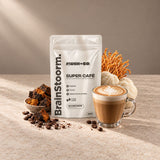
- In the morning: Brainstoorm, our mushroom coffee, offers the pleasure of a warm cup with 20 mg of caffeine, against about 80 mg for an espresso. EFSA sets the safety benchmark at 400 mg a day for an adult, and 200 mg during pregnancy.
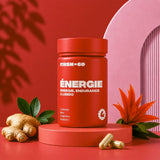
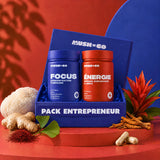
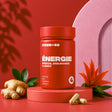
- During the day: Energy combines cordyceps, maca, ginger and 80 mg of vitamin C (100% of the reference intakes). Vitamin C contributes to the reduction of tiredness and fatigue.
- Light and movement: a walk in morning light sets the internal clock.
To learn more about the ingredients, read our articles on cordyceps, maca and the maca coffee.
Sleep
Follicular phase and sleep: usually an easier stretch.
The review by Baker and Driver (2007) reports that sleep complaints are less frequent in the first half of the cycle than in the week before your period, and that body temperature is lower then. This is the moment to build good foundations: getting up at a fixed time, natural light in the morning, a last coffee before early afternoon (see our article on the coffee cut-off time).
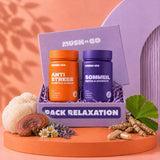
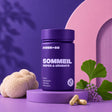
Nights during your period can be more restless because of cramps or heat. Sleep+ contains 1.9 mg of melatonin in the evening, 300 mg of magnesium bisglycinate (60 mg of magnesium, 16% of the reference intakes), valerian and reishi. Melatonin contributes to the reduction of time taken to fall asleep, and magnesium contributes to a reduction of tiredness and fatigue. One capsule thirty minutes before bedtime.
Eating
Follicular phase and diet: focus on iron and vegetables.
Periods involve iron loss. To make up for it, pair each meal with a source of iron and vitamin C:
- Iron: pulses (lentils, chickpeas), red meat or poultry, fish, tofu, eggs.
- Vitamin C at the same meal: bell pepper, citrus, kiwi, parsley. Vitamin C contributes to increasing iron absorption.
- Colourful vegetables and wholegrain cereals for fibre and magnesium.
- Warm, simple meals on period days, with good hydration.
If your periods are heavy or tiredness persists, talk to your doctor: an iron check is a simple blood test. Our article persistent tiredness sets out the leads to check.
Exercise
Follicular phase and exercise: the right time to progress.
The meta-analysis by McNulty and colleagues (2020), covering 78 studies, indicates that performance could be slightly lower at the very start of the follicular phase, during the period, than in other phases. The differences are small, vary widely from one woman to another, and the authors recommend observing your own sensations.
During your period, walking, yoga or easy cycling suit you well. As soon as energy returns, it is a good time for more intense sessions: strength training, running, long outings. If you have a coffee before training, our article coffee before exercise gives the timings.
What the studies say
Follicular phase: three studies to know.
Three studies give benchmarks for the follicular phase. Full references are in the footnotes.
Bull et al., 2019 · Analysis of real cycles
Analysis of 612,613 cycles from 124,648 users of a tracking app. Average cycle length: 29.3 days; follicular phase: 16.9 days; luteal phase: 12.4 days. Limitation: data self-reported by users of an app.
McNulty et al., 2020 · United Kingdom
Systematic review and meta-analysis of 78 studies on sports performance. Performance could be slightly lower at the start of the follicular phase, with small and variable differences; the authors recommend following your own sensations. Limitation: study quality judged modest.
Baker and Driver, 2007 · Review
Review on sleep and the menstrual cycle: lower body temperature before ovulation, more frequent sleep complaints before the period. Limitation: small studies.
The routine
A routine for the follicular phase, from morning to evening.
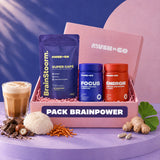
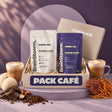
The Cycle Energy Pack brings together three products that follow the day, from the follicular phase to the luteal phase.
Morning: Brainstoorm
A cup of mushroom coffee: 20 mg of caffeine and 6,040 mg of actives, with Lion's Mane, Cordyceps and Chaga at 1,000 mg each, maca and ashwagandha.
Daytime: Energy
One capsule with lunch: cordyceps, maca, ginger and vitamin C.
Evening: Sleep+
One capsule thirty minutes before bed: melatonin, magnesium, valerian and reishi.
Precautions for use:
- Pregnancy, pregnancy planning and breastfeeding: these food supplements are not recommended.
- Thyroid or hormonal disorders: ask your doctor before taking Brainstoorm's ashwagandha.
- Autoimmune or inflammatory disease, current treatment (sedative, anxiolytic, antidepressant, anticoagulant): medical advice before Sleep+ and Energy.
Food supplements, to be used as part of a varied, balanced diet and a healthy lifestyle. Sleep+ is not recommended for pregnant or breastfeeding women, or for children under 12.
When to see a doctor
Follicular phase: when should you see a doctor?
The follicular phase needs no special follow-up when it goes well. Medical advice is useful in the following situations.
- very heavy periods or periods lasting more than seven days;
- pain that stops you working or living normally;
- regular cycles shorter than 24 days or longer than 38 days, or periods absent for three months;
- bleeding between periods;
- persistent tiredness, breathlessness or dizziness during and after your period;
- a late period: a pregnancy test is the first step.
If you have dark thoughts, call the 116 123, the national suicide prevention line, free and available 24 hours a day.
See it all
The four phases of the cycle, side by side.
The follicular phase is the first of the two main phases of the cycle. Our guide compares them: energy, mood and sleep, phase by phase.

Energy
Cordyceps, maca, ginger and vitamin C in capsules. Vitamin C contributes to the reduction of tiredness and fatigue. A 30-day course, crafted in France, with a 60-day satisfied or refunded guarantee.
Discover Energy →
The 4 phases of the menstrual cycle
Periods, the follicular phase, ovulation and the luteal phase: what changes in your body, and the habits that accompany each phase.
Read the guide →Your questions
Follicular phase: your questions.
Follicular phase: what is it, and how long does it last?
The follicular phase is the first half of the menstrual cycle: it begins on the first day of your period and ends at ovulation. It lasts 17 days on average (16.9 days in an analysis of more than 600,000 cycles) and varies from one woman to another.
What is the definition of the follicular phase?
It is the period during which a follicle in the ovary grows under the effect of FSH, until it releases an egg. The follicle secretes oestrogens, which rebuild the lining of the uterus after your period.
What are the symptoms of the follicular phase?
Your period opens the phase, with possible cramps and tiredness. Then many women describe more energy, a lighter belly, a calmer appetite and a more stable mood, as oestrogens rise.
Which hormones dominate the follicular phase?
FSH makes the follicles grow, and oestradiol, an oestrogen, rises gradually. Progesterone stays low. An LH surge triggers ovulation and marks the end of the phase.
How do I regain energy during the follicular phase?
Sleep at regular times, get out into daylight, move every day and eat iron-rich foods with vitamin C. Vitamin C contributes to the reduction of tiredness and fatigue; Energy provides 80 mg per capsule, i.e. 100% of the reference intakes.
What should I eat during the follicular phase?
Pulses, meat or fish, eggs and tofu for iron, paired with vitamin C-rich foods such as bell pepper, kiwi or citrus. Vitamin C contributes to increasing iron absorption.
Can I exercise during the follicular phase?
Yes. A meta-analysis of 78 studies shows small and variable differences between phases. During your period, choose a gentle activity; as soon as your energy returns, you can increase the intensity.
What is the difference between the follicular and luteal phases?
The follicular phase comes before ovulation, with rising oestrogens and a lower body temperature. The luteal phase follows it, with progesterone rising, a higher body temperature and, for many women, more tiredness and lighter sleep.
Can I get pregnant during the follicular phase?
Yes, in the days before ovulation: sperm can survive several days in the reproductive tract. The fertile window covers the days before ovulation and the day of ovulation itself.
Sources
- Bull J. R. et al. (2019). Real-world menstrual cycle characteristics of more than 600 000 menstrual cycles. npj Digital Medicine, 2, 83.
- Munro M. G. et al. (2018). The two FIGO systems for normal and abnormal uterine bleeding symptoms and classification of causes of abnormal uterine bleeding in the reproductive years. International Journal of Gynecology & Obstetrics, 143(3), 393-408.
- McNulty K. L. et al. (2020). The effects of menstrual cycle phase on exercise performance in eumenorrheic women: a systematic review and meta-analysis. Sports Medicine, 50(10), 1813-1827.
- Baker F. C., Driver H. S. (2007). Circadian rhythms, sleep, and the menstrual cycle. Sleep Medicine, 8(6), 613-622.
- Sundström Poromaa I., Gingnell M. (2014). Menstrual cycle influence on cognitive function and emotion processing: from a reproductive perspective. Frontiers in Neuroscience, 8, 380.
- EFSA NDA Panel (2015). Scientific opinion on the safety of caffeine. EFSA Journal, 13(5), 4102.
- Commission Regulation (EU) No 432/2012: authorised health claims (vitamin C, magnesium, melatonin).
Discover our mushroom and adaptogenic plant supplements
Our vegan formulas, made in Toulouse by a French manufacturer.