















Cortisol Face and Cortisol Belly: The Truth Behind the Videos
By the Mush n Go editorial team - 22 November 2026
By the Mush n Go editorial teamPublished 22 November 202613 min read
Cortisol
“Cortisol face” is the social media name for a puffy face blamed on stress. In the vast majority of cases, it is water retention linked to sleep, salt or alcohol, not an excess of hormone. Stress does weigh on the belly, the so-called “cortisol belly”, but mainly through sleep and appetite. A genuine high-cortisol face, on the other hand, is rare and comes with other signs.

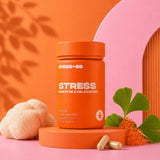
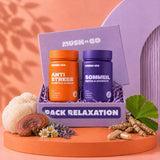
Anti-Stress
Ashwagandha and reishi, holy basil, schisandra and vitamin B6, which contributes to the reduction of tiredness and fatigue. One capsule in the morning, as part of a routine that starts with sleep.
Discover Anti-Stress →
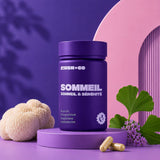
Sleep+
Reishi, valerian, magnesium bisglycinate and melatonin, which contributes to the reduction of time taken to fall asleep. 1 to 2 capsules 30 minutes before bed.
Discover Sleep+ →What the videos say
A real hormone, misleading shortcuts.
The videos always follow the same formula: a photo of a slightly round face or a rounded belly, the word “cortisol” in big letters, then a list of fixes, often a supplement, a drink or a programme. They rest on a grain of truth: cortisol really does affect fat storage and water. But they skip several steps.
- True: a large, long-lasting excess of cortisol, as in Cushing's syndrome, rounds the face and thickens the belly.
- True: chronic stress encourages abdominal weight gain in some people, mainly through sleep and diet.
- False: a puffy face on waking proves your cortisol is too high. Above all, it proves a short night, a salty dinner or one drink too many.
- False: you can “deflate your cortisol” with a cocktail or a massage.
- Misleading: before-and-after photos. Lighting, angle, time of day and water retention are enough to change a face.
These videos have one merit: they remind us that stress has physical effects. Their flaw is that they turn a real mechanism into self-diagnosis. To understand what cortisol really does, you need to separate the belly and the face, which have different causes.
Belly fat and cortisol: the real link
Cortisol belly is real, but not the way it's told.
The body stores fat in two main places: under the skin, and inside the abdomen, around the organs. This second kind of fat, called visceral fat, is the one most linked to health risks. And it is the one cortisol favours: fat cells in the belly have more cortisol receptors than those in the thighs.
Belly fat tissue can even make its own cortisol, from an inactive form, thanks to an enzyme called 11β-HSD1. In 2001, Masuzaki's team showed that mice that produced too much of this enzyme in their fat developed abdominal obesity. In humans, the activity of this enzyme is increased in the fat tissue of people who are overweight.
What cortisol does
It mobilises sugar, stimulates appetite for rich foods and steers storage towards the abdomen when it stays high for a long time.
What it doesn't do alone
It doesn't make you gain weight without an energy intake. A belly that is getting rounder reflects, first and foremost, the balance between what you eat and what you burn.
The stress cycle
Stress, short nights, evening snacking, less exercise: the causes add up and reinforce each other, far more than the hormone alone.
The other players
Age, menopause, genetics, alcohol and a sedentary lifestyle often weigh more heavily on belly fat than cortisol does.
The Swedish researcher Per Björntorp suggested as early as the 1990s that chronic stress contributes to abdominal fat through this route. Studies have since confirmed a link, without making it the main cause. It is one factor among others, rarely the first.
Sleep, appetite, snacking
High cortisol and weight gain: sleep is the link.
When you sleep badly, two things happen. Evening cortisol stays higher, as research by Eve Van Cauter's team has shown. And appetite changes: ghrelin, the hunger hormone, goes up, while leptin, the satiety hormone, goes down. You feel hungrier, and above all you crave more sugar and fat.
Stress works the same way. Some stressed people eat less, but many eat more, especially in the evening and especially comfort food. This is where most of the weight gain blamed on cortisol actually happens.
A short night
The following evening's cortisol rises, so does ghrelin, and leptin falls.
The next day
More coffee to keep going, more hunger, sugar cravings in the afternoon.
In the evening
Fatigue, stress, snacking in front of a screen, going to bed late.
Over the weeks
The surplus settles where cortisol steers storage: on the belly.
This mechanism explains why the solutions that work are so unspectacular. They involve sleep, meal times and coffee, which we cover in detail in our guide how to lower cortisol.
What the studies say
Stress, sleep and belly fat: four studies worth knowing.
Here are four pieces of research that shed light on the link between cortisol, sleep and abdominal fat. Full references are at the bottom of the page.
Epel et al., 2000 · United States
Around sixty premenopausal women, slim or overweight, were put through stress tests in the laboratory. Those whose fat was mainly on the belly secreted more cortisol in response to stress, including among the slim women. Limitation: a small group, and an association, not proof of cause.
Spiegel et al., 2004 · United States
12 healthy young men slept two nights of 4 hours, then two nights of 10 hours. After the short nights, ghrelin was 28% higher, leptin 18% lower, and hunger had increased, especially for carbohydrate-rich foods. Limitation: very small sample, short duration.
Nedeltcheva et al., 2010 · United States
10 overweight adults followed the same diet for 14 days, once with 8.5 hours in bed, once with 5.5 hours. With the short nights, they lost 55% less fat, and more muscle. Limitation: 10 people, in a laboratory, over two weeks.
Vissers et al., 2013 · meta-analysis
This review pooled trials on exercise and visceral fat in overweight adults. Endurance activity reduced visceral fat, even without an accompanying diet and sometimes without much weight loss on the scales. Limitation: varied programmes and measurements.
These studies tell the same story: stress and lack of sleep steer appetite and storage, and regular physical activity acts precisely on belly fat.
Cortisol face: water or hormone?
Cortisol face: in most cases, it's water.
A rounder face in the morning, puffy eyes, fuller cheeks: before blaming a hormone, look at what you did the day before. The face is where water retention shows most, because the skin there is thin and we sleep lying down.
| What you see | Most likely cause | How it differs from excess cortisol |
|---|---|---|
| Puffy face on waking that goes down during the morning | Short night, salt, alcohol, sleeping position | Varies from day to day |
| Puffy eyelids, runny nose | Allergy, cold | Itching, seasonal |
| Fuller cheeks after weight gain | General weight gain | The rest of the body has changed too |
| Puffy face, fatigue, feeling the cold, dry skin | Possible underactive thyroid | To be checked with a blood test |
| Round, red face that has developed over months, with bruising, purple stretch marks, weak thighs | Possible genuine excess of cortisol | Doesn't go down; several signs together |
The signs most suggestive of a genuine excess of cortisol are described by the Endocrine Society (Nieman, 2008): facial redness, easy bruising, weakness of the proximal muscles, purple stretch marks more than 1 cm wide.
The high-cortisol face, which doctors call moon face or a cushingoid face, is round and red, with cheeks that bulge out at the sides, and it often comes with a thickening at the back of the neck and fat pads above the collarbones. It does not vary with the night you have had. Its leading cause is long-term use of corticosteroids, such as cortisone. We have covered these signs in detail in our article on high cortisol and its symptoms.
Bloated belly or belly fat
High cortisol and a bloated belly: two different things.
Many videos confuse a bloated belly with a belly that is getting bigger. The first varies through the day, the second does not. The causes are not the same, and neither are the solutions.
The bloated belly
Flat in the morning, tight in the evening. Wind, slow digestion, fermentable foods, rushed meals. Stress plays a part, through the link between brain and gut.
Belly fat
Stable from one day to the next, it grows over months. It reflects abdominal fat, under the skin and around the organs.
The role of stress
In both cases it plays a part, but not in the same way: on digestion on one side, on appetite and storage on the other.
The role of coffee
Coffee speeds up transit and can make bloating worse in some people. Keep it to the morning to protect your nights.
If your belly mostly bloats after meals or after coffee, read our article on coffee and bloating instead. A belly that is permanently bloated, painful, or accompanied by weight loss or blood in your stools should be shown to a doctor.
What really works
Less spectacular than a cocktail, but it works.
The levers that act on belly fat and on water retention in the face are well known. None of them is a trick: they are habits, to keep up for several weeks. For sleep, our evening habits for better sleep are a good starting point.
Sleep first
Seven hours or more, at regular times. This is the lever that acts on evening cortisol, hunger and your morning face all at once.
Walk every day
Around 150 minutes of moderate activity a week, as recommended by the WHO, and two strength sessions. Visceral fat responds well to endurance exercise.
A lighter evening
Less alcohol and salt at dinner, dinner at a regular time, with a portion of starchy food rather than late-night snacking.
Two adjustments complete these three steps. The first concerns training: if you do a lot of intense sessions without rest, alternate with easy days, because repeated intense exercise without recovery keeps cortisol high. The second concerns caffeine: keeping it to the morning, in reasonable amounts, protects your sleep. Our guide to how long caffeine lasts will help you set your cut-off time.
If stress is at the heart of the problem, simple practices, such as five minutes of slow breathing in the evening, have been studied for their effect on salivary cortisol. Some people add a plant studied for stress, such as ashwagandha, found in our Anti-Stress formula. One capsule a day, in the morning, simply slots into the routine described above.
Dead ends
Detoxes, blockers, massages: the dead ends.
- “Cortisol detoxes”. Cortisol is not a toxin: the liver and kidneys clear it continuously. No cleanse “flushes” it out.
- Over-the-counter “cortisol blockers”. Real blockers are medicines reserved for Cushing's syndrome, under medical supervision.
- The “adrenal cocktail”. Orange juice, coconut water and salt: nothing shows any effect on cortisol, and salt does not help a puffy face.
- Lymphatic drainage massages and jade rollers. They can de-puff a face for a few hours by moving water around. They have no effect on cortisol or on fat.
- “Tummy-slimming” belts and shapewear. They make you sweat and compress, without touching visceral fat.
- Very restrictive diets. Severe restriction is itself a stress, and it often comes with worse nights.
A useful rule: the more a solution promises a visible result on your belly or face within a few days, the less likely it is to act on cortisol. What de-puffs quickly is water. What changes visceral fat are the habits described above, kept up for a few weeks.
When to see a doctor
When your belly or face calls for a doctor's visit.
Talk to your doctor if:
- Your face becomes rounder and redder over a few months and never goes down, especially if you bruise easily or have wide, purple stretch marks.
- Your belly and upper back are thickening while your arms and legs are getting thinner, with thigh muscles that are weakening.
- You take or have taken cortisone as tablets, as a high-dose inhaler or as a cream over large areas. Never stop it on your own.
- Your blood pressure or blood sugar rises for no reason, or your periods become irregular.
- The swelling also affects your ankles and legs, or comes with breathlessness: it may come from the heart, kidneys or thyroid.
- You have a permanently bloated and painful belly, unexplained weight loss or blood in your stools.
If an excess of cortisol is suspected, your doctor will prescribe specific tests, such as a late-night salivary cortisol test or a 24-hour urine test. We explain what each test measures in our article on how to test your cortisol. A test bought online and done at any time of day cannot give you an answer.
Your questions
Cortisol face and cortisol belly: your questions.
What is “cortisol face”?
It is the name given on social media to a puffy face blamed on stress and cortisol. Most of the time, it is water retention linked to lack of sleep, salt or alcohol. A genuine high-cortisol face is rare, develops over months and comes with other physical signs.
Is cortisol belly real?
Yes, in part. Cortisol favours fat storage in the abdomen, and chronic stress is associated with more abdominal fat in some people. But this link works mainly through sleep, appetite and physical activity, and cortisol is rarely the main cause.
Does high cortisol make you gain weight?
A genuine, long-lasting excess, as in Cushing's syndrome, does cause weight gain, especially on the belly, face and upper back. With everyday stress, the effect is more modest and works through hunger, sugar cravings and short nights.
How do I know if my puffy face is caused by cortisol?
A face that puffs up in the morning and goes down during the day is almost always water. An excess of cortisol gives a face that is permanently round and red, developing over months, with easy bruising, purple stretch marks or weak thighs. In that case, see your doctor.
Can high cortisol cause a bloated belly?
Stress can make bloating worse through the link between the brain and the gut, but a bloated belly that varies through the day is a matter of digestion, not fat. Rushed meals, fermentable foods and coffee can all play a part.
How do you get rid of a cortisol belly?
Through the most classic levers: sleeping seven hours or more, walking every day, doing strength training, cutting down on alcohol and evening snacking. Endurance activity reduces visceral fat even without dieting. Allow several weeks of consistent habits to see the difference.
How long does it take to get rid of cortisol face?
If the puffiness comes from water, it often goes down within a few days with better nights, less salt and less alcohol. If it doesn't change over several weeks, or if it comes with other signs, the cause needs to be investigated with a doctor.
How long does it take to lose a stress belly?
Allow several weeks: belly fat changes at the pace of your habits, not in a few days. Nights of seven hours or more, a daily walk and lighter evenings form the foundation, and endurance activity acts directly on visceral fat, even without dieting. What goes down within a few days is mostly water.
Can cortisone cause a round face?
Yes, it is in fact the leading cause of a face rounded by excess cortisol. Corticosteroids taken for a long time or at high doses reproduce the effects of an excess of the hormone. Never stop a treatment on your own: talk to the doctor who prescribed it.
Sources
- Epel E. S. et al. (2000). Stress and body shape: stress-induced cortisol secretion is consistently greater among women with central fat. Psychosomatic Medicine, 62(5).
- Björntorp P. (2001). Do stress reactions cause abdominal obesity and comorbidities? Obesity Reviews, 2(2).
- Masuzaki H. et al. (2001). A transgenic model of visceral obesity and the metabolic syndrome. Science, 294(5549).
- Spiegel K., Tasali E., Penev P., Van Cauter E. (2004). Brief communication: sleep curtailment in healthy young men is associated with decreased leptin levels, elevated ghrelin levels, and increased hunger and appetite. Annals of Internal Medicine, 141(11).
- Nedeltcheva A. V. et al. (2010). Insufficient sleep undermines dietary efforts to reduce adiposity. Annals of Internal Medicine, 153(7).
- Vissers D. et al. (2013). The effect of exercise on visceral adipose tissue in overweight adults: a systematic review and meta-analysis. PLoS One, 8(2).
- Leproult R., Copinschi G., Buxton O., Van Cauter E. (1997). Sleep loss results in an elevation of cortisol levels the next evening. Sleep, 20(10).
- Nieman L. K. et al. (2008). The diagnosis of Cushing's syndrome: an Endocrine Society clinical practice guideline. Journal of Clinical Endocrinology & Metabolism, 93(5).
- World Health Organization (2020). WHO guidelines on physical activity and sedentary behaviour.
Keep reading
Further reading.
Cortisol is linked to sleep, stress and what's on your plate. Explore our other guides, or our formula Anti-Stress.

Discover our mushroom and adaptogenic plant supplements
Our vegan formulas, made in Toulouse by a French manufacturer.