























Sugar Cravings: What They Mean and How to Stop Them
By the Mush n Go editorial team - 14 November 2026
By the Mush n Go editorial teamPublished 14 November 202610 min read
Sugar and cravings
A sugar craving is a message, not a failure of willpower: blood sugar dropping, tiredness, stress, habit or the menstrual cycle. After two nights of four hours' sleep, appetite for sugary foods rises by 33 to 45% (Spiegel, 2004). It rises, peaks, then fades: ten minutes and the right moves are enough to let it pass.

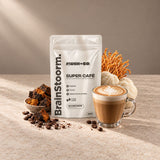
Brainstoorm
A hot drink made with roasted chicory and organic cocoa, in Chocolate-hazelnut or Coffee flavour: Lion's Mane, Cordyceps and Chaga at 1,000 mg each, 20 mg of microencapsulated caffeine.
Discover Brainstoorm →
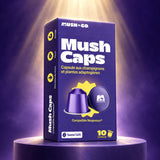
Anti-Stress
Ashwagandha and reishi, holy basil, schisandra and vitamin B6, which contributes to normal functioning of the nervous system and to the reduction of tiredness and fatigue.
Discover Anti-Stress →What a sugar craving means
Sugar craving meaning: it comes down to five messages.
A sugar craving is the most visible part of a diet that is too sweet, and the easiest to tame. For the complete method, see our guide to quitting sugar in 21 days, without frustration; this article focuses on the craving itself: where it comes from, and what to do when it shows up.
A sugar craving is not hunger. Hunger accepts any food; a craving demands a specific taste, right now. It almost always means one of these five things.
Your blood sugar is dropping
A very sweet meal or snack makes blood sugar rise fast, then insulin brings it back down. Two to three hours later, the brain asks for the same thing again.
You are short of sleep
A short night changes the hunger hormones and makes sweet foods more attractive. The tired brain looks for the quickest energy.
You are under tension
Stress raises cortisol, and sugar brings immediate comfort. The brain remembers the association, then asks for it again.
It is the usual time
The square of chocolate with coffee, the 4 p.m. biscuit, the dessert in front of the series: the cue triggers the craving before you even think about it.
The fifth message concerns women: the menstrual cycle. In the days before a period, appetite increases and cravings for sweet and fatty foods are more frequent, a phenomenon researchers have described for a long time (Dye and Blundell, 1997). Knowing that the craving has a date helps a lot in living with it: it goes away with the cycle.
Why it arrives at that time
Why you crave sugar: look at the clock.
The time at which the craving shows up is the best clue to its cause. Note it for three days: a pattern almost always appears, and every pattern has its first move.
| When the craving arrives | What it most often means | The first move |
|---|---|---|
| Around 11 a.m. | Sweet or too light a breakfast: blood sugar has already dropped | Add protein in the morning: egg, fromage frais, nuts and seeds |
| Just after lunch | The dessert habit, more than a need | A whole piece of fruit or a hot drink to end the meal |
| Around 4 p.m. | Afternoon energy dip and a distant lunch | A planned snack and a hot cup |
| After a tense meeting | Stress looks for quick comfort | Five minutes of walking or slow breathing |
| After dinner | End-of-day tiredness, screen, sofa ritual | A replacement ritual, then an earlier bedtime |
| Before your period | The premenstrual phase of the cycle | More filling meals, a square of dark chocolate you fully allow yourself |
If the 4 p.m. craving is yours, our article on the 4 p.m. slump details this afternoon dip. For filling snack ideas, see our article on snacking.
The underlying benchmark remains that of the World Health Organization: less than 10% of the day's energy as free sugars, and ideally less than 5%, which is about 25 g a day for an adult. The closer your meals get to it, the steadier your blood sugar stays, and the further apart the cravings come.
Sugar cravings and tiredness
Sugar cravings and tiredness: the same signal.
When you are tired, your brain looks for the quickest fuel. Sugar does that job in a few minutes, then blood sugar drops, the tiredness comes back, and the craving with it. It is a loop, and it is broken from the tiredness side.
Sleep is the first lever. In an imaging study carried out at Berkeley (Greer, 2013), after a sleepless night, the brain regions that evaluate food choices responded less, those for reward responded more, and participants chose higher-calorie foods. A full night resets the counters.
- You sleep less than seven hours: bring your bedtime forward by thirty minutes for a week. Our evening habits for sleeping well give the steps to follow.
- You get drowsy after lunch: the meal was probably rich in fast sugars. See our article on tiredness after eating.
- You wake in the night: broken sleep is as tiring as a short night. Our guide insomnia: what to do goes through the solutions one by one.
- Tiredness lasts despite good nights: talk to your doctor, who can check iron, blood sugar or the thyroid. The signs to know are in our article on underactive thyroid symptoms.
On the minerals side, magnesium has its place here: it contributes to the reduction of tiredness and fatigue and to normal energy-yielding metabolism. You find it in nuts and seeds, pulses, dark chocolate and magnesium-rich mineral waters.
What the studies say
Sugar cravings: four studies worth knowing.
Sleep, stress, movement, plants: four studies that shed light on sugar cravings, with their exact conditions. Full references are at the bottom of the page.
Spiegel et al., 2004 · United States
12 healthy young men, two nights of 4 hours then two nights of 10 hours. After the short nights, leptin fell by 18%, ghrelin rose by 28%, hunger by 24%, and appetite for sweet, carbohydrate-rich foods by 33 to 45%.
Epel et al., 2001 · United States
59 healthy women put through stress tests in the lab. Those whose cortisol reacted most went on to eat more, and turned more readily to sweet foods.
Taylor and Oliver, 2009 · United Kingdom
25 regular chocolate lovers, deprived of chocolate for three days. After 15 minutes of brisk walking, their craving for chocolate was lower than after 15 minutes sitting, even when faced with an open bar.
Choudhary et al., 2017 · India
52 adults under chronic stress received 300 mg of ashwagandha root extract twice a day, or a placebo, for 8 weeks. In the ashwagandha group, perceived stress scores, cortisol and food craving scores fell more.
These four studies tell the same story: the sugar craving is played out in the night, in the level of tension during the day and in the minutes after it appears. These are the three places to act.
Evening sugar cravings
Sugar cravings in the evening: the day settling its account.
Evening piles everything up: the day's tiredness, tension easing off, a dinner that is sometimes far off or too light, and the sofa, home of all habits. Evening sugar cravings are therefore prepared from the morning. Here is the day that defuses them.
Morning
A breakfast with protein and fibre: blood sugar stays steady until lunch, and the day starts without a spike.
At midday
A complete plate: vegetables, protein, starch. A skipped lunch is almost always paid back after 9 p.m.
Around 4 p.m.
A planned snack and a hot cup. Arriving at dinner without a hunger pang changes the whole evening.
At dinner
A proper meal, with a simple dessert if you like: fruit, plain yoghurt, compote with no added sugar. Dessert eaten at the table is not snacking.
After dinner
A ritual that closes the kitchen: herbal tea, brushing your teeth, softer light. Then bed, before tiredness disguises itself as hunger.
If busy days are your trigger, work on the tension itself too: our guide to lowering cortisol brings together the habits that count. And for a complete evening routine, Sleep+ is taken as one capsule thirty minutes before bed: reishi, valerian, magnesium bisglycinate and melatonin, which contributes to the reduction of time taken to fall asleep.
Calming it in 10 minutes
How to make a sugar craving pass in 10 minutes.
A craving behaves like a wave: it rises, peaks, then falls away by itself. Your only job is to fill those few minutes. Follow the steps in order; most cravings stop at the second.
Name it
Ask yourself: “Would I eat an apple or a hard-boiled egg?” If yes, it is hunger: have a real snack. If not, it is a craving: go to step 2.
Drink something hot
A big glass of water, then a hot drink: herbal tea, chicory, a chocolatey cup with no added sugar. The warmth occupies your hands, your mouth and a good five minutes.
Move
Fifteen minutes of brisk walking if you can, otherwise two flights of stairs or a few stretches. This is the move tested by Taylor and Oliver.
Then decide
Ten minutes have passed. If the craving is still there, take a chosen portion, sitting down, on a plate: two squares of dark chocolate savoured are worth more than a packet swallowed standing up.
Two discreet helpers: brushing your teeth (the minty taste closes the meal) and changing room, because a craving is often tied to a place.
Spacing it out in 2 weeks
How to stop craving sugar: two weeks of adjustments.
Calming a craving is useful; having fewer is even better. Two weeks are enough to put in place the adjustments that space them out. You remove nothing: you change the order, the time and the context.
| Period | What you put in place | Why it spaces out the cravings |
|---|---|---|
| Days 1 to 3 | You note the time and context of each craving | You identify your pattern: blood sugar, tiredness, stress or habit |
| Days 4 to 7 | Protein and fibre at breakfast, a planned snack at 4 p.m. | Blood sugar stays steady, the 11 a.m. and 4 p.m. dips ease |
| Days 8 to 10 | Bedtime 30 minutes earlier, screens off earlier | Longer nights, a calmer sweet appetite the next day |
| Days 11 to 14 | A replacement ritual at the time of your main craving | The signal stays, the response changes: a new habit forms |
Keep sweets out of sight rather than out of the house: what you don't see, you think about less. And plan a chosen sweet treat during the week, at the table. A craving you expect is easier to manage than one that is forbidden.
Taste follows movement. In a three-month American trial (Wise, 2016), participants who had cut back on simple sugars found the same dessert sweeter from the second month. Your two weeks are the start of this recalibration; the rest of the programme is in the guide quitting sugar.
What you find at the pharmacy
Chromium, magnesium, homeopathy: the sugar craving aisle.
The search “medicine to stop sugar cravings” leads to the pharmacist's counter, who points you to food supplements and routine habits. Here is what you will find, and how to use it.
Chromium
It is the aisle's flagship mineral. Its authorised claim in Europe: “chromium contributes to the maintenance of normal blood glucose levels”. Reference value: 40 µg a day. It is taken as a course, often with a meal.
Magnesium
It contributes to the reduction of tiredness and fatigue, to normal functioning of the nervous system and to normal psychological function. The form magnesium bisglycinate is valued for its digestive comfort.
Homeopathy
“Sugar craving homeopathy” is a frequent request at the counter. The choice of remedy depends on your profile: craving linked to stress, tiredness or the cycle. The pharmacist selects it with you.
Essential oils
Essential oil for sugar cravings is used by inhalation: peppermint or grapefruit, breathed in from the bottle for a few seconds. A short gesture that creates a pause at the right moment.
On the plant side, ashwagandha is the one researchers have studied in stressed adults, with a measure of food cravings (Choudhary, 2017). It appears, with reishi, holy basil, schisandra and vitamin B6, in our Anti-Stress formula, to be taken during the day.
A few precautions, and when to see a doctor:
- Diabetes or blood-sugar medication: ask your doctor's advice before any chromium course.
- Essential oils: avoid during pregnancy and breastfeeding, in children, and in cases of epilepsy or asthma, unless your pharmacist advises otherwise.
- Herbal supplements: ask for advice if you are pregnant, breastfeeding or on treatment, in particular for the thyroid.
- Intense thirst, frequent urination, weight loss or unusual tiredness with the sugar cravings: see your doctor for tests.
- Large food intakes with a feeling of losing control: talk to your doctor, support exists.
The hot drink ritual
A chocolatey cup, prepared without sugar: the ritual that replaces.
A habit is not removed, it is replaced. The chocolatey hot drink is the best candidate: it keeps the cocoa taste, the warmth, the gesture and the pause, exactly what the craving came looking for. Prepare it without adding sugar, with hot water or an unsweetened plant milk.
Brainstoorm in Chocolate-hazelnut flavour is made for this moment. In the cup: a base of roasted chicory and organic cocoa, Lion's Mane, Cordyceps and Chaga at 1,000 mg each, maca, ashwagandha and rhodiola, i.e. 6,225 mg of actives, and 20 mg of microencapsulated caffeine, against about 80 mg for an espresso. It is our mushroom coffee, vegan, blended in Toulouse. It dissolves in thirty seconds.
- In the morning: a cup of Brainstoorm with a high-protein breakfast, to start without a sugar spike.
- During the day: Anti-Stress, for the days when tension calls the biscuit cupboard.
- At 4 p.m. or after lunch: the chocolatey cup in place of dessert or a biscuit, drunk sitting down, without a screen.
- In the evening: Sleep+, one capsule thirty minutes before bed, because the night prepares tomorrow's appetite.
These three moments are brought together in the Stop Fringales Pack: Brainstoorm in the morning, Anti-Stress during the day, Sleep+ in the evening. A complete routine for your two weeks of adjustments, with a 60-day money-back guarantee to try it with no pressure.
Your questions
Everything we are asked about sugar cravings.
How do you stop craving sugar?
By acting on what triggers the sugar craving: a breakfast with protein and fibre, complete meals, a planned snack at 4 p.m., nights of at least seven hours and a replacement ritual at the usual time of the craving. Allow two weeks to feel the cravings spacing out, then a few more weeks for your taste to recalibrate.
How do you make a sugar craving go away?
Give it ten minutes: drink a big glass of water then a hot drink with no added sugar, walk for a quarter of an hour or change room, brush your teeth. The craving rises, peaks, then falls. If it is still there, take a small chosen portion, sitting down and without a screen.
Is sugar addictive?
In rats, intermittent access to sugar produces behaviours close to dependence (Avena, 2008). In humans, the review by Westwater (2016) mostly describes an attachment to sweet taste and to habit, without dependence in the medical sense. The good news: a habit can be replaced, and taste adjusts within a few weeks.
Why do I crave sugar in the evening?
Because the evening adds up the day's tiredness, tension easing off, a dinner that is sometimes too light and the sofa ritual. Evening sugar cravings are sorted upstream: a real lunch, a snack at 4 p.m., a complete dinner, then a ritual that closes the kitchen and an earlier bedtime.
Sugar cravings: what do they mean?
Most often they signal blood sugar dropping after a sweet meal, a lack of sleep, a period of stress, a habit set at a fixed time or, in women, the phase before a period. The time at which it shows up tells you which of these causes is yours.
Is there a medicine to stop sugar cravings?
At the pharmacy, the answer is food supplements and the pharmacist's advice. The most requested is chromium, which contributes to the maintenance of normal blood glucose levels, often combined with magnesium, which contributes to the reduction of tiredness and fatigue. If the cravings come with intense thirst or great tiredness, see your doctor.
Homeopathy or essential oil: which to choose against sugar cravings?
Both are asked for at the counter. With homeopathy, the pharmacist chooses the remedy according to your profile: stress, tiredness or cycle. With aromatherapy, peppermint or grapefruit is breathed in from the bottle for a few seconds, at the moment of the craving. Essential oils are best avoided during pregnancy, breastfeeding and in children.
Why does tiredness make you crave sugar?
Because a tired brain looks for the quickest energy. In the Spiegel study (2004), two nights of four hours raised hunger by 24% and appetite for sweet foods by 33 to 45%. Getting full nights back is the most direct way to calm these cravings.
Sources
The references for this article.
- Spiegel K., Tasali E., Penev P., Van Cauter E. (2004). Sleep curtailment in healthy young men is associated with decreased leptin levels, elevated ghrelin levels, and increased hunger and appetite. Annals of Internal Medicine, 141(11), 846-850.
- Greer S. M., Goldstein A. N., Walker M. P. (2013). The impact of sleep deprivation on food desire in the human brain. Nature Communications, 4, 2259.
- Epel E., Lapidus R., McEwen B., Brownell K. (2001). Stress may add bite to appetite in women: a laboratory study of stress-induced cortisol and eating behavior. Psychoneuroendocrinology, 26(1), 37-49.
- Taylor A. H., Oliver A. J. (2009). Acute effects of brisk walking on urges to eat chocolate, affect, and responses to a stressor and chocolate cue. Appetite, 52(1), 155-160.
- Choudhary D., Bhattacharyya S., Joshi K. (2017). Body weight management in adults under chronic stress through treatment with ashwagandha root extract. Journal of Evidence-Based Complementary & Alternative Medicine, 22(1), 96-106.
- Dye L., Blundell J. E. (1997). Menstrual cycle and appetite control: implications for weight regulation. Human Reproduction, 12(6), 1142-1151.
- Wise P. M. et al. (2016). Reduced dietary intake of simple sugars alters perceived sweet taste intensity but not perceived pleasantness. The American Journal of Clinical Nutrition, 103(1), 50-60.
- Avena N. M., Rada P., Hoebel B. G. (2008). Evidence for sugar addiction: behavioral and neurochemical effects of intermittent, excessive sugar intake. Neuroscience & Biobehavioral Reviews, 32(1), 20-39.
- Westwater M. L., Fletcher P. C., Ziauddeen H. (2016). Sugar addiction: the state of the science. European Journal of Nutrition, 55(Suppl. 2), 55-69.
- World Health Organization (2015). Guideline: Sugars intake for adults and children. Geneva: WHO.
- Commission Regulation (EU) No 432/2012: authorised health claims (chromium, magnesium, vitamin B6, melatonin).
- Regulation (EU) No 1169/2011, Annex XIII: nutrient reference values (chromium 40 µg).
- EFSA NDA Panel (2015). Scientific opinion on the safety of caffeine. EFSA Journal, 13(5):4102.
Keep reading
Read next.
The sugar craving is the first step. To remove most of the added sugar from your days, follow our method for quitting sugar in 21 days, with the Stop Fringales Pack as your routine.

Discover our mushroom and adaptogenic plant supplements
Our vegan formulas, made in Toulouse by a French manufacturer.