

















Snacking: How to Stop, and What to Snack On Without Gaining Weight
By the Mush n Go editorial team - 14 November 2026
By the Mush n Go editorial teamPublished 14 November 20269 min read
Sugar and cravings
Snacking is rarely fixed by willpower: it almost always has a cause, and the cause can be treated. Meals that are too light, a sawtooth blood sugar, stress, boredom or short nights: two nights of four hours are enough to raise hunger by 24% (Spiegel, 2004). Here is how to stop, and what to snack on when hunger is real.

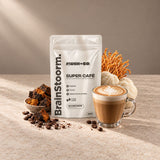
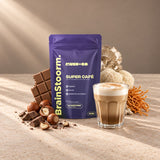
Brainstoorm
A hot cup tasting of cocoa and roasted chicory, Lion's Mane, Cordyceps and Chaga at 1,000 mg each, and 20 mg of microencapsulated caffeine.
Discover Brainstoorm →
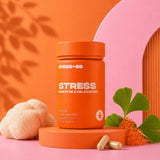
Anti-Stress
Ashwagandha and reishi, holy basil, schisandra and vitamin B6, which contributes to the normal functioning of the nervous system.
Discover Anti-Stress →What snacking is
Snacking is eating when you are not hungry.
Snacking is the sugar that is easiest to forget: the kind eaten standing up, between two tasks. For the complete method, see our guide to quitting sugar in 21 days, without frustration; this article focuses on what happens between meals.
We speak of snacking when small amounts are eaten repeatedly, outside meals and without real hunger. A snack, by contrast, is planned, portioned and eaten sitting down.
The risks of snacking come from its repetition: intakes that add to meals, blood sugar called on all day long, teeth exposed to sugar and hunger signals that are less clear.
Why we snack
Five causes, and almost never a lack of willpower.
First spot which of these five causes is yours: each has its answer.
| The cause | How to recognise it | The answer that works |
|---|---|---|
| Real hunger | Empty stomach, a craving for any food at all, a light or skipped previous meal | Fuller meals, with protein and fibre, and a proper snack |
| Falling blood sugar | A slump and a craving for something sweet two to three hours after a very sugary meal | Fewer fast sugars at the meal, more wholegrain starches and vegetables |
| Stress | A sudden craving for fatty and sweet foods after something upsetting | A five-minute break, a hot drink, a walk |
| Boredom or habit | Always in the same place, at the same time, in front of the same screen | Change the scenery and set up a replacement ritual |
| Lack of sleep | Unusual hunger the day after a short night, especially late in the day | Catch up on an hour of sleep, bring dinner forward |
A meal rich in fast sugars sends blood sugar up quickly and high; insulin brings it down just as fast, and it is in that dip that the craving for sweet things appears. This is the mechanism behind the 4 p.m. slump.
Sleep acts through two hormones: leptin, which signals fullness, falls after a short night; ghrelin, which triggers hunger, rises.
Emotional snacking
When you are eating an emotion, not a food.
Emotional snacking means eating to soothe an emotion rather than hunger: stress, loneliness, tiredness. Sugar and fat activate the reward circuit, the relief is immediate, and the brain remembers the lesson.
Cortisol, the stress hormone, steers appetite towards dense foods. If your cravings follow your busy days, work on the source: our guide to lowering cortisol and the one on mental load give you the levers.
- Real hunger: it builds gently, is felt in the stomach, and an apple or a hard-boiled egg would appeal to you.
- Emotional craving: it arrives all at once, targets a specific food (chocolate, crisps, biscuits) and sits in the head.
- Habit snacking: there is neither hunger nor emotion, only a time, a place, a screen.
- The ten-minute test: drink a big glass of water and wait. Real hunger is still there; a craving has often passed.
Talk to your doctor if:
- You eat large amounts in a short time, with a feeling of losing control, several times a week (binge eating).
- You get up at night to eat, on a regular basis.
- Food occupies your thoughts, and comes with shame or lasting sadness. If you are in distress, 116 123 answers day and night.
What the studies say
Sleep, stress, snacks: four studies worth knowing.
Full references are at the bottom of the page.
Spiegel et al., 2004 · United States
12 healthy young men, two nights of 4 hours in bed compared with two nights of 10 hours. After the short nights: leptin down 18%, ghrelin up 28%, hunger up 24%, with an appetite turned towards sweet, carbohydrate-rich foods.
Nedeltcheva et al., 2009 · United States
11 adults followed in the laboratory over two 14-day periods, with 5 h 30 then 8 h 30 of possible sleep. Meals did not change; snacks did: 1,087 kcal a day in the short-night period, against 866 kcal, mostly in the evening.
Epel et al., 2001 · United States
59 women exposed to stress in the laboratory and then left with snacks. Those whose cortisol had reacted the most ate more that day, and more sweet foods.
Choudhary et al., 2017 · India
52 adults under chronic stress, ashwagandha root extract at 300 mg twice a day or placebo, for 8 weeks. The ashwagandha group saw a greater drop in perceived stress and in food craving scores.
The common thread: the urge to snack is made upstream, in the night and in the tension of the day.
Evening and night-time cravings
In the evening, tiredness disguises itself as hunger.
The evening craving is the most frequent: the day has used up your decisions, dinner is sometimes too light, and the screen keeps your hands busy. In the Markwald trial (2013), 16 adults limited to five hours of sleep for five nights ate more, especially after dinner, and gained 0.82 kg on average.
The night-time craving, the one that makes you get up, often comes from a low-protein dinner, a late bedtime or broken sleep. When regular, it has a name, night eating syndrome (Allison criteria, 2010), and is treated with a doctor.
At dinner
A complete plate: vegetables, a portion of protein, a wholegrain starch.
After dinner
Brush your teeth early and close the kitchen.
In front of the screen
A herbal tea or a hot drink in your hands. Nothing within arm's reach on the coffee table.
30 min before bed
Lights low, screen put down.
Our evening habits for sleeping well describe the ritual. Many add Sleep+: reishi, valerian, magnesium bisglycinate and melatonin, which contributes to the reduction of time taken to fall asleep, one capsule thirty minutes before bed.
How to stop snacking
How to stop snacking in five steps.
To stop snacking, remove the causes one by one, then replace the gesture. Allow two to three weeks to feel the shift, and about two months for it to become automatic: in the Lally study (2010), a new habit took 66 days to set in on average.
Note it down for three days
The time, the place, the food, what you were feeling. Your slot appears quickly: 4 p.m. at the office, 10 p.m. in front of a series.
Strengthen your meals
A source of protein at every meal, breakfast included, vegetables and a wholegrain starch.
Plan a proper snack
If more than five hours separate two meals, plan a snack chosen in advance, served on a plate.
Change the scenery
Take the biscuits out of the office and the worktop, put fruit and nuts in view.
Replace the gesture
At the critical hour, set up a ritual: a hot drink, fifteen minutes of walking, a phone call.
Walking has its evidence: among 25 regular chocolate eaters, fifteen minutes of brisk walking reduced the craving compared with a quarter of an hour seated (Taylor and Oliver, 2009). And everything starts in the morning: a morning routine built around a proper breakfast, then a coffee taken after eating rather than a fasted coffee, steadies the morning.
What to snack on without gaining weight
Healthy snacking exists: it is called a snack.
When hunger is real, eat. A filling snack combines two things: protein or good fats, which last a long time, and fibre, which slows the arrival of sugar. In the Ortinau trial (2014), 20 women were given 160 kcal snacks in the afternoon: after the high-protein yoghurt, hunger stayed lower and dinner was requested later than after crackers or chocolate.
| The snack | The portion | Why it fills you up |
|---|---|---|
| Unsalted almonds, walnuts, hazelnuts | A small handful, about 30 g | Unsaturated fats, fibre and protein; you have to chew |
| Plain yoghurt, skyr or fromage frais | One pot, with a chopped fruit | Dairy protein, fruit fibre |
| Hard-boiled egg | One or two | Protein, zero sugar, ready in advance |
| Hummus and vegetable sticks | Two tablespoons, vegetables as you like | Fibre and protein from chickpeas, large volume |
| Dark chocolate at 70% and above | Two squares, with a hot drink | An intense taste, to be savoured slowly |
The “small handful” of unsalted nuts a day is the benchmark of Santé publique France, the French public health agency.
To snack without gaining weight: a portion decided in advance, sitting down, no screen.
The 4 p.m. hot drink
At 4 p.m., replace the biscuit with a cup.
A habit is replaced. At 4 p.m., the blood sugar from lunch drops and the break calls for comfort. A hot drink ticks the same boxes as the biscuit: a pause, warmth, an indulgent taste, hands busy for ten minutes.
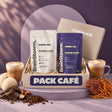
That is what Brainstoorm is for. In the coffee version, the roasted chicory base brings together Lion's Mane, Cordyceps and Chaga at 1,000 mg each, maca and ashwagandha: 6,040 mg of actives per cup. Its 20 mg of microencapsulated caffeine, against about 80 mg for an espresso, accompany the afternoon and leave the evening peaceful.
“Very good product for my part, the afternoon crash has gone”
★★★★★ Franck C. · 6 September 2026
“More mental clarity, more energy, and the famous 4 p.m. slump... forgotten!”
★★★★★ Virginie L. · 29 August 2026
Real Trustpilot reviews of Brainstoorm, quoted as they are.
Prepare the cup at a set time, a quarter of an hour before your usual slot. The whole range is in our collection of mushroom coffee.
Losing 5 kg by stopping
Losing 5 kg by stopping snacking: the calculation.
The calculation is encouraging. Hall's model, published in The Lancet in 2011, gives a simple benchmark: every 10 kcal removed each day, durably, eventually corresponds to about 450 g less on the scales, half of it within the first year.
A daily snack of 250 kcal, roughly a 50 g chocolate bar, therefore represents around 5 kg over a year, and double after three years.
Order of magnitude from an average model in adults; the result depends on starting weight, activity and the rest of the diet.
The routine over a day
A day built so you stop thinking about it.
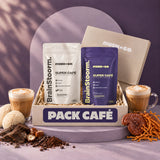
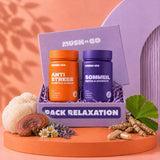
Snacking is played out at three moments: morning, afternoon and evening. Our Stop Fringales Pack is built on these three beats: Brainstoorm in the morning, Anti-Stress during the day, Sleep+ in the evening.
The morning
A breakfast with protein, then a cup of Brainstoorm: cocoa, chicory and 20 mg of caffeine to start without a spike or a dip.
The day
Anti-Stress with the meal: ashwagandha standardised in withanolides, reishi, holy basil, schisandra and vitamin B6, which contributes to the reduction of tiredness and fatigue.
At 4 p.m.
The planned snack and the hot drink, at a set time.
The evening
A complete dinner, the kitchen closed, then Sleep+ thirty minutes before bed.
Our ashwagandha formulas are brought together in their collection. And to see the approach through, the guide to quitting sugar sets out the complete 21-day plan.
Precautions for use:
- Sleep+ is not recommended for pregnant or breastfeeding women or for children under 12.
- Pregnancy, breastfeeding, a thyroid condition or ongoing treatment: ask your doctor for advice before a course containing ashwagandha.
- A food supplement is used in addition to a varied diet and a healthy lifestyle.
Your questions
Everything we are asked about snacking.
How do I stop snacking?
Start by spotting your slot and its cause: real hunger, falling blood sugar, stress, boredom or lack of sleep. Then strengthen your meals, plan a proper snack and replace the gesture with a ritual, such as a hot drink at a set time.
What are the risks of snacking?
Snacking adds intakes that do not replace those of meals, which favours weight gain over the months. It calls on blood sugar all day long, exposes teeth to sugar at every bite and blurs hunger and fullness signals.
What is emotional snacking?
It is eating to soothe an emotion (stress, boredom, sadness, tiredness) rather than hunger. The craving arrives all at once and targets a specific food, often sweet or fatty. After a glass of water and ten minutes' pause, it has often gone.
How do I stop craving sugar?
Eat complete meals, with protein from breakfast onwards, to avoid dips in blood sugar. Sleep enough: after short nights, hunger and the pull of sweet foods increase. Keep an indulgent alternative, such as two squares of dark chocolate with a hot drink.
What can I snack on without gaining weight?
Choose a snack that combines protein or good fats with fibre: a small handful of almonds or walnuts (about 30 g), plain yoghurt or skyr with a fruit, a hard-boiled egg, hummus with vegetable sticks.
Can you lose 5 kg by stopping snacking?
Yes, it is a realistic order of magnitude if the snacking was daily. According to Hall's model (The Lancet, 2011), durably removing 250 kcal a day, the equivalent of a chocolate bar, corresponds to about 5 kg over the first year.
Why do I have night-time cravings?
The most common causes are a dinner that is too light, a late bedtime and a lack of sleep, which raises ghrelin, the hunger hormone. If you regularly get up at night to eat, talk to your doctor.
What is the best natural way to stop snacking?
The most effective is a filling plate: protein, fibre and wholegrain starches at every meal. Next come sleep, walking and a ritual at the critical hour. A hot drink with cocoa and chicory, like Brainstoorm with its 20 mg of caffeine per cup, fills that slot with indulgence.
Sources
References for this article.
- Spiegel K., Tasali E., Penev P., Van Cauter E. (2004). Sleep curtailment in healthy young men is associated with decreased leptin levels, elevated ghrelin levels, and increased hunger and appetite. Annals of Internal Medicine, 141(11), 846-850.
- Nedeltcheva A. V. et al. (2009). Sleep curtailment is accompanied by increased intake of calories from snacks. The American Journal of Clinical Nutrition, 89(1), 126-133.
- Epel E. et al. (2001). Stress may add bite to appetite in women: a laboratory study of stress-induced cortisol and eating behavior. Psychoneuroendocrinology, 26(1), 37-49.
- Choudhary D., Bhattacharyya S., Joshi K. (2017). Body weight management in adults under chronic stress through treatment with ashwagandha root extract. Journal of Evidence-Based Complementary & Alternative Medicine, 22(1), 96-106.
- Markwald R. R. et al. (2013). Impact of insufficient sleep on total daily energy expenditure, food intake, and weight gain. PNAS, 110(14), 5695-5700.
- Allison K. C. et al. (2010). Proposed diagnostic criteria for night eating syndrome. International Journal of Eating Disorders, 43(3), 241-247.
- Taylor A. H., Oliver A. J. (2009). Acute effects of brisk walking on urges to eat chocolate, affect, and responses to a stressor and chocolate cue. Appetite, 52(1), 155-160.
- Lally P. et al. (2010). How are habits formed: modelling habit formation in the real world. European Journal of Social Psychology, 40(6), 998-1009.
- Ortinau L. C. et al. (2014). Effects of high-protein vs. high-fat snacks on appetite control, satiety, and eating initiation in healthy women. Nutrition Journal, 13, 97.
- Hall K. D. et al. (2011). Quantification of the effect of energy imbalance on bodyweight. The Lancet, 378(9793), 826-837.
- Santé publique France (2019). Recommendations on diet, physical activity and sedentary behaviour for adults (in French).
- ANSES. Ciqual food composition table (chocolate bar).

Discover our mushroom and adaptogenic plant supplements
Our vegan formulas, made in Toulouse by a French manufacturer.