














Adaptogenic plant
Rhodiola rosea: the golden root of the lands of the great cold
By the Mush n Go team · Updated 18 September 2026
The rhodiola (Rhodiola rosea), also called golden root or roseroot, grows where almost nothing grows: the cliffs of the far North, tundra, high mountains. Used for centuries in Scandinavia and Siberia, it was closely studied by Soviet and then European researchers. At Mush n Go you find it in Brainstoorm Chocolate hazelnut, with Lion's Mane, Cordyceps, Chaga, Maca and Ashwagandha.

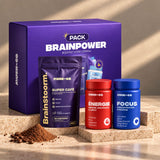
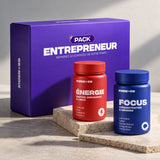
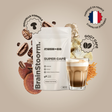
Choco & Coffee Pack
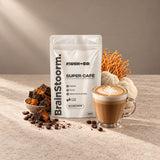
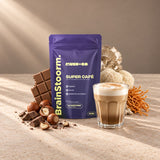
Brainstoorm in the Chocolate-hazelnut version, with rhodiola, and in the Coffee version. To alternate according to the mood and the moment of the day.
Discover the bundle →
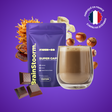
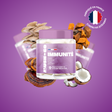
Brainstoorm Chocolate hazelnut
Rhodiola with 1,000 mg of Lion's Mane, Cordyceps and Chaga, plus Maca and Ashwagandha. Drinks like a hot chocolate, with 20 mg of caffeine.
Discover Brainstoorm →The fact file
Rhodiola in brief.
The essentials on this small succulent with yellow flowers, whose freshly cut root gives off a scent of rose.
A long history
From the Vikings to the Soviet laboratories.
Rhodiola is nothing like a recent fashion. In the countries where it grows, it has been part of folk medicine for centuries, long before it interested researchers.
Scandinavia
Tradition has it that the Vikings took it to face the long winters. In the 18th century, the Swedish botanist Linnaeus gives it its scientific name.
Siberia
According to the Altai tradition, a bunch of golden roots was given to newlyweds. The root was drunk as an infusion.
1940s-1970s
The term “adaptogen” is born in the USSR in 1947. Soviet researchers then study rhodiola closely, but publish mostly in Russian.
Today
It is studied in Europe, notably in Sweden, and it is one of the most searched-for adaptogenic plants on the continent.
The molecules
Rosavins and salidroside: what sets it apart.
There are more than a hundred species of Rhodiola. The one studied and used in Europe is Rhodiola rosea, and that is not a detail: it contains two families of molecules that serve as a marker for every serious extract.
The rosavins (rosavin, rosin, rosarin) are unique to Rhodiola rosea. They are not found in the other species, which makes them a kind of signature. Salidroside, for its part, is present in several rhodiola species, and even in other plants.
Reference extracts are standardised to around 3 % rosavins and 1 % salidroside. That three-to-one ratio roughly reproduces the one in the natural root. An extract that states only salidroside may come from another, less studied species.
What to take away in practice: look for “ Rhodiola rosea ” on the label, and if possible the percentages of rosavins and salidroside.
A plant of the cold
Growing where nothing grows.
Rhodiola lives in extreme conditions: intense cold, wind, poor soils, a very short summer and, at altitude, strong solar radiation. It survives by storing its reserves in a thick, fleshy root, which gives it the name golden root.
It is this ability to hold on in a hostile environment that first drew researchers to the so-called adaptogenic plants. The idea was simple: plants that withstand difficult conditions produce defence compounds, and it is those compounds that are found in the root.
That rarity has a downside. Long harvested from the wild, rhodiola has been over-exploited in some regions, to the point of being protected in several countries. Cultivation is developing, notably in Scandinavia and in the Alps, and it is a good question to put to a brand: where does the root come from?
What the studies say
Trials on fatigue, for twenty-five years.
Rhodiola has been the subject of many trials, often small, and of abundant but hard-to-access Soviet research. Here are three trials published in international journals, with their exact conditions.
Darbinyan et al., 2000 · Armenia
56 young doctors on night duty, 170 mg a day of standardised extract for 2 weeks, against placebo, in crossover. The researchers measured less mental fatigue on tests of calculation, memory and attention.
Olsson et al., 2009 · Sweden
60 adults aged 20 to 55 with stress-related fatigue, 576 mg a day for 28 days, against placebo. Fatigue and attention scores improved more than on placebo.
Lekomtseva et al., 2017 · Open trial
101 adults with prolonged fatigue, 400 mg a day for 8 weeks, with no placebo group. Fatigue scores fell from the first week, then throughout the trial.
In short: encouraging results on fatigue, obtained with 170 to 576 mg of standardised extract a day. The last trial, without a placebo, should be read with caution. The full references are at the bottom of the page.
The studied uses
Rhodiola benefits: what has been explored.
Search for “rhodiola benefits” and you often read endless lists. Here are the subjects that have actually been studied, without exaggeration.
Mental fatigue
This is the thread running through the trials: people tired by night work, exams or stress, tested on attention and concentration. To go further, discover the symptoms of high cortisol and the natural answers.
Everyday stress
Several studies have followed adults who describe themselves as stressed, with fatigue and wellbeing questionnaires over a few weeks.
Physical effort
Work has looked at endurance and at the perception of effort. The results are more variable than on mental fatigue.
Exam periods
Students in exam periods have been followed in several small trials, over a few weeks.
One thing is certain: rhodiola is neither a stimulant nor a medicine. It is taken in the morning, over a few weeks, within a routine. To understand what is at play on tense days, read our guide to understand cortisol better.
An immediate effect?
Does rhodiola have an immediate effect?
This is a much-searched question, and it deserves a straight answer. Most of the trials lasted from two to eight weeks, with a daily intake. It is over that length of time that the researchers measured differences.
Some studies have also tested a single intake, a few hours before an effort or a test, with variable results. In the Lekomtseva trial, without a placebo, changes were already noted after one week. Many people say they feel something from the first days, but that experience is a personal one.
Our advice: judge it on three to four weeks of regular intake, not on one cup. That is also why our formulas come with a 60-day guarantee.
The dose
What dose of rhodiola per day?
There is no official dose, but the studies give clear markers. They depend on the form you take.
| Form | Daily marker | What that represents |
|---|---|---|
| Standardised extract (3 % rosavins, 1 % salidroside) | 170 to 600 mg | The doses in the main trials, in one or two servings |
| Dried root as an infusion | A few grams | The traditional use, far less concentrated |
| Brainstoorm Chocolate hazelnut | One cup | With Lion's Mane, Cordyceps, Chaga, Maca and Ashwagandha |
Always follow the directions for use printed on your product label, and do not stack several rhodiola supplements.
When to take it
In the morning, never late in the evening.
Rhodiola is taken early in the day. In some people it can get in the way of falling asleep if taken too late.
In the morning
At breakfast, or at the latest in the early afternoon. On an empty stomach or with the meal, whichever suits you.
Every day
Same moment, same dose. That is what was done in the studies cited.
3 to 8 weeks
The length of the trials. Some people then take a one- to two-week break.
That is the idea behind Brainstoorm: instead of adding a capsule, rhodiola arrives in the cup you already drink in the morning. One dose, water or milk, hot or cold, and it is ready.
Rhodiola and chocolate
Why in the Chocolate-hazelnut?
Rhodiola has a slightly bitter, astringent taste, with a floral note. In cocoa it disappears completely. That is why we kept it for the Chocolate-hazelnut version of Brainstoorm: the Coffee version does not contain any.
Brainstoorm Chocolate-hazelnut provides 6,225 mg of actives per 8 g serving : 1,000 mg of Lion's Mane, 1,000 mg of Cordyceps, 1,000 mg of Chaga, plus Maca, Ashwagandha and rhodiola, with cocoa. On the caffeine side, 20 mg of microencapsulated NewCaff® caffeine, against around 80 mg in an espresso. That is three times more actives than competing mushroom coffees, which sit at around 3,000 mg.
No mushroom taste at all: it drinks like a hot chocolate, with water or milk, hot or cold. The recipes are developed and produced in Toulouse, France, by a French contract manufacturer.
What they say about it
Trustpilot reviews, reproduced as they are.
These reviews are about Brainstoorm. They describe a personal experience, which varies from one person to another.
“What I like most is the steadier energy it gives: no jitters and no energy dip.”
★★★★★Nawel F., 7 January 2026 · Brainstoorm
“Very good product, for me the afternoon crash has gone”
★★★★★Franck C., 6 September 2026 · Brainstoorm
A typical day
Rhodiola, from waking up to the evening.
To give you a concrete idea, here is how our customers most often fit it into their day.
7:30 a.m.
A cup of Brainstoorm Chocolate-hazelnut at breakfast, in place of the usual coffee or chocolate: rhodiola arrives at the right moment, early in the day.
10 a.m.
No second coffee needed for most of them. A large glass of water, and on you go.
2 p.m.
If you fancy a hot drink, a cup of Brainstoorm Coffee, without rhodiola, with only 20 mg of caffeine. Later than that, we avoid rhodiola to protect sleep.
In the evening
No rhodiola: this is the moment for Reishi and Sleep+ for those who want a complete routine, from morning to night.
Rhodiola and saffron
Rhodiola and saffron: the fashionable duo.
You have probably come across “rhodiola saffron” supplements. The pairing is popular: rhodiola for tiring days, saffron, the spice studied in connection with mood. Each ingredient has its own studies; the pairing itself remains little studied as such.
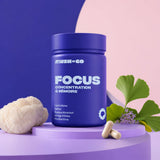
At Mush n Go, saffron is in Focus, with Lion's Mane, Bacopa, Ginkgo and Maritime pine. Some of our customers combine a cup of Brainstoorm Chocolate-hazelnut in the morning with Focus during busy weeks. If you are on treatment, in particular an antidepressant, ask your doctor before pairing these plants.
The right combinations
Rhodiola plays as a team.
Here are the combinations we use in Brainstoorm Chocolate-hazelnut, and why.
+ Lion's Mane
The mushroom of focus routines, at 1,000 mg per cup. Discover Lion's Mane, its benefits and its dosage.
+ Cordyceps
The mushroom of athletes and of active days, also at 1,000 mg. Discover the benefits and dosage of Cordyceps.
+ Ashwagandha
The Ayurvedic root, to keep a cool head. Two adaptogens, two traditions. DiscoverAshwagandha.
+ Maca
The root of the Andes, grown above 3,800 metres. Another plant of harsh climates. Discover maca, its benefits and its dosage.
As an infusion
And the dried root, can you drink it?
Yes, and that is even the traditional use. In Siberia as in Scandinavia, the dried root was infused or macerated, and it is still found in herbalists' shops. The infusion has a slightly bitter taste, with a note of rose, which many soften with honey.
For daily intake, however, it remains impractical: the rosavin and salidroside content of an infusion is hard to know, and it varies from one batch to another. That is why the studies use standardised extracts, and why most people take it as an extract, in capsules or in a drink.
Risks and precautions
Rhodiola: risks, side effects and contraindications.
Rhodiola is generally well tolerated at the doses used in the studies. The side effects reported are most often mild: difficulty falling asleep if it is taken late, irritability, dry mouth, dizziness or digestive discomfort.
In these situations, do not take it, or only after medical advice:
- Pregnancy and breastfeeding, and in children and adolescents.
- Antidepressant or anxiolytic treatment: do not combine it without your doctor's agreement.
- Bipolar disorder, or a history of an episode of agitation.
- Liver or kidney disease, or long-term treatment.
- Treatment for blood pressure or diabetes.
Stop taking it and seek advice in case of any unusual effect. Respect the stated dose, and keep the product out of reach of children.
Who it is for
Rhodiola is for you if…
- You string together long days, shifted hours or exam periods.
- You are looking for a traditional plant to take in the morning, not one more stimulant.
- You like hot chocolate and want to cut down on coffee.
- You are a healthy adult, not on antidepressant treatment.
- You like to understand what you take, dose by dose.
Choosing well
Six criteria so you do not get it wrong.
- The species : Rhodiola rosea, clearly stated, and not another rhodiola species.
- The part used : the root or the rhizome.
- The standardisation : rosavins and salidroside stated, ideally around 3 % and 1 %.
- The real dose : milligrams per serving, not just a list of ingredients.
- The manufacturing : an identified place. The recipes are developed and produced in Toulouse, France, by a French contract manufacturer, and are vegan, GMO-free and gluten-free.
- The guarantee : enough to try it risk-free. With us, 60 days satisfied or your money back, and the choice between a one-off purchase and a monthly subscription (−30%).
| Brainstoorm Coffee | Brainstoorm Chocolate hazelnut | |
|---|---|---|
| Rhodiola | No | Yes |
| Actives per serving | 6,040 mg (6 g serving) | 6,225 mg (8 g serving) |
| Caffeine | 20 mg per cup | 20 mg per cup |
| The taste | Mild coffee, a note of chicory | Like a hot chocolate |
Torn between them? The Choco & Coffee Pack brings both tastes together.
Your questions
Everything you ask us about rhodiola.
What is rhodiola used for?
It is an adaptogenic plant of cold regions, traditionally used in Scandinavia and Siberia. The studies have mostly looked at mental fatigue and everyday stress, with standardised extracts over two to eight weeks.
What is the difference between rhodiola, rhodiola rosea and golden root?
It is the same plant: Rhodiola rosea is its scientific name, golden root and roseroot its common names. Be careful, there are other rhodiola species, less studied.
Does rhodiola have an immediate effect?
Some people say they feel a difference from the first days, but the studies measured their results over two to eight weeks of regular intake. Judge it over at least three weeks.
What dose of rhodiola per day?
The trials used 170 to 576 mg of standardised extract a day. Always follow your product label.
When should you take rhodiola?
In the morning, or at the latest in the early afternoon. Taken in the evening, it can get in the way of falling asleep in some people.
Is rhodiola dangerous?
At the doses used in the studies, it is generally well tolerated. It is not recommended during pregnancy and breastfeeding, in children, in case of bipolar disorder or alongside certain treatments. Ask your doctor for advice if you have liver disease.
Can you take rhodiola with an antidepressant?
Not without your doctor's advice. Rhodiola can interact with certain treatments, and it is for your doctor to judge.
Rhodiola and saffron: how long does it take?
There is no single answer: each plant has its own studies, over several weeks. Allow at least a month of regular intake before making up your mind.
Does Brainstoorm Coffee contain rhodiola?
No. Rhodiola is only in the Chocolate-hazelnut version, where the cocoa covers its bitterness. Both versions do, however, contain Lion's Mane, Cordyceps, Chaga, Maca and Ashwagandha.
Can you take rhodiola with coffee?
Yes, in moderation. Brainstoorm Chocolate-hazelnut contains only 20 mg of caffeine per cup, around four times less than an espresso.
Do you need breaks between two courses?
Nothing requires it, but many people take a one- to two-week break after two or three months of daily intake. It is a matter of habit: simply follow the directions for use on the label.
Is rhodiola vegan?
Yes, it is a plant. Brainstoorm is vegan, GMO-free and gluten-free.
Where can you buy quality rhodiola?
Directly on mushngo.com, with free delivery from €59 in France and €69 to €89 across Europe, depending on the destination, a one-off purchase or a monthly subscription (−30%) as you prefer, and 60 days satisfied or your money back. The recipes are developed and produced in Toulouse, France, by a French contract manufacturer.
Sources
- Darbinyan V. et al. (2000). Rhodiola rosea in stress induced fatigue: a double blind cross-over study of a standardized extract SHR-5 with a repeated low-dose regimen on the mental performance of healthy physicians during night duty. Phytomedicine, 7(5).
- Olsson E.M., von Schéele B., Panossian A.G. (2009). A randomised, double-blind, placebo-controlled, parallel-group study of the standardised extract SHR-5 of the roots of Rhodiola rosea in the treatment of subjects with stress-related fatigue. Planta Medica, 75(2).
- Lekomtseva Y., Zhukova I., Wacker A. (2017). Rhodiola rosea in Subjects with Prolonged or Chronic Fatigue Symptoms: Results of an Open-Label Clinical Trial. Complementary Medicine Research, 24(1).
Put it into practice
Rhodiola, the Mush n Go version.
You now know all about rhodiola and what to look for on a label. Here is where to find it with us, with vegan formulas whose recipes are developed and produced in Toulouse, France, by a French contract manufacturer, backed by a 60-day money-back guarantee.
Choco & Coffee Pack
Brainstoorm in the Chocolate-hazelnut version, with rhodiola, and in the Coffee version. To alternate according to the mood and the moment of the day.
Discover the bundle →Brainstoorm Chocolate hazelnut
Rhodiola with 1,000 mg of Lion's Mane, Cordyceps and Chaga, plus Maca and Ashwagandha. Drinks like a hot chocolate, with 20 mg of caffeine.
Discover Brainstoorm →The other ingredients
Keep exploring.
Rhodiola is only one of the actives in our formulas. Discover the other plants and mushrooms, or read our guide to adaptogenic mushrooms and plants and stress.


