

















Valerian or melatonin: which is better for sleep?
By the Mush n Go editorial team - 13 October 2026
By the Mush n Go editorial teamPublished 13 October 202615 min read
Sleep
Valerian or melatonin? It depends on what is keeping you awake. If your body clock is out of sync (late bedtimes, jet lag, shift work), melatonin is the most logical choice: it contributes to the reduction of time taken to fall asleep. If it is evening tension and a racing mind, valerian is a better fit. The two can also be combined.

Sleep+
Valerian and melatonin in the same capsule, with reishi, magnesium bisglycinate and acacia fibre. 1 to 2 capsules 30 minutes before bed.
Discover Sleep+ →
Relaxation Pack
Anti-Stress in the morning (ashwagandha, reishi, holy basil, schisandra, vitamin B6) and Sleep+ in the evening, for tense days that spill over into the night.
Discover the pack →The answer in one table
Valerian or melatonin: the difference in brief.
They often sit on the same shelf and get compared like two brands of the same thing. That is a mistake. Melatonin and valerian do not work on the same lever of sleep, and that is exactly what should guide your choice.
Melatonin is a hormone your body makes itself. It does not knock you out: it sends a time signal, "it is night". Valerian is a plant whose root has been used since antiquity to support relaxation and sleep. One speaks to your body clock, the other to your nervous tension.
| Melatonin | Valerian | |
|---|---|---|
| Nature | Hormone made by the brain, reproduced as a supplement | Root of a European plant (Valeriana officinalis) |
| Lever | The clock: the "it is night" signal | Relaxation: evening tension |
| Ideal for | Jet lag, bedtime too late, shifted rhythm | Racing mind, nervousness, trouble switching off |
| Onset | Works from the first evenings, if the timing is right | Often noticeable after two to four weeks of regular use |
| Authorised claim | Yes: contributes to the reduction of time taken to fall asleep (1 mg at bedtime) | No, traditional use only |
| Main pitfall | Wrong timing, doses too high | Strong smell, effect varies from person to person |
For everything about each one, in detail, see our pages on melatonin and on valerian. Here we focus on a single question: which one to choose, and when.
How melatonin works
Melatonin, a clock more than a sleeping pill.
Every evening, as the light fades, a small gland in the centre of the brain, the pineal gland, starts secreting melatonin. Its level climbs during the first part of the night, then falls again in the early morning. Light, especially the blue light from screens and LEDs, slows this production.
This night-time peak acts as a conductor. It tells the whole body it is time to slow down: body temperature drops, alertness falls, the body gets ready for sleep. So melatonin does not "make" you sleep the way a sleeping pill does: it makes sleep possible at the right time. To find out more, discover mushrooms for better sleep.
That explains its real value, and its limits. When your clock is out of sync, because of a flight east, evenings that stretch to 2 am or a night-shift rota, melatonin taken at the right time can help reset it. When your clock works fine but you are tense, it does much less.
In Europe, two health claims are authorised for melatonin. The first: melatonin contributes to the reduction of time taken to fall asleep, with 1 mg taken close to bedtime. The second: melatonin contributes to the alleviation of subjective feelings of jet lag, with at least 0.5 mg taken close to bedtime on the first day of travel and on the following days. These are the only promises a manufacturer is allowed to make.
In France, a food supplement provides less than 2 mg of melatonin a day. Above that, it becomes a prescription-only medicine. It comes in immediate-release form, for falling asleep, or prolonged-release form, for staying asleep.
How valerian works
Valerian, the plant of relaxation.
Common valerian is a tall plant with pink flowers that grows in damp meadows across Europe. It is not the flower that is used but the root, dried and then ground into powder or made into an extract. Its smell is famous: strong, musky, likened by many to old socks.
Valerian has been used for sleep since at least ancient Greece. The monographs of the European Medicines Agency recognise it for temporary nervousness and mild sleep disorders.
Its chemistry is complex. Researchers have focused mainly on valerenic acid and valepotriates, and several laboratory studies suggest an interaction with the GABA system, the brain's main "brake" system. But no one yet knows exactly which molecule does what, and it is probably the root as a whole that counts.
Two practical points set it apart from melatonin. First, it is often taken over time: the monographs state that the optimal effect may take two to four weeks of regular use. Second, it does not touch your body clock. It will not bring your sleep time forward if you are a natural night owl, but it can support a mind that struggles to let go.
Note that it has no authorised health claim in Europe: like most plants, its file is still awaiting assessment. A serious manufacturer will therefore talk about tradition and studies, never about "valerian that makes you sleep".
What the studies say
Melatonin and valerian under the research lens.
Both have been studied a lot, with more modest results than some labels promise. Here are the reference studies, with their conditions.
Ferracioli-Oda et al., 2013 · meta-analysis, melatonin
19 trials, 1,683 participants with primary sleep disorders. Melatonin reduced the time to fall asleep by about 7 minutes and increased total sleep time by about 8 minutes compared with placebo. A real but modest effect.
Herxheimer and Petrie, 2002 · Cochrane review, jet lag
10 trials in air travellers. Melatonin taken at bedtime at the destination reduced jet lag, especially for eastward flights and across five or more time zones. This is its best-established use.
Bent et al., 2006 · meta-analysis, valerian
16 trials, 1,093 participants. The authors found a possible improvement in perceived sleep quality, with no notable effect on objective measures, and highlight the wide variation in extracts and methods.
Fernández-San-Martín et al., 2010 · meta-analysis, valerian
Controlled trials in insomnia. A subjective improvement in sleep quality appears, with no measurable difference on quantitative criteria. The authors call for better-standardised trials.
In short: melatonin has a measurable but limited effect on falling asleep, and real value for jet lag. Valerian is appreciated mainly for perceived sleep quality. Neither replaces good habits. The full references are at the bottom of the page.
Which one for your profile
Your night, your choice: six situations.
Rather than looking for "the best", start from what wakes you up or keeps you awake. Here are the most common cases, and the most consistent option for each.
The traveller
Long-haul flight, especially eastward: melatonin at bedtime, local time, for the first few days. This is its best-documented use.
The night owl
You never sleep before 1 am, even when tired: melatonin, taken at a set time, together with fewer screens and more light in the morning.
The shift worker
Night or rotating shifts: melatonin can help you sleep during the day, but ask your occupational health doctor how to plan your hours.
The racing mind
You are tired, but your to-do list starts scrolling as soon as the light goes off: valerian, over several weeks, within a real evening ritual.
The stressful patch
Exams, a busy spell at work, moving house: valerian in the evening, and an anti-stress routine during the day, such as ashwagandha.
Both at once
Shifted hours and nervous tension: a formula combining valerian, melatonin and magnesium addresses both levers in one dose.
Do you recognise yourself in several boxes? That is common. Stress pushes bedtime back, late bedtimes keep fatigue going, fatigue increases sensitivity to stress. Combined formulas exist for exactly these multi-cause nights.
Three questions to choose
Melatonin or valerian: the quick test.
Answer these three questions in order. In under a minute, you will know which way to go.
Is your schedule shifted?
Do you naturally fall asleep very late, have you just got back from a trip, or do you work nights? If so, start with melatonin.
Are you tense in the evening?
Racing thoughts, nervousness, trouble switching off from work? If so, valerian suits your situation better.
Both, or night waking?
If you tick both, or if your nights are broken, look at a combined formula with magnesium.
And if you tick none? Your problem may lie elsewhere: coffee too late, a heavy dinner, a bedroom that is too warm, alcohol, or a disorder that deserves medical advice. We come back to this in the section on when to see a doctor.
How to take them
Dose, timing, duration: how to use them.
With melatonin, timing matters as much as the dose. With valerian, regularity makes the difference. Here are the benchmarks to know, always adapted to your product's label.
| Melatonin | Valerian | |
|---|---|---|
| When | 30 minutes to an hour before your target bedtime, always at the same time | 30 minutes to an hour before bed, sometimes also in the late afternoon |
| How much | 0.5 to 1 mg is often enough, no more than 2 mg a day as a supplement | The dose on your extract's label, which varies widely with its concentration |
| How long | A few days for jet lag, a few weeks to reset a rhythm | At least two to four weeks to judge, as a course |
| With what | A glass of water, in dim light, screens off | A glass of water or herbal tea, in a calm ritual |
| Avoid | Taking it in the middle of the night, which shifts the clock | Alcohol and other sedatives the same evening |
A common mistake with melatonin is raising the dose when the effect disappoints. More is not better: a high dose can leave you groggy the next day without helping you fall asleep faster. Better to check your timing and your exposure to light in the evening.
With valerian, the opposite mistake is common: take it for two evenings, feel nothing, stop. Give it a few weeks, taking it at a set time. And if the smell puts you off, choose a capsule rather than a tea.
Valerian and melatonin together
Can you combine valerian and melatonin?
Yes, and it is actually a common combination. Because they do not act on the same lever, they do not overlap: one gives the time signal, the other supports relaxation. Many sleep formulas sold in pharmacies are built on this pair, often with magnesium or other plants added.
That is the thinking behind our formula Sleep+. It brings together five ingredients in a single capsule, taken with water 30 minutes before sleep:
- Melatonin, for the signal to fall asleep, at a food-supplement dose.
- Valerian, the traditional plant for evening relaxation.
- Reishi, the mushroom that Chinese medicine has linked with calm for centuries.
- Magnesium bisglycinate, a well-tolerated form of magnesium, which contributes to normal functioning of the nervous system and to the reduction of tiredness and fatigue.
- Acacia fibre, a gentle fibre that rounds off the formula.
The advantage of a combined formula: one dose, doses designed to work together, and no need to stack three bottles on your bedside table. The drawback: if you do not tolerate one of the ingredients, you have to switch product. If you already take melatonin or valerian on its own, do not combine it with Sleep+: choose one or the other.
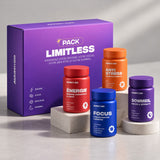
If your difficult nights come mainly from days under pressure, the Relaxation Pack pairs Sleep+ in the evening with Anti-Stress in the morning. The idea: tackle tension during the day, so it is not waiting for you intact at 11 pm.
Side effects and precautions
What to know before taking them.
Melatonin and valerian are generally well tolerated by adults at food-supplement doses. That does not make them harmless. With melatonin, the most reported side effects are headaches, next-day drowsiness, dizziness and nausea. With valerian, mainly digestive upset, headaches and sometimes a heavy feeling on waking.
In 2018, France's food safety agency (Anses) published an opinion on melatonin food supplements, after collecting reports of adverse effects. It recommends that certain groups avoid these products, and that everyone else take them only for short periods, when needed.
Precautions to follow, for both:
- Not recommended during pregnancy and breastfeeding, or for children, unless on medical advice.
- Melatonin: medical advice essential for epilepsy, asthma, mood, behavioural or personality disorders, and not recommended with inflammatory or autoimmune conditions.
- No driving or activities requiring alertness after taking them: both can cause drowsiness.
- Ask for advice if you take sleeping pills, anti-anxiety drugs, antidepressants, anticoagulants or epilepsy treatment.
- No alcohol the same evening: it strengthens the sedative effect and worsens sleep quality.
- Stick to the dose on the label and keep the products out of reach of children.
And dependence? Neither melatonin nor valerian is known to cause dependence comparable to sleeping pills. On the other hand, getting used to a pill to sleep can mask an underlying problem. Take regular breaks to check whether you still need it.
The habits that matter
What helps both.
No supplement will make up for a bedroom at 24 degrees, a coffee at 5 pm or a phone under your pillow. Conversely, a few simple habits make both melatonin and valerian far more effective.
- Regular wake-up times, weekends included: this is the first setting of your body clock.
- Daylight in the morning and dim light in the evening, with no screens in the hour before bed.
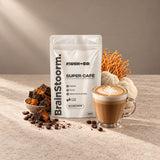
- Your last coffee in the early afternoon. Our Brainstoorm contains only 20 mg of caffeine per cup, but we keep it for the morning too.
- A cool, dark, quiet bedroom, around 18 degrees.
- A light, not-too-late dinner, and no alcohol to "help" you sleep.
- A ritual of a few minutes: reading, slow breathing, herbal tea, always in the same order.
To learn more about the link between stress, cortisol and difficult nights, read our article on how to lower cortisol.
When to see a doctor
When a supplement is no longer enough.
Melatonin and valerian are aids for temporary difficulties. They do not treat chronic insomnia, sleep apnoea or depression. Talk to your doctor if:
- Your difficulties have lasted more than three months, at least three nights a week.
- You are sleepy during the day, to the point of dozing off in meetings or at the wheel.
- You are told you snore loudly or stop breathing during the night.
- Your insomnia comes with persistent sadness, marked anxiety or pain.
- You have needed a product every night for months to sleep.
For chronic insomnia, European guidelines put cognitive behavioural therapy for insomnia first, before any medication. It is delivered by trained professionals, sometimes online, in a few sessions.
Your questions
Valerian or melatonin: your questions.
What is the difference between valerian and melatonin?
Melatonin is a hormone that tells the body it is night: it acts on the body clock and contributes to the reduction of time taken to fall asleep. Valerian is a plant traditionally used for relaxation and mild sleep problems. One sets the time, the other supports evening tension.
Which works better for sleep, valerian or melatonin?
Neither is more effective in absolute terms. Melatonin is best suited to shifted schedules and jet lag. Valerian is a better fit when nervousness keeps you awake. Their measured effect in studies remains modest.
Can you take valerian and melatonin at the same time?
Yes, the combination is common and many formulas contain both. Just avoid stacking several products that contain them, and ask for advice if you take a sedative medication.
How long does valerian take to work?
Valerian works over time. The European monographs state that the optimal effect may take two to four weeks of regular use, in the evening at a set time.
What dose of melatonin should I take for sleep?
The claim authorised in Europe is based on 1 mg taken close to bedtime. In France, food supplements contain less than 2 mg a day. Start low, and adjust the timing rather than the dose.
Is melatonin dangerous?
At supplement doses, it is generally well tolerated by healthy adults, for a short period. It is not recommended during pregnancy, breastfeeding, for children or with inflammatory or autoimmune conditions, and requires medical advice for epilepsy, asthma or mood disorders.
Is valerian addictive?
Valerian is not known to cause dependence comparable to sleeping pills. As with any evening product, take regular breaks to check you still need it.
What can I take to sleep without melatonin?
Valerian, magnesium, reishi or plants such as passionflower and chamomile are common alternatives. The most effective step is still to sort out your timing, light and caffeine. If insomnia persists, talk to your doctor.
Which Mush n Go product contains valerian and melatonin?
Sleep+, our evening formula, combines reishi, valerian, magnesium bisglycinate, acacia fibre and melatonin. Take 1 to 2 capsules with water 30 minutes before bed. As a one-off purchase or a monthly subscription (−30%), with a 60-day money-back guarantee.
Sources
- Ferracioli-Oda E., Qawasmi A., Bloch M. H. (2013). Meta-analysis: melatonin for the treatment of primary sleep disorders. PLoS One, 8(5).
- Herxheimer A., Petrie K. J. (2002). Melatonin for the prevention and treatment of jet lag. Cochrane Database of Systematic Reviews.
- Bent S., Padula A., Moore D., Patterson M., Mehling W. (2006). Valerian for sleep: a systematic review and meta-analysis. The American Journal of Medicine, 119(12).
- Fernández-San-Martín M. I. et al. (2010). Effectiveness of Valerian on insomnia: a meta-analysis of randomized placebo-controlled trials. Sleep Medicine, 11(6).
- Anses (2018). Opinion on the risks associated with consuming food supplements containing melatonin (in French).
- Commission Regulation (EU) No 432/2012 establishing a list of permitted health claims made on foods.
Keep reading
Sleep better: go further.
Sleep is one of our favourite topics. Discover our guides and the ingredients in our evening formulas, or browse the page of all our active ingredients.

Discover our mushroom and adaptogenic plant supplements
Our vegan formulas, made in Toulouse by a French manufacturer.