








The focus plant
Rosemary: the memory herb, from the garrigue to science
By the Mush n Go team · Updated on 18 September 2026
The rosemary (Rosmarinus officinalis, today Salvia rosmarinus) has always scented our grilled dishes, grows in almost every garden and has carried a reputation as the memory herb since Antiquity. Tea, cooking, essential oil: each use has its rules, and its precautions. At Mush n Go, rosemary is not part of our formulas: our focus formula, Focus, brings together Lion's Mane, Saffron, Bacopa monnieri, Ginkgo biloba and Maritime pine.

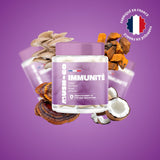
Focus
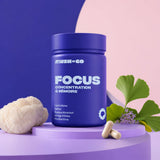
Our focus formula: Lion's Mane, Saffron, Bacopa monnieri, Ginkgo biloba and Maritime pine. The 30-day course for periods of intense work.
Discover Focus →
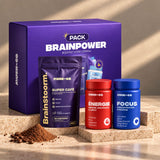
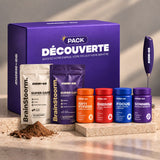
BrainPower Pack
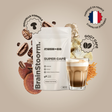
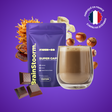
Focus and Energy in capsules, plus a Brainstoorm, our mushroom coffee at 20 mg of caffeine per cup.
Discover the pack →The fact file
Rosemary in brief.
An evergreen shrub, needle-like leaves, pale blue flowers from the end of winter. Here is the essential before going further.
The herb of remembrance
A reputation two thousand years old.
Its name is thought to come from the Latin ros marinus, the “dew of the sea”, because it often grows facing the Mediterranean. Since Antiquity it has been associated with memory and faithfulness, long before researchers took an interest in it.
Antiquity
According to tradition, Greek students wore crowns of rosemary while revising. It was also burned in temples, hence its nickname of incense plant.
Middle Ages
Rosemary is grown in monastery gardens. A legend credits a queen of Hungary with a rosemary “water” distilled in alcohol, which stayed famous for centuries.
Around 1600
In Hamlet, Ophelia offers rosemary “for remembrance”. It is then slipped into wedding and funeral bouquets.
2017
Botanists show through DNA that rosemary belongs to the sage genus. Its official name becomes Salvia rosmarinus.
Today
Rosemary is among the most searched-for kitchen herbs online, and its benefits are one of the most typed queries about it. A cooking plant that has become a research subject.
What it contains
Three families of molecules, three uses.
Rosemary is not one molecule but a mixture. Depending on how you take it, you get something quite different.
Rosmarinic acid is a water-soluble polyphenol, also found in lemon balm and sage. It is largely this one that you get in a tea.
Carnosic acid and carnosol are highly antioxidant diterpenes, poorly soluble in water. They are so effective at protecting fats from going rancid that rosemary extracts are authorised as a food additive in Europe, under the code E392.
1,8-cineole, also called eucalyptol, is the major compound of the essential oil, along with camphor and alpha-pinene. It is what gives rosemary its fresh smell, and it is what researchers tracked in the blood of volunteers exposed to its aroma.
| Form | What you mainly get | Use |
|---|---|---|
| Leaf in cooking | A little of everything, in small amounts | Everyday seasoning |
| Tea | Rosmarinic acid | Traditional infusion, after meals |
| Dry extract | Carnosic acid, carnosol, rosmarinic acid | Supplements, antioxidant additive E392 |
| Essential oil | 1,8-cineole, camphor, pinenes | Diffusion, diluted use on the skin |
People speak of “cineole”, “camphor” or “verbenone” rosemary depending on which molecule dominates in the essential oil. These are chemotypes, that is chemical variants of one and the same plant.
The benefits of rosemary
What tradition credits it with, and what we actually know.
The benefits of rosemary are one of the most asked questions about it. The honest answer comes in two parts: a very rich tradition, and human research that is still modest.
On the tradition side, rosemary has been used for centuries as a tea after meals, to accompany digestion, and externally, in baths or rubs. The European monographs on medicinal plants recognise it for those traditional uses, based on how long they have been established rather than on clinical trials.
On the research side, its polyphenols and diterpenes are heavily studied in the laboratory for their antioxidant properties. In humans, the subject that has moved forward most is that of the rosemary aroma and memory, with short, small-scale studies that we set out just below.
What to take away: rosemary is an excellent cooking and tea plant, not a remedy. That is why, in Focus, we chose other ingredients, better documented in humans.
Rosemary and memory
The aroma, the powder and memory: three studies worth knowing.
The idea of a memory herb eventually caught the interest of psychologists. The most cited work comes from Mark Moss's team at Northumbria University, in the United Kingdom. Here are their exact conditions.
Moss et al., 2003 · United Kingdom
144 healthy adults, placed in a room scented with rosemary essential oil, with lavender, or with no smell. The rosemary group obtained better scores on overall memory quality, but a slightly slower memory.
Moss and Oliver, 2012 · United Kingdom
20 adults, exposed to the rosemary aroma during cognitive tests. The higher the concentration of 1,8-cineole in their blood, the better their speed and accuracy on certain tasks.
Pengelly et al., 2012 · Australia
28 older adults, different doses of dried rosemary leaf powder. The lowest, 750 mg, close to a culinary dose, was associated with faster memory; the highest, 6 000 mg, with poorer scores.
In short: real leads, on small groups and over very short periods. And a useful lesson: with rosemary, more is not better. The full references are in the at the bottom of the page.
Rosemary tea
The tea, properly made.
It is the simplest and most traditional way to enjoy rosemary. It has a forthright, slightly bitter taste, which softens with a slice of lemon or a spoonful of honey.
The right amount
One teaspoon of dried leaves, or a fresh sprig a few centimetres long, for a 250 ml cup.
The infusion
Simmering water, not boiling, then 5 to 10 minutes with the lid on to keep the aromas in the cup.
The rhythm
One to three cups a day, preferably after meals, and not continuously for months on end.
And the “danger” of rosemary tea, so often searched for? At those amounts, it is generally well tolerated in adults. The precautions concern large amounts, pregnancy and certain treatments: we set them out below, in the precautions.
A typical day
Rosemary, from morning to evening.
No need to overhaul your habits. Here is how to slip rosemary and a focus routine into an ordinary day, without forcing anything. To go further, discover the dosage and reviews of Lion's Mane.
7:30 am
1 to 2 capsules of Focus at breakfast, with a large glass of water, during busy weeks.
9 am
Your morning coffee, classic or replaced by a cup of Brainstoorm, with only 20 mg of microencapsulated caffeine.
12:30 pm
Fresh rosemary on the plate: roast vegetables, baked fish or a simple scented dressing.
2 pm
A cup of rosemary tea after lunch, instead of a second coffee, with a slice of lemon.
In the evening
A sprig in the diffuser if you like its scent, then Sleep+ for those who follow a complete routine.
Oil and essential oil
Two oils, two worlds.
When people talk about “rosemary oil”, they often mix up two very different products. The confusion is not risk-free, so here is how to tell them apart.
| Essential oil | Infused oil | |
|---|---|---|
| How it is made | Steam distillation of the flowering tops | Rosemary infused for several weeks in a vegetable oil |
| Concentration | Very strong: a few drops are enough | Mild, used like a care oil |
| Use | Diffusion, or on the skin diluted in a vegetable oil | Massage, hair care, and cooking for some |
| By mouth | No, not without a professional's advice | Only if it is sold as a food-grade oil |
Rosemary oil is very fashionable for hair, massaged into the scalp. Research on this is still very thin: if you try it, go for an infused oil or a well-diluted essential oil, and do a patch test on the inner elbow 48 hours beforehand.
For the essential oil, the chemotype matters. Cineole rosemary is the mildest and the most common for diffusion. Camphor rosemary is more powerful and trickier to handle, notably for sensitive people.
For diffusion, a few drops are enough, for 10 to 15 minutes, in an aired room. Avoid diffusing continuously, and never in the presence of young children, pregnant women or sensitive animals such as cats. For use on the skin, always dilute the essential oil in a vegetable oil, a few drops to a tablespoon.
In the kitchen
Rosemary on the plate.
It is still the best way to have it every day, and the most enjoyable. Its scent stands up to cooking, which makes it the herb of slow dishes and grills.
Roasts and grills
Lamb, chicken, pork: a few sprigs on the meat or in the dish, or as skewers in place of sticks.
Oven vegetables
Potatoes, squash, carrots roasted with olive oil and garlic, with finely chopped rosemary.
Bread and focaccia
Salt, olive oil and fresh rosemary: Italian focaccia needs nothing more.
Herbes de Provence
Rosemary is part of the blend, with thyme, savory and oregano.
One tip: chop the needles very finely or remove the sprigs before serving, as their texture is firm. And for marinades, rosemary and its antioxidants even help protect the fats during cooking.
In the garden
Planting, pruning, taking cuttings without getting it wrong.
Having a rosemary plant within reach means fresh rosemary all year round, for cooking as for tea. And it is far more fragrant than the dried rosemary from the supermarket.
Rosemary is one of the easiest aromatic plants. It wants sun, poor, well-drained soil, and very little water once established. Its real enemy is standing damp in winter.
| Task | When | How |
|---|---|---|
| Planting | Spring or early autumn | In full sun, in sandy or stony soil, or in a well-drained pot |
| Pruning | Just after flowering | Shorten this year's shoots by a third, never cutting into the bare old wood |
| Taking cuttings | Late summer | Stems 10 to 15 cm long, stripped at the base, pushed into a mix of sand and compost |
| Harvesting | All year round | Cut sprigs with secateurs, ideally before flowering for more aroma |
Creeping rosemary, a ground-cover form, trails attractively over a low wall or a window box. It is cooked exactly like upright rosemary.
Choosing it well
Five criteria for a rosemary supplement.
- For tea : whole leaves, green and fragrant. Grey, odourless rosemary has lost most of its aroma.
- For the essential oil : the Latin name, the chemotype (cineole, camphor or verbenone) and the part distilled must appear on the bottle.
- For a supplement : an identified extract, with a dose in milligrams per serving, not just a list of ingredients.
- The manufacturing : an identified place of manufacture. With us, the recipes are developed and produced in Toulouse, France, by a French contract manufacturer, vegan, GMO-free and gluten-free.
- The guarantee : enough to try it risk-free. With us, 60 days satisfied or your money back, and the choice between a one-off purchase and a monthly subscription (−30%).
The right combinations
The plants of focus.
Rosemary is not in our formulas, but it belongs to the same family of uses. Here are the ingredients we chose for our focus range, and why. Also worth reading: Natural nootropics: the guide to focus.
+ Ginkgo biloba
The most studied leaf extract in the world, present in Focus. everything about ginkgo biloba.
+ Lion's Mane
The mushroom of concentration, studied in connection with its hericenones, at the heart of Focus and Brainstoorm. Lion's Mane: benefits, dosage and precautions.
+ Bacopa and Saffron
An ayurvedic plant taken over several weeks, and a spice studied in connection with mood, both in Focus.
+ Rhodiola
An adaptogenic plant from cold regions, in Brainstoorm Chocolate-hazelnut. Rhodiola: benefits, dosage and precautions.
Who it is for
A focus routine is made for you if…
- You string together days of intellectual work, screens and meetings.
- You are preparing for exams, a competitive entrance test or a return to study.
- You like plants, but prefer stated doses to an approximate tea.
- You are looking for a caffeine-free course, to be taken over time.
- You want to understand what you are taking, ingredient by ingredient.
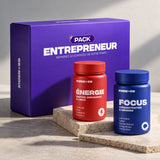
| Focus on its own | Entrepreneur Pack | BrainPower Pack | |
|---|---|---|---|
| Contents | Focus | Focus + Energy | Focus, Energy + one Brainstoorm |
| Caffeine | None | None | 20 mg per cup of Brainstoorm |
| Who it is for | A targeted course for focus | Mind and body, through busy weeks | The complete routine, coffee included |
For all our formulas, the recipes are developed and produced in Toulouse, France, by a French contract manufacturer, vegan, GMO-free and gluten-free, with 60 days satisfied or your money back and the choice between a one-off purchase and a monthly subscription (−30 %). See the Entrepreneur Pack.
Risks and precautions
What to know before overdoing it.
In cooking and as a reasonable tea, rosemary is well tolerated by the great majority of adults. The precautions concern above all large amounts and the essential oil, which is far more concentrated.
Tea and extracts are taken at a moderate dose. The essential oil, for its part, calls for real precautions.
- During pregnancy and breastfeeding, keep to culinary amounts and ask your doctor for advice about anything else.
- Avoid the essential oil, above all the camphor chemotype, in case of epilepsy, in children and in pregnant women.
- Never swallow essential oil without a professional's advice, and never apply it neat to the skin.
- Ask for advice if you are on any treatment, notably an anticoagulant, or before surgery.
- Follow the dose stated on the label of your supplement, and keep it out of reach of children.
Your questions
Everything we are asked about rosemary.
What are the benefits of rosemary?
Rosemary is traditionally used as a tea after meals and externally. It is rich in antioxidants, heavily studied in the laboratory, and a few small human studies have explored the link between its aroma and memory. The results remain preliminary.
Is rosemary good for memory?
That has been its reputation since Antiquity. British studies observed better memory scores in volunteers exposed to its aroma, and an Australian study tested a small dose of dried leaf. These are leads, not definitive proof.
Is rosemary tea dangerous?
No, at one to three cups a day in a healthy adult. It is not advised in large amounts, and medical advice is recommended during pregnancy, breastfeeding or any treatment.
How many cups of rosemary tea a day?
One to three cups, each made with a teaspoon of dried leaves. It is better to take breaks than to drink it continuously for months.
What is cineole rosemary?
It is a chemotype: a rosemary whose essential oil is dominated by 1,8-cineole. It is the mildest and the most used for diffusion, unlike camphor rosemary, which is stronger.
Can you swallow rosemary essential oil?
Not without the advice of a healthcare professional. An essential oil is extremely concentrated, and the camphor it can contain is poorly tolerated at a high dose.
Does rosemary oil make hair grow?
It is a very popular trend, but research on the subject is still very limited. If you want to try it, use it diluted and test it first on a small area of skin.
Why is rosemary called Salvia rosmarinus?
In 2017, DNA analyses showed that rosemary belongs to the same genus as the sages. Its official scientific name therefore changed from Rosmarinus officinalis to Salvia rosmarinus. It is still the same plant.
What is the difference between fresh and dried rosemary?
Dried rosemary is more concentrated in taste: count about a third of the amount of fresh rosemary. For tea, either works.
When should rosemary be pruned?
Just after flowering, shortening this year's shoots by about a third. Never cut into the bare old wood: it regrows very poorly.
Is rosemary in the Mush n Go products?
No, rosemary is not part of our formulas. Our focus formula, Focus, brings together Lion's Mane, Saffron, Bacopa monnieri, Ginkgo biloba and Maritime pine, as a 30-day course.
Where can I buy our focus formulas?
Directly on mushngo.com, with free delivery from €59 in France and €69 to €89 across Europe, depending on the destination, a one-off purchase or a monthly subscription (−30%) as you prefer, and 60 days satisfied or your money back. The recipes are developed and produced in Toulouse, France, by a French contract manufacturer.
Sources
- Moss M., Cook J., Wesnes K., Duckett P. (2003). Aromas of rosemary and lavender essential oils differentially affect cognition and mood in healthy adults. International Journal of Neuroscience, 113(1).
- Moss M., Oliver L. (2012). Plasma 1,8-cineole correlates with cognitive performance following exposure to rosemary essential oil aroma. Therapeutic Advances in Psychopharmacology, 2(3).
- Pengelly A. et al. (2012). Short-term study on the effects of rosemary on cognitive function in an elderly population. Journal of Medicinal Food, 15(1).
Put it into practice
Rosemary, the Mush n Go version.
You now know all about rosemary and what to look for on a label. Here is where to find it with us, with vegan formulas whose recipes are developed and produced in Toulouse, France, by a French contract manufacturer, and guaranteed 60 days satisfied or your money back.
Focus
Our focus formula: Lion's Mane, Saffron, Bacopa monnieri, Ginkgo biloba and Maritime pine. The 30-day course for periods of intense work.
Discover Focus →BrainPower Pack
Focus and Energy in capsules, plus a Brainstoorm, our mushroom coffee at 20 mg of caffeine per cup.
Discover the pack →The other ingredients
Keep exploring.
Rosemary is one of the ingredients we have studied. Discover the ones in our formulas, or browse the page listing all our active ingredients.


