












The bark of focus
Maritime pine bark: from the forests of the Landes to the laboratory
By the Mush n Go team · Updated 18 September 2026
The maritime pine (Pinus pinaster) has drawn the landscape of the Landes de Gascogne for more than a century and a half. Its wood makes floorboards, its resin supported generations of resin tappers, and its bark gives an extract rich in OPCs, proanthocyanidins among the most studied in the world. At Mush n Go, maritime pine bark is part of Focus, our focus formula.

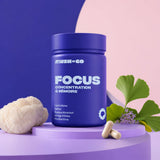
Focus
Our focus formula: Lion's Mane, Saffron, Bacopa monnieri, Ginkgo biloba and Maritime pine. The 30-day course for stretches of intense work.
Discover Focus →
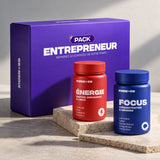
Entrepreneur Pack
Focus for concentration, Energy for vitality, caffeine-free. The duo for busy weeks, in a single bundle.
Discover the bundle →The fact file
Maritime pine in brief.
A tall conifer with thick, deeply fissured bark and long needles grouped in pairs, which loves sand and sun. Here are the essentials before going any further.
The pine of the Landes
A forest born from the hand of man.
When you think of maritime pine, you think of the Landes. Yet this immense forest, one of the largest in Western Europe, is nothing like wild: it was planted, in large part, in the 19th century. And it was in Bordeaux, a century later, that its bark entered the laboratory.
1535
Jacques Cartier's crew, stuck for the winter in Canada, suffer from scurvy. Iroquoian people give them a decoction of a tree called “annedda” to drink. Historians see in it a cedar rather than a pine, but the story would inspire the Bordeaux researchers.
Late 18th century
On the Gascon coast, the engineer Nicolas Brémontier leads the stabilising of the shifting dunes. The maritime pine, which tolerates sand and salt, becomes the tree of the coast.
1857
Under Napoleon III, a law requires the communes of the Landes to drain and sow their land. Within a few decades, the marshes of the heath give way to a sea of pines.
1948
In Bordeaux, the pharmacist Jacques Masquelier isolates procyanidolic oligomers, the OPCs, first in the skin of the peanut. He then turns to maritime pine bark and grape seeds.
Today
“Maritime pine” and “maritime pine bark” are searched for thousands of times a month across Europe. The bark extract itself has been the subject of dozens of clinical trials.
For more than a century, the Landes forest also lived on resin. Tappers cut into the trunks to collect the gum, turned into turpentine and rosin. That activity practically disappeared at the end of the 20th century, and the forest was badly hit by storms Martin, in 1999, and Klaus, in 2009. It nevertheless remains the heart of the maritime pine industry in France, with plantations also in Charente, Brittany and Corsica.
From bark to extract
A by-product of timber that became precious.
The bark of the maritime pine is thick, red-brown, deeply fissured into plates. It protects the tree from fire, from insects and from swings in temperature, and that is precisely why it is so rich in polyphenols.
For a long time it was mostly sawmill waste, then a garden mulch. If you are looking for 20/40 grade maritime pine bark for your borders, it is the same tree, but not at all the same product as the extract found in food supplements.
To obtain an extract, the bark is ground and then extracted, most often with water, before being purified, concentrated and dried into a powder. The result is a red-brown powder, astringent in taste, standardised in proanthocyanidins.
| Form | What it is | Use |
|---|---|---|
| Raw bark | Graded pieces of bark, unprocessed | Garden mulch, decoration |
| Bark powder | Ground bark, not concentrated, variable active content | Rarely used on its own |
| Standardised extract | Purified extract, standardised in proanthocyanidins | Food supplements, the form used in the clinical trials |
| Essential oil | Distillate of the resin or the needles, rich in pinenes | Diffusion, diluted use on the skin |
The most studied extract, developed from the Bordeaux work, is sold under the brand Pycnogenol®. It is the one used by most of the clinical trials cited on this page. Other maritime pine bark extracts exist, with their own standardisation.
OPCs and proanthocyanidins
OPCs: what are we talking about?
Behind the initials OPC sit the procyanidolic oligomers, the name given by Jacques Masquelier to a family of polyphenols. Researchers today speak of proanthocyanidins, or of procyanidins.
These are short chains of two small molecules, catechin andepicatechin, the same as in green tea and cocoa. The shorter the chain, the better it is absorbed; the long chains stay mostly in the gut, where the microbiota turns them into smaller metabolites.
They are also found in grapes, apples, cranberries and cocoa. But maritime pine bark is one of the most concentrated sources, and a standardised extract, standardised at around 70 % for the most studied one, keeps the same composition from batch to batch.
In the bark extract, the OPCs are not alone. You also find taxifolin, a flavonoid, and phenolic acids such as ferulic and caffeic acid. It is this whole, rather than an isolated molecule, that was tested in the studies.
The benefits of maritime pine
What it is credited with, and what we actually know.
“Maritime pine benefits” is among the most frequent searches on the subject. The honest answer comes in two parts: a heavily studied extract, and results that are encouraging but not always solid.
On the circulation side, that is the historical subject. The bark extract has been studied on the suppleness of blood vessels, on heavy legs and on the function of the endothelium, the thin layer of cells that lines the inside of arteries and veins.
On the cognition side, several trials have explored working memory, attention and intellectual performance, in students as in older people. That is why maritime pine bark has joined focus formulas like ours. To go further, discover the dosage of Lion's Mane and what people say about it.
What to take away: maritime pine bark extract is one of the best-documented plant extracts, but most of the trials are small, and part of the work was funded by the maker of the extract. The 2020 Cochrane review, which examined 27 trials, concludes that the evidence remains of low quality. It is a serious ingredient, not a miracle cure.
What the studies say
Circulation and focus: four pieces of work to know.
Here are four real studies, with their exact conditions: group size, dose and duration.
Nishioka et al., 2007 · Japan
16 healthy young men, 180 mg of extract a day for 2 weeks, against placebo. The extract increased the endothelium-dependent dilation of the forearm vessels, a marker of good vascular function.
Ryan et al., 2008 · Australia
101 adults aged 60 to 85, 150 mg a day for 3 months, double-blind against placebo. The extract group showed better spatial working memory and a drop in a marker of oxidative stress.
Belcaro et al., 2011 · Italy
Students followed for 8 weeks, 53 of whom took 100 mg of extract a day, compared with a control group. The researchers observed better results in attention and memory tests. An open study, without placebo, to be read with caution.
Robertson et al., 2020 · Cochrane review
27 controlled trials, more than 1,600 participants, across a dozen chronic conditions. The authors judge the evidence insufficient to conclude, for lack of trials that are large and rigorous enough.
In short: interesting signals on the vessels and on working memory, at doses of 100 to 180 mg a day, and a recognised need for larger trials. The full references are at the bottom of the page.
Dose and how to use it
How to take maritime pine bark extract.
The doses studied are small compared with those of other plants: you count in tens or hundreds of milligrams, not in grams.
The dose
The studies on cognition used 100 to 150 mg of standardised extract a day. For your supplement, follow the dose on the label.
The moment
In the morning, with breakfast, with a large glass of water. Taken with a meal, the extract sits better with the stomach.
The duration
The trials lasted from 2 weeks to 3 months. Allow at least a 30-day course before you judge, without exceeding the dose.
In Focus, maritime pine is paired with four other focus ingredients. We do not use it on its own: the exact quantity per capsule is on the product label, and that is what counts.
Maritime, Scots or stone pine
Three pines, three uses.
“Maritime pine or Scots pine?”, “maritime pine or stone pine?”: the question comes up often. These are three quite distinct species, easy to tell apart once you know what to look at.
| Maritime pine | Scots pine | Stone pine | |
|---|---|---|---|
| Latin name | Pinus pinaster | Pinus sylvestris | Pinus pinea |
| Needles | Very long, 15 to 25 cm, rigid | Short, 4 to 7 cm, often twisted | Medium, 10 to 20 cm |
| Bark | Red-brown, very thick, in deep plates | Orange at the top of the trunk, flaking | Grey to red-brown, in broad plates |
| Silhouette | Tall trunk, often leaning, irregular crown | Straight trunk, narrow crown | Flat, umbrella-shaped crown |
| Flagship use | Timber, resin, bark extract | Construction timber, buds in herbal medicine | Edible pine nuts |
The pine nuts you eat in a salad come from the stone pine, not from the maritime pine, whose seeds are not eaten.
The other uses
From floorboards to essential oil.
The maritime pine is a do-everything tree. Here is how to find your way between its different uses.
The wood
Floorboards, panelling, plywood, pallets and decking: it is one of the most widely used construction timbers in France, thanks to the Landes forest.
The resin
Once collected by resin tappers, it gave turpentine and rosin, used for example on violin bows.
The essential oil
Distilled from the resin or the needles, rich in alpha and beta-pinene. It is used in diffusion or diluted on the skin, never neat and never by mouth without a professional's advice.
Garden bark
As a mulch, it limits weeds and keeps moisture in the soil. It has nothing to do with the extract in food supplements.
In the garden, the maritime pine grows fast in sandy, acidic, well-drained soil, in full sun. It tolerates wind and sea spray, but not chalky soils or standing water. Its roots are deep and powerful: plant it well away from houses, pipes and utility lines.
The right combinations
Maritime pine plays as a team.
In Focus, maritime pine bark is never alone. Here are the ingredients that go with it in our focus range, and why they were brought together. Also worth reading: Natural nootropics: the guide to focus.
+ Ginkgo biloba
Another standardised plant extract, also studied for circulation and memory. Maritime pine's natural companion in Focus. Ginkgo biloba: benefits, dosage and precautions.
+ Lion's Mane
The mushroom of focus, studied in connection with its hericenones, at the heart of Focus and of Brainstoorm. the benefits and dosage of Lion's Mane.
+ Bacopa monnieri
An Ayurvedic plant studied on memory, to be taken over several weeks. the benefits and dosage of bacopa.
+ Saffron
The spice studied in connection with mood, which rounds out the formula on the mental wellbeing side. Saffron: benefits, dosage and precautions.
For physical energy, the Entrepreneur Pack adds our Energy capsules to Focus, with Cordyceps, Maca and Ginger, caffeine-free.
Who it is for
A focus routine is for you if…
- You string together days of intellectual work, screens and meetings.
- You are preparing for exams, a competitive entrance test or a return to study.
- You prefer standardised extracts, already studied, to approximate powders.
- You are looking for a caffeine-free course, to take over time.
- You want to understand what you are taking, ingredient by ingredient.
| Focus on its own | Entrepreneur Pack | BrainPower Pack | |
|---|---|---|---|
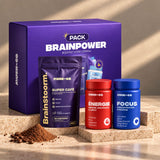
| Contents | Focus | Focus + Energy | Focus, Energy + one Brainstoorm |
| Caffeine | None | None | 20 mg per cup of Brainstoorm |
| Who it is for | A targeted course for focus | The head and the body, through busy weeks | The complete routine, coffee included |
The recipes for all our formulas are developed and produced in Toulouse, France, by a French contract manufacturer, and they are vegan, GMO-free and gluten-free, with a 60-day money-back guarantee and the choice between a one-off purchase and a monthly subscription (−30 %). See the BrainPower Pack.
Choosing it well
Five criteria for an extract supplement.
- The exact name : “maritime pine bark extract”, with the Latin name Pinus pinaster. “Pine extract” on its own does not say which species nor which part of the tree.
- The standardisation : a stated percentage of proanthocyanidins or procyanidins. Without it, there is no way to compare two products.
- The dose : a quantity of extract in milligrams per serving, to be set against the 100 to 150 mg used in the studies on cognition.
- The manufacturing : an identified place of manufacture. With us, the recipes are developed and produced in Toulouse, France, by a French contract manufacturer, vegan, GMO-free and gluten-free.
- The guarantee : enough to try it risk-free. With us, 60 days satisfied or your money back, and the choice between a one-off purchase and a monthly subscription (−30%).
Side effects and precautions
What to know before a course.
At the doses studied, maritime pine bark extract is generally well tolerated. The side effects reported in the trials are rare and mild: digestive discomfort, headaches, sometimes dizziness. Taking it with a meal limits digestive upsets.
A few situations call for medical advice before starting.
- During pregnancy and breastfeeding, the data are insufficient: ask your doctor for advice.
- If you take an anticoagulant or an antiplatelet, or before surgery, talk to your doctor.
- If you are on treatment for diabetes, on immunosuppressive treatment or if you have an autoimmune disease, ask for advice.
- Never swallow pine essential oil without a professional's advice, and never apply it neat to the skin.
- Respect the dose stated on your supplement's label, and keep it out of reach of children.
Your questions
Everything you ask us about maritime pine.
What are the benefits of maritime pine bark?
Its extract, rich in proanthocyanidins, has been studied on the function of blood vessels, on heavy legs and on working memory. The results are encouraging, but most of the trials are small and the 2020 Cochrane review judges the evidence still to be of low quality.
What are OPCs?
Procyanidolic oligomers, or proanthocyanidins, are polyphenols made of short chains of catechin and epicatechin. They were isolated in Bordeaux by Jacques Masquelier, and maritime pine bark is one of the most concentrated sources of them.
What dose of maritime pine extract per day?
The studies on cognition used 100 to 150 mg of standardised extract a day, and some circulation studies a little more. For a supplement, always follow the dose stated on the label.
When should you take maritime pine extract?
In the morning, with breakfast, with a glass of water. Taken with a meal, it sits better with the stomach. What matters is regularity.
How long before you feel a difference?
The trials lasted from 2 weeks to 3 months. Allow at least a 30-day course before you judge. All our formulas come with a 60-day money-back guarantee.
Does maritime pine extract have side effects?
They are rare and mild at the doses studied: digestive discomfort, headaches or dizziness. Medical advice is recommended during pregnancy, breastfeeding, or alongside anticoagulant, antidiabetic or immunosuppressive treatment.
What is the difference between maritime pine and Pycnogenol?
Maritime pine is the tree, Pinus pinaster. Pycnogenol® is the registered brand of a standardised extract of its bark, the most studied one. Other maritime pine bark extracts exist, with their own standardisation.
Maritime pine or grape seed: which should you choose?
Both are major sources of OPCs, discovered by the same researcher. Maritime pine bark extract is the one with the most clinical trials on circulation and cognition, and it is the one we chose for Focus.
What is the difference between maritime pine and Scots pine?
The maritime pine has very long needles, 15 to 25 cm, and very thick red-brown bark. The Scots pine has short needles and orange bark that flakes at the top of the trunk. They are two different species.
Is garden maritime pine bark the same thing?
It is the same tree, but not the same product. Mulching bark is raw, simply graded. The extract in supplements is purified, concentrated and standardised in proanthocyanidins. Never eat garden bark.
Why is the maritime pine associated with the Landes?
Because the forest of the Landes de Gascogne, planted in large part after the law of 1857, is mainly made up of maritime pines. It is also in Bordeaux that the OPCs in its bark were studied for the first time.
Is maritime pine in Mush n Go products?
Yes, maritime pine bark is part of Focus, with Lion's Mane, Saffron, Bacopa monnieri and Ginkgo biloba, as a 30-day course. You also find it in the Entrepreneur Pack.
Where can you buy a maritime pine supplement?
Directly on mushngo.com, with free delivery from €59 in France and €69 to €89 across Europe, depending on the destination, a one-off purchase or a monthly subscription (−30%) as you prefer, and 60 days satisfied or your money back. The recipes are developed and produced in Toulouse, France, by a French contract manufacturer.
Sources
- Nishioka K. et al. (2007). Pycnogenol, French maritime pine bark extract, augments endothelium-dependent vasodilation in humans. Hypertension Research, 30(9).
- Ryan J. et al. (2008). An examination of the effects of the antioxidant Pycnogenol on cognitive performance, serum lipid profile, endocrinological and oxidative stress biomarkers in an elderly population. Journal of Psychopharmacology, 22(5).
- Belcaro G. et al. (2011). Pycnogenol supplementation improves cognitive function, attention and mental performance in students. Panminerva Medica, 53(3 Suppl 1).
- Robertson N. U., Schoonees A., Brand A., Visser J. (2020). Pine bark (Pinus spp.) extract for treating chronic disorders. Cochrane Database of Systematic Reviews, 9.
Put it into practice
Maritime pine, the Mush n Go version.
You now know all about maritime pine and what to look for on a label. Here is where to find it with us, with vegan formulas whose recipes are developed and produced in Toulouse, France, by a French contract manufacturer, backed by a 60-day money-back guarantee.
Focus
Our focus formula: Lion's Mane, Saffron, Bacopa monnieri, Ginkgo biloba and Maritime pine. The 30-day course for stretches of intense work.
Discover Focus →Entrepreneur Pack
Focus for concentration, Energy for vitality, caffeine-free. The duo for busy weeks, in a single bundle.
Discover the bundle →The other ingredients
Keep exploring.
Maritime pine is only one of the ingredients in our formulas. Discover the others, or browse the page for all our active ingredients.


Focus
Improve your focus, productivity and memory.

Entrepreneur Pack
Take Back Control of Your Time

Limitless Pack
Maximizes concentration, energy, reduces stress and improves sleep for optimal performance.

Discovery Pack
Become the best version of yourself to achieve all your goals with efficiency and serenity

BrainPower Pack
A sharp mind, steady energy, Naturally