













Lion's Mane
Hericium erinaceus
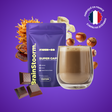
The lion's mane mushroom, the mushroom of concentration routines. Hericenones and erinacines, 1,000 mg per cup of Brainstoorm.
Found in: Brainstoorm, Focus
Read the full guide →
5 mushrooms · 16 plants · 2 nutrients
All our formulas are built on 23 active ingredients: 5 functional mushrooms (Lion's Mane, Cordyceps, Reishi, Chaga, Oyster mushroom), 16 adaptogenic and botanical plants (Ashwagandha, Rhodiola, Maca, Ginkgo, Bacopa, Saffron, Rosemary, Turmeric, Boswellia, Ginger, Siberian ginseng, Valerian, Holy basil, Schisandra, Maritime pine, Chicory) and 2 nutrients (Melatonin, Magnesium bisglycinate). For each one we have written a complete guide: history, molecules, studies, dosage, precautions and good combinations. Click on an ingredient to learn everything.
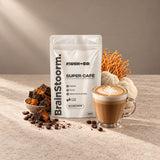
Our most highly dosed mushroom coffee: Lion's Mane, Cordyceps, Chaga, Maca and Ashwagandha in every cup.
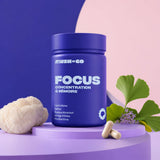
Discover Brainstoorm →Lion's Mane, Ginkgo, Bacopa, Saffron and Maritime pine: the 30-day course for periods of intense work.
Discover Focus →Cordyceps, Maca, Ginger and vitamin C, which contributes to the reduction of tiredness and fatigue. Caffeine-free. To go further, discover our 7 natural alternatives to coffee.
Discover Energy →The heart of our formulas
So-called “functional” mushrooms have been eaten for centuries in Asia, and for a few years now in Europe. It is their polysaccharides (beta-glucans), their triterpenes and molecules specific to each species that make them unique. We use fruiting body extracts, the visible part of the mushroom.
Hericium erinaceus
The lion's mane mushroom, the mushroom of concentration routines. Hericenones and erinacines, 1,000 mg per cup of Brainstoorm.
Found in: Brainstoorm, Focus
Read the full guide →
Cordyceps militaris
The mushroom of athletes and busy mornings, rich in cordycepin. Militaris or sinensis: we explain everything.
Found in: Brainstoorm, Energy, Recovery
Read the full guide →
Ganoderma lucidum
Ling zhi, the “mushroom of immortality”, star of evening routines thanks to its triterpenes.
Found in: Sleep+, Anti-Stress Complex, Immunity
Read the full guide →
Inonotus obliquus
The black birch mushroom, harvested in northern forests, rich in polyphenols and melanin.
Found in: Brainstoorm, Immunity, Recovery
Read the full guide →
Pleurotus ostreatus
The oyster-shaped mushroom of our kitchens, rich in beta-glucans, including the famous pleuran.
Found in: Immunity
Read the full guide →The power of plants
Alongside the mushrooms we combine plants chosen for their complementary profiles: roots from the Andes and the Himalayas, leaves, spices and resins. Each one is used as an extract, with a dose clearly shown on the label.

Withania somnifera
The queen of Ayurveda for days under pressure. KSM-66 extract, standardised in withanolides.
Found in: Brainstoorm, Anti-Stress Complex
Read the full guide →
Rhodiola rosea
The golden root of the Nordic countries, rich in rosavins and salidroside.
Found in: Brainstoorm Chocolate hazelnut
Read the full guide →
Lepidium meyenii
The root of the Peruvian Andes, grown at more than 4,000 metres. 3,000 mg per cup of Brainstoorm.
Found in: Brainstoorm, Energy
Read the full guide →
Ginkgo biloba
The maidenhair tree, one of the most studied plants in the world, with its standardised extract.
Found in: Focus
Read the full guide →
Salvia rosmarinus
The Mediterranean herb of memory, rich in rosmarinic acid and carnosic acid.
Found in: no current formula
Read the full guide →
Curcuma longa
The golden spice of India and its curcuminoids, for athletes' routines.
Found in: Recovery
Read the full guide →
Boswellia serrata
Indian frankincense, a resin rich in boswellic acids, paired with turmeric in our formulas.
Found in: Recovery
Read the full guide →
Crocus sativus
The most expensive spice in the world, rich in crocins and safranal. A key ingredient in our Focus formula.
Found in: Focus
Read the full guide →
Bacopa monnieri
The brahmi of Ayurveda, rich in bacosides, studied for twenty years in connection with memory. Paired with ginkgo in Focus.
Found in: Focus
Read the full guide →
Zingiber officinale
The spicy rhizome of our kitchens, rich in gingerols and shogaols. With cordyceps and maca in Energy.
Found in: Energy
Read the full guide →
Valeriana officinalis
The root of calm evenings, used in Europe since Antiquity. One of the pillars of Sleep+.
Found in: Sleep+
Read the full guide →
Ocimum tenuiflorum
Tulsi, the sacred plant of India and an adaptogen of Ayurveda. Paired with ashwagandha in Anti-Stress.
Found in: Anti-Stress Complex
Read the full guide →
Schisandra chinensis
The “five-flavour berries” of Chinese tradition, rich in lignans. In Anti-Stress.
Found in: Anti-Stress Complex
Read the full guide →
Pinus pinaster
The bark of the maritime pine, rich in proanthocyanidins (OPCs). An active in Focus.
Found in: Focus
Read the full guide →
Cichorium intybus
The roasted root of northern Europe, rich in inulin, which gives Brainstoorm its roundness.
Found in: Brainstoorm
Read the full guide →
Eleutherococcus senticosus
Eleuthero, the historic adaptogen of Soviet cosmonauts and athletes.
Read the full guide →For the nights
Neither mushrooms nor plants: a hormone your body makes every evening and an essential mineral, in its best-tolerated form. Both sit at the heart of Sleep+.

Sleep hormone
The hormone of falling asleep, produced in the evening by the body. One of the actives in Sleep+.
Found in: Sleep+
Read the full guide →
Magnesium glycinate
The best-tolerated form of magnesium, bound to glycine. In Sleep+.
Found in: Sleep+
Read the full guide →The word of the moment
The term “adaptogen” was proposed in 1947 by the Soviet pharmacologist Nikolai Lazarev, then developed by Israel Brekhman, who studied eleuthero (Siberian ginseng) and rhodiola in athletes, factory workers and cosmonauts. The idea: plants able to help the body face demanding situations, in a non-specific way, without disturbing its normal functioning.
Today the name covers a small group of plants and mushrooms with a long traditional use: ashwagandha, rhodiola, Siberian ginseng, maca, reishi, cordyceps… What they have in common is being taken as a routine, over several weeks, rather than on demand.
Research is mainly interested in their link with the stress axis (the hypothalamic-pituitary-adrenal axis, the cortisol one). Results vary from one ingredient to another, hence the value of knowing each in detail: that is exactly what our 23 guides are for.
Two families
Neither plants nor animals, they form a kingdom of their own. Their value lies in their beta-glucans (fibres from the cell wall) and in molecules specific to each species: hericenones in Lion's Mane, cordycepin in Cordyceps, triterpenes in Reishi. Their chitin wall is not digestible: that is why extracts are used.
Roots (ashwagandha, maca, rhodiola, eleuthero), leaves (ginkgo, rosemary), rhizome (turmeric) or resin (boswellia): each plant has its marker compounds, such as withanolides or rosavins. Extracts are often standardised on these markers, which guarantees a constant content from one batch to the next.
The two families complement each other: that is why our formulas combine them, rather than betting on a single ingredient.
How to use them
The simplest way to find your way around: start from your day. Here is how our customers organise their routines.
| Moment | Key ingredients | At Mush n Go |
|---|---|---|
| In the morning, with coffee | Lion's Mane, Cordyceps, Chaga, Maca | Brainstoorm |
| Days of concentration | Lion's Mane, Ginkgo, Bacopa, Saffron | Focus |
| Flat spells | Cordyceps, Maca, Ginger, Siberian ginseng | Energy |
| Periods under pressure | Ashwagandha, Reishi, Rhodiola | Anti-Stress Complex |
| Evening | Reishi | Sleep+ |
| Change of season | Chaga, Reishi, Oyster mushroom | Immunity |
| After sport | Turmeric, Boswellia, Cordyceps | Muscle Recovery |
Team effect
A single ingredient, however heavily dosed, only covers part of what a day asks of you. Our formulas bring together actives with complementary profiles: the mushrooms contribute their beta-glucans and their signature molecules, the plants target other ground, such as stress management, energy or recovery.
It is also a practical matter: taking five separate supplements every morning is something few people keep up over time. One cup of Brainstoorm brings together Lion's Mane, Cordyceps, Chaga, Maca and Ashwagandha, that is 6,040 mg of actives, in a gesture you already make every day.
The concentration duo in Focus, with Bacopa and Saffron.
The energy duo, present in Brainstoorm and in Energy.
The duo for days under pressure, at the heart of Anti-Stress.
The athletes' duo, in Muscle Recovery.
Reading a label
Two supplements can list the same ingredient and have nothing in common. Three points make the difference:
Each of our guides sets out the usual dose of the ingredient and what our formulas deliver, so that you can compare with full knowledge of the facts.
Our commitments
Worth knowing
Each ingredient guide sets out its own precautions. To go further, read our complete guide to adaptogenic mushrooms and plants.
Put it into practice
Capsules or coffee, morning or evening: choose the formula that matches your day.
Ashwagandha KSM-66, Reishi, Holy basil and vitamin B6, which contributes to the reduction of tiredness and fatigue.
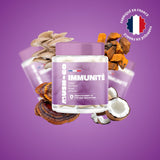
Discover Anti-Stress Complex →Chaga, Reishi and Oyster mushroom brought together in a 30-day capsule course.
Discover Immunity →Cordyceps, Chaga, Turmeric and Boswellia: the course designed for back-to-back training sessions.
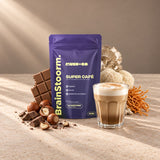
Discover Recovery →Coffee or chocolate hazelnut flavour, only 20 mg of caffeine per cup. With or without a subscription. To go further, discover our mushroom drink recipes.
Discover Brainstoorm →Your questions
It is a mushroom traditionally used to help the body face demanding situations: Reishi, Cordyceps, Chaga or Lion's Mane, for example. They are taken as fruiting body extracts, in capsules or in a drink such as mushroom coffee.
The five most widely consumed in Europe are Lion's Mane, Cordyceps, Reishi, Chaga and, more recently, the Oyster mushroom. They are the five mushrooms in our formulas, and each one has its full guide on our site.
Mushrooms form a kingdom of their own: their value comes from their beta-glucans and from molecules specific to each species. Adaptogenic plants (ashwagandha, rhodiola, maca, eleuthero) bring other compounds, such as withanolides or rosavins. The two families complement each other.
Yes, that is in fact the principle behind our formulas, which combine several actives with complementary profiles. Simply avoid stacking several supplements containing the same ingredient, and follow the directions for use of each product.
They are taken as a routine: allow a 30-day course at the very least, and 4 to 8 weeks to judge. All our formulas come with a 60-day money-back guarantee.
At Mush n Go you will find them in capsules (Focus, Energy, Sleep+, Anti-Stress, Immunity, Muscle Recovery) or in your cup with Brainstoorm, the mushroom coffee, whose recipes are developed and produced in Toulouse, France, by a French contract manufacturer.
They are generally well tolerated at the recommended doses. Some situations call for medical advice: pregnancy, breastfeeding, anticoagulant or antidepressant treatment. The precautions specific to each ingredient are set out in its guide.
Keep exploring


