








The energy root
Ginger: benefits, doses and precautions for the root that wakes you up
By the Mush n Go team · Updated on 18 September 2026
The ginger (Zingiber officinale) has been adding heat, warmth and fragrance to kitchens around the world for millennia. Juice, shot, lemon infusion, powder or extract: it is one of the most searched-for roots online, and one of the best studied. Here we sort out sensations, studies and precautions. At Mush n Go, ginger is part of our caffeine-free formula Energy.

Energy
Our vitality formula: Cordyceps, Maca, Ginger and vitamin C. Caffeine-free, for a 30-day course during the periods when tiredness settles in.
Discover Energy →
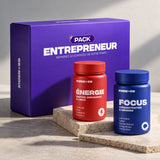
Entrepreneur Pack
Energy and Focus together: ginger and cordyceps on one side, Lion's Mane and saffron on the other. For the weeks that demand everything.
Discover the pack →The fact file
Ginger in brief.
What we call “ginger root” is not a root. It is a rhizome, an underground stem that stores the plant's reserves. Here is the essential before going further.
The spice of the trade routes
Three thousand years of travel, from India to Rome.
Its name is thought to come from the Sanskrit shringavera, “horn-shaped”, because of the outline of its rhizomes.
Antiquity in Asia
Ginger is grown in India and China, where it features both in cooking and in the traditional medicines, ayurvedic and Chinese alike.
Rome
It reaches the Mediterranean by the spice routes. Greek and Roman physicians already describe it, and it sells dear in the markets of the Empire.
Middle Ages
It is one of the commonest spices in Europe, after pepper. It goes into sauces, spiced wines and the first gingerbreads.
The Spanish acclimatise it in the West Indies. Jamaican ginger becomes a benchmark, and the root settles for good in the kitchens of the Americas.
Today
Ginger is among the most searched-for roots online, and its benefits are one of the most typed queries about it. A cooking spice that has become a morning ritual.
What it contains
Fresh, dried or cooked: not the same spice.
Ginger's heat does not come from a single molecule, and it changes in nature depending on what you put the root through.
The gingerols, and above all 6-gingerol, are the major pungent compounds of the fresh rhizome.
The shogaols form from the gingerols when ginger is dried or heated. They are even more pungent, which explains why the powder seems sharper than the fresh root.
Zingerone appears with long cooking. Less aggressive, milder and slightly sweet, it gives gingerbread and slow-cooked dishes their round warmth. To this is added an essential oil rich in zingiberene, with lemony notes.
| Form | What you mainly get | Use |
|---|---|---|
| Fresh root | Gingerols, aromatic essential oil | Juices, shots, infusions, raw cooking |
| Dried powder | Gingerols and shogaols | Baking, spice blends, capsules |
| Long-cooked ginger | Zingerone, softened heat | Curries, stews, gingerbread |
| Standardised extract | Gingerols measured as a percentage | Food supplements |
The gingerols are related to the capsaicin in chilli and the piperine in pepper. All of them activate the same heat receptors in the mouth, hence that sensation of fire without any real burn.
The benefits of ginger
What tradition credits it with, and what we actually know.
The honest answer comes in two parts: an immense tradition, and human research that is more solid than for most spices.
On the tradition side, ginger has been used for centuries for digestion, to warm you in winter and against travel sickness. The European monographs on medicinal plants recognise the use of the powdered rhizome to prevent the nausea and vomiting of travel sickness, with an intake of 1 to 2 g about an hour before the journey in adults.
On the research side, three subjects have really moved forward in humans. Nausea, in particular pregnancy nausea, which has been the subject of several controlled trials. Digestive comfort, with studies on stomach emptying. And certain pains, such as period pain or muscle soreness after exercise. We set out the studies just below.
What to take away: ginger is not a miracle potion, but it is a plant whose effects are documented, at precise doses, on precise subjects. It is in that spirit that, alongside cordyceps and maca, it goes into Energy.
What the studies say
Nausea, digestion, pain: four studies worth knowing.
Ginger has been tested in hundreds of pieces of work. Here are four solid references, with their exact conditions.
Viljoen et al., 2014 · South Africa
A systematic review and meta-analysis of 12 controlled trials, that is 1 278 pregnant women. Ginger reduced nausea compared with placebo, with no significant effect on the number of vomiting episodes, and no increased risk observed for the pregnancy.
Wu et al., 2008 · Taiwan
24 healthy volunteers, 1.2 g of ginger in capsules before a test meal. The stomach emptied faster than with placebo, which sheds light on its traditional use after heavy meals.
Ozgoli et al., 2009 · Iran
150 female students suffering from period pain, 250 mg of ginger four times a day during the first three days of the cycle. The pain fell as much as with mefenamic acid or ibuprofen.
Black et al., 2010 · United States
74 adults, 2 g of raw or heated ginger a day for 11 days, before and after intense muscular exercise. Next-day soreness was reduced by about a quarter compared with placebo.
In short: real but modest effects, obtained with 1 to 2 g a day, taken regularly. No spectacular effect in a single gulp. The full references are in the at the bottom of the page.
An immediate effect?
What you feel straight away, and the rest.
“Ginger immediate effect”: the search is frequent, and it deserves a two-part answer. There is what you feel in the minutes that follow, and what takes several days.
Straight away, ginger makes itself felt. The heat of the gingerols warms the mouth and the throat, a sensation of warmth spreads, you feel awake. It is that sensory jolt that made the morning shot a success. It comes above all from the sensation, not from a measurable rise in energy.
Within one to two hours, some digestive effects can appear: that is the interval used for travel sickness.
Over several days come the effects observed on muscle soreness or period pain, with a daily intake.
The lesson is simple: ginger acts fast on the senses, more slowly on the rest. Hence our 30-day courses rather than a one-off intake.
Aphrodisiac and received ideas
What ginger does not do.
A plant this popular inevitably drags a few legends behind it. Here are the three most frequent.
Ginger as an aphrodisiac
It is a very old reputation, doubtless linked to its warmth in the mouth. No serious human study shows an effect on libido. The pleasure of a spicy dish, yes. A love potion, no.
Ginger as a fat burner
A few studies have explored its effect on weight, with weak and variable results. A shot replaces neither your diet nor physical activity.
Ginger as a stimulant
It contains no caffeine. The feeling of waking up comes from its heat. That is precisely why it has its place in a caffeine-free formula such as Energy.
Juice, shot and infusion
Ginger as a drink.
Ginger juice, ginger water, shot, ginger and lemon infusion, ginger tea: each drink has its own preparation and its own intensity.
The ginger and lemon infusion
Three or four thin slices of fresh ginger in 250 ml of simmering water, 10 minutes with the lid on, then a squeeze of lemon and a spoonful of honey once the cup has cooled a little.
The morning shot
A 3 to 5 cm piece blended with the juice of a lemon and a little water, then strained. About 30 ml, to be drunk in one go, not on an empty stomach if your stomach is sensitive.
Ginger water
A few slices left overnight in the fridge in a jug of water. Much milder, it is drunk through the day.
| Drink | Intensity | The right moment |
|---|---|---|
| Ginger shot | Very strong | In the morning, after a little something to eat |
| Home-made ginger juice | Strong | Lengthened with sparkling water or apple juice |
| Ginger and lemon infusion | Medium | After meals, or in winter to warm up |
| Ginger tea | Medium | In the morning and early afternoon, because of the theine |
| Ginger water | Mild | All day long |
And drinking ginger in the evening? It contains no caffeine: a ginger and lemon tea in the evening will not keep you awake. The only precaution: if you are prone to acid reflux, avoid it just before going to bed. Finally, beware of industrial ginger syrups and drinks, which are often very sweet.
Fresh, powder or extract
Which form to choose, and what for.
Fresh ginger, powdered ginger or capsules: the same rhizomes, not the same use.
| Fresh ginger | Powdered ginger | Extract in capsules | |
|---|---|---|---|
| Taste | Lively, lemony, juicy | Warmer and sharper | None |
| Dose | Approximate, depending on the size of the piece | Measurable by the spoonful | Precise, in milligrams per serving |
| Storage | Two to three weeks in a cool place | Several months, away from light | As per the date stated |
| Ideal for | Juices, shots, infusions, cooking | Baking, spice blends, travel | A regular course, without thinking about it |
To swap one for the other in cooking, count about one teaspoon of powdered ginger for one tablespoon of freshly grated ginger. The powder is more concentrated in taste, and more pungent.
To keep fresh ginger, store it whole and unpeeled in the vegetable drawer. It also freezes very well: grate it straight from frozen, without even thawing it.
And growing your own ginger? It is possible in a pot, from a piece of organic rhizome with buds, kept warm and in the light. Allow several months before harvest, and a plant that does not tolerate cold.
In the kitchen
Ginger on the plate.
Raw, it brings liveliness; cooked, a round warmth. Here are its great classics.
Curries and stir-fries
With garlic and onion, it forms the aromatic base of many Asian cuisines. Fry it first, in a little oil.
Candied ginger
Slices cooked in syrup, then dried and sugared. Delicious with dark chocolate, but to be nibbled in moderation.
Gingerbread and biscuits
Powdered ginger is one of the major spices in spiced breads and in English-speaking gingerbread.
Pickled ginger
Japanese gari, in thin pink slices, accompanies sushi to refresh the mouth between two mouthfuls.
One tip: peel fresh ginger with the edge of a teaspoon, more precise than a knife, and grate it finely to release all its juice. Ginger jam and lemon-ginger honey? For pleasure, given the sugar.
Choosing it well
Five criteria for a ginger supplement.
- Fresh : a heavy, firm root with thin, taut skin. Go for organic if you plan to use it with the skin on.
- Powdered : a light beige colour and a clear smell when you open it. A powder with no fragrance has aged.
- For a supplement : an identified extract, with a dose in milligrams per serving, and ideally a gingerol content.
- The manufacturing : an identified place of manufacture. With us, the recipes are developed and produced in Toulouse, France, by a French contract manufacturer, vegan, GMO-free and gluten-free.
- The guarantee : enough to try it risk-free. With us, 60 days satisfied or your money back, and the choice between a one-off purchase and a monthly subscription (−30%).
The right combinations
Ginger plays as a team.
In a vitality routine, ginger is never alone. Here are the ingredients that go with it, or that resemble it.
+ Cordyceps
The endurance mushroom, at the heart of Energy and Brainstoorm, at 1 000 mg per cup. Cordyceps: benefits, dosage and precautions.
+ Maca
The root of the high Andean plateaus, present in Energy and at 3 000 mg in every cup of Brainstoorm. Maca: benefits, dosage and precautions.
+ Turmeric
Its cousin from the Zingiberaceae family, studied in connection with curcumin, in Muscle Recovery. the benefits and dosage of turmeric.
+ Siberian ginseng
A traditional adaptogenic plant from the forests of Russia and China, for demanding periods. the benefits and dosage of Siberian ginseng.
Who it is for
A vitality routine is made for you if…
- You are going through a period of tiredness, of getting back into things or of a change of season.
- You want to cut the caffeine without losing your morning momentum.
- You play sport and are looking for a simple routine, to be taken over time.
- You like ginger, but prefer a stated dose to an approximate shot.
| Energy on its own | Entrepreneur Pack | Limitless Pack | |
|---|---|---|---|
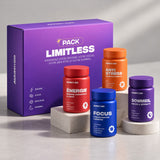
| Contents | Energy | Energy + Focus | Focus, Energy, Sleep+ and Anti-Stress Complex |
| Caffeine | None | None | None |
| Who it is for | A targeted vitality course | Mind and body, through busy weeks | The complete routine, from morning to bedtime |
For all our formulas, the recipes are developed and produced in Toulouse, France, by a French contract manufacturer, vegan, GMO-free and gluten-free, with 60 days satisfied or your money back and the choice between a one-off purchase and a monthly subscription (−30 %). See the Entrepreneur Pack or the Limitless Pack.
Contraindications
Ginger: side effects and precautions.
In cooking and at a moderate dose, ginger is well tolerated by the great majority of adults. The most frequent side effects are digestive: heartburn, acid reflux or discomfort, above all on an empty stomach or at a high dose.
Shots and concentrated extracts call for a little more attention than the everyday spice.
- During pregnancy, ginger is often used against nausea, but always ask your doctor or your midwife for advice before taking it as a supplement. The same goes for breastfeeding.
- In case of gallstones, ask for medical advice before taking it in quantity, as ginger can stimulate bile secretion.
- Ask for advice if you are on anticoagulant or antiplatelet treatment, on treatment for diabetes or blood pressure, or before surgery.
- In case of reflux or ulcer, avoid shots on an empty stomach and prefer the gentler forms, during or after a meal.
- Follow the dose stated on the label of your supplement, and keep it out of reach of children.
Your questions
Everything we are asked about ginger.
What are the benefits of ginger?
Ginger is traditionally used for digestion and against travel sickness. In humans, the most solid studies concern nausea, notably in pregnancy, stomach emptying and certain pains, such as period pain or muscle soreness, with 1 to 2 g a day.
Does ginger have an immediate effect?
On the senses, yes: its heat warms the mouth and wakes you up in a few seconds. The digestive effects come rather within one to two hours, and the effects observed on pain require a daily intake over several days.
Is ginger an aphrodisiac?
It is an old reputation, but no solid human study shows an effect on desire or libido. Its warmth in the mouth doubtless explains the legend.
How much ginger a day?
Most studies use between 1 and 2 g of dried ginger a day, often split into several intakes. For a supplement, simply follow the dose stated on the label.
What are the contraindications of ginger?
Medical advice is recommended during pregnancy and breastfeeding, in case of gallstones, of anticoagulant, antidiabetic or blood-pressure treatment, and before an operation. In case of reflux, avoid it on an empty stomach.
Can ginger have side effects?
Yes, above all at a high dose or on an empty stomach: heartburn, acid reflux, digestive discomfort. They generally disappear by reducing the dose or taking it with a meal.
Can you drink ginger in the evening?
Yes. Ginger contains no caffeine and should not disturb your sleep. Just avoid a very concentrated infusion right before going to bed if you have acid reflux.
Ginger and lemon: what is the point?
It is above all a pairing of taste, fresh and tangy, which makes ginger easier to drink. Lemon brings a little vitamin C. In an infusion, add it once the water has cooled a little.
How do you make a ginger shot?
Blend a 3 to 5 cm piece of fresh ginger with the juice of a lemon and a little water, strain, and drink about 30 ml. It keeps two to three days in the fridge, in a closed bottle.
How do you keep fresh ginger?
Whole and unpeeled, in the vegetable drawer of the fridge, for two to three weeks. To keep it longer, freeze it and grate it straight from frozen.
Is ginger in the Mush n Go products?
Yes, in Energy, our caffeine-free vitality formula, alongside Cordyceps, Maca and vitamin C, as a 30-day course. It is also found in the Entrepreneur Pack and the Limitless Pack.
Where can I buy our vitality formulas?
Directly on mushngo.com, with free delivery from €59 in France and €69 to €89 across Europe, depending on the destination, a one-off purchase or a monthly subscription (−30%) as you prefer, and 60 days satisfied or your money back. The recipes are developed and produced in Toulouse, France, by a French contract manufacturer.
Sources
- Viljoen E., Visser J., Koen N., Musekiwa A. (2014). A systematic review and meta-analysis of the effect and safety of ginger in the treatment of pregnancy-associated nausea and vomiting. Nutrition Journal, 13:20.
- Wu K.L. et al. (2008). Effects of ginger on gastric emptying and motility in healthy humans. European Journal of Gastroenterology & Hepatology, 20(5).
- Ozgoli G., Goli M., Moattar F. (2009). Comparison of effects of ginger, mefenamic acid, and ibuprofen on pain in women with primary dysmenorrhea. Journal of Alternative and Complementary Medicine, 15(2).
- Black C.D., Herring M.P., Hurley D.J., O'Connor P.J. (2010). Ginger (Zingiber officinale) reduces muscle pain caused by eccentric exercise. The Journal of Pain, 11(9).
Put it into practice
Ginger, the Mush n Go version.
You now know all about ginger and what to look for on a label. Here is where to find it with us, with vegan formulas whose recipes are developed and produced in Toulouse, France, by a French contract manufacturer, and guaranteed 60 days satisfied or your money back.
Energy
Our vitality formula: Cordyceps, Maca, Ginger and vitamin C. Caffeine-free, for a 30-day course during the periods when tiredness settles in.
Discover Energy →Entrepreneur Pack
Energy and Focus together: ginger and cordyceps on one side, Lion's Mane and saffron on the other. For the weeks that demand everything.
Discover the pack →The other ingredients
Keep exploring.
Ginger is only one of the plants in our formulas. Discover the other ingredients, or browse the page listing all our active ingredients.


Entrepreneur Pack
Take Back Control of Your Time

Energy
Boost your natural energy for increased performance throughout the day.

Limitless Pack
Maximizes concentration, energy, reduces stress and improves sleep for optimal performance.

Discovery Pack
Become the best version of yourself to achieve all your goals with efficiency and serenity

BrainPower Pack
A sharp mind, steady energy, Naturally