





Plant and spice
Turmeric: the golden spice, from Indian cooking to your recovery
By the Mush n Go team · Updated on 18 September 2026
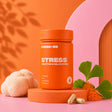
The turmeric (Curcuma longa), also known as Indian saffron, is an orange root from the ginger family. It has been colouring curries for millennia, and it is today one of the most studied plants in the world, thanks to curcumin. On this page: its studied benefits, how to absorb it better, the difference between fresh turmeric, powder and extract, and the real contraindications. At Mush n Go, you will find it in Muscle Recovery, with Boswellia, Cordyceps and Chaga.
Boswellia
The resin of Indian frankincense, which Ayurveda has paired with turmeric for centuries. A duo we have brought together in a single capsule.
Discover Boswellia →
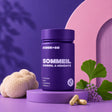
Muscle Recovery
Turmeric, Boswellia, Cordyceps and Chaga in a single formula. 1 to 3 capsules a day, in the morning, with or without a subscription.
Discover the formula →The fact file
Turmeric in brief.
Before going into detail, here is the essential about this plant, known above all as a powder, but of which we actually eat the root.
A long history
From Ayurveda to our kitchen cupboards.
Turmeric is nothing like a recent fashion. It is among the oldest spices used in Asia, in cooking as in caring traditions.
Ancient India
It holds a central place in Ayurveda, traditional Indian medicine, and in cooking. It is also used to dye fabrics and during wedding ceremonies.
The spice routes
It reaches South-East Asia, the Middle East and then Europe, where it is nicknamed “Indian saffron” because it colours like saffron, for far less money.
20th century
Curcumin, isolated in the 19th century, becomes a major research subject. Thousands of publications are devoted to it.
Today
Turmeric is one of the most searched-for spices online, and “turmeric benefits” is among the most typed queries about it. It is also found as a food colouring, under the code E100.
The molecules
Curcumin: what makes it unique.
If turmeric interests researchers so much, it is because of a family of yellow pigments, the curcuminoids. The best known is curcumin, accompanied by two cousins, demethoxycurcumin and bisdemethoxycurcumin.
Their content is modest, however: in the turmeric powder sold in the spice aisle, curcuminoids account for only a few per cent of the weight, often around 3 %. That is why most studies use concentrated extracts, standardised at 95 % curcuminoids.
Turmeric also contains essential oils, including the turmerones, responsible for its scent. They are the subject of separate research, and that is one of the reasons why some people prefer a whole-root extract.
What to take away in practice: a spoonful of turmeric in a dish brings little curcumin. That is no bad thing, it is a spice. But it is not the same as an extract.
What the studies say
One of the most studied plants in the world.
Curcumin has been the subject of many trials in humans, in particular on joint comfort and on recovery after exercise. They vary in size and in quality. Here are three frequently cited pieces of work, with their exact conditions.
Shoba et al., 1998 · India
In healthy volunteers, 2 g of curcumin on its own gave very low blood levels. With 20 mg of piperine, the extract of black pepper, the bioavailability of curcumin was multiplied by about twenty.
Nicol et al., 2015 · crossover trial
17 men, 2.5 g of curcumin twice a day around intense muscular exercise, against placebo and in crossover. The muscle soreness felt was less marked with curcumin, with an effect judged moderate.
Daily et al., 2016 · meta-analysis
8 randomised trials in people with joint pain, most often with around 1 000 mg of curcumin a day for 8 to 12 weeks. The authors conclude that the results are encouraging, while calling for larger studies.
In short: interesting results, obtained with concentrated extracts and precise doses, and a real absorption question to settle. This work explains why turmeric has its place in a formula designed for after exercise. The full references are in the at the bottom of the page.
Absorbing it better
The real challenge: bioavailability.
Curcumin has a well-known flaw: it passes poorly into the blood. It dissolves badly in water, is little absorbed by the intestine, then rapidly transformed by the liver. As a result, much of what you swallow is never used. Three levers help to fix this.
Black pepper
Its piperine slows the transformation of curcumin by the liver. A pinch is enough in cooking.
A little fat
Curcumin is fat-soluble. A drizzle of oil, coconut milk or a full meal help you absorb it.
The formulation
Modern extracts use micelles, phospholipids or fibres to improve absorption.
One word of caution: piperine does not only increase the absorption of curcumin. It also changes that of certain medicines. If you are on any treatment, that is a point to mention to your doctor before taking a turmeric supplement combined with pepper.
Fresh, powder or extract
Three forms, three uses.
Turmeric comes in three main forms. They are not used in the same way, and they do not bring the same amount of curcumin.
| Fresh turmeric | Powder (spice) | Extract (supplement) | |
|---|---|---|---|
| What it is | The whole root, to be peeled and grated | The root dried and then ground | Concentrated curcuminoids |
| Curcuminoids | Low, diluted by the water in the root | A few per cent | Up to 95 % |
| Use | Juices, smoothies, curries, herbal teas | Everyday cooking | Daily intake, known dose |
| Storage | Two to three weeks in the fridge | Several months, away from light | As stated on the label |
Fresh turmeric is recognisable by its thin brown skin and its bright orange flesh. Choose firm roots, with no soft patches. It freezes very well, whole or grated.
The dose
What dose of turmeric per day?
There is no official dose for supplements, but there is a safety benchmark. The European Food Safety Authority (EFSA) has set an acceptable daily intake for curcumin of 3 mg per kilo of body weight, that is about 180 mg a day for a person of 60 kg and 210 mg for 70 kg.
| Form | Daily marker | What that represents |
|---|---|---|
| Powder in cooking | 1 to 2 teaspoons | A classic culinary use, in dishes |
| Fresh turmeric | 1 to 3 cm of root | Grated into a dish, a juice or a hot drink |
| Curcumin (EFSA ADI) | 3 mg per kg | About 180 to 210 mg for an adult |
| Muscle Recovery | 1 to 3 capsules a day | With Boswellia, Cordyceps and Chaga, in the morning, with a large glass of water |
The studies sometimes use much higher doses, over short periods and under supervision. For long-term intake, always follow the directions for use on the label and do not stack several turmeric supplements.
How to take it
One gesture, after every session.
For Muscle Recovery, the logic is simple: hook the intake onto your training. Regularity matters more than the exact time.
After exercise
One capsule with a glass of water, ideally with your snack or your recovery meal.
With a little fat
A handful of nuts, a yoghurt or a full meal: curcumin is absorbed better.
Over time
At least 30 days of regular intake during a training period before forming an opinion.
No need to double the dose on big session days: one capsule is enough, and it is regularity over several weeks that counts. And turmeric in cooking remains welcome: the two do not compete, they complement each other.
A typical week
Turmeric, from the session to dinner.
To give you a concrete idea, here is how our sporty customers most often fit it into their week, without turning anything upside down.
In the morning
A cup of Brainstoorm at breakfast for those who train early: Cordyceps, Chaga and only 20 mg of caffeine.
After the session
One Muscle Recovery capsule with your recovery snack: a piece of fruit, a yoghurt, a handful of almonds.
At dinner
A vegetable curry or a lentil dal, with turmeric, black pepper and a drizzle of oil: the pleasure of the spice, on top.
In the evening
No turmeric: this is the moment for Reishi and Sleep+ for those who also want to look after their night-time recovery.
On rest days, simply keep the same habit at mealtime, so as not to lose it. And if you are starting out, begin with a one-month course during a period of regular training.
In the kitchen
Turmeric, from the pan to the cup.
Turmeric is first and foremost a spice, and it is in cooking that it is best enjoyed. Its golden rule: always with a pinch of black pepper and a fat, which also help bring out its taste.
Curries and dals
Fry it for a few seconds in oil with the onion, garlic and ginger before adding the lentils or the vegetables.
Golden milk
“Golden milk”: a cup of hot milk or plant drink, a teaspoon of turmeric, a pinch of pepper, some cinnamon and a little honey.
Rice and grains
Half a spoonful in the cooking water turns rice yellow and gives it a mild note.
Dressings and soups
Freshly grated turmeric wakes up a dressing, a carrot soup or a vegetable broth.
One small drawback: it stains. Fingers, chopping boards, worktops and clothes. A little lemon juice or bicarbonate of soda helps remove the marks. That is also why turmeric face masks, much searched for online, can leave the skin yellow for a few hours, and why it is better to test on a small area: some skins react to it. As for the “turmeric flower” sold by florists, it is most often an ornamental cousin species, Curcuma alismatifolia, grown for its pink flowers and not for its root.
The right combinations
Turmeric plays as a team.
On its own it already has a lot to offer. Combined with other ingredients, it fits into a more complete routine. Here are the pairings we chose for Muscle Recovery, and why.
+ Boswellia
The classic Ayurvedic pairing, studied together in several trials on joint comfort. Everything you need to know on our Boswellia page.
+ Cordyceps
The athletes' mushroom, traditionally associated with energy and endurance. See our Cordyceps page.
+ Chaga
The black birch mushroom, rich in polyphenols, also present in Brainstoorm. See our Chaga page.
+ Pepper and fat
In cooking as at the moment of the capsule: a meal or a snack improves the absorption of curcumin.
Who it is for
Muscle Recovery is made for you if…
- You train several times a week, in the gym, running or in a team sport.
- You are getting back into sport and want to support the restart.
- You prefer a single capsule to a collection of bottles.
- You are looking for traditional ingredients, with published studies.
- You want to try a one-off purchase first, with 60 days to change your mind.
Turmeric and risk
Is turmeric dangerous for the liver?
In cooking, no: turmeric is eaten every day by hundreds of millions of people. The question arises for food supplements, above all the most concentrated ones.
Cases of liver injury have been reported in Europe in people taking turmeric supplements, notably in Italy in 2019, often with forms combined with piperine or designed to be highly absorbed. In 2022, France's food safety agency ANSES published an opinion on these supplements. It recalls the acceptable daily intake set by EFSA and recommends that certain people avoid them, in particular in case of liver or biliary tract disease, or of drug treatment.
These cases remain rare given the number of consumers, but they justify three simple rules: follow the dose on the label, do not stack several turmeric products, and stop and see a doctor in case of unusual tiredness, nausea, dark urine or yellowing of the skin.
The contraindications
What to know before you start.
Turmeric is generally well tolerated. The most frequent adverse effects are digestive: bloating, reflux or loose stools, especially at high doses. Some situations, however, call for medical advice before any supplement.
- Gallstones or obstruction of the bile ducts: turmeric stimulates bile production, so it is not advised.
- Anticoagulant or antiplatelet treatment: risk of interaction, ask your doctor for advice.
- Liver disease, or surgery planned within two weeks.
- Pregnancy and breastfeeding: no supplement without medical advice, cooking remains fine.
- Long-term treatment, notably if the supplement contains piperine, or iron deficiency.
- Respect the dose stated on the label, and keep the supplement out of the reach of children.
Your questions
Everything we are asked about turmeric.
What are the benefits of turmeric?
Turmeric is a spice used for millennia in India. Its curcumin has been the subject of many trials, notably on joint comfort and on muscle soreness after exercise, with encouraging results that still need confirming. We present them as leads, not as promises.
Is turmeric dangerous?
In cooking, no. As a supplement, it is generally well tolerated, but rare cases of liver injury have been reported, and it is not advised in case of gallstones, liver disease or anticoagulant treatment. Always follow the dose on the label.
Why combine turmeric and black pepper?
Because curcumin is poorly absorbed on its own. The piperine in black pepper slows its elimination: in Shoba's 1998 study, it multiplied its bioavailability by about twenty. A fat helps too.
Fresh or powdered turmeric: which to choose?
For cooking, the two are equally good: fresh has a livelier taste, powder is more practical. For a daily intake at a known dose, an extract in capsules is more precise than either.
Are turmeric and ginger the same thing?
No, but they are cousins: two roots from the same botanical family, the Zingiberaceae. Ginger has pale yellow flesh and a pungent taste, turmeric orange flesh and an earthier taste. They go very well together, in cooking as in a golden milk.
When should turmeric be taken?
With a meal or a snack, to make the most of the fats that help its absorption. For Muscle Recovery, it is taken in the morning, before or after breakfast.
How long before you feel a difference?
What people feel varies from one person to another. The trials on joint comfort lasted from 8 to 12 weeks: allow at least a 30-day course before judging. All our formulas are guaranteed 60 days, satisfied or your money back.
Turmeric and the liver: should you worry?
Not in cooking. For supplements, ANSES recommends caution in case of liver or biliary tract disease. In case of unusual tiredness, nausea or yellowing of the skin, stop and see a doctor.
Can turmeric be taken with medicines?
Not without medical advice if you take an anticoagulant, an antiplatelet drug or a long-term treatment. Curcumin, and above all piperine, can change the effect of certain medicines.
Are turmeric capsules better than the spice?
It is not the same use. The spice flavours your dishes and brings little curcumin. Capsules bring a known, regular dose. Nothing stops you enjoying both.
What is in Muscle Recovery?
Four actives: Turmeric, Boswellia, Cordyceps and Chaga. The formula is vegan, GMO-free, gluten-free, and the recipes are developed and produced in Toulouse, France, by a French contract manufacturer. 1 to 3 capsules a day, in the morning.
Is turmeric suitable for children and pregnant women?
Our formulas are designed for adults. During pregnancy, breastfeeding or for a child, ask a healthcare professional for advice. Turmeric in cooking, for its part, poses no problem.
Where can I buy a quality turmeric supplement?
Directly on mushngo.com, with free delivery from €59 in France and €69 to €89 across Europe, depending on the destination, a one-off purchase or a monthly subscription (−30%) as you prefer, and 60 days satisfied or your money back. The recipes are developed and produced in Toulouse, France, by a French contract manufacturer.
Sources
- Shoba G. et al. (1998). Influence of piperine on the pharmacokinetics of curcumin in animals and human volunteers. Planta Medica, 64(4).
- Nicol L. M. et al. (2015). Curcumin supplementation likely attenuates delayed onset muscle soreness (DOMS). European Journal of Applied Physiology, 115(8).
- Daily J. W., Yang M., Park S. (2016). Efficacy of turmeric extracts and curcumin for alleviating the symptoms of joint arthritis: a systematic review and meta-analysis of randomized clinical trials. Journal of Medicinal Food, 19(8).
- EFSA ANS Panel (2010). Scientific Opinion on the re-evaluation of curcumin (E 100) as a food additive. EFSA Journal, 8(9).
Put it into practice
Turmeric, the Mush n Go version.
You now know all about turmeric and what to look for on a label. Here is where to find it with us, with vegan formulas whose recipes are developed and produced in Toulouse, France, by a French contract manufacturer, and guaranteed 60 days satisfied or your money back.
Boswellia
The resin of Indian frankincense, which Ayurveda has paired with turmeric for centuries. A duo we have brought together in a single capsule.
Discover Boswellia →Muscle Recovery
Turmeric, Boswellia, Cordyceps and Chaga in a single formula. 1 to 3 capsules a day, in the morning, with or without a subscription.
Discover the formula →The other ingredients
Keep exploring.
Turmeric is only one of the actives in our formulas. Discover the others, or browse the full list of our active ingredients.

