















Shiitake: benefits, cooking and what the research says
By the Mush n Go editorial team - 07 October 2026
By the Mush n Go editorial teamPublished 7 October 202614 min read
Edible mushrooms
Shiitake (Lentinula edodes) is an edible mushroom from Asia, rich in fibre, B vitamins and studied compounds such as lentinan and ergothioneine. Its benefits come mainly from being part of a varied diet: one study observed effects on certain immune markers, but it must always be well cooked.

Immunity
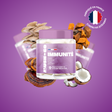
Our three-mushroom formula: Chaga, Reishi and Oyster mushroom, the closest cousin to shiitake in our formulas. Crafted in France, vegan, with or without a subscription.
Discover Immunity →
Brainstoorm
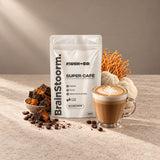
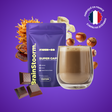
Our mushroom coffee: Lion's Mane, Cordyceps and Chaga at 1,000 mg each, Maca, and only 20 mg of caffeine per cup. No mushroom taste.
Discover Brainstoorm →The ID card
Shiitake at a glance.
A brown, domed cap, sometimes cracked with white, a fibrous stem and a woodland smell that intensifies with cooking. Shiitake is now one of the most cultivated mushrooms in the world, and you can find it fresh at most markets. Here are the essentials before going further.
A thousand years of cultivation
From the Chinese forest to our plates.
Shiitake is one of the very first mushrooms to have been cultivated by humans. For centuries it was a precious product, given and traded, before becoming one of the most widely eaten mushrooms in the world.
Ancient China
The first writings on its cultivation date back to the Song dynasty. Tradition attributes the technique to a farmer, Wu San Kwung, who cut notches into logs to grow the mushroom.
Japan
Cultivation on oak logs spreads. Shiitake becomes a luxury product, associated with temple cuisine and dashi broth.
Cultivation on sawdust substrate, faster and less dependent on forests, makes shiitake available on a large scale.
1976
The mycologist David Pegler moves it to the genus Lentinula. Its scientific name becomes Lentinula edodes.
Today
"Shiitake" is searched around 27,100 times a month in France. Producers also grow it in Europe, often selling directly to consumers.
What it provides
A light mushroom, but well stocked.
Like most mushrooms, fresh shiitake is almost 90% water. It is therefore very low in calories, while providing fibre, a little protein and a good range of micronutrients. Dried, everything becomes concentrated: the flavour as well as the nutrients.
| Per 100 g of raw shiitake | Approximate value | What to remember |
|---|---|---|
| Energy | About 34 kcal | A very light food, like most mushrooms |
| Protein | About 2 g | A useful addition to a plant-based plate |
| Fibre | About 2.5 g | Including beta-glucans, fibres specific to mushrooms |
| B vitamins | B2, B3 and especially B5 | Vitamin B5, or pantothenic acid, is particularly present |
| Minerals | Copper, selenium, zinc | In modest amounts, but regular if you eat it often |
| Vitamin D | Variable | Low in mushrooms grown in the shade, higher if exposed to UV or sunlight |
Indicative values from nutrition tables (USDA FoodData Central). They vary with the variety, the growing method and freshness.
Shiitake's molecules
The compounds that interest researchers.
What makes shiitake so studied is not its calories but a few particular molecules. Some give it its flavour, others have been researched since the 1970s.
Lentinan
A beta-glucan, that is, a large fibre from the mushroom's cell wall. It is the most studied molecule in shiitake, especially in Japan.
Eritadenine
A compound specific to shiitake, studied in animals for its role in fat metabolism. Human data remain limited.
Ergothioneine
An antioxidant our body does not make, found mainly in mushrooms. Shiitake is among the richest.
Ergosterol
The "precursor" of vitamin D2: under UV light, it is converted. Hence the trick of leaving shiitake in the sun, gills facing up.
And the flavour? Shiitake is rich in guanylate, a molecule that enhances umami, and in lenthionine, a sulphur compound that forms during drying and cooking. This duo gives dried shiitake its distinctive, almost smoky aroma.
The benefits of shiitake
Shiitake: real benefits and exaggerated promises.
Type "shiitake benefits" into a search engine and you will find everything and its opposite: a miracle mushroom for immunity, the heart, the skin, longevity. The honest answer comes in three parts.
First, it is a good food. Light, rich in fibre and a source of B vitamins, it can replace some of the meat in a stew or a stir-fry, with the deep flavour that plant-based dishes sometimes lack. This benefit is simple, and it is very real.
Second, it is a traditional food. In China and Japan, shiitake has been eaten for centuries, and traditional Chinese medicine credits it with a role in vitality. These are traditional uses, based on how long they have been practised, not on clinical trials.
Finally, it is a subject of research. Its beta-glucans, ergothioneine and eritadenine are widely studied, mostly in the laboratory and in animals. In humans, studies are few, often small and short. The most cited one is presented just below.
In Europe, no health claim is authorised for shiitake or for any other mushroom. So be wary of products that promise to "boost" your defences or lower your cholesterol: European regulations do not allow it, and science has not shown it to date.
What the research says
Shiitake and immunity: the study to know.
The question of immune defences comes up again and again with shiitake. An often-cited American study looked at shiitake eaten as a food, not as an extract. Here are its exact conditions, and what can be concluded from it.
Dai et al., 2015 · United States
52 healthy adults aged 21 to 41 ate 5 or 10 g of dried shiitake a day for 4 weeks. The researchers observed increased proliferation of certain immune cells (gamma-delta T cells and NKT cells) and a drop in a marker of inflammation, C-reactive protein.
What it does not say
The study had no mushroom-free control group, it measured blood markers rather than illnesses, and it lasted one month. It cannot be concluded that shiitake protects against infections.
Ergothioneine · Kalaras et al., 2017
Researchers at Pennsylvania State University measured ergothioneine and glutathione in a range of species. Levels varied widely from one to another, with wild porcini at the top, and several cultivated species, including shiitake, clearly exceeded the button mushroom.
In short: interesting leads, with a reasonable food amount, the equivalent of about 50 to 100 g of fresh shiitake a day. And a cautious conclusion: a quality food, not a remedy. The full references are at the bottom of the page.
Cooking it properly
The golden rule: never raw.
This is the most important point in this article. Raw or undercooked shiitake can cause a dramatic skin reaction in some people, shiitake dermatitis (see the precautions section). Well cooked, it generally causes no problems. Here is how to prepare it.
Cleaning
Not under the tap: it would soak up water like a sponge. A brush or a damp paper towel is enough. Remove the base of the stem, which is often dirty.
Slicing
Caps in slices, stems set aside for a broth. The stems are too fibrous to sauté but very flavourful.
Cooking it through
5 to 8 minutes in a frying pan over high heat, or 10 minutes in a simmering broth. It should be tender and golden, never rubbery.
Salt at the end of cooking: salt draws out water and prevents browning. And if you like raw mushrooms in salads, keep that for button mushrooms, never for shiitake. Also worth reading: Microdosing functional mushrooms: guide and protocols.
Garlic stir-fry
Neutral oil, high heat, sliced shiitake, then garlic, soy sauce and spring onion at the end. Ready in ten minutes.
In broth
Dried shiitake is the base of many Asian broths, such as a plant-based dashi with a sheet of kombu seaweed.
In risotto
Replace some of the button mushrooms with shiitake and use their soaking water as stock.
In the oven
Whole caps, olive oil, thyme, 15 to 20 minutes at 200 °C. They become tender, almost meaty.
Fresh, dried or powdered
Which form to choose?
Shiitake comes in three main forms. They do not have the same flavour, use or shelf life. Here is how to find your way.
| Fresh | Dried | Powder or extract | |
|---|---|---|---|
| Taste | Mild, woody | Intense, smoky, very umami | Varies with the product |
| Use | Pan-fries, wok, oven | Broths, sauces, stews | Seasoning or food supplement |
| Storage | 4 to 5 days in the fridge, in a paper bag | Several months in a jar, kept dry | According to the label |
| Preparation | Clean, slice, cook | Rehydrate for 30 minutes to a few hours | None |
To rehydrate dried shiitake, soak it in warm water for 30 minutes, or in cold water for a few hours for an even rounder flavour. Keep the soaking water, strained: it is a ready-made broth.
For supplements, read the label closely. A good product states the part used (fruiting body, meaning the cap and stem, or mycelium), the type of extract and the dose in milligrams per serving. A simple mention of "shiitake" with no other detail says almost nothing about what is in the capsule.
Growing it at home
Shiitake on your balcony.
Shiitake is one of the easiest mushrooms to grow at home. There are two methods, depending on your patience and your space.
The substrate kit is the simplest solution: a block of sawdust already colonised by mycelium, to place somewhere cool and bright, out of direct sunlight. You mist it regularly, and the first mushrooms appear within a few weeks. A kit often gives two or three flushes.
Log cultivation is the traditional method. Holes are drilled into a freshly cut oak or chestnut log, inoculated dowels are inserted, and the log is left in a shady, damp corner of the garden. It takes six months to a year before the first harvest, but the log can then produce for several years.
If you grow a lot of shiitake indoors, ventilate well: spores released in large quantities can irritate the airways, a known problem among some growers.
Shiitake and mushrooms and adaptogenic plants
Why it is not in our formulas.
Let's be clear: shiitake is not part of any Mush n Go formula. It is an excellent cooking mushroom, and we encourage you to eat it. But for our supplements, we chose other species, and here is why.
Shiitake is eaten first and foremost as a food, in quantity: several dozen grams on a plate. Our formulas bring together mushrooms that cannot be cooked, or barely, such as Chaga, hard as wood, or Reishi, too bitter for a pan-fry. That is precisely where a capsule or a cup makes sense. To understand these species fully, read our guide to mushrooms and adaptogenic plants.
Chaga
A birch mushroom from cold regions that grows as a black, cracked mass. In Immunity and Brainstoorm. Find out more.
Reishi
The "mushroom of immortality" of Chinese tradition, lacquered red and very bitter. In Immunity, Anti-Stress Complex and Sleep+. Find out more.
Oyster mushroom
The edible mushroom closest to shiitake in our formulas, also rich in beta-glucans. In Immunity. Find out more.
Lion's Mane
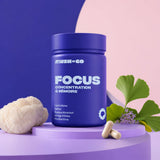
An edible mushroom that looks like a white mane, studied for its hericenones. In Focus and Brainstoorm. Find out more.
If you are looking for a mushroom formula for winter, our Immunity formula combines Chaga, Reishi and Oyster mushroom in capsules. It does not replace shiitake on your plate: the two complement each other very well. To learn more about Chaga, also read our article on the king of antioxidants.
A typical week
Shiitake every day, without the fuss.
No need to eat it every day. Two or three times a week, in simple dishes, is enough to make it a regular in your kitchen. Here is one possible week, with the other mushrooms in your routine.
Monday
A wok of vegetables and fresh shiitake, soy sauce and ginger, with brown rice.
Wednesday
A miso soup with dried shiitake broth, tofu and spring onion. The soaking water does all the work.
Friday
Oven-roasted shiitake caps, served with fish or sweet potato mash.
Every morning
For those who like mushrooms in their cup, a Brainstoorm instead of coffee, with its Chaga, Lion's Mane and Cordyceps.
In winter
A 30-day course of Immunity if you want to add Chaga, Reishi and Oyster mushroom to your routine.
Precautions
Shiitake: the side effects to know.
Well cooked and eaten in normal amounts, shiitake is well tolerated by the vast majority of adults. There is, however, one side effect specific to this mushroom, well known to French poison control centres.
Shiitake dermatitis usually appears one to two days after eating raw or undercooked shiitake. It shows up as red, itchy streaks, often on the back, chest or arms, like scratch marks. It is attributed to lentinan, which is sensitive to heat, and usually clears up on its own within one to three weeks. A team from French poison control centres described a series of cases in 2014.
A few simple rules are enough to enjoy shiitake without any nasty surprises.
- Never eat it raw, and cook it through, even in small amounts.
- If you have itching or red streaks after eating it, see a doctor and tell them about your meal.
- Like any mushroom, it can cause allergies: stop if you react.
- For shiitake-based supplements, ask your doctor if you are on medication, pregnant or breastfeeding.
- Buy cultivated shiitake from reliable sources: never pick wild mushrooms you cannot identify with certainty.
For an overview of the precautions related to mushroom supplements, read our article on the side effects of mushrooms and adaptogenic plants.
Your questions
Everything people ask us about shiitake.
What are the benefits of shiitake?
Shiitake is a light food, rich in fibre, B vitamins and studied compounds such as lentinan and ergothioneine. A 2015 study observed effects on certain immune markers in young adults, but human data remain limited. No health claim is authorised in Europe.
Can you eat raw shiitake?
No. Raw or undercooked shiitake can cause dermatitis, with red, itchy streaks. Always cook it through, at least 5 to 8 minutes in a frying pan.
How do you cook shiitake?
Clean it without water, remove the base of the stem, slice the caps and sauté them over high heat with a little oil. It also works very well in broths, stir-fries, risottos and in the oven.
What is the difference between fresh and dried shiitake?
Dried shiitake has a much more intense, almost smoky flavour and keeps for months. It must be rehydrated before use. Fresh is milder and can be cooked straight away, but only keeps for a few days.
Is shiitake good for immunity?
It is the most frequently asked question. A small American study observed changes in certain immune markers after four weeks of eating it. It is a lead, not proof: no "immunity" claim is authorised for shiitake in Europe.
How much shiitake per day?
In cooking, there is no official dose. In the most cited study, participants ate 5 to 10 g of dried shiitake a day, or about 50 to 100 g of fresh mushrooms. Two or three portions a week is a good baseline.
Does shiitake have side effects?
Well cooked, it is generally well tolerated. The known effects are shiitake dermatitis when eaten raw, allergies, and respiratory irritation in people exposed to its spores during cultivation.
Is shiitake a functional mushroom?
It is often classed among functional mushrooms, but it is above all an edible mushroom. The functional mushrooms most used in supplements are rather Reishi, Chaga, Cordyceps or Lion's Mane. To find out more, see the 12 medicinal mushrooms to know.
Is there shiitake in Mush n Go products?
No, shiitake is not in any of our formulas. Our Immunity formula combines Chaga, Reishi and Oyster mushroom, and our Brainstoorm coffee contains Lion's Mane, Cordyceps and Chaga.
How do you store fresh shiitake?
In a paper bag, in the fridge, for 4 to 5 days. Avoid plastic, which traps moisture and makes them go black. You can also dry them yourself at a low temperature.
Sources
- Dai X., Stanilka J. M., Rowe C. A., Esteves E. A., Nieves C., Spaiser S. J., Christman M. C., Langkamp-Henken B., Percival S. S. (2015). Consuming Lentinula edodes (Shiitake) mushrooms daily improves human immunity: a randomized dietary intervention in healthy young adults. Journal of the American College of Nutrition, 34(6).
- Kalaras M. D., Richie J. P., Calcagnotto A., Beelman R. B. (2017). Mushrooms: a rich source of the antioxidants ergothioneine and glutathione. Food Chemistry, 233.
- Boels D. et al. (2014). Shiitake dermatitis recorded by French Poison Control Centers: new case series with clinical observations. Clinical Toxicology, 52(6).
Keep reading
More mushrooms to discover.
Shiitake is just one of the many mushrooms studied today. To go further, browse our guide to mushrooms and adaptogenic plants or read our article on the benefits of mushrooms and adaptogenic plants.

Discover our mushroom and adaptogenic plant supplements
Our vegan formulas, made in Toulouse by a French manufacturer.