







Coffee before exercise: good idea or not?
By the Mush n Go editorial team - 05 October 2026
By the Mush n Go editorial teamPublished 5 October 202614 min read
Coffee and exercise
Drinking a coffee before exercise is generally a good idea: caffeine is one of the best-studied performance aids. The documented effect appears at around 3 mg per kilo of body weight, taken 30 to 60 minutes beforehand. Three details still need care: your stomach, your sleep and your total caffeine for the day.

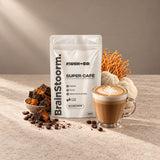
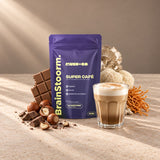
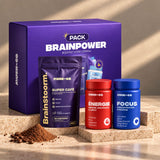
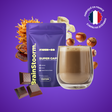
Brainstoorm
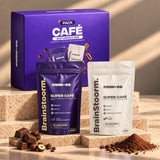
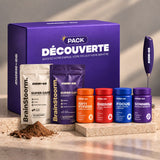
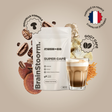
Our mushroom coffee: 6,040 mg of actives per cup, including Lion's Mane, Cordyceps and Chaga at 1,000 mg each, and only 20 mg of NewCaff® caffeine. Hot or cold, with no mushroom taste.
Discover Brainstoorm →
Muscle Recovery
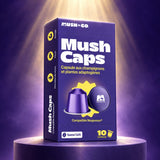
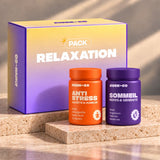
Cordyceps, Chaga, Turmeric and Boswellia: our formula for active people, caffeine-free. One capsule after training.
Discover Recovery →The short answer
Coffee before exercise: good idea or not?
For most healthy athletes, yes. Caffeine is one of the few substances whose effect on performance has been confirmed by dozens of studies, across very different sports: running, cycling, swimming, team sports, strength training.
But "good idea" does not mean "the more the better". Coffee before exercise is a matter of dose, timing and tolerance. A well-timed espresso can make your session feel easier. Three coffees gulped down in a hurry can ruin it: knotted stomach, shaky hands, a shortened night.
Rather yes if…
You tolerate coffee well, you train in the morning or early afternoon, and you stick to your usual intake.
Rather no if…
You are sensitive to caffeine, you have a delicate stomach, you train late in the evening, or your doctor has advised against it.
What caffeine does
Why a coffee changes your session.
Caffeine acts mainly on the brain. It blocks the receptors for adenosine, a molecule that builds up over the day and sends a tiredness signal. The result: you feel more alert, and effort feels less hard. To find out more, see our advice on persistent fatigue.
This is probably the heart of its effect on exercise. At the same intensity, perceived effort is lower. So you can hold a pace a little longer, or push a little harder, before you feel like easing off.
It is absorbed quickly: blood levels rise in the minutes after the cup and generally peak thirty to sixty minutes later. Its half-life is several hours in adults, with big differences from one person to the next. That is why a late-afternoon coffee can still be working at bedtime.
Other mechanisms are being studied: an effect on the perception of muscle pain during exercise, on alertness and reaction time, or on how muscle uses calcium. They may explain why caffeine helps a cyclist on a long ride as much as a sprinter or a tennis player. But for an amateur athlete, the most tangible effect is the one you feel: a session that gets going more easily. To find out more, see natural pre-workouts.
Sensitivity to caffeine depends partly on genetics, notably the CYP1A2 gene, which codes for the liver enzyme that clears it. Hence "fast metabolisers" and "slow metabolisers".
What the research says
Coffee, caffeine and performance: the key studies.
The subject has been studied so much that researchers now publish reviews of reviews. Here are the publications to know. The full references are at the bottom of the page.
Guest et al., 2021 · ISSN position stand
The International Society of Sports Nutrition concludes that caffeine consistently improves performance at 3 to 6 mg per kilo, about 60 minutes before exercise. Lower doses may be enough for some people, and responses vary widely between individuals.
An "umbrella" review bringing together 21 meta-analyses. The effect of caffeine is found on muscular endurance, strength, power, sprints and aerobic endurance, generally with a modest magnitude.
Eight trained cyclists. A caffeine dose of 5 mg per kilo, taken as pure caffeine or as coffee, improved their time-trial performance compared with placebo and decaffeinated coffee. Coffee did as well as pure caffeine.
In plain terms: the effect is real, but it is measured in a few percent, not miracles. For an amateur athlete, it mostly means a session that feels easier.
The right dose
How much coffee before exercise?
Studies work in milligrams of caffeine per kilo of body weight. The most commonly used range is 3 to 6 mg per kilo. Above that, side effects increase with no clear extra benefit. Starting at the low end of the range is the wisest choice.
| Your weight | 2 mg per kilo | 3 mg per kilo | In espressos (80 mg) |
|---|---|---|---|
| 55 kg | 110 mg | 165 mg | About two |
| 65 kg | 130 mg | 195 mg | Two to two and a half |
| 75 kg | 150 mg | 225 mg | About three |
| 90 kg | 180 mg | 270 mg | Three or more |
Average values of 80 mg per 60 ml espresso and 90 mg per 200 ml cup of filter coffee, according to EFSA. Actual content varies with the coffee and the preparation.
Two limits to keep in mind. EFSA considers that 200 mg of caffeine in a single dose and 400 mg a day raise no safety concerns for healthy adults. So your pre-session coffee adds to your morning coffees, tea and soft drinks. If you have already had three coffees at the office, a fourth before the gym is not a good idea.
And decaf? It contains only a few milligrams of caffeine per cup. It keeps the taste and the ritual, but not the effect on effort. In fact it serves as the "placebo" in several studies, including Hodgson's.
And if you drink little coffee day to day, a single espresso will probably already have a clear effect. Regular drinkers often feel the stimulating effect less, although the ISSN notes that the performance benefits seem to persist in part for them.
The right moment
When should you drink your coffee before exercise?
The timing most often used in studies is sixty minutes. In practice, thirty to sixty minutes before the session suits most people. Here is how to plan it.
One hour before
Your coffee, with a small snack if you have not eaten for a while: a banana, a slice of toast, a fruit purée.
Thirty minutes before
A large glass of water. A trip to the toilet: coffee stimulates the bowels in many people.
During exercise
Water. For a long outing, some add caffeine in gel form, to be tested in training first.
For a morning race, keep your usual routine. If you have a coffee every morning, take the same dose at the same time before the start. It is not the day to double up or try a new drink.
And on an empty stomach ? A coffee before a fasted morning run is a common habit. It suits some people and bothers others, who feel burning or nausea. If that is you, a small snack with the coffee often changes everything.
Coffee or pure caffeine
Does coffee work as well as a tablet?
It was long thought that coffee was less effective than pure caffeine, because of the other compounds in the cup. The 2013 study by Hodgson and colleagues challenged that idea: at the same caffeine dose, coffee and anhydrous caffeine improved performance in a similar way.
| Coffee | Caffeine tablets or powder | Pre-workout booster | |
|---|---|---|---|
| Dose | Varies with the coffee, has to be estimated | Precise | Often high |
| Other compounds | Polyphenols, taste, ritual | None | Many added ingredients |
| Risk of overdose | Low, you need a lot of cups | Real, especially as powder | Real if you combine them |
| Practicality | Everywhere, inexpensive | Easy to carry | Shaker to prepare |
For an amateur athlete, coffee is the simplest and safest option. Caffeine powder, on the other hand, is best avoided: a few grams too many on a kitchen scale are enough to reach dangerous doses. To put together a complete routine without a booster, see also our coffee alternatives.
Coffee and your stomach
When coffee before exercise does not sit well.
It is the most common complaint among runners. Coffee stimulates the colon in many people, and exercise, especially running, already shakes up the digestive system. Together, they can cause cramps or an urgent need mid-run.
Others feel burning or acid reflux instead, especially on an empty stomach or with a very strong coffee. And a milky coffee sometimes sits less well just before exercise in people who digest lactose poorly.
- Drink your coffee earlier, an hour before rather than just before you leave.
- Have it with a small, simple snack, not a fatty meal.
- Try a lighter coffee, a longer one, or filter coffee rather than a very strong espresso.
- Replace cow's milk with a plant drink if lactose bothers you.
- Test every change in training, never on race day.
If coffee bothers you day to day, not just before exercise, a drink lower in caffeine may be worth a look. We discuss it in our article why swap your coffee for a coffee with mushrooms and adaptogenic plants.
Evening workouts
Coffee, evening training and sleep.
This is the real trap of coffee before exercise. If you train at 7 pm, the 6 pm coffee is still working when you go to bed. And a bad night costs your progress far more than a small performance gain.
A study by Drake and colleagues, published in 2013, showed it clearly: a high dose of caffeine, 400 mg, taken even six hours before bedtime, still reduced sleep by more than an hour. And participants were not necessarily aware of it.
Before 2 pm
A pre-session coffee is fine for most people, at a reasonable dose.
2 pm to 4 pm
Grey zone: reduce the dose to a single espresso and watch your sleep.
After 4 pm
Better to skip it. A snack, cold water, music: there are other ways to get going.
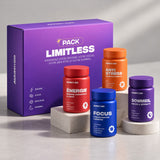
For evening sport, focus on what does not disrupt the night: a carbohydrate snack an hour before, good hydration, and a caffeine-free background routine such as Energy in the morning and Muscle Recovery after the session.
By sport
Coffee before running, weights or cycling.
The value of coffee changes with the type of effort. Here are the benchmarks, sport by sport. To find out more, see the benefits and dosage of boswellia.
| Your sport | Coffee before? | Our advice |
|---|---|---|
| Running | Yes, if your stomach agrees | An hour before, with a light snack |
| Cycling, trail, long outings | Yes | The most studied context, aerobic endurance |
| Strength training | Yes, at a moderate dose | Documented effect on strength and muscular endurance |
| Team sports | Yes, with caution | Watch out for evening matches and sleep |
| Yoga, pilates | Rarely useful | Calm matters more than alertness |
| Swimming | Possible | Avoid drinking right before you swim |
One point applies to every sport: the effect of caffeine is stronger when you are tired, at the end of the day or after a short night. Those are also the situations where the risk of sleeping badly afterwards is greatest. Coffee never replaces sleep: it masks tiredness, it does not repair it. Also worth reading: The 4 pm slump: why it happens and how to avoid it.
Athletes who compete can drink coffee: caffeine was removed from the World Anti-Doping Agency's list of prohibited substances in 2004. It is still part of its monitoring programme.
A gentler coffee
Brainstoorm: the everyday coffee, without the excess.
Let's be frank: with 20 mg of caffeine per cup, Brainstoorm is not a performance coffee. To reach the 3 mg per kilo used in studies, you would need a real coffee. Brainstoorm plays a different role: replacing your everyday coffees so you keep some caffeine headroom for the day it counts.
Each cup provides 6,040 mg of actives, including Lion's Mane, Cordyceps and Chaga at 1,000 mg each and 3,000 mg of maca, with chicory and ashwagandha. It can be drunk hot or cold, with water or milk, and leaves no mushroom taste.
"I particularly appreciate the steadier energy it gives: no jitters and no energy slumps."
★★★★★ Nawel F., 7 January 2026
"I was sceptical and in the end I'm won over. Less caffeine and yet I'm full of energy and my mood stays steady"
★★★★★ Maïté S., 4 April 2026
Reviews translated from French. A typical routine: Brainstoorm in the morning and early afternoon, a real coffee only before important sessions. You consume less caffeine over the week, and the caffeine you take before exercise regains its effect. To understand what this drink really is, read what is mushroom coffee, or browse our mushroom coffee collection.
Precautions
What to know before drinking coffee before exercise.
Coffee is safe for the vast majority of adults at a reasonable dose. The precautions mainly concern high doses and certain situations.
A few pointers to enjoy coffee without suffering its effects.
- Add up all your caffeine for the day: coffees, tea, soft drinks, energy drinks, caffeinated gels, boosters.
- Stop the session and seek medical advice if you have palpitations, chest pain or feel faint.
- During pregnancy, the EFSA benchmark drops to 200 mg of caffeine a day.
- If you have a heart rhythm disorder, high blood pressure, reflux or are on medication, ask your doctor.
- No caffeine powder or tablets at home: far too easy to overdose.
- For teenagers, the benchmark is 3 mg per kilo per day, from all sources combined.
Your questions
Everything people ask us about coffee before exercise.
Is it good to drink coffee before exercise?
For most healthy adults, yes. Caffeine can make effort feel easier and slightly improve performance. The main thing is to stick to a reasonable dose, test your digestive tolerance and avoid coffee too late in the day.
How long before exercise should you drink coffee?
About thirty to sixty minutes before. That is the timing used in most studies, the time it takes caffeine to reach its peak concentration in the blood.
How many coffees before a workout?
One to three espressos depending on your weight and sensitivity. Studies use 3 to 6 mg of caffeine per kilo, but starting at 2 or 3 mg per kilo is often enough.
Does coffee before exercise help you lose weight?
Caffeine slightly increases fat use and energy expenditure, but the effect is small. What counts for weight loss is regular training and diet, not the cup.
Coffee before strength training: a good idea?
Yes, at a moderate dose. The review by Grgic and colleagues finds an effect of caffeine on strength and muscular endurance. Just avoid late sessions with coffee.
Can you run after a coffee on an empty stomach?
Yes, if your stomach can handle it. Some runners feel burning, nausea or intestinal cramps: a small snack with the coffee often solves the problem.
Does coffee dehydrate you before exercise?
Not really at usual doses. Caffeine has a mild diuretic effect, especially in people who drink little of it, but coffee also provides water. Simply drink an extra glass of water.
White or black coffee before exercise?
Black coffee generally sits better just before exercise. Milk slows digestion a little and bothers people who tolerate lactose poorly. A plant drink or a black coffee with a small snack is often more comfortable.
Is caffeine banned in sport?
No. It was removed from the World Anti-Doping Agency's list of prohibited substances in 2004, and remains tracked in its monitoring programme.
What is an alternative to coffee before exercise?
Tea or mate for gentler caffeine, or a low-caffeine drink such as Brainstoorm, with 20 mg of caffeine per cup. For an evening session, a carbohydrate snack and water are enough.
Sources
- Guest N. S. et al. (2021). International Society of Sports Nutrition position stand: caffeine and exercise performance. Journal of the International Society of Sports Nutrition, 18(1):1.
- Grgic J., Grgic I., Pickering C., Schoenfeld B. J., Bishop D. J., Pedisic Z. (2019). Wake up and smell the coffee: caffeine supplementation and exercise performance, an umbrella review of 21 published meta-analyses. British Journal of Sports Medicine, 54(11).
- Hodgson A. B., Randell R. K., Jeukendrup A. E. (2013). The metabolic and performance effects of caffeine compared to coffee during endurance exercise. PLoS One, 8(4):e59561.
- Drake C., Roehrs T., Shambroom J., Roth T. (2013). Caffeine effects on sleep taken 0, 3, or 6 hours before going to bed. Journal of Clinical Sleep Medicine, 9(11).
- EFSA NDA Panel (2015). Scientific opinion on the safety of caffeine. EFSA Journal, 13(5):4102.
Keep reading
Go further.
Coffee, energy, recovery: our guides and pages to help you dose your caffeine better and build your sports routine.

Discover our mushroom and adaptogenic plant supplements
Our vegan formulas, made in Toulouse by a French manufacturer.