





Ayurvedic plant
Boswellia: the resin of Indian frankincense, from Ayurveda to your recovery
By the Mush n Go team · Updated 18 September 2026
The Boswellia (Boswellia serrata), also called Indian frankincense, is a tree of the dry hills of India. Its fragrant resin has been used for centuries in Ayurveda, and its boswellic acids, including AKBA, have been studied for some thirty years. On this page: what it is, what the studies say, how to choose it well, and the real contraindications. At Mush n Go you find it in Muscle Recovery, with Turmeric, Cordyceps and Chaga.
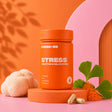
Turmeric
The golden spice of Ayurveda, often paired with Boswellia in the tradition as in the studies. Everything about this duo.
Discover Turmeric →
Muscle Recovery
Boswellia, Turmeric, Cordyceps and Chaga in a single formula. 1 to 3 capsules a day, in the morning, with or without a subscription.
Discover the formula →The fact file
Boswellia in brief.
Before going into detail, here are the essentials on this tree, of which neither the leaves nor the fruit are used, but the resin that flows from its bark.
A long history
From Indian temples to the laboratory.
Boswellia is nothing like a recent fashion. Incense resins are among the most traded goods of Antiquity, and Indian frankincense has a history of its own, tied to Ayurveda.
Antiquity
The incenses of the genus Boswellia are burned in the temples of Egypt, the Middle East and India, and carried along the incense route across Arabia.
Ayurveda
Ayurvedic texts describe shallaki, whose resin is prepared as a powder or a paste, often with other plants such as turmeric and ginger.
1990s
Researchers, notably in Germany and India, turn their attention to the boswellic acids and to the way they act on certain enzymes, including 5-lipoxygenase.
Today
“Boswellia” and “boswellia serrata” are searched for tens of thousands of times a month across Europe. It is found above all in formulas for athletes and for the joints.
Serrata, sacra, carterii
Not all frankincense is the same.
The genus Boswellia has about twenty species. Three come up most often, and they are not used in the same way.
| Species | Origin | Main use |
|---|---|---|
| Boswellia serrata | India | Food supplements: it is the species used in almost all the human studies |
| Boswellia sacra | Oman, Yemen | Frankincense of the Arabian peninsula, perfumery, resin for burning |
| Boswellia carterii | Horn of Africa | Olibanum essential oil, often considered close to sacra |
Frankincense (olibanum) essential oil, sold in bottles for diffusion or massage, is not a food supplement. It contains almost no boswellic acids in any case, as they do not survive distillation. Do not swallow it.
From the tree to the capsule
How a tear of frankincense is born.
Boswellia is not grown like a kitchen-garden plant. It is a wild tree, which grows slowly on poor, dry soils, and its resin is harvested by hand, with gestures that have changed little over the centuries.
The incision
Harvesters cut lightly into the bark of the trunk. The tree then secretes a milky resin to close its wound.
The drying
In contact with the air, the resin hardens within a few weeks and forms “tears” from pale yellow to brown.
The extraction
The tears are sorted, ground and then extracted to concentrate the boswellic acids and remove the gums.
A responsible harvest gives the tree time to rest between two seasons. That is a point worth keeping in mind: a quality resin comes from trees that are not over-exploited, and from an extract whose active content is checked batch by batch.
The molecules
The boswellic acids: what makes it unique.
If Boswellia interests researchers so much, it is because of a family of compounds found only in these resins: the boswellic acids. Several are known, four of which are particularly studied.
The most famous has a mouthful of a name: 3-O-acetyl-11-keto-β-boswellic acid, mercifully shortened to AKBA. Its close relative, KBA, almost always goes with it. Laboratory work has looked at their action on 5-lipoxygenase, an enzyme involved in producing signalling molecules linked to inflammation.
The raw resin also contains gums (sugars) and essential oils, which give it its smell. That is why extracts are standardised : they state the percentage of total boswellic acids, often 65 %, or the percentage of AKBA, which can reach 20 to 30 % in some enriched extracts.
What to take away in practice: a serious Boswellia extract states its boswellic acid content. Without that figure, there is no way to know what you are really taking.
What the studies say
Trials on the knee, for twenty years.
Boswellia has mostly been studied in people with knee osteoarthritis. The trials are modest in size, but they have one thing in common: standardised extracts and precise doses. Here are the main ones, with their exact conditions.
Kimmatkar et al., 2003 · India
30 patients with knee osteoarthritis, 1,000 mg of extract of Boswellia serrata a day (in three servings) for 8 weeks, against placebo and in crossover. Patients reported less pain and better mobility with the extract.
Sengupta et al., 2008 · India
75 patients, 100 mg or 250 mg a day of an extract enriched to 30 % AKBA for 90 days, against placebo. Pain and function scores improved in both Boswellia groups, more so at the higher dose.
Haroyan et al., 2018 · Armenia
201 patients with knee osteoarthritis, 12 weeks. The trial compared curcumin alone, the combination of curcumin and Boswellia extract, and a placebo. Both formulas did better than placebo, the combination giving the clearest results on certain criteria.
Yu et al., 2020 · meta-analysis
7 randomised trials, 545 patients. The authors conclude that pain and stiffness improve with Boswellia, while stressing the small size of the studies.
In short: encouraging results, obtained with standardised extracts of 100 to 1,000 mg a day and regular intake over several weeks. This work explains why Boswellia has its place, alongside turmeric, in a formula designed for after the effort. The full references are at the bottom of the page.
Resin, powder and extract
Reading a label in thirty seconds.
Boswellia comes in several forms, which do not provide at all the same thing.
| Standardised extract | Raw resin or powder | |
|---|---|---|
| What it is | The purified resin, with a guaranteed active content | The dried resin, in tears or ground |
| Boswellic acids | Stated on the label, often 65 % | Variable from one harvest to the next |
| Taste | None, in a capsule | Very bitter and resinous |
| Traditional use | Modern form of the Ayurvedic use | Yes, as a powder or to chew |
| Human studies | Most of the trials cited above | Very rare |
Three markers are enough to judge a label: thespecies (Boswellia serrata), the boswellic acid or AKBA content, and the dose per serving in milligrams. If one of the three is missing, ask the brand.
The dose
What dose of Boswellia per day?
There is no official dose, but the studies give clear markers. They depend above all on the concentration of the extract.
| Form | Daily marker | What that represents |
|---|---|---|
| Extract enriched in AKBA (30 %) | 100 to 250 mg | The doses in the Sengupta trial, over 90 days |
| Standard extract | 300 to 1,000 mg | Often in two or three servings, with meals |
| Raw resin | No reliable marker | The active content varies too much from one harvest to the next |
| Muscle Recovery | 1 to 3 capsules a day | With Turmeric, Cordyceps and Chaga, in the morning, with a large glass of water |
Always follow the directions for use printed on your product label, and do not stack several Boswellia supplements.
How to take it
One gesture, every morning.
Boswellia is taken daily, over time. Regularity counts more than the exact hour, and the simplest thing is to hook it onto a fixed moment.
With a meal
Boswellic acids are better absorbed with a meal containing a little fat.
Every day
Same moment, same dose, rest days included. That is what was done in the studies.
At least 30 days
The trials lasted 8 to 12 weeks: give yourself at least one full course before you judge.
For Muscle Recovery, it is taken in the morning, with a large glass of water, before or after breakfast. Keep the same gesture every day, training or not.
Boswellia and turmeric
A duo as old as Ayurveda.
In the Indian tradition, Boswellia is rarely taken alone. It is often paired with turmeric and ginger in preparations intended for the joints. Modern research has picked up that idea: several trials have tested the combination of curcumin and boswellic acids, including Haroyan's in 2018, which compared it with curcumin alone.
That is the logic we followed in Muscle Recovery: two plants of Ayurveda, completed by two mushrooms that athletes know well.
+ Turmeric
The golden spice and its curcumin, Boswellia's historical partner. Everything about it on our Turmeric page.
+ Cordyceps
The athletes' mushroom, traditionally associated with energy and endurance. See our Cordyceps page.
+ Chaga
The black mushroom of birch trees, rich in polyphenols, also present in Brainstoorm. See our Chaga page.
+ A meal
Taken with a snack or a meal, Boswellia and turmeric alike are better absorbed.
A typical week
Boswellia, from the session to the rest day.
To give you a concrete idea, here is how our sporty customers most often fit it into their week, without upending anything.
In the morning
A cup of Brainstoorm for those who train early: Cordyceps, Chaga and only 20 mg of caffeine.
After the session
One Muscle Recovery capsule with the recovery snack: a piece of fruit, a yoghurt, a handful of almonds.
Rest day
The same capsule at lunch, to keep the habit. It is regularity over several weeks that counts.
In the evening
No Boswellia: this is the moment for Reishi and Sleep+ for those who want to look after their night-time recovery too.
Who it is for
Muscle Recovery is for you if…
- You train several times a week, in the gym, running or in team sport.
- You are getting back into sport and want to support the return.
- You would rather have a single capsule than a collection of tubs.
- You are looking for traditional plants, with published studies.
- You want to try it first as a one-off purchase, with 60 days to change your mind.
Choosing it well
Five criteria so you do not get it wrong.
- The species : Boswellia serrata, the one in the studies, clearly stated.
- The standardisation : a stated boswellic acid or AKBA content.
- The real dose : milligrams per serving, not just a list of ingredients.
- The manufacturing : an identified place. The recipes are developed and produced in Toulouse, France, by a French contract manufacturer, and are vegan, GMO-free and gluten-free.
- The guarantee : enough to try it risk-free. With us, 60 days satisfied or your money back, and the choice between a one-off purchase and a monthly subscription (−30%).
Pharmacy, health-food shop or online store: today you find Boswellia serrata everywhere, on its own or in combination, in organic form or not. Where you buy matters less than the label. A product sold in a pharmacy without a boswellic acid content is no better than any other, and a standardised extract remains the best marker, whatever the channel. If you are on treatment, however, your pharmacist remains the right person to check interactions with.
Boswellia and risk
Is Boswellia dangerous?
In clinical trials, Boswellia has generally been well tolerated, with infrequent and mostly digestive side effects: nausea, heartburn, reflux or diarrhoea. Skin reactions have also been described on contact with the resin.
Boswellia and the liver : the data are reassuring in the trials, but rare cases of liver injury have been reported with supplements containing Boswellia, often combined with other plants. As a precaution it is not recommended in case of liver disease, and you should stop and seek advice in case of unusual tiredness, nausea or yellowing of the skin.
Boswellia and blood pressure : no study has established a link. If you are on treatment for blood pressure, as for any long-term treatment, simply ask your doctor for advice. As for weight, no serious data show that it makes you lose or gain kilos.
The contraindications
What to know before you start.
Boswellia is generally well tolerated. Some situations nevertheless call for medical advice before any supplement.
- Pregnancy and breastfeeding: for lack of sufficient data, it is not recommended.
- Anticoagulant or antiplatelet treatment: risk of interaction, ask your doctor for advice.
- Immunosuppressive treatment or a medically followed autoimmune disease.
- Liver disease, or a known allergy to resins and to plants of the Burseraceae family.
- Respect the dose stated on the label, and keep the supplement out of the reach of children.
Your questions
Everything you ask us about Boswellia.
What is Boswellia?
It is a tree of India, Boswellia serrata, whose resin is harvested by cutting into the bark. It is also called Indian frankincense. Its resin has been used for centuries in Ayurveda, and its boswellic acids have been studied since the 1990s.
What are the benefits of Boswellia serrata?
Boswellia has mostly been studied in people with knee osteoarthritis, with encouraging results on pain and mobility, obtained with standardised extracts over 8 to 12 weeks. These studies remain modest in size: we present them as leads, not as promises.
Is Boswellia dangerous?
It is generally well tolerated, sometimes with mild digestive upsets. It is not recommended during pregnancy and breastfeeding, or in case of liver disease, and it calls for medical advice if you are on anticoagulant or immunosuppressive treatment.
What are the contraindications of Boswellia?
Pregnancy, breastfeeding, liver disease, allergy to resins, and anticoagulant, antiplatelet or immunosuppressive treatments without medical advice. If in doubt, talk to your doctor or your pharmacist.
What dose of Boswellia per day?
The studies used 100 to 250 mg of an AKBA-enriched extract, or up to 1,000 mg of a standard extract. Everything depends on the concentration: follow the directions for use on the label. For Muscle Recovery, it is one capsule a day.
How long before you feel a difference?
Experiences vary from one person to another. The trials lasted 8 to 12 weeks: allow at least a 30-day course before you judge. All our formulas come with a 60-day money-back guarantee.
Why combine Boswellia and turmeric?
Because it is a traditional Ayurvedic pairing, picked up by research: Haroyan's 2018 trial tested curcumin alone and combined with Boswellia. The two are brought together in Muscle Recovery.
What is the difference between Boswellia serrata and Boswellia carterii?
They are two frankincense species. Boswellia serrata comes from India and it is the one used in supplements and in the studies. Boswellia carterii comes from the Horn of Africa and is used mainly to produce olibanum essential oil, which is not to be swallowed.
Is Boswellia vegan?
Yes, it is a plant resin. Muscle Recovery is vegan, GMO-free and gluten-free, like all our formulas, and its recipe is developed and produced in Toulouse, France, by a French contract manufacturer.
Does Boswellia make you gain or lose weight?
Neither, according to the available data. No serious study shows any effect of Boswellia on weight, in either direction.
Can you take Boswellia with medicines?
Not without medical advice if you take an anticoagulant, an antiplatelet, an immunosuppressant or any long-term treatment. Show the label to your doctor or your pharmacist.
What is in Muscle Recovery?
Four actives: Boswellia, Turmeric, Cordyceps and Chaga. The formula is vegan, GMO-free and gluten-free, and the recipe is developed and produced in Toulouse, France, by a French contract manufacturer. 1 to 3 capsules a day, in the morning, with a glass of water.
Where can you buy a quality Boswellia supplement?
Directly on mushngo.com, with free delivery from €59 in France and €69 to €89 across Europe, depending on the destination, a one-off purchase or a monthly subscription (−30%) as you prefer, and 60 days satisfied or your money back. The recipes are developed and produced in Toulouse, France, by a French contract manufacturer.
Sources
- Kimmatkar N. et al. (2003). Efficacy and tolerability of Boswellia serrata extract in treatment of osteoarthritis of knee: a randomized double blind placebo controlled trial. Phytomedicine, 10(1).
- Sengupta K. et al. (2008). A double blind, randomized, placebo controlled study of the efficacy and safety of 5-Loxin for treatment of osteoarthritis of the knee. Arthritis Research & Therapy, 10(4).
- Haroyan A. et al. (2018). Efficacy and safety of curcumin and its combination with boswellic acid in osteoarthritis: a comparative, randomized, double-blind, placebo-controlled study. BMC Complementary and Alternative Medicine, 18(1).
- Yu G. et al. (2020). Effectiveness of Boswellia and Boswellia extract for osteoarthritis patients: a systematic review and meta-analysis. BMC Complementary Medicine and Therapies, 20(1).
Put it into practice
Boswellia, the Mush n Go version.
You now know all about boswellia and what to look for on a label. Here is where to find it with us, with vegan formulas whose recipes are developed and produced in Toulouse, France, by a French contract manufacturer, backed by a 60-day money-back guarantee.
Turmeric
The golden spice of Ayurveda, often paired with Boswellia in the tradition as in the studies. Everything about this duo.
Discover Turmeric →Muscle Recovery
Boswellia, Turmeric, Cordyceps and Chaga in a single formula. 1 to 3 capsules a day, in the morning, with or without a subscription.
Discover the formula →The other ingredients
Keep exploring.
Boswellia is only one of the actives in our formulas. Discover the others, or browse the full list of our active ingredients.

