












Ginseng: Panax, red or Siberian, which should you choose?
By the Mush n Go editorial team - 29 September 2026
By the Mush n Go editorial teamPublished 29 September 202614 min read
Ginseng
True ginseng is Panax ginseng, an Asian root rich in ginsenosides. Red ginseng is that same root, steamed and then dried. Siberian ginseng is another plant altogether, eleuthero, with no ginsenosides. To choose, look at the Latin name, the form and the dose, then at your goal and any medication you take.

Energy
Our energy formula combines Cordyceps, Maca, Ginger and Vitamin C. A 30-day course for the weeks when you need to keep going, caffeine-free.
Discover Energy →
Brainstoorm
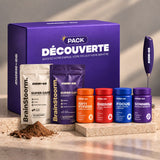
Our mushroom coffee: Lion's Mane, Cordyceps and Chaga at 1,000 mg each, 3,000 mg of maca, ashwagandha and only 20 mg of NewCaff® caffeine per cup.
Discover Brainstoorm →What is ginseng
One root, one name, a lot of confusion.
The word “ginseng” comes from the Chinese rénshēn, the “man root”, because of the shape of its root, which sometimes looks like a human figure with two legs. Its Latin name is even more ambitious: Panax comes from the Greek and shares its root with “panacea”, the cure for all ills.
Botanically, ginseng is a small herbaceous woodland plant of the Araliaceae family. Its fleshy, branching root is harvested after several years of cultivation in the shade. It is one of the oldest and most respected plants in Chinese and Korean medicine, and one of the most studied in the world.
The problem is that the word has spread. On the shelf, “ginseng” can mean three different plants, several preparations of the same root, and even plants with no botanical link at all, given the nickname to sell better. Hence the question: Panax, red or Siberian ginseng, which should you choose?
Ginsengs at a glance
Panax, red, American, Siberian: who's who.
Before going into detail, here is the map. Remember one idea: only the genus Panax contains ginsenosides. The rest is a matter of preparation or nickname.
| Name on the shelf | Plant | What sets it apart |
|---|---|---|
| White ginseng | Panax ginseng | Root, peeled or not, simply dried |
| Red ginseng | Panax ginseng | The same root, steamed then dried: amber colour, altered ginsenoside profile |
| American ginseng | Panax quinquefolius | A different species of Panax, from North America, said to be milder |
| Siberian ginseng | Eleutherococcus senticosus | A thorny shrub, same family but a different genus, no ginsenosides |
| “Indian ginseng” | Withania somnifera | Ashwagandha, no botanical link |
| “Peruvian ginseng” | Lepidium meyenii | Maca, a crucifer from the Andes |
In the United States, a 2002 law reserves the word “ginseng” for species of the genus Panax. In Europe there is no equivalent rule: the Latin name on the label remains your best guide.
White or red ginseng
Red ginseng, a matter of steam.
This is the most common confusion: red ginseng is not a separate species. It is Panax ginseng, prepared differently. The colour comes from processing, not from the plant.
The harvest
The roots are dug up after four to six years of cultivation, the age at which they are considered richest.
Steaming
For red ginseng, they are steamed for several hours. White ginseng skips this step.
Drying
They then dry slowly and take on a translucent reddish-brown hue through browning reactions, as in cooking.
This cooking has two consequences. First, it allows the roots to keep for a very long time, which explains its historical origin in Korea. Second, it changes the composition: some ginsenosides turn into others, such as ginsenoside Rg3, almost absent from the raw root and characteristic of red ginseng.
Is red “better” than white? That has not been shown in general. They are simply different, and studies often concern a specific extract of a specific preparation. Korean red ginseng is the most studied in Asia; standardised white ginseng is widely used in European studies. The price follows scarcity: the age of the root and the steaming make red more expensive.
Korean, Chinese, American
One family, several origins.
“Korean ginseng” and “Chinese ginseng” usually refer to the same species, Panax ginseng, grown in two countries. American ginseng is a distinct species. And there are other Panax, less well known in Europe.
Korean ginseng
Panax ginseng grown in Korea, often sold in red form. Korea has made it a national product, with tightly regulated cultivation.
Chinese ginseng
The same species, grown mainly in north-east China. Sold both white and red.
American ginseng
Panax quinquefolius, native to the forests of eastern North America. Chinese medicine regards it as more “cooling” than Asian ginseng.
Sanqi
Panax notoginseng, another species from southern China, used in traditional medicine for purposes other than tonic ginseng.
As for “wild” ginseng, it has become extremely rare and exorbitantly priced. Almost all ginseng sold today is cultivated, which is not a flaw: controlled cultivation makes it possible to manage the age of the roots and their active content.
Siberian ginseng
Eleuthero, a distant cousin.
Siberian ginseng, or eleuthero (Eleutherococcus senticosus), is a thorny shrub of the Far Eastern taiga. It belongs to the same family as ginseng, but to a different genus, and contains no ginsenosides. Its reference compounds are called eleutherosides, notably B and E.
Its history is unusual. In the 1950s and 1960s, Soviet researchers around Israel Brekhman in Vladivostok were looking for an alternative to Asian ginseng, which was scarce and costly. Eleuthero, abundant and cheap, became their subject of study, and it was around it that the notion of an adaptogen was formalised. Our guide to adaptogenic mushrooms and plants looks back at this concept.
It is often presented as a milder, cheaper version of ginseng. That is a simplification: these are two different plants, with different compositions, and they are not interchangeable. On the research side, modern placebo-controlled trials on sports performance have proved disappointing, as we will see below.
It remains genuinely interesting for those who like traditional herbal courses: it is generally well tolerated, contains no caffeine, and European authorities recognise it as a traditional herbal medicine for temporary fatigue. Everything is detailed on our eleuthero page.
False ginsengs
Indian, Peruvian: misleading nicknames.
The word ginseng has become a marketing label, a byword for a tonic root. Several plants with no botanical link have inherited it. They have their own merits, but they do not replace a Panax.
“Indian ginseng”
It is ashwagandha, an Ayurvedic plant of the Solanaceae family. Its reputation is the opposite of ginseng's: people take it for calm instead. It is in Brainstoorm and in Anti-Stress Complex.
“Peruvian ginseng”
It is maca, a root from the Andean highlands, a cousin of the turnip. It is at the heart of our Energy formula and of Brainstoorm, at 3,000 mg per cup.
“Brazilian ginseng”
A nickname given to suma, a South American plant still rarely found in Europe.
And mushrooms?
Cordyceps is nothing like ginseng, but Chinese tradition ranks it among the great tonics. We include it in Energy, Brainstoorm and Muscle Recovery.
The lesson is the same everywhere: a nickname tells you nothing about the plant. Only the Latin name lets you know what you are buying, and find the studies that match it.
Ginseng benefits
What research says about ginseng.
Ginseng is one of the most studied plants, but the quality of studies varies a lot, and results depend on the extract used. Here are some reference studies, both favourable and cautious. None of them allows us to speak of a guaranteed effect.
Reay, Kennedy and Scholey, 2005 · United Kingdom
Thirty young adults, single doses of 200 and 400 mg of a standardised extract of Panax ginseng, against placebo, during demanding mental tasks. The 200 mg dose was associated with better performance on some tasks and less reported mental fatigue.
Kim et al., 2013 · South Korea
Ninety adults with unexplained chronic fatigue, 1 or 2 g of Panax ginseng a day for four weeks, against placebo. The researchers observed a reduction in perceived fatigue in the ginseng groups.
Geng et al., 2010 · Cochrane Review
A systematic review of trials on ginseng and cognitive function. Conclusion: some encouraging results, but studies too small and too short to draw conclusions.
Goulet and Dionne, 2005 · Canada
A review devoted to Siberian ginseng and endurance: the best-conducted trials show no improvement in sports performance.
On the regulatory side, the European Medicines Agency recognises the root of Panax ginseng as a traditional herbal medicine for temporary fatigue and weakness, on the basis of its long-standing use. However, no health claim is authorised to date for ginseng in food supplements. The full references are at the foot of the page.
Which to choose
Panax, red or Siberian: depending on your goal.
There is no best ginseng in absolute terms. There is the one that suits your use, your budget and your tolerance. Here is an honest guide.
| You are looking for | Rather | Why |
|---|---|---|
| The most studied ginseng | Panax ginseng as a standardised extract | Most human trials concern it |
| The Korean tradition | Red ginseng | Historical preparation, its own ginsenoside profile |
| A milder version | American ginseng | Considered less stimulating in Chinese tradition |
| A long course on a tight budget | Siberian ginseng | Abundant plant, well tolerated, affordable price |
| A routine without ginseng | Cordyceps and maca | Two other tonic traditions, without ginsenosides, in Energy |
| Calm rather than energy | Ashwagandha | “Indian ginseng”, in Anti-Stress Complex |
If you take long-term medication, the answer to “which to choose” goes first through your doctor or pharmacist: Panax has known interactions, which we detail further down in the precautions.
Dose and timing
What dose of ginseng, and when to take it?
Doses vary enormously from one product to another, because we are comparing dried roots, powders and concentrated extracts. Here are some benchmarks, which do not replace the directions for use of your product.
| Form | Daily benchmark | Worth knowing |
|---|---|---|
| Dried root of Panax | 1 to 2 g | Benchmark set by the German Commission E, for a limited course |
| Standardised extract of Panax | According to the label | Studies often use 200 to 400 mg of extract |
| Eleuthero root | 2 to 3 g | Traditional benchmark, or the equivalent as an extract |
| Length of a course | A few weeks | Then a break, according to traditional use |
The right time : in the morning or early in the day, with breakfast. Ginseng is considered a tonic and may disturb sleep if taken late. The right length : courses of a few weeks, interspersed with breaks, rather than continuous use all year round.
And with coffee? For healthy adults nothing forbids it, but avoid stacking stimulants. If you want to cut back on caffeine, Brainstoorm provides only 20 mg per cup, compared with around 80 mg for an espresso.
Side effects and contraindications
What to know before a course.
At usual doses and for limited periods, ginseng is generally well tolerated by healthy adults. But it is an active plant, with real precautions.
The most reported side effects are sleep problems, headaches, nervousness or digestive discomfort. The precautions mainly concern medication.
- Ask your doctor if you take an anticoagulant such as warfarin: interactions have been described.
- The same caution applies to diabetes treatment, as ginseng can influence blood sugar, and to some antidepressants.
- Talk to your doctor if you have high blood pressure, a heart condition or a hormone-dependent disease.
- Ginseng is not recommended during pregnancy and breastfeeding, or for children and teenagers, for lack of sufficient data.
- Avoid taking it in the evening, or combining it with a lot of caffeine or other stimulants.
- Stick to the dose shown on the label and take breaks between courses.
These precautions largely apply to eleuthero too. For an overview, our article on the risks of adaptogenic mushrooms and plants covers the right reflexes before starting a course.
Reading the label
Five lines to check before buying.
Faced with a shelf full of “ginseng” bottles, these five points sort things out in a few seconds.
- The Latin name: Panax ginseng, Panax quinquefolius or Eleutherococcus senticosus. Without it, you do not know what you are buying.
- The part used: the root, not the leaves or stems, which are far less studied.
- The form: root powder or extract, with the concentration ratio if it is an extract.
- Standardisation: a ginsenoside content, or eleutheroside content for Siberian ginseng, expressed as a percentage or in milligrams.
- The dose per serving, in milligrams, and the place of manufacture.
Be wary of blends that line up a dozen plants, including ginseng, with no doses: the amount of each ingredient is often too low to make sense. It is the logic we apply to our formulas, with written doses, as our article on the benefits of adaptogenic mushrooms and plants points out.
Our approach
An energy routine, done differently.
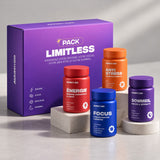
At Mush n Go, we built our range for energy around other tonic traditions, better suited to a daily routine and to displayed doses. Our Energy formula combines Cordyceps, Maca, Ginger and Vitamin C, caffeine-free, as a 30-day course.
For those who prefer to go through their cup, Brainstoorm combines Lion's Mane, Cordyceps and Chaga at 1,000 mg each, 3,000 mg of maca, ashwagandha and 20 mg of microencapsulated caffeine. No mushroom taste, hot or iced.
| Energy | Entrepreneur Pack | Brainstoorm | |
|---|---|---|---|
| Format | Capsules | Capsules | Drink |
| Contents | Cordyceps, Maca, Ginger, Vitamin C | Energy + Focus | 3 mushrooms, maca, ashwagandha, chicory |
| Caffeine | None | None | 20 mg per cup |
| For whom | A targeted course | Mind and body, during busy weeks | Replacing your coffee |
Formulas crafted in Toulouse, vegan, GMO-free and gluten-free. 60-day money-back guarantee, as a one-off purchase or a monthly subscription (−30%). See the Entrepreneur Pack.
Your questions
Everything we get asked about ginseng.
What is the difference between red and white ginseng?
It is the same plant, Panax ginseng. White ginseng is simply dried; red ginseng is steamed before drying, which changes its colour and its ginsenoside profile.
Is Siberian ginseng real ginseng?
No. Eleuthero belongs to the same botanical family, but to a different genus, and contains no ginsenosides. “Siberian ginseng” is a trade name.
What are the benefits of ginseng?
Panax ginseng is traditionally used for temporary fatigue and weakness, a use recognised by the European Medicines Agency. Studies have explored its effects on fatigue and mental performance, with encouraging but still limited results. Also worth reading: The 4 pm slump: why it happens and how to avoid it.
Which ginseng for fatigue?
Panax ginseng as a standardised extract is the most studied. But fatigue that lasts should first be assessed by a doctor, to find its cause. To go further, discover the causes of brain fog and how to clear it.
When should I take ginseng?
In the morning or early in the day, with breakfast. Avoid taking it in the evening, as it can disturb sleep.
What dose of ginseng per day?
Traditional benchmarks are 1 to 2 g of dried root of Panax a day, for a limited course. For an extract, follow the product's directions for use.
What are the side effects of ginseng?
Sleep problems, headaches, nervousness or digestive discomfort are the most reported. Medical advice is essential if you take anticoagulant or antidiabetic treatment, or are pregnant or breastfeeding.
Does ginseng contain caffeine?
No. Neither Panax nor eleuthero contains caffeine. Their tonic reputation comes from other compounds.
What is Indian ginseng?
It is the nickname of ashwagandha, an Ayurvedic plant with no botanical link to ginseng. Likewise, maca is sometimes called Peruvian ginseng.
What does Mush n Go's Energy formula contain?
Energy combines Cordyceps, Maca, Ginger and Vitamin C, caffeine-free, as a 30-day course, with a 60-day money-back guarantee, as a one-off purchase or a monthly subscription (−30%).
Sources
- Reay J. L., Kennedy D. O., Scholey A. B. (2005). Single doses of Panax ginseng (G115) reduce blood glucose levels and improve cognitive performance during sustained mental activity. Journal of Psychopharmacology, 19(4).
- Kim H. G. et al. (2013). Antifatigue effects of Panax ginseng C.A. Meyer: a randomised, double-blind, placebo-controlled trial. PLoS One, 8(4).
- Geng J. et al. (2010). Ginseng for cognition. Cochrane Database of Systematic Reviews, (12).
- Goulet E. D. B., Dionne I. J. (2005). Assessment of the effects of Eleutherococcus senticosus on endurance performance. International Journal of Sport Nutrition and Exercise Metabolism, 15(1).
- European Medicines Agency, HMPC (2014). Community herbal monograph on Panax ginseng C.A. Meyer, radix.
Keep reading
The other tonic plants.
Ginseng is just one of the roots in the large family of adaptogens. Discover the others, or browse the page of all our active ingredients.

Discover our mushroom and adaptogenic plant supplements
Our vegan formulas, made in Toulouse by a French manufacturer.