





Adaptogenic plant
Holy basil (tulsi): the queen of herbs, from Ayurveda to science
By the Mush n Go team · Updated 18 September 2026
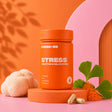
The holy basil, or tulsi (Ocimum tenuiflorum, long known as Ocimum sanctum), grows in the courtyard of millions of Indian homes and holds a place apart in Ayurvedic medicine. Infusion, powder, capsules, essential oil: each form has its uses and its precautions. At Mush n Go, holy basil is one of the plants in our Anti-Stress Complexformula, alongside ashwagandha, reishi and schisandra.

Anti-Stress Complex
Our balance formula: Ashwagandha, Reishi, Holy basil, Vitamin B6, Schisandra and Acacia fibre. 1 to 2 capsules in the morning, to get through busy days.
Discover Anti-Stress →
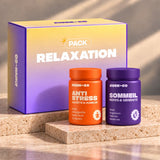
Relaxation Pack
Anti-Stress Complex for the day, Sleep+ for the evening. Two complementary formulas brought together in a single bundle, with or without a subscription.
Discover the bundle →The fact file
Holy basil in brief.
A small, intensely fragrant shrub, slightly downy leaves, spikes of mauve or white flowers. Here are the essentials before going any further.
India's sacred plant
A plant venerated for three thousand years.
In Sanskrit, tulasi means “the incomparable one”. In India, holy basil is not a simple culinary herb: it is a plant of devotion, present in temples as in apartment courtyards, often planted in a small altar of earth or stone.
The Vedic period
Tulsi appears in Hindu traditions as a plant associated with the goddess Lakshmi and the god Vishnu. It is watered, circled each morning, and its leaves are laid down as an offering.
Ayurveda
The texts of traditional Indian medicine class it among the most highly regarded plants. It is nicknamed “the queen of herbs” and is taken as an infusion, as fresh leaf juice or chewed raw.
18th century
Carl Linnaeus describes the plant and places it in the genus Ocimum, the basil genus. The name Ocimum sanctum, “the holy basil”, would be used in the literature for a long time.
2000s
Botanists settle on Ocimum tenuiflorum as the official name. Research intensifies, particularly in India, on its properties and its traditional uses.
Today
“Holy basil” and “tulsi” are both heavily searched for across Europe. The plant has carved out a place in the herbal tea aisle and in adaptogenic formulas.
The word adaptogen, which is often attached to tulsi, comes from Soviet research of the 1940s to the 1960s. It describes plants traditionally used to help the body cope with the demands of daily life. Holy basil shares that label withashwagandha, the rhodiola or schisandra.
Tulsi or sweet basil
Three tulsis, and a cousin not to be confused with them.
Holy basil comes in several forms, which the Indian tradition tells apart by leaf colour and taste.
Rama tulsi
Light green leaves, a mild, refreshing taste. It is the most widespread form in cultivation.
Krishna tulsi
Also called Shyama tulsi, recognisable by its purplish leaves and stems. Its taste is more peppery, sharper.
Vana tulsi
The tulsi “of the forest”, attached to a neighbouring species, Ocimum gratissimum. A very herbaceous, lemony fragrance.
Blends
Many infusions sold under the name tulsi combine two or three of these forms. The packet usually says so.
Another frequent confusion: the difference between holy basil and tropical, or Thai, basil. Thai basil is a variety of sweet basil, widely used in South-East Asian cooking. Holy basil is a distinct species.
| Holy basil (tulsi) | Sweet basil | Thai basil | |
|---|---|---|---|
| Latin name | Ocimum tenuiflorum | Ocimum basilicum | A variety ofOcimum basilicum |
| Leaves | Small, slightly hairy, green or purplish | Broad, smooth, glossy | Narrow, purple stems |
| Taste | Peppery, clove | Mild, aniseed, slightly sweet | Aniseed, liquorice |
| Main use | Infusion, Ayurvedic tradition | Mediterranean cooking, pesto | Thai and Vietnamese cooking |
What it contains
A rich plant, a variety of molecules.
Like most plants, holy basil does not act through a single molecule. Its composition changes with the variety, the soil, the harvest season and the way it is prepared.
Eugenol is the best-known compound. It is what gives tulsi its clove fragrance. It is found in large quantity in the essential oil, far less in an infusion.
Ursolic acid and oleanolic acid are triterpenes, a family of molecules also studied in reishi, another mushroom rich in triterpenes. They are poorly soluble in water and are found mainly in extracts.
Rosmarinic acid and the flavonoids, such as orientin and vicenin, are polyphenols. They pass readily into hot water and account for a good part of what makes the infusion interesting.
| Form | What you mainly get | Use |
|---|---|---|
| Fresh leaf | A bit of everything, in small quantity | Chewed or in cooking, following the Indian tradition |
| Infusion | Rosmarinic acid, flavonoids | Daily herbal tea |
| Dry extract | Triterpenes, polyphenols, depending on the standardisation | Capsules and adaptogenic formulas |
| Essential oil | Eugenol, methyleugenol, beta-caryophyllene | Diffusion, diluted use on the skin |
The benefits of tulsi
What tradition credits it with, and what we actually know.
“Tulsi benefits” and “holy basil benefits” are among the most frequent searches about the plant. The honest answer comes in two parts: an extremely rich tradition, and human research that is encouraging but still young.
On the tradition side, Ayurveda uses tulsi to accompany balance in the face of stress, to support breathing during the cold season and to ease digestion. It is also credited with the role of a vitality plant, to be taken every day, over the long term.
On the research side, holy basil has been the subject of many studies in the laboratory and in animals. In humans, the trials are fewer, often short and modest in size. They deal mainly with perceived stress, sleep, certain metabolic parameters and a few cognitive functions. We set out the most solid ones just below.
What to take away: tulsi is a plant with a well-established traditional use, not a medicine. It is in that spirit, within a formula that brings together several complementary ingredients, that it has its place in an anti-stress routine. Also worth reading: Adaptogenic mushrooms, plants and stress: the guide.
What the studies say
Two reviews, two trials: the essentials of the research.
The Australian researcher Marc Cohen, of RMIT University in Melbourne, is one of the authors who has done most to take stock of the plant. Here is the work to know, with its conditions.
Cohen, 2014 · Australia
A review titled “Tulsi, a herb for all reasons”. It gathers the traditional, animal and human data, and presents tulsi as an adaptogenic plant for daily use, while stressing the need for larger human trials.
Jamshidi and Cohen, 2017 · Australia
A systematic review of 24 studies carried out in humans. The authors conclude that the results are favourable on several parameters, including stress and certain metabolic markers, with no notable adverse effect reported. They stress the uneven quality of the studies.
Saxena et al., 2012 · India
A double-blind, placebo-controlled trial in about 150 adults with symptoms of stress, with a tulsi leaf extract for six weeks. The tulsi group saw its stress symptom scores fall more than the placebo group.
Lopresti et al., 2022 · Australia
A double-blind, placebo-controlled trial in around a hundred adults describing themselves as stressed, with a standardised extract for eight weeks. The researchers observed an improvement in perceived stress and in sleep quality compared with placebo.
In short: encouraging results and good tolerance, in numbers that remain modest. The full references are at the bottom of the page.
The tulsi infusion
The infusion, properly made.
This is the simplest and the most traditional form. Tulsi infusion has a warm, peppery, slightly spicy taste that goes well with ginger, cinnamon, lemon or a spoonful of honey.
The right quantity
A teaspoon of dried leaves, or about ten fresh leaves, for a 250 ml cup.
The infusion
Water just off the boil, then 5 to 10 minutes covered to keep the aromas. Longer, and the taste becomes more pronounced.
The rhythm
One to three cups a day. Tulsi contains no caffeine: it can be drunk at any moment, including in the evening.
In India, tulsi is also prepared as a “chai”: infused with black tea, milk and spices. In that case the caffeine comes from the tea, not from the basil.
And the “danger” of tulsi tea, so often searched for? At the usual quantities it is generally well tolerated in adults. The precautions concern pregnancy, certain treatments and the concentrated forms: we set them out further down, in the section on contraindications.
Capsules, powder, essential oil
Four forms, four uses.
Beyond the infusion, holy basil is found in very different forms. They are not equivalent and are not used in the same way.
| Form | What it is | For which use | Worth knowing |
|---|---|---|---|
| Infusion | Dried leaves, loose or in bags | Daily ritual, hot or cold drink | Dose varies with the preparation |
| Tulsi powder | Dried, ground leaves | To be mixed into a drink or a smoothie | Strong taste, dose hard to measure |
| Capsules | Powder or extract, dosed per capsule | Regular course, known dose | Check whether it is powder or extract |
| Essential oil | Distillation of the aerial parts | Diffusion, diluted use on the skin | Very concentrated, not to be taken orally without advice |
Capsules are the most practical form for regular intake. In the studies, extract doses vary a great deal from one trial to another, from a few hundred milligrams to more than a gram a day, depending on the concentration of the extract. In our products, always refer to the dose stated on the label: for Anti-Stress Complex, it is 1 to 2 capsules in the morning.
Holy basil essential oil is very rich in eugenol, and sometimes in methyleugenol, a molecule whose exposure the European health authorities recommend limiting. It can irritate the skin and the mucous membranes. For diffusion, a few drops are enough, 10 to 15 minutes in an aired room, never in the presence of young children, pregnant women or animals. On the skin, always dilute it in a vegetable oil.
Tulsi is also fashionable for hair, as a mask or a rinse. The research on this is very thin: if you try it, choose the cooled infusion over the essential oil, and do a patch test on the inner elbow 48 hours beforehand.
In the garden
Sowing and planting tulsi at home.
Having a tulsi plant on the balcony guarantees fresh leaves all summer, for the infusion as much as for cooking.
Holy basil is a tropical plant. It loves heat and sun, hates the cold and dies at the first frost. In temperate Europe it is therefore grown as an annual in the ground, or in a pot brought indoors for the winter.
| Step | When | How |
|---|---|---|
| Sow | March to April, indoors | Tulsi seeds barely covered with compost, above 20 °C, keeping the substrate moist |
| Plant out | Mid-May, after the last frosts | In full sun, sheltered from wind, in rich, well-drained soil |
| Water | All summer | Regularly, in the morning, without wetting the foliage or leaving standing water |
| Harvest | From June to the first cold spells | Pinch the stems above a pair of leaves, and remove the flowers to extend the harvest |
The right combinations
Holy basil plays as a team.
In an anti-stress routine, tulsi is never alone. Here are the ingredients that go with it in our range, and why.
+ Ashwagandha
The flagship plant of Ayurveda for balance in the face of stress, at the heart of Anti-Stress Complex. the benefits and dosage of ashwagandha.
+ Reishi
The mushroom of serenity, present both in Anti-Stress Complex and in Sleep+. the benefits and dosage of Reishi.
+ Schisandra
The five-flavour berries of the Chinese tradition, which round out the Anti-Stress Complex formula. the benefits and dosage of schisandra.
+ Vitamin B6
A vitamin that contributes to the normal functioning of the nervous system and to the reduction of tiredness and fatigue, added to Anti-Stress Complex.
You may have come across supplements combining “griffonia and holy basil”. Griffonia is an African plant whose seeds provide 5-HTP, a precursor of serotonin. That is a very different pairing from ours, and it calls for real caution if you are on antidepressant treatment. Anti-Stress Complex contains no griffonia.
Who it is for
An anti-stress routine is for you if…
- You string together days under pressure, at work as much as at home.
- You like traditional plants, but prefer a stated dose to an approximate infusion.
- You are looking for a caffeine-free formula, to take in the morning.
- You want to look after your days and your nights with two complementary formulas.
- You want to understand what you are taking, ingredient by ingredient.
| Anti-Stress Complex on its own | Relaxation Pack | Limitless Pack | |
|---|---|---|---|
| Contents | Anti-Stress Complex | Anti-Stress Complex + Sleep+ | Focus, Energy, Sleep+ and Anti-Stress Complex |
| When | 1 to 2 capsules in the morning | In the morning, and 1 to 2 capsules 30 min before bedtime | Depending on each formula |
| Who it is for | A targeted course for busy days | Day and night, through intense stretches | The complete routine, from focus to sleep |
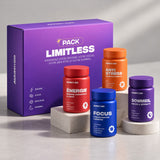
The recipes for all our formulas are developed and produced in Toulouse, France, by a French contract manufacturer, and they are vegan, GMO-free and gluten-free, with a 60-day money-back guarantee and the choice between a one-off purchase and a monthly subscription (−30 %). See the Limitless Pack.
Risks and contraindications
What to know before you start.
As an infusion and at the usual doses, holy basil is well tolerated by the vast majority of adults, and human studies report few side effects, generally mild digestive upsets. The contraindications concern a few specific situations, and the essential oil, which is far more concentrated.
Tulsi is taken at a moderate dose, and some people should seek medical advice before taking it.
- During pregnancy, breastfeeding or while trying to conceive, avoid supplements and regular infusions: animal studies have flagged effects on fertility.
- If you are on anticoagulant treatment or before surgery, ask for advice: eugenol could influence clotting.
- If you are treated for diabetes, talk to your doctor: tulsi could add to your treatment's effect on blood sugar.
- If you take an antidepressant, an anxiolytic, or treatment for high blood pressure or for the thyroid, ask your doctor before starting any course.
- Never swallow holy basil essential oil without the advice of a professional, and never apply it neat to the skin.
- Respect the dose stated on your supplement's label, and keep it out of reach of children.
Your questions
Everything you ask us about holy basil.
What are the benefits of holy basil?
Holy basil has been used for centuries in Ayurveda to accompany balance in the face of stress, digestion and vitality. A few human trials have observed a drop in perceived stress and better sleep, in groups that remain modest. To go further, discover the symptoms of high cortisol and the natural answers.
Holy basil and tulsi, are they the same plant?
Yes. Tulsi is the Indian name for holy basil, Ocimum tenuiflorum, also called Ocimum sanctum. People also speak of Rama, Krishna or Vana tulsi depending on the variety.
What is the difference between holy basil and sweet basil?
They are two different species. Sweet basil, Ocimum basilicum, is mild and aniseed, perfect for pesto. Holy basil is peppery, with a clove taste, and mostly used as an infusion.
Is tulsi dangerous?
No, as an infusion and at the usual doses in a healthy adult. It is not recommended during pregnancy and breastfeeding, and medical advice is essential if you are on anticoagulant, antidiabetic or antidepressant treatment.
What are the contraindications of holy basil?
Pregnancy, breastfeeding and trying to conceive, anticoagulant treatments, the days before an operation, and certain treatments for diabetes, the thyroid or mood. If in doubt, ask your doctor or your pharmacist.
Does holy basil lower blood pressure?
The human data are too limited to say so. If you are being followed for high blood pressure, talk to your doctor before taking a tulsi supplement.
Can you take holy basil with an antidepressant?
Not without your doctor's advice. This matters all the more for supplements that combine holy basil and griffonia, because griffonia provides 5-HTP, which acts on serotonin.
How do you make a tulsi infusion?
A teaspoon of dried leaves for 250 ml of water just off the boil, 5 to 10 minutes covered. One to three cups a day. Caffeine-free, it can be drunk in the evening.
When should you take holy basil?
As an infusion, at any moment of the day. For a supplement, follow the label: Anti-Stress Complex is taken at the rate of one to two capsules in the morning.
Can you swallow holy basil essential oil?
Not without the advice of a health professional. It is very concentrated in eugenol and may contain methyleugenol, exposure to which should be limited.
Can you grow tulsi in Europe?
Yes, as an annual. Sow the seeds somewhere warm in March or April, plant out in full sun after the frosts, and bring the pot indoors before winter.
Is holy basil in Mush n Go products?
Yes, in Anti-Stress Complex, with Ashwagandha, Reishi, Vitamin B6, Schisandra and Acacia fibre. You also find it in the Relaxation Pack and the Limitless Pack.
Sources
- Cohen M. M. (2014). Tulsi – Ocimum sanctum: A herb for all reasons. Journal of Ayurveda and Integrative Medicine, 5(4).
- Jamshidi N., Cohen M. M. (2017). The clinical efficacy and safety of Tulsi in humans: a systematic review of the literature. Evidence-Based Complementary and Alternative Medicine.
- Saxena R. C. et al. (2012). Efficacy of an extract of Ocimum tenuiflorum (OciBest) in the management of general stress: a double-blind, placebo-controlled study. Evidence-Based Complementary and Alternative Medicine.
- Lopresti A. L., Smith S. J., Metse A. P., Drummond P. D. (2022). A randomized, double-blind, placebo-controlled trial investigating the effects of an Ocimum tenuiflorum (Holy Basil) extract on stress, mood, and sleep in adults experiencing stress. Frontiers in Nutrition, 9.
Put it into practice
Holy basil, the Mush n Go version.
You now know all about holy basil and what to look for on a label. Here is where to find it with us, with vegan formulas whose recipes are developed and produced in Toulouse, France, by a French contract manufacturer, backed by a 60-day money-back guarantee.
Anti-Stress Complex
Our balance formula: Ashwagandha, Reishi, Holy basil, Vitamin B6, Schisandra and Acacia fibre. 1 to 2 capsules in the morning, to get through busy days.
Discover Anti-Stress →Relaxation Pack
Anti-Stress Complex for the day, Sleep+ for the evening. Two complementary formulas brought together in a single bundle, with or without a subscription.
Discover the bundle →The other ingredients
Keep exploring.
Holy basil is only one of the plants in our formulas. Discover the other ingredients, or browse the page for all our active ingredients.


Anti-Stress Complex
Say goodbye to stress and welcome serenity, for total peace of mind.

Limitless Pack
Maximizes concentration, energy, reduces stress and improves sleep for optimal performance.

Discovery Pack
Become the best version of yourself to achieve all your goals with efficiency and serenity

Relaxation Pack
Reduces stress and improves sleep for increased relaxation and well-being.