















Medicinal mushrooms: the 12 species to know
By the Mush n Go editorial team - 06 October 2026
By the Mush n Go editorial teamPublished 6 October 202614 min read
The species guide
Medicinal mushrooms are species that have been used for centuries in traditional medicine, especially in Asia, and are studied today for their polysaccharides and triterpenes. The twelve to know: lion's mane, reishi, cordyceps, chaga, oyster mushroom, shiitake, maitake, turkey tail, tremella, agaricus blazei, enoki and wood ear.

Immunity
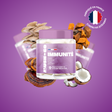
Chaga, Reishi and Oyster mushroom in a single capsule. Three of the most widely consumed medicinal mushrooms in the world, in a vegan formula crafted in France.
Discover Immunity →
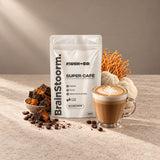
Brainstoorm
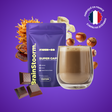
Lion's Mane, Cordyceps and Chaga at 1,000 mg each, plus 3,000 mg of maca: 6,040 mg of actives per cup, 20 mg of caffeine and no mushroom taste.
Discover Brainstoorm →The definition
What is a medicinal mushroom?
The term has no official definition. Medicinal mushrooms are the species with a long history of use in traditional pharmacopoeias, Chinese, Japanese, Korean or Siberian, that are now the subject of scientific research. They are also known as medicinal mushrooms or functional mushrooms.
The history goes back a long way. Ötzi, the Iceman found in the Alps in 1991 and around 5,300 years old, was already carrying two polypore mushrooms, including the birch polypore. In China, reishi and other species appear in materia medica texts nearly two thousand years old. In Japan, shiitake has been grown on logs for centuries.
Some are excellent edible mushrooms you will find in the fresh aisle, like shiitake or oyster mushrooms. Others are too tough or too bitter to cook, like reishi or turkey tail, and are taken as an infusion, a powder or an extract.
What they have in common are their compounds. The most studied are beta-glucans, polysaccharides from the mushroom cell wall, and triterpenes, which are responsible, for example, for reishi's bitterness. Then there are molecules specific to certain species: hericenones in lion's mane, cordycepin in cordyceps, and ergothioneine, an antioxidant for which mushrooms are one of the best food sources.
Medicinal mushroom
A species with a long tradition of use and studied compounds. The term describes a history and a research interest, not a medicine.
Adaptogenic plant
A term reserved for plants, such as ashwagandha or rhodiola, associated with the idea of helping the body cope with stress. For mushrooms, the term is functional mushrooms. We have a full guide to mushrooms and adaptogenic plants.
One important point: in the European Union, none of these mushrooms is a medicine. They are sold as foods or food supplements, and never replace medical treatment.
The list
The 12 medicinal mushrooms to know.
Here is the overview, with the Latin name, the form in which they are most often taken and their traditional area of use. Each species is described in more detail below.
| Mushroom | Latin name | Mostly taken as | Known for |
|---|---|---|---|
| Lion's Mane | Hericium erinaceus | Powder, extract, cooking | Focus, memory |
| Reishi | Ganoderma lucidum | Extract, infusion | Calm, sleep |
| Cordyceps | Cordyceps militaris | Extract, powder | Energy, endurance |
| Chaga | Inonotus obliquus | Infusion, extract | Antioxidants |
| Oyster mushroom | Pleurotus ostreatus | Cooking, powder | Nutrition, beta-glucans |
| Shiitake | Lentinula edodes | Cooking | Natural defences |
| Maitake | Grifola frondosa | Cooking, extract | Beta-glucans |
| Turkey tail | Trametes versicolor | Extract, decoction | Research in Japan |
| Tremella | Tremella fuciformis | Desserts, cosmetics | Skin hydration |
| Agaricus blazei | Agaricus subrufescens | Extract, cooking | Beta-glucans |
| Enoki | Flammulina velutipes | Cooking | Everyday food in Asia |
| Wood ear | Auricularia auricula-judae | Cooking | Circulation, in Chinese medicine |
And the button mushroom? It is by far the most widely eaten mushroom, and it also provides fibre and ergothioneine. But it has no comparable history of medicinal use, so we have left it off this list.
Mind and energy
Lion's Mane and Cordyceps, the mushrooms for drive.
These are the two species most sought after by students, working people and athletes. They are at the heart of Brainstoorm, at 1,000 mg each per cup.
Lion's Mane
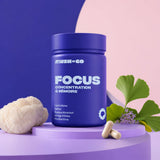
The bearded tooth fungus, or yamabushitake in Japan, forms a cascade of white spines on hardwood trees. It is edible, with a taste close to crab. It is studied for its hericenones and erinacines. You will find it in Focus. All about lion's mane.
Cordyceps
Wild cordyceps, Ophiocordyceps sinensis, parasitises caterpillars on the Tibetan plateau and costs a fortune. The one in supplements is mostly Cordyceps militaris, cultivated and rich in cordycepin. It is in Energy. All about cordyceps.
On the research side, lion's mane was the subject of a small, often-cited Japanese study by Mori and colleagues in 2009 in older adults with mild cognitive decline. Cordyceps has been studied in athletes and older people, in small trials. We detail them in the research section, and in our article lion's mane: benefits, dosage and studies.
Calm and antioxidants
Reishi and Chaga, the two pillars of tradition.
One is glossy and bitter, the other looks like a lump of charcoal. Neither can be cooked, yet they are two of the most widely consumed medicinal mushrooms in the world, as an infusion or an extract.
Reishi
The lacquered bracket, or lingzhi in China, has been nicknamed the "mushroom of immortality" for centuries. Very bitter and rich in triterpenes and polysaccharides, it is usually taken in the evening. It is in Sleep+, Anti-Stress Complex and Immunity. All about reishi.
Chaga
The chaga mushroom grows on birch trees in cold regions: Siberia, Scandinavia, Canada. What is harvested is not a cap but a black, cracked sclerotium, orange on the inside. In Russia, it has long been drunk as an infusion. All about chaga.
To find out more, read our guides to reishi and chaga.
On the plate
Oyster, shiitake, maitake: the medicinal mushrooms you can cook.
Good news: three of the most studied mushrooms are available at the market and are prepared like any other mushroom. It is the simplest and most enjoyable way to add them to your diet.
Oyster mushroom
The oyster mushroom grows in clusters on dead wood and is easy to cultivate on straw or even coffee grounds. It is rich in ergothioneine and contains a studied beta-glucan, pleuran. You will find it in Immunity. All about oyster mushrooms.
Shiitake
Grown on logs in China and Japan for centuries, it is the most searched-for medicinal mushroom in France. It contains lentinan, a beta-glucan. Always eat it well cooked: raw or undercooked, it can cause a streaky skin rash in some people, known as shiitake dermatitis.
Maitake
Hen of the woods forms large clumps of grey-brown caps at the foot of oak trees that can weigh several kilos. Its Japanese name means "dancing mushroom". Japanese researchers have studied one of its beta-glucan fractions, the D-fraction.
In the kitchen, all three can be pan-fried over high heat with a little oil, garlic and parsley. Shiitake adds wonderful flavour to broths, maitake roasts well in large pieces, and oyster mushrooms happily replace meat in a stir-fry. Dried shiitake, rehydrated in warm water, has an even more intense flavour.
Japanese research
Turkey tail and Agaricus blazei, two much-studied species.
These two medicinal mushrooms are less well known to the general public, but they hold an important place in research, particularly in Japan.
Trametes versicolor
Turkey tail is very common in Europe on stumps and dead branches. Too tough to cook, it is taken as a decoction or an extract. In Japan, an extract of turkey tail, PSK, has been used for decades in hospitals, under medical supervision.
Agaricus blazei
A cousin of the button mushroom, native to Brazil, it is known as the almond mushroom or "sun mushroom" and smells of almonds. It became very popular in Japan in the 1990s. Cases of liver damage have been reported with concentrated extracts: be careful with high doses. To find out more, see microdosing functional mushrooms.
Turkey tail is also one of the easiest mushrooms to recognise in the woods: small, thin, leathery fans, zoned with concentric bands of varied colours, from beige to blue-grey and brown, growing in tight groups on dead wood. Its Latin name comes from these changing colours.
These two species show what a medicinal mushroom really is: a serious subject of research, sometimes integrated into medicine in some countries, but not a miracle product. An extract used in hospital under supervision has nothing to do with a powder bought online with no stated dose.
Asian cuisine
Tremella, enoki and wood ear.
These three mushrooms are part of everyday life in China, Japan and Korea. Less studied than the previous ones, they complete the list because they are widely eaten, and because each has a history in traditional medicine.
Tremella
Snow fungus is gelatinous and translucent. In China, it is cooked in a sweet soup with pears and jujubes. Its polysaccharides hold water, hence its use in moisturising cosmetics.
Enoki
Long white stems and tiny caps: this is the form of velvet shank grown away from light, which grows wild in Europe in the middle of winter. Always eat it cooked.
Wood ear
The "black fungus" of Asian restaurants, crunchy and with no strong taste. It also grows in Europe, often on elder. Sold dried, it rehydrates in a few minutes.
For enoki, cooking is not a detail: there have been several product recalls in recent years because of listeria. For wood ear, a 1980 American medical article linked heavy consumption to skin bleeding, due to an effect on platelets: be careful if you take anticoagulant medication.
What the research says
Medicinal mushrooms: three studies to know.
Research on medicinal mushrooms is abundant in the laboratory but much rarer in humans. Here are three often-cited controlled trials, with their exact conditions. The full references are at the bottom of the page.
Mori et al., 2009 · Lion's Mane
30 Japanese adults aged 50 to 80 with mild cognitive decline took 3 g of lion's mane powder a day or a placebo for 16 weeks. The lion's mane group scored better on a cognitive scale. Scores fell after stopping.
Dai et al., 2015 · Shiitake
52 healthy adults ate 5 or 10 g of dried shiitake a day for 4 weeks. The researchers observed changes in several immune system markers in the blood.
Chen et al., 2010 · Cordyceps
20 adults aged 50 to 75 took a cordyceps extract (Cs-4) or a placebo for 12 weeks. The researchers observed an improvement in certain respiratory thresholds during exercise in the cordyceps group.
These results are encouraging, but they concern small groups, short durations and specific products. They do not automatically apply to every powder sold under the same name.
Which mushroom for which use
Choosing among medicinal mushrooms according to your goal.
Twelve species is a lot. To see clearly, start from what you are looking for. Here are the most common matches, as tradition and research describe them, and the formulas where you will find them at Mush n Go.
| Your goal | Associated mushrooms | At Mush n Go |
|---|---|---|
| Focus, mental work | Lion's Mane | Focus, Brainstoorm |
| Energy, sport | Cordyceps | Energy, Muscle Recovery |
| Calm, stress management | Reishi | Anti-Stress Complex |
| Sleep | Reishi | Sleep+ |
| Natural defences, cold season | Chaga, Reishi, Oyster mushroom, Shiitake | Immunity |
| Varied diet | Oyster, Shiitake, Maitake, Enoki | At the market, in the kitchen |
To discover several formulas at once, the Discovery Pack is our most complete box.
Ways to take them
Fresh, powdered or extract: what changes.
The same medicinal mushroom can be taken in many ways, and you do not get the same thing at all. Here is how to find your way.
| Form | What to know | For which species |
|---|---|---|
| Fresh or dried, in cooking | The simplest, with fibre and protein, but in variable amounts | Oyster, shiitake, maitake, enoki, wood ear, lion's mane |
| Infusion or decoction | Mainly extracts the polysaccharides soluble in hot water | Chaga, reishi, turkey tail |
| Mushroom powder | The whole dried mushroom, ground, not very concentrated | All |
| Extract | More concentrated, sometimes obtained by dual extraction with water and alcohol | Reishi, chaga, cordyceps, lion's mane |
| Coffee and drinks | One dose per cup, easy to fit into daily life | Lion's mane, cordyceps, chaga, reishi |
Mushroom coffee has become one of the most popular forms. We explain it in detail in what is mushroom coffee, and you can browse our mushroom coffee collection.
Choosing well
Five criteria for a quality supplement.
The medicinal mushroom market has exploded, and quality varies enormously. Before buying, check these points on the label or product page.
- The Latin name of the species, to avoid confusion: several species are sold under the name reishi or cordyceps.
- The dose in milligrams per serving, not just a list of ingredients.
- The part used: the mushroom body or mycelium grown on grain, which do not have the same composition.
- An identified place of manufacture. Our formulas are crafted in France, vegan, GMO-free and gluten-free.
- A way to try without risk. With us, a 60-day money-back guarantee, as a one-off purchase or a monthly subscription (−30%).
Precautions
Are medicinal mushrooms dangerous?
In cooking and at the doses stated on supplements, they are well tolerated by most adults. But when concentrated, taken for a long time or combined with medication, they call for a few precautions. We have devoted a whole article to the side effects of mushrooms taken as supplements.
The points to watch, species by species.
- Shiitake: always well cooked, to avoid shiitake dermatitis.
- Enoki: always cooked, never raw in a salad.
- Chaga: very rich in oxalates. Avoid if you have kidney stones or kidney disease, and not as a long course at high doses.
- Reishi and wood ear: seek advice if you take an anticoagulant or before surgery.
- Agaricus blazei: be careful with concentrated extracts if your liver is fragile.
- Pregnancy, breastfeeding, children, ongoing medication or an autoimmune disease: ask your doctor.
- Never pick a wild mushroom without having it identified, for example by a pharmacist or a mycological society.
Your questions
Everything people ask us about medicinal mushrooms.
What are the best-known medicinal mushrooms?
Reishi, shiitake, lion's mane, cordyceps, chaga and maitake are the best known. Turkey tail, oyster mushroom, tremella, agaricus blazei, enoki and wood ear complete the list of the most widely consumed species.
What is the most powerful medicinal mushroom?
There is no single one. Each species has its own compounds and uses: lion's mane for focus, cordyceps for energy, reishi for calm. It all depends on your goal, and on the quality and dose of the product.
Medicinal, functional or adaptogenic mushroom: what is the difference?
Medicinal mushroom and functional mushroom mean the same thing: a species with a long tradition of use and studied compounds, such as reishi or cordyceps. The word "adaptogenic" is used for plants such as ashwagandha or rhodiola. That is why our formulas combine mushrooms and adaptogenic plants.
What are the benefits of shiitake?
Shiitake is a good food, rich in fibre, plant protein and beta-glucans such as lentinan. A 2015 study observed changes in immune markers in adults who ate it every day for 4 weeks.
Is maitake edible?
Yes, it is an excellent edible mushroom, very popular in Japan, where it is called the dancing mushroom. It can be pan-fried or roasted, and is found fresh or dried in Asian grocery shops.
What is trametes versicolor?
It is turkey tail, a small fan-shaped mushroom very common on dead wood. Too tough to cook, it is taken as a decoction or an extract. In Japan, one of its extracts, PSK, is used in hospitals.
Can you pick medicinal mushrooms in Europe?
Yes, several grow wild: oyster mushroom, turkey tail, wood ear, velvet shank, maitake or lion's mane, which is protected in some European countries. Always have your harvest identified before eating it.
Is the button mushroom a medicinal mushroom?
Not in the traditional sense: it has no history of medicinal use comparable to reishi or shiitake. It is, however, a good food, low in calories, providing fibre, B vitamins and ergothioneine. It belongs to the same genus as agaricus blazei.
Can you combine several medicinal mushrooms?
Yes, it is very common. Our Immunity formula combines chaga, reishi and oyster mushroom, and Brainstoorm combines lion's mane, cordyceps and chaga. Seek advice if you are on medication.
How long should you take medicinal mushrooms?
Supplements are generally taken as a course of several weeks, as in the studies, with breaks. In cooking, you can eat them as often as you like, well cooked.
Sources
- Mori K., Inatomi S., Ouchi K., Azumi Y., Tuchida T. (2009). Improving effects of the mushroom Yamabushitake (Hericium erinaceus) on mild cognitive impairment: a double-blind placebo-controlled clinical trial. Phytotherapy Research, 23(3).
- Dai X. et al. (2015). Consuming Lentinula edodes (Shiitake) mushrooms daily improves human immunity: a randomized dietary intervention in healthy young adults. Journal of the American College of Nutrition, 34(6).
- Chen S. et al. (2010). Effect of Cs-4 (Cordyceps sinensis) on exercise performance in healthy older subjects: a double-blind, placebo-controlled trial. Journal of Alternative and Complementary Medicine, 16(5).
- Hammerschmidt D. E. (1980). Szechwan purpura. New England Journal of Medicine, 302(21).
Keep reading
Go further.
Each species deserves its own guide. Discover our mushroom pages, or start with our guide to mushrooms and adaptogenic plants.

Discover our mushroom and adaptogenic plant supplements
Our vegan formulas, made in Toulouse by a French manufacturer.