

















Revising for exams: 10 habits to stay focused
By the Mush n Go editorial team - 09 October 2026
By the Mush n Go editorial teamPublished 9 October 202614 min read
Study and focus
To revise for exams and stay focused, rely on what research backs up: test yourself rather than re-read, spread your revision over several days, work in blocks of 25 to 50 minutes, keep your phone out of the room and protect your sleep. A plan, active breaks and music without lyrics do the rest.

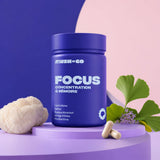
Focus
Our focus formula: Lion's Mane, Saffron, Bacopa monnieri, Ginkgo biloba and Maritime pine. The 30-day course for revision periods and intense work.
Discover Focus →
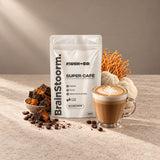
Brainstoorm
Our mushroom coffee: Lion's Mane, Cordyceps, Chaga and Maca, with only 20 mg of microencapsulated caffeine per cup. Hot or cold, with no mushroom taste.
Discover Brainstoorm →Habit 1 · Plan backwards
A revision timetable that holds up.
Focus starts before you sit down. When you don't know what to revise, you waste ages choosing, start with the easy stuff and put off the rest. A timetable solves this problem once and for all.
The simplest method is the backward plan : start from the exam date and work back in time. List every subject and every chapter, estimate the time each will take, then spread them across the weeks left, keeping some slack for the unexpected.
| Period | Goal | What you do |
|---|---|---|
| D-30 to D-15 | Cover the whole syllabus | Notes, exercises, a first pass over each chapter |
| D-15 to D-7 | Consolidate | Test yourself, redo failed exercises, go back over weak points |
| D-7 to D-2 | Practise in real conditions | Timed past papers, oral questions on the course |
| The day before | Review, don't learn | A last look over your notes, then a calm evening |
Each day, set yourself two or three precise goals, such as "do exercises 4 to 8 in chapter 3", rather than a vague "revise chemistry". A clear goal is a goal you actually start.
Habit 2 · Test yourself
Stop re-reading, quiz yourself.
This is the most useful finding in learning research, and the least applied. Re-reading your notes and highlighting give an impression of mastery: the text feels familiar, so you think you know it. But recognising information is not the same as being able to retrieve it on exam day.
Testing yourself forces your brain to fetch the information without having it in front of you. It is more uncomfortable, and that is exactly why it works: each effort of recall strengthens the memory. Researchers call it the testing effect, or retrieval practice.
- Close your notes and write down everything you remember on a blank sheet.
- Make question-and-answer cards, and only turn the answer over after you have answered.
- Redo worked exercises without looking at the solution.
- Explain the chapter out loud, as if you were presenting it to someone.
- Work on past papers from previous years, against the clock.
And when you get it wrong? Good. Note the mistake, read the right answer, then test yourself again later. That loop is where most of the learning happens.
Habit 3 · Space out revision
Less cramming, more coming back.
Revising a chapter for four hours straight the night before the exam feels productive. The same time, split into four one-hour sessions over several days, produces far more lasting memories. This is called spaced repetition, one of the most robust effects in memory psychology.
The principle is simple: come back to an idea just as you are starting to forget it. One rhythm often suggested to students is to review a lesson the next day, then a few days later, then a week after that. The further away the exam, the longer the intervals can be.
The same day
You learn the chapter and make your cards. A first quick test at the end of the session.
A few days later
You test yourself on the cards, without re-reading the notes first. You note what didn't stick.
A week later
Another test, focusing on the weak points. The chapter starts to hold on its own.
A bonus: mix up subjects or types of exercise in the same session, rather than doing everything in blocks. It is more confusing at the time, but it trains you to recognise which method to apply, exactly as on exam day.
What the research says
Revising effectively: three landmark studies.
Revision methods are not just a matter of taste. Cognitive psychologists have been comparing them for decades. Here are three pieces of research that changed how we see learning.
Roediger and Karpicke, 2006 · United States
Students read a text, then re-read it or tested themselves on it. Five minutes later, the "re-readers" did slightly better. But two days and one week later, those who had tested themselves remembered much more.
Cepeda et al., 2006 · United States
A meta-analysis of several hundred experiments on verbal memory: for the same study time, spreading sessions out over time produces better memories than concentrating them in one go.
Dunlosky et al., 2013 · United States
A review of ten learning techniques. Testing yourself and spacing out revision got the highest usefulness rating. Re-reading, highlighting and summarising, among the most used by students, got the lowest.
The good news: these methods don't take more time, just a different use of the time you already have. The full references are at the bottom of the page.
Habit 4 · Work in blocks
How to focus: the block method.
Nobody stays focused for four hours straight. Attention fluctuates, and trying to force it often ends in a "ghost" session: you're at your desk, but not doing much. The solution is to cut your time into short blocks, separated by real breaks.
The best known of these methods is the Pomodoro technique, invented in the late 1980s by the Italian Francesco Cirillo, then a student, with a tomato-shaped kitchen timer.
25 minutes
One task, a timer running, no interruptions. If an idea pops up, write it down and carry on.
5 minutes
A real break: stand up, drink a glass of water, look out of the window. No phone.
After 4 blocks
A long break of 15 to 30 minutes, to recharge before the next cycle.
Twenty-five minutes is a starting point, not a rule. Many students then move on to blocks of 45 or 50 minutes, followed by a 10-minute break. What matters is the principle: a short, protected stretch of work, then a clean break.
Habit 5 · Put the phone away
Your phone, in another room.
A notification, a message, a glance "just to check": every interruption breaks your momentum, and it then takes several minutes to get back into an exercise. During revision, your phone is focus enemy number one.
Even switched off, it is not neutral. In a study of nearly 800 people, Adrian Ward and colleagues found that participants whose smartphone was on the desk, screen down, did worse on working memory tests than those who had left it in another room. Its mere presence seemed to take up some of their attention.
- Leave your phone in another room during every work block.
- Turn on your computer's focus mode, or a site blocker.
- Close all unnecessary tabs and keep only your notes open.
- Tell those close to you your hours: they'll know when to reach you.
Habit 6 · Choose your music
Music for focus: what helps, what gets in the way.
"Music for concentration" is one of the most common searches during exam season. Should you revise with music on? The answer depends mainly on the type of music and the task.
The famous "Mozart effect" comes from a short study published in 1993 by Frances Rauscher and colleagues: students scored better on spatial reasoning tasks after listening to a Mozart sonata. The effect was brief, and later research struggled to reproduce it. So listening to Mozart does not make you more intelligent.
What is much better established is that lyrics get in the way of verbal tasks, such as reading, learning by heart or writing. The brain can't help processing the words it hears, even when you try to ignore them.
| Type of sound | For which revision | Avoid when |
|---|---|---|
| Silence | Learning by heart, difficult reading, writing | Silence makes you nervous |
| Calm instrumental music | Exercises, cards, repetitive tasks | It is too rhythmic or too loud |
| White noise, rain, café sounds | Masking a noisy environment | The volume is high |
| Music with lyrics | Mechanical tasks, tidying up, breaks | You are reading, learning or writing |
A good compromise: an instrumental playlist, always the same one, at low volume. It ends up becoming a signal: when it starts, it's time to work.
Habit 7 · Protect your sleep
At night, your brain revises for you.
It's the habit most often sacrificed during exams, yet one of the most important. During sleep, the brain consolidates what you learned during the day. An all-nighter before an exam means both less memory and less focus the next day. To find out more, see the benefits and dosage of rosemary.
Regular hours
Go to bed and get up at roughly the same time, even at weekends. Your body clock will thank you.
No screens before bed
Switch off screens an hour before bed. Read over a paper card instead.
Caffeine before 2 pm
It works long after the last cup, and can shorten your night without you noticing.
A short nap
Twenty minutes in the early afternoon, no more, to avoid waking up even more tired.
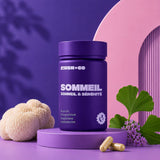
If exam stress keeps you from falling asleep, our Sleep+ formula contains melatonin, which contributes to reducing the time it takes to fall asleep, with Reishi, Valerian and magnesium bisglycinate. 1 to 2 capsules 30 minutes before bed.
Habit 8 · Move
Active breaks, not the sofa.
Sitting for eight hours a day numbs body and mind. The most useful breaks are not the ones spent on social media, but the ones where you move a little: stand up, walk, stretch, breathe at the window.
A twenty- to thirty-minute walk each day, ideally in daylight, helps you switch off, ease built-up tension and sleep better at night. During short breaks, a few stretches or a trip up and down the stairs are enough to get going again.
And if you do sport, don't stop during revision. Cut back the volume if needed, but keep your sessions: they are often the best moment of the day to let off steam.
Habit 9 · Eat and drink
What's on your plate and in your cup.
A heavy lunch, and you are guaranteed a nap over your notes. During revision, aim for simple, regular meals: vegetables, protein, wholegrain starches, and snacks that don't send you on a rollercoaster, such as fruit, nuts or a yoghurt. And drink water throughout the day: a water bottle on your desk is the most effective reminder.
Then there's the question of coffee. Many students drink cup after cup to keep going. The problem is jitters, clammy hands before the exam and worse sleep. That's why we designed Brainstoorm with only 20 mg of microencapsulated caffeine per cup, combined with 1,000 mg of Lion's Mane, Cordyceps and Chaga and 3,000 mg of Maca. Here's what two of our customers say on Trustpilot (reviews translated from French).
"I feel more focused and much less jittery"
★★★★★ Roxane T., 24 October 2025, about Brainstoorm
"I particularly appreciate the steadier energy it gives: no jitters and no energy slumps."
★★★★★ Nawel F., 7 January 2026, about Brainstoorm
If you're looking for more drink ideas, read our article on drinks with mushrooms and adaptogenic plants and focus.
Habit 10 · Manage stress
Exam stress, tamed.
A little stress helps you get going. Too much, and your mind goes blank when it's time to answer. Exam nerves can't be removed, but they can be tamed, especially if you start early.
- Practise in real conditions: timer, tidy desk, no notes.
- Practise slow breathing, for example breathing out for longer than you breathe in, a few minutes a day.
- Keep at least one evening a week free of revision.
- Talk about your worries to someone close, a classmate or your school or university health service.
- Replace "I have to know everything" with "I'm doing my best with the time I have".
For those who like plants, our Anti-Stress Complex formula combines ashwagandha, Reishi, holy basil, schisandra and vitamin B6. And to understand how stress works, read our article on how to lower cortisol.
If anxiety becomes overwhelming, if you can no longer sleep or have dark thoughts, don't wait for the exams to end: talk to your doctor or your student health service. If you are in distress, Samaritans answer free on 116 123, 24 hours a day, in the UK and Ireland.
A typical day
A revision day, from waking to bedtime.
Here's what a day applying these ten habits can look like. Adapt the times to your own rhythm: what matters is the structure, not the exact time.
7:30 am
Wake up at a fixed time, daylight, breakfast with protein. 1 to 2 capsules of Focus during your course.
8:30 am
Two blocks on the hardest subject, while your head is fresh. Phone in another room.
10:30 am
A 20-minute break, outside if possible. Then a cup of Brainstoorm and two blocks of exercises.
12:30 pm
A light lunch, away from your desk. A short walk or a 20-minute nap.
2 pm
Tests on the chapters from previous days: cards, blank sheet, past papers.
5 pm
Sport or a walk. Then one last short session to plan the next day.
In the evening
No revision after dinner, or just a look over your cards. Screens off, bed at a fixed time.
Plants and mushrooms
Natural nootropics, in their rightful place.
During revision, many students take an interest in natural nootropics, the plants and mushrooms associated with focus. Let's be clear: no supplement replaces the ten habits in this article. But some like to add them to their routine, over the length of a course.
Lion's Mane
The white-maned mushroom, studied for its hericenones. In Focus and Brainstoorm. Find out more.
Bacopa
A plant from the Ayurvedic tradition, taken over several weeks. In Focus. Find out more.
Ginkgo biloba
One of the most studied leaf extracts in the world. In Focus. Find out more.
Saffron
A precious spice, studied in particular for mood. In Focus. Find out more.
To understand these ingredients fully, read our guide to natural nootropics. And if you want the complete routine, the BrainPower Pack brings together Focus, Energy and a Brainstoorm.
Your questions
Everything people ask us about revising.
How can I focus when revising?
Work in blocks of 25 to 50 minutes on a single task, with your phone in another room and short breaks where you move. Set precise goals for each session and protect your sleep.
What is the best way to revise for exams?
According to research in the psychology of learning, the two most effective methods are testing yourself (question-and-answer cards, blank sheet, past papers) and spacing out revision over several days. Re-reading and highlighting are much less effective.
What music should I listen to for focus?
Calm instrumental music at low volume works well for exercises. For reading, learning by heart or writing, silence is still better: lyrics get in the way of verbal tasks.
How many hours a day should I revise?
There's no ideal figure. Many students manage four to six hours of truly focused work, split into blocks. Fewer hours well used are better than long, scattered days.
How can I improve my concentration for studying?
Get enough sleep, keep your phone away, work in blocks, move during breaks, eat a light lunch and drink water. These are the habits that make the biggest difference.
Does coffee help with revision?
A moderate amount can help you stay alert, but too much causes jitters and damages sleep. Limit yourself to a few cups, before 2 pm. Our Brainstoorm contains 20 mg of caffeine per cup.
Should you revise the night before an exam?
A light review of your cards, yes. Learning new chapters late at night, no: a good night's sleep will serve you better.
Is it better to revise in the morning or the evening?
It depends on your rhythm. Many people are more effective in the morning for difficult tasks. Either way, avoid revising late if it pushes back your bedtime.
How can I revise effectively in a short time?
Focus on past papers and the most frequent questions, test yourself rather than re-read, and keep your hours of sleep. Last-minute cramming doesn't stick for long.
Sources
- Roediger H. L., Karpicke J. D. (2006). Test-enhanced learning: taking memory tests improves long-term retention. Psychological Science, 17(3).
- Cepeda N. J., Pashler H., Vul E., Wixted J. T., Rohrer D. (2006). Distributed practice in verbal recall tasks: a review and quantitative synthesis. Psychological Bulletin, 132(3).
- Dunlosky J., Rawson K. A., Marsh E. J., Nathan M. J., Willingham D. T. (2013). Improving students' learning with effective learning techniques. Psychological Science in the Public Interest, 14(1).
- Ward A. F., Duke K., Gneezy A., Bos M. W. (2017). Brain drain: the mere presence of one's own smartphone reduces available cognitive capacity. Journal of the Association for Consumer Research, 2(2).
- Rauscher F. H., Shaw G. L., Ky K. N. (1993). Music and spatial task performance. Nature, 365.
Keep reading
Go further on focus.
Focus is built on every front: habits, sleep, food, plants. Here are our other articles and ingredient pages to keep going.

Discover our mushroom and adaptogenic plant supplements
Our vegan formulas, made in Toulouse by a French manufacturer.