









The sleep plant
Valerian: the root of calm nights, from tradition to science
By the Mush n Go team · Updated on 18 September 2026
The valerian (Valeriana officinalis) is the most used sleep plant in Europe. Its root, with its very particular smell, has been taken as a tea, in capsules or as a tincture since Antiquity. What it really does, what it does not do, and how to take it safely: here is the essential. At Mush n Go, you will find it in Sleep+, our evening formula.

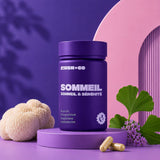
Sleep+
Our evening formula: Reishi, Valerian, Magnesium bisglycinate, Acacia fibre and Melatonin. 1 capsule 30 minutes before bedtime.
Discover Sleep+ →
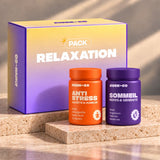
Relaxation Pack
Anti-Stress Complex in the morning, Sleep+ in the evening. The duo for the periods when your head never really stops.
Discover the pack →The fact file
Valerian in brief.
A tall perennial of damp meadows, pinkish-white flowers in umbels, and a root you would recognise with your eyes shut. Here is the essential before going further.
Officinalis or red?
Two plants, one name, nothing in common.
This is the most frequent confusion. The “valerian” that flowers bright red on old southern walls is not the valerian of sleep. They share a name, not a use.
| Common valerian | Red valerian | |
|---|---|---|
| Latin name | Valeriana officinalis | Centranthus ruber |
| Flowers | White to pale pink, in fragrant umbels | Bright red, pink or white, in dense clusters |
| Where to find it | Cool, damp places, water's edge | Walls, rockeries, dry sunny banks |
| Part used | The root, dried | The flowers for decoration, the young leaves in cooking |
| Use | Teas and supplements for sleep | Ornamental garden plant |
Red valerian, also called garden valerian, is edible: its young leaves are eaten raw in salad or cooked like spinach. But it has neither the fragrant root nor the molecules of common valerian. For sleep, the only one that counts is Valeriana officinalis.
A long history
From ancient Greece to our bedside tables.
Its name is thought to come from the Latin valere, “to be in good health”. A name that says a lot about the place it held for centuries in physic gardens and pharmacies.
Antiquity
Greek physicians already describe it. Galen, in the 2nd century, recommends it against insomnia: it is one of the oldest known uses of a plant for sleep.
Middle Ages
Grown in monasteries, it earns the nickname of “all-heal”. It is then credited with just about every virtue, far beyond sleep.
19th century
Valerian root enters the European pharmacopoeias as a remedy for nervousness. It still appears today in the European Pharmacopoeia.
1980s
The first modern controlled trials, in Switzerland, on aqueous root extracts. Valerian enters the era of clinical research.
Today
Valerian is one of the most searched-for sleep plants online. It remains one of the best-selling sleep plants in Europe.
What it contains
One root, several families of molecules.
Valerian is not a single molecule but a whole. That is in fact one of the reasons why researchers find it hard to say precisely “what acts”.
Valerenic acid and its derivatives are specific to common valerian. They are the ones most often used to standardise extracts. In the laboratory, they interact with the GABA-A receptors, the very ones involved in the passage into sleep.
The valepotriates are fragile compounds, which break down quickly with heat and storage. They are found above all in the fresh root, and little in teas and dry extracts.
The essential oil of the root, rich in sesquiterpenes, carries part of its scent. And isovaleric acid, which forms during drying, explains the strong smell everyone recognises. It is also that smell that attracts cats so much, hence its nickname of cat's herb.
| Form | What you mainly get | Use |
|---|---|---|
| Dried root | A little of everything, in variable amounts | Tea, decoction |
| Dry extract | Valerenic acid, standardised dose | Capsules, tablets |
| Mother tincture | Compounds extracted by alcohol | Drops diluted in water |
| Essential oil | Volatile sesquiterpenes | Diffusion, rarely used |
The benefits of valerian
What tradition credits it with, and what we actually know.
The benefits of valerian are among the most asked questions about plants. The honest answer comes in two parts: a very well established traditional use, and clinical research that remains divided.
On the tradition side, valerian is used for two things: helping you fall asleep and easing mild nervous tension. The European Medicines Agency (EMA) recognises both uses in its monograph on valerian root. For certain extracts it even speaks of “well-established use”, a level reserved for plants that have clinical data.
On the research side, dozens of trials have been run. Many report an improvement in sleep quality as felt by the participants. But the objective measures, in a sleep laboratory, are less clear-cut. And the quality of those trials is very uneven.
And the other virtues credited to it, for the stomach, period pain or mood? They belong above all to tradition. The data are too thin to go any further.
What to take away: valerian is not a sleeping pill. It is a supporting plant, which fits into an evening routine, over several days, alongside good sleep habits.
Valerian and sleep
Four studies to understand the debate.
Few plants have been tested so much for sleep. And few divide researchers so much. Here is the most cited work, with its exact conditions.
Leathwood et al., 1982 · Switzerland
128 volunteers took, on some evenings, 400 mg of aqueous valerian root extract, and on other evenings a placebo. With valerian, they reported falling asleep more easily and sleeping better, with no “hangover” effect the next day.
Donath et al., 2000 · Germany
16 people with insomnia, 600 mg of extract, studied in a sleep laboratory. No clear effect after a single intake. After 14 days of intake, the share of deep sleep had increased: an argument for a regular rather than an occasional intake.
Bent et al., 2006 · United States
A meta-analysis of 16 controlled trials, that is more than 1 000 participants. Conclusion: valerian might improve sleep quality, but the authors underline trials of uneven quality and possible publication bias.
Taibi et al., 2007 · United States
A systematic review of 37 studies, 29 of them controlled. Its title sums up the finding: valerian is safe, but its efficacy is not demonstrated by the best trials.
In short: a very well tolerated plant, a benefit felt by some users, and a science that still calls for more solid trials. The full references are in the at the bottom of the page.
Its effect, and when
A background plant, not a switch.
This is the most misunderstood point. Many people take valerian one evening, feel nothing, and conclude that it does not work. That is normal: its effect is discreet and gradual.
The European monograph says it clearly: for sleep disturbance, the optimal effect can take two to four weeks of regular intake. That is consistent with the Donath study: nothing after one intake, longer deep sleep after two weeks.
What you can expect is falling asleep more easily and a feeling of more restorative sleep. What you should not expect is the knock-out effect of a sleeping pill. And that is rather good news: valerian does not bring the marked next-day drowsiness seen with certain medicines. Also worth reading: High cortisol: symptoms and natural solutions.
Tea, capsules, tincture
Which form to choose?
Valerian in capsules, in tablets, as a tea, as a mother tincture or even as an essential oil: the shelves offer all sorts. Each form has its advantages, and its limits.
| Form | Advantage | Limit |
|---|---|---|
| Capsules and tablets | Precise dose, no taste, easy to carry | To be chosen with an identified and measured extract |
| Tea or infusion | A real evening ritual, inexpensive | Strong smell, variable content from one cup to the next |
| Mother tincture | Dose adjustable drop by drop | Contains alcohol, marked taste |
| Essential oil | Woody scent for diffusion | Little studied, never by mouth without advice |
| Homeopathy | Very widespread in pharmacies | Dilutions unrelated to the doses in the studies |
For a regular routine, the capsule remains the simplest solution: no smell, no preparation, and the same dose every evening. That is the choice we made with Sleep+.
And organic valerian? The label guarantees a way of growing, not an active content. For an extract, standardisation matters more.
Valerian tea
The tea, properly made.
Valerian tea is the oldest form. Its taste is earthy, slightly bitter, and its smell is surprising. People happily soften it with lemon balm or lime blossom.
The right amount
2 to 3 g of dried root, that is about a teaspoon, for a 150 to 250 ml cup.
The infusion
Pour simmering water over the root and leave it to infuse for 10 to 15 minutes with the lid on, then strain.
The moment
About an hour before bedtime. If needed, a cup earlier in the evening.
And the “danger” of valerian tea, so often searched for? At those amounts, it is generally well tolerated in adults. The precautions concern pregnancy, children, alcohol and certain treatments: we set them out below, in the precautions.
What dose
The doses in the studies.
There is no single dose of valerian: everything depends on the form. Here are the markers from the studies and from the European monograph. For a supplement, the right dose is always the one on the label.
| Form | Marker | Source |
|---|---|---|
| Aqueous extract | 400 mg in the evening | Leathwood, 1982 |
| Hydroalcoholic dry extract | 600 mg in the evening | Donath, 2000 |
| Dried root as a tea | 2 to 3 g per cup | Traditional use |
| Food supplement | The dose on the label | Manufacturer |
In Sleep+, valerian is combined with other actives. The detailed composition is on the label: that is what counts, and the recommended dose must not be exceeded.
A typical evening
Valerian, from dinner to bedtime.
A sleep plant does not do everything. It works better in an evening that is already preparing you for rest. Here is how to fit it in, without turning anything upside down.
7:30 pm
A light dinner, not too late. Avoid alcohol, which fragments sleep and does not go with valerian.
9 pm
Lights low, screens put away. If you like herbal teas, this is the moment for a gentle infusion.
10 pm
One capsule of Sleep+, 30 minutes before bedtime, with a glass of water.
The right combinations
Valerian plays as a team.
In an evening routine, valerian is rarely alone. Here are the ingredients that go with it in our range, and why.
+ Melatonin
The hormone that signals to the body that night has fallen, at the heart of Sleep+. Melatonin: benefits, dosage and precautions.
+ Magnesium bisglycinate
A form of magnesium that is well absorbed and gentle on the stomach, in Sleep+. Magnesium bisglycinate: benefits, dosage and precautions.
+ Reishi
The mushroom of calm, present both in Sleep+ and in Anti-Stress Complex. the benefits and dosage of Reishi.
+ Ashwagandha and Holy basil
Two ayurvedic plants for managing stress, in Anti-Stress Complex, for the daytime. Ashwagandha and holy basil.
In herbal medicine, valerian is also often combined with passionflower, lemon balm, hops or California poppy. These blends are traditional. Simply avoid adding several sleep products together without advice: one complete formula is better than three bottles.
Choosing well
Five criteria for a valerian supplement.
- The right Latin name : Valeriana officinalis, and not red valerian or another valerian species.
- The part used : the root. A label that does not say so deserves a question.
- For a supplement : an identified extract, with a dose in milligrams per serving, not just a list of ingredients.
- The manufacturing : an identified place of manufacture. With us, the recipes are developed and produced in Toulouse, France, by a French contract manufacturer, vegan, GMO-free and gluten-free.
- The guarantee : enough to try it risk-free. With us, 60 days satisfied or your money back, and the choice between a one-off purchase and a monthly subscription (−30%).
Who it is for
An evening routine is made for you if…
- You take a long time to fall asleep, your head still full of the day.
- You are going through a busy period, which is spilling over into your nights.
- You prefer plants, with stated doses, to an approximate tea.
- You are looking for a simple routine: one capsule, at a fixed time, with or without a subscription.
- You want to understand what you are taking, ingredient by ingredient.
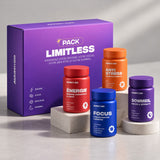
| Sleep+ on its own | Relaxation Pack | Limitless Pack | |
|---|---|---|---|
| Contents | Sleep+ | Anti-Stress Complex + Sleep+ | Focus, Energy, Sleep+, Anti-Stress Complex |
| Moment | In the evening | Morning and evening | All day long |
| Who it is for | A targeted sleep routine | The stress of the day and the rest of the night | The complete routine, from focus to sleep |
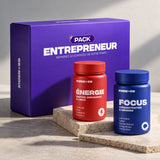
For all our formulas, the recipes are developed and produced in Toulouse, France, by a French contract manufacturer, vegan, GMO-free and gluten-free, with 60 days satisfied or your money back and the choice between a one-off purchase and a monthly subscription (−30 %). See the Relaxation Pack or the Limitless Pack.
Risks and side effects
What to know before taking it.
Valerian is one of the best tolerated sleep plants. In the trials, adverse effects are rare and close to those of placebo. But “natural” does not mean “without rules”.
The possible side effects are mainly digestive: nausea, stomach cramps. More rarely, headaches or next-day drowsiness. They generally disappear on stopping.
And the liver? A few rare cases of liver injury have been reported, most often with products combining several plants, without valerian's role being established. As a precaution, stop and see a doctor in case of unusual tiredness, persistent nausea or dark urine.
Tea and extracts are taken at a moderate dose. Some situations call for medical advice before starting.
- During pregnancy and breastfeeding, valerian is not advised, for lack of sufficient data.
- It is not recommended in children under 12 without medical advice.
- Avoid alcohol, and ask for advice if you take sleeping pills, anxiolytics or antidepressants: the sedative effects can add up.
- Be careful driving or with machinery if you feel drowsy.
- Tell your doctor before an anaesthetic, and stop if you have ever had a liver problem without discussing it with them.
- Follow the dose stated on the label of your supplement, and keep it out of reach of children.
Finally, insomnia that lasts more than a few weeks deserves a real medical appointment. A plant supports sleep. It does not replace a diagnosis.
Your questions
Everything we are asked about valerian.
What are the benefits of valerian?
Valerian is traditionally used to help you fall asleep and to ease mild nervous tension, two uses recognised by the European monograph. In the studies, some participants report better quality sleep, but the results remain divided.
Does valerian really make you sleep?
It does not send you to sleep like a sleeping pill. It mainly helps you find sleep more easily, with a gradual effect that can take two to four weeks of regular intake.
Is valerian dangerous?
No, at the usual doses in a healthy adult. It is not advised during pregnancy, breastfeeding or in children under 12, and it must not be combined with alcohol or sedatives without medical advice.
What are the side effects of valerian?
They are rare: digestive upset, headaches, sometimes next-day drowsiness. A few cases of liver injury have been reported, above all with plant blends. In case of an unusual symptom, stop and see a doctor.
Can valerian be taken with an antidepressant?
Not without the advice of your doctor or pharmacist. Valerian can strengthen the sedative effect of certain treatments, including antidepressants, anxiolytics and sleeping pills.
Is valerian a drug?
No. It is a plant used since Antiquity, sold freely as a tea and as a supplement. No dependence has been clearly demonstrated at the usual doses, but it remains an active product, to be taken at the stated dose.
When should valerian be taken?
In the evening, about 30 minutes to an hour before bedtime, at a fixed time. For Sleep+, it is 1 capsule 30 minutes before bedtime.
What is the difference between common valerian and red valerian?
They are two different plants. Common valerian, Valeriana officinalis, is the sleep plant, of which the root is used. Red valerian, Centranthus ruber, is an ornamental plant of walls and gardens, with edible young leaves.
Why does valerian smell so strong?
Its smell comes mainly from isovaleric acid, which forms as the root dries. It is an earthy smell, close to that of certain cheeses, which also greatly attracts cats.
Is valerian in the Mush n Go products?
Yes, in Sleep+, with Reishi, magnesium bisglycinate, acacia fibre and melatonin. You will also find it in the Relaxation Pack and the Limitless Pack.
Where can I buy our sleep formulas?
Directly on mushngo.com, with free delivery from €59 in France and €69 to €89 across Europe, depending on the destination, a one-off purchase or a monthly subscription (−30%) as you prefer, and 60 days satisfied or your money back. The recipes are developed and produced in Toulouse, France, by a French contract manufacturer.
Sources
- Leathwood P. D., Chauffard F., Heck E., Munoz-Box R. (1982). Aqueous extract of valerian root (Valeriana officinalis L.) improves sleep quality in man. Pharmacology Biochemistry and Behavior, 17(1).
- Donath F., Quispe S., Diefenbach K. et al. (2000). Critical evaluation of the effect of valerian extract on sleep structure and sleep quality. Pharmacopsychiatry, 33(2).
- Bent S., Padula A., Moore D., Patterson M., Mehling W. (2006). Valerian for sleep: a systematic review and meta-analysis. The American Journal of Medicine, 119(12).
- Taibi D. M., Landis C. A., Petry H., Vitiello M. V. (2007). A systematic review of valerian as a sleep aid: safe but not effective. Sleep Medicine Reviews, 11(3).
- European Medicines Agency (EMA), Committee on Herbal Medicinal Products. Community herbal monograph on Valeriana officinalis L., radix.
Put it into practice
Valerian, the Mush n Go version.
You now know all about valerian and what to look for on a label. Here is where to find it with us, with vegan formulas whose recipes are developed and produced in Toulouse, France, by a French contract manufacturer, and guaranteed 60 days satisfied or your money back.
Sleep+
Our evening formula: Reishi, Valerian, Magnesium bisglycinate, Acacia fibre and Melatonin. 1 capsule 30 minutes before bedtime.
Discover Sleep+ →Relaxation Pack
Anti-Stress Complex in the morning, Sleep+ in the evening. The duo for the periods when your head never really stops.
Discover the pack →The other ingredients
Keep exploring.
Valerian is only one of the plants in our formulas. Discover the other ingredients, or browse the page listing all our active ingredients.


Sleep+
Relax and enjoy peaceful nights, for deep and restorative sleep.

Limitless Pack
Maximizes concentration, energy, reduces stress and improves sleep for optimal performance.

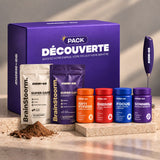
Discovery Pack
Become the best version of yourself to achieve all your goals with efficiency and serenity

Relaxation Pack
Reduces stress and improves sleep for increased relaxation and well-being.