






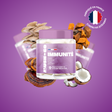


Natural pre-workout: the alternatives to boosters
By the Mush n Go editorial team - 01 October 2026
By the Mush n Go editorial teamPublished 1 October 202614 min read
Sport and energy
A natural pre-workout, is a boost before training without a booster's cocktail: a coffee or a measured dose of caffeine, beetroot juice, creatine and beta-alanine daily, a proper meal at the right time. And for the long-term routine, mushrooms such as cordyceps.

Muscle Recovery
Our formula for active people: Cordyceps, Chaga, Turmeric and Boswellia. One capsule after training, caffeine-free, to complete your pre-session routine.
Discover Recovery →
Energy
Cordyceps, Maca, Ginger and Vitamin C, as a 30-day course. Vitamin C contributes to the reduction of tiredness and fatigue, with no peak and no crash.
Discover Energy →What's in a booster
A classic pre-workout: what is it exactly?
A pre-workout, or “booster”, is a powder mixed in a shaker twenty to forty-five minutes before training. It came from American bodybuilding gyms and has spread everywhere, from CrossFit to running.
Its promise fits in three words: energy, pump, focus. To get there, most formulas stack the same families of ingredients, often at high doses, with flavourings and colourings for taste.
| Common ingredient | Intended role | What to know |
|---|---|---|
| Caffeine | Alertness, effort feels easier | Often 200 to 300 mg per serving, sometimes more, the equivalent of three espressos at once |
| Beta-alanine | Intense efforts of one to four minutes | Responsible for tingling on the skin, harmless but surprising |
| Citrulline or arginine | “Pump”, muscle congestion | Citrulline is the more studied of the two |
| Creatine | Strength and power in short efforts | Works by accumulation, not on the day |
| Taurine, tyrosine, various extracts | Concentration, “focus” | Very variable doses, sometimes hidden in a “proprietary blend” |
The problem isn't each ingredient on its own. It's the stacking: a high dose of caffeine in one go, secondary stimulants, a blend whose exact quantities aren't always known. Hence the growing search for a natural pre-workout, simpler and easier to read.
What “natural” means
Natural doesn't mean weak.
A natural pre-workout isn't a magic powder sold under another label. It's a way of building your preparation for exercise with simple foods and ingredients, at known doses, that you can adjust session after session.
It rests on three pillars. First, energy from your plate: carbohydrates available at the right time. Then, a controlled stimulant, usually caffeine from coffee, dosed according to your weight and sensitivity. Finally, background ingredients, taken every day, which don't work in thirty minutes but over several weeks. To go further, discover the different ginsengs and how to choose.
The powder booster
All in one dose, a fast and marked effect, but high caffeine, sometimes opaque blends and tolerance that builds quickly.
The natural approach
Separate, dosed building blocks: coffee, meal, creatine, beetroot. A bit more organisation, much more control.
The advantage is that you know exactly what you're taking. If a session goes badly, you can identify the cause: too much coffee, a meal too close, a night too short. With a fifteen-ingredient booster, that's impossible.
Coffee, the first pre-workout
Caffeine, the most solid ingredient of a natural pre-workout
It's the best-documented ingredient of all. The International Society of Sports Nutrition (ISSN) published a reference position stand in 2021: a dose of 3 to 6 mg of caffeine per kilo of body weight, taken about sixty minutes before exercise, consistently improves performance in many sports, especially endurance.
Translated into cups, that quickly adds up. For a 70 kg person, 3 mg per kilo is 210 mg, or two to three espressos. And the ISSN also notes that lower doses, around 2 mg per kilo, may already have an effect in some people.
| Your weight | 3 mg per kilo | In espressos (80 mg) |
|---|---|---|
| 55 kg | 165 mg | Two espressos |
| 70 kg | 210 mg | Two to three espressos |
| 85 kg | 255 mg | Three espressos |
Average value of 80 mg of caffeine per espresso, according to EFSA. Actual content varies with the coffee and the preparation.
Two safeguards. EFSA considers that 200 mg in a single dose and 400 mg over the day raise no safety concerns for healthy adults: a pre-session coffee must therefore fit within this daily total. And if you train in the evening, caffeine can eat into your sleep, which remains your best recovery tool. To cut back on caffeine for the rest of the day, see our guide on what to replace coffee with.
If you want to keep your morning cup without loading up on caffeine, Brainstoorm provides only 20 mg of microencapsulated caffeine per cup. It isn't an exercise dose, it's an everyday coffee, gentler, which leaves room for a proper coffee before a competition.
The studied ingredients
The building blocks of a natural pre-workout, one by one.
Beyond caffeine, a few ingredients have been studied enough to be taken seriously. Each has its moment, its dose and its type of effort. Here is the table to keep handy.
| Ingredient | For which effort | When | Where to find it |
|---|---|---|---|
| Caffeine | Endurance, team sports, strength | 30 to 60 min before | Coffee, tea, maté |
| Nitrates | Endurance, repeated efforts | 2 to 3 h before | Beetroot juice, rocket, spinach |
| Creatine | Strength, sprint, weight training | Every day, whatever the time | Meat, fish, or creatine monohydrate |
| Beta-alanine | Intense efforts of 1 to 4 min | Every day, in several doses | Meat, poultry, or a supplement |
| Citrulline | Weight training, repetitions | About 1 h before | Watermelon, or citrulline malate |
| Carbohydrates | All sports | 1 to 3 h before | Banana, oat flakes, rice, bread |
Creatine is the perfect example of a misunderstood ingredient. Many take it just before the session expecting an immediate effect. But it works by gradually filling the muscles' stores. The ISSN position stand recommends 3 to 5 g a day as maintenance. The time of intake matters far less than regularity.
Beta-alanine works on the same accumulation principle: it raises muscle carnosine over a few weeks. The tingling it causes, called paraesthesia, is harmless and can be limited by splitting the dose.
The nitrates in beetroot are turned by the body into nitric oxide. It's the most “natural” building block on the list: a small glass of concentrated beetroot juice two to three hours before a long outing.
What the research says
The reference studies on pre-workout ingredients.
Rather than lining up percentages out of nowhere, here are the publications sports nutritionists rely on. The full references are at the foot of the page.
Guest et al., 2021 · Caffeine
ISSN position stand. Caffeine consistently improves performance, at 3 to 6 mg per kilo, about 60 minutes before exercise. Responses vary a great deal from one person to another.
Kreider et al., 2017 · Creatine
ISSN position stand. Creatine monohydrate is described as the most effective supplement for high-intensity exercise capacity and lean mass, with a good safety profile at recommended doses.
Trexler et al., 2015 · Beta-alanine
ISSN position stand. Daily supplementation of 4 to 6 g for at least two to four weeks increases muscle carnosine. The effect mainly concerns efforts of one to four minutes.
Jones, 2014 · Nitrates
Review published in Sports Medicine. Dietary nitrates, notably those in beetroot juice, can reduce the oxygen cost of exercise. The effect seems clearer in recreational athletes than in elite athletes.
What stands out from this work: the ingredients that work are few, well known and cheap. The rest is often marketing.
The pre-session meal
Your plate, the forgotten pre-workout.
No supplement makes up for a session started on an empty stomach after a day without eating, or on the contrary in the middle of digestion. The first natural pre-workout is the right meal, at the right time.
Three hours before
A proper meal: starches, protein, a few vegetables. Rice and chicken, pasta and tuna, sweet potato and eggs.
One hour before
A light, easy-to-digest snack: a banana, a fruit purée, a slice of bread with honey, a few dates.
Thirty minutes before
Water, and your coffee if you have one. Nothing fatty, nothing very high in fibre.
Fat and fibre slow digestion: excellent day to day, they are best avoided just before intense exercise. If you run in the morning on an empty stomach, start with short, easy outings, and keep hard sessions for days when you've eaten.
Hydration matters just as much. Arriving at a session already slightly dehydrated is enough to make the effort harder. Drink regularly during the day, and a large glass of water in the hour before.
Cordyceps and mushrooms
Cordyceps, the mushroom for active people.
Among mushrooms taken as supplements, cordyceps is the one that interests sports people most. Its reputation goes back to herders on the Tibetan plateaus, and it was revived in the 1990s by media coverage of Chinese athletes.
On the human research side, studies remain few and small. The most cited was conducted by Chen and colleagues in 2010: twenty adults aged 50 to 75 took a cordyceps extract (Cs-4) or a placebo for twelve weeks. The researchers observed an improvement in certain respiratory thresholds during exercise in the cordyceps group. An interesting lead, in a small group and a specific population.
The takeaway: cordyceps is not a booster. You don't take it thirty minutes before to “feel” something. It belongs to a daily routine, over several weeks, alongside training, sleep and diet.
Energy, before
Cordyceps, Maca, Ginger and Vitamin C in capsules, in the morning. Energy contains no caffeine: you keep your coffee for the session.
Recovery, after
Cordyceps, Chaga, Turmeric and Boswellia. Muscle Recovery is taken as one capsule after training.
Turmeric and boswellia, two plants long used in traditional Indian medicine, complement cordyceps and chaga in this formula designed for after the session. To understand these species fully, read our guide to adaptogenic mushrooms and plants.
Three homemade recipes
Your natural pre-workout, homemade.
No need for a neon shaker. Here are three simple preparations, to adapt to your weight, your caffeine tolerance and the time of your session.
Endurance
Two to three hours before a long outing: a small glass of beetroot juice. One hour before: a banana and a coffee. During exercise, water, and carbohydrates if the outing lasts more than an hour and a half.
Weight training
One hour before: a bowl of oat flakes with honey, or two slices of wholemeal bread. Thirty minutes before: an espresso. As for your creatine, take it whenever you like during the day, every day.
The evening session
No coffee after 4 pm. Instead: a sweet snack an hour before, a large glass of cool water with lemon juice and a pinch of salt. Your morning Energy capsule, caffeine-free, won't disturb the night.
On budget, the natural approach wins too. A packet of coffee, a few bananas, a bottle of beetroot juice and a tub of creatine monohydrate cost far less per session than a branded booster. And every ingredient is easy to find, in the supermarket or an organic shop.
A golden rule: never test a new recipe on competition day. Try it first in training, note how you feel, and adjust the quantities.
By sport
Which natural pre-workout for which effort?
A marathon runner and a weightlifter don't have the same needs. The choice of building blocks depends first on the duration and intensity of your effort.
| Your sport | Priority building blocks | Often unnecessary |
|---|---|---|
| Running, cycling, trail | Carbohydrates, moderate caffeine, beetroot | Beta-alanine for long outings |
| Weight training, strength | Daily creatine, meal, caffeine | Nitrates |
| CrossFit, HIIT | Creatine, beta-alanine, carbohydrates | Stacked stimulants |
| Team sports | Meal, hydration, moderate caffeine | High-dose boosters |
| Yoga, walking, getting back into sport | A light meal and water are enough | Everything else |
And for recovery, whatever the sport, the fundamentals don't change: protein and carbohydrates in the hours that follow, water, and above all a proper night's sleep. If you train in the evening, our article on mushrooms and sleep will interest you.
For whom
The natural approach is for you if…
- You have already felt palpitations, jitters or a “crash” with a booster.
- You train at the end of the day and care about your sleep.
- You want to know exactly what you're taking, and at what dose.
- You prefer a regular routine to an occasional jolt.
- You're getting back into sport and don't want to start with a 300 mg caffeine powder.
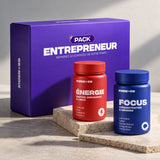
| Energy | Muscle Recovery | Entrepreneur Pack | |
|---|---|---|---|
| Contents | Cordyceps, Maca, Ginger, Vitamin C | Cordyceps, Chaga, Turmeric, Boswellia | Energy + Focus |
| When | Morning | One capsule after training | Morning |
| Caffeine | None | None | None |
Our formulas are crafted in Toulouse, vegan, GMO-free and gluten-free, with a 60-day money-back guarantee, as a one-off purchase or a monthly subscription (−30%). See the Entrepreneur Pack.
Precautions
What to know before you start.
Natural doesn't mean without rules. Most problems with pre-workouts, natural or not, come from caffeine and from sources adding up during the day.
A few simple benchmarks to train with peace of mind.
- Add up all the caffeine of the day: coffee, tea, sodas, energy drinks and boosters. EFSA's benchmark is 400 mg a day for an adult.
- Avoid concentrated caffeine powder or tablets, much easier to overdose on than coffee.
- During pregnancy, breastfeeding, or in case of heart problems, high blood pressure or ongoing treatment, ask your doctor.
- Beetroot juice can turn urine pink: it's harmless. If you have kidney stones, talk to your doctor, as beetroot is rich in oxalates.
- Tested athletes must check every supplement and favour products tested for banned substances.
Your questions
Everything we get asked about natural pre-workouts.
What is the best natural pre-workout?
There isn't just one. For most athletes, the most effective trio remains a carbohydrate-rich meal two to three hours before, a coffee dosed to your weight thirty to sixty minutes before, and creatine taken every day. Beetroot juice is added for endurance.
Can coffee replace a pre-workout?
Yes, for the stimulant part. Caffeine is the main ingredient of most boosters, and one or two espressos provide a dose close to those studied. You'll be missing the other ingredients, which you can add separately.
How long before a session should you take a natural pre-workout?
About 30 to 60 minutes for caffeine, two to three hours for beetroot juice. Creatine and beta-alanine have no precise timing: daily intake is what counts.
Are pre-workouts dangerous?
Not necessarily, but many contain high doses of caffeine, sometimes combined with other stimulants. The most common problems are jitters, palpitations and sleep trouble. Read the labels and add up your caffeine for the day.
Can you take a pre-workout in the evening?
A caffeinated booster in the evening risks disturbing your sleep. For a late session, choose a carbohydrate snack, water and caffeine-free ingredients.
Which natural pre-workout without caffeine?
A carbohydrate-based snack, beetroot juice, citrulline from watermelon, and your daily creatine. On the mushroom side, cordyceps is taken daily, for example in our Energy formula, which contains no caffeine. Also worth reading: Persistent fatigue: when to worry and what to do.
Is creatine a pre-workout?
Pre-workouts often contain it, but it doesn't act like a booster. It works by accumulating in the muscles, at 3 to 5 g a day as maintenance, whatever the time of intake.
Why does a pre-workout make you tingle?
That's beta-alanine. The tingling, called paraesthesia, is harmless and temporary. Splitting the dose over the day greatly limits it.
How much beetroot juice before sport?
Studies generally use a small volume of concentrated juice, taken two to three hours before exercise. Start with a small amount to test your digestive tolerance, and choose a pure juice with no added sugar.
Is cordyceps a natural pre-workout?
Not in the sense of a booster. Small studies have explored its interest for athletes, but it's taken daily over several weeks, not thirty minutes before exercise.
Sources
- Guest N. S. et al. (2021). International Society of Sports Nutrition position stand: caffeine and exercise performance. Journal of the International Society of Sports Nutrition, 18(1):1.
- Kreider R. B. et al. (2017). International Society of Sports Nutrition position stand: safety and efficacy of creatine supplementation in exercise, sport, and medicine. Journal of the International Society of Sports Nutrition, 14:18.
- Trexler E. T. et al. (2015). International Society of Sports Nutrition position stand: beta-alanine. Journal of the International Society of Sports Nutrition, 12:30.
- Jones A. M. (2014). Dietary nitrate supplementation and exercise performance. Sports Medicine, 44(Suppl 1).
- Chen S. et al. (2010). Effect of Cs-4 (Cordyceps sinensis) on exercise performance in healthy older subjects: a double-blind, placebo-controlled trial. Journal of Alternative and Complementary Medicine, 16(5).
- EFSA NDA Panel (2015). Scientific opinion on the safety of caffeine. EFSA Journal, 13(5):4102.
Keep reading
To go further.
Energy, caffeine, recovery: our guides and ingredient pages to build a sports routine that suits you.

Discover our mushroom and adaptogenic plant supplements
Our vegan formulas, made in Toulouse by a French manufacturer.