













Foods for memory: the complete list
By the Mush n Go editorial team - 10 October 2026
By the Mush n Go editorial teamPublished 10 October 202615 min read
Memory
The best foods for memory are oily fish, leafy green vegetables, berries, nuts, olive oil, eggs and pulses. None works miracles on its own: it is eating them regularly, as part of a Mediterranean-style diet, with good sleep and exercise, that helps the brain work well over time.

Focus
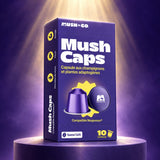
Our focus formula: Lion's Mane, Saffron, Bacopa monnieri, Ginkgo biloba and Maritime pine. The 30-day course for periods of intense work.
Discover Focus →
Brainstoorm
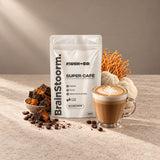
Our mushroom coffee: Lion's Mane, Cordyceps and Chaga at 1,000 mg each, Maca 3,000 mg, and only 20 mg of caffeine per cup.
Discover Brainstoorm →What the brain needs
A hungry organ, and a demanding one.
The brain makes up about 2% of body weight, yet on its own it uses around 20% of the energy the body spends at rest. It works day and night and stores almost nothing: it depends on what you give it, meal after meal.
To work well, and therefore to remember, it needs three things. Steady fuel, in the form of glucose released gradually, rather than sugar spikes followed by crashes. Good fats, because almost 60% of its dry mass is made of lipids, including DHA, an omega-3 that is part of the structure of neurons. And micronutrients : B vitamins, iron, iodine and zinc, which help make neurotransmitters and carry oxygen.
Add the polyphenols from fruit, vegetables, tea or cocoa, widely studied for their antioxidant role, and you have the specification for a "memory" plate. Good news: it matches a classic Mediterranean diet point for point.
The complete list
Foods for memory, one by one.
Here are the foods that come up most often in studies and nutrition guidelines, with what they provide and a simple way to fit them into your week.
| Food | What it provides | How to eat it |
|---|---|---|
| Sardine, mackerel, salmon, herring | DHA and EPA omega-3s, vitamin D, iodine | Two portions of fish a week, one of them oily |
| Spinach, chard, lamb's lettuce, kale | Folate (B9), vitamin K, lutein, nitrates | One portion a day, raw or cooked |
| Broccoli, cabbage, cauliflower | Folate, vitamin C, fibre | Steamed, roasted or in soup |
| Blueberries, strawberries, blackcurrants, blackberries | Anthocyanins and other polyphenols | A handful, fresh or frozen |
| Walnuts, almonds, hazelnuts | ALA omega-3 (walnuts), vitamin E, magnesium | A small handful a day, unsalted |
| Extra virgin olive oil | Monounsaturated fatty acids, polyphenols | Main fat, raw and for gentle cooking |
| Rapeseed oil, walnut oil | ALA omega-3 | In dressings, alternating with olive oil |
| Eggs | Choline, vitamin B12, protein | For breakfast or as a main dish, several times a week |
| Lentils, chickpeas, beans | Fibre, folate, iron, plant protein | At least twice a week |
| Wholegrains, oats | Slow-release carbohydrates, B vitamins | Instead of white bread and sugary cereals |
| Dark chocolate, cocoa | Flavanols, magnesium | One or two squares of over 70% cocoa |
| Green tea, coffee | Polyphenols, caffeine, L-theanine (tea) | In the morning and early afternoon, without overdoing it |
| Yoghurt, cheese, dairy | Iodine, vitamin B12, calcium | One or two portions a day, to taste |
| Seafood, seaweed | Iodine, zinc, B12 | Occasionally, varying the sources |
| Turmeric, rosemary, saffron | Curcuminoids, rosmarinic acid, crocin | In cooking, with a little pepper and fat for turmeric |
Oily fish and omega-3
Oily fish, top of the list.
If you had to remember just one food for memory, it would probably be oily fish. Sardines, mackerel, herring, salmon and anchovies are the best food sources of DHA, a long-chain omega-3 found in large amounts in the membranes of neurons.
It is one of the rare cases where European regulations recognise a direct link between a nutrient and the brain: DHA contributes to the maintenance of normal brain function, an effect obtained with a daily intake of 250 mg. In practice, a portion of sardines or mackerel provides far more than that, hence the classic advice to eat fish twice a week, including one oily fish.
Small oily fish have a double advantage: they are inexpensive, tinned as well as fresh, and they are low in the food chain, which limits their mercury content. Large predators, such as swordfish, shark or bluefin tuna, should be eaten less often, especially during pregnancy.
Tinned sardines
On a slice of wholemeal bread, with a squeeze of lemon and herbs. The quickest memory meal there is.
Oven-baked mackerel
Fifteen minutes at 200 °C, with cherry tomatoes, garlic and fresh rosemary.
Salmon and lentils
A pan-fried fillet on a bed of green lentils: omega-3, fibre and folate on the same plate.
If you don't eat fish
Walnuts, ground flaxseed, rapeseed oil and, if needed, a DHA supplement made from microalgae.
Greens and colours
A portion of greens every day.
Leafy green vegetables are often left off lists of brain foods, yet they produced one of the most striking results in the research. Spinach, lamb's lettuce, rocket, chard, kale, green salad: they are rich in folate (vitamin B9), vitamin K, lutein, nitrates and polyphenols.
In an American study published in 2018, Martha Clare Morris and her team followed 960 older people for almost five years. Those who ate around one portion of leafy greens a day had a clearly slower decline in memory and thinking than those who almost never ate them, a gap equivalent to eleven years of ageing. An observational study, showing an association and not a cause, but a solid result in line with the rest of the research.
Other vegetables count too. Broccoli, cabbage, peppers, beetroot, carrots, tomatoes: the more colourful your plate, the more you vary the families of polyphenols and carotenoids. A simple rule of thumb: half the plate vegetables, at lunch and dinner.
- A handful of lamb's lettuce or rocket under your evening meal.
- Frozen spinach added to an omelette, a soup or pasta.
- Broccoli roasted in the oven with olive oil and garlic.
- A mixed salad at lunch, with pulses and walnuts.
Nuts, olive oil and berries
The everyday Mediterranean trio.
Nuts, and walnuts in particular, provide plant-based omega-3s (ALA), vitamin E, magnesium and polyphenols. A small handful a day, around thirty grams, plain and unsalted, is enough.
Extra virgin olive oil is the reference fat of the Mediterranean diet. It provides monounsaturated fatty acids and polyphenols, which are better preserved when it is used raw or for gentle cooking. Alternate it with rapeseed or walnut oil, richer in omega-3s, in your dressings.
Berries, with blueberries in the lead, are rich in anthocyanins, the pigments that give them their colour. Several small studies have explored their effect on memory in older people, with encouraging results but in very small groups.
What the studies say
MIND and Mediterranean diets: four studies to know.
Research on diet and memory is vast but difficult: thousands of people need to be followed for years. Here are the most cited studies, with their exact conditions, to separate promises from facts.
Morris et al., 2015 · United States
923 people aged 58 to 98, followed for an average of four and a half years. Those who most closely followed the MIND diet, a blend of the Mediterranean diet and an anti-hypertension diet centred on leafy greens, berries, nuts, fish and olive oil, had a 53% lower risk of Alzheimer's disease. An observational study.
Valls-Pedret et al., 2015 · Spain
447 older volunteers, followed for about four years as part of the PREDIMED trial. A Mediterranean diet supplemented with extra virgin olive oil or nuts was associated with better cognitive scores than a low-fat diet.
Morris et al., 2018 · United States
960 older people, almost five years of follow-up. A daily portion of leafy greens was associated with slower cognitive decline, the equivalent of eleven fewer years of ageing.
Barnes et al., 2023 · United States
604 overweight older people, over three years, in a randomised trial. The MIND diet and the control diet, both slightly calorie-reduced, improved cognition, with no significant difference between the two.
The takeaway: eating better is associated with better cognitive health, but no diet has been proven to prevent memory decline on its own. Consistency and your overall lifestyle count for more than any single food. The full references are at the bottom of the page.
Vitamins and minerals
The nutrients that really matter.
Beyond the star foods, some nutrients have a recognised role in how the brain works. European regulations set out exactly what can be said about them. Here are the main ones, with the foods that provide the most.
| Nutrient | Recognised role | Where to find it |
|---|---|---|
| DHA (omega-3) | Contributes to the maintenance of normal brain function | Sardine, mackerel, salmon, herring |
| Iodine | Contributes to normal cognitive function | Fish, seafood, dairy, iodised salt |
| Iron | Contributes to normal cognitive function | Red meat, black pudding, lentils, spinach |
| Zinc | Contributes to normal cognitive function | Oysters, meat, pumpkin seeds, cheese |
| Vitamin B12 | Contributes to normal functioning of the nervous system | Eggs, fish, meat, dairy |
| Folate (B9) | Contributes to normal psychological function | Leafy greens, pulses |
| Vitamin B6 | Contributes to the reduction of tiredness and fatigue | Poultry, fish, chickpeas, banana |
| Magnesium | Contributes to normal psychological function | Nuts, cocoa, wholegrains |
A varied diet covers most of these needs. Two groups deserve particular attention: vegans, for whom a vitamin B12 supplement is essential, and people over 60, whose absorption of B12 decreases. If you have persistent tiredness or any doubt, a simple blood test can check iron, B12 and folate.
Spices and herbs
Rosemary, turmeric, saffron: spices for the mind.
Some spices and herbs have long been known as memory plants, and they now interest researchers. They do not replace the rest of the plate, but they add polyphenols and plenty of flavour, which helps you cook more vegetables.
Rosemary has been called the herb of remembrance since ancient times. Small British studies have found better memory scores in volunteers exposed to its aroma. Fresh on roasted vegetables or as a tea after a meal, it is the easiest herb to adopt. To find out more, see our tips for revising for exams.
Turmeric contains curcuminoids that are widely studied in the laboratory. They are poorly absorbed on their own: combine turmeric with a pinch of black pepper and a little fat, in a curry, a soup or a golden milk.
Saffron, the most expensive spice in the world, has been the subject of several trials on mood. A few threads are enough to flavour a risotto or a bouillabaisse, and it is one of the ingredients in our formula Focus.
What weighs on memory
The foods and habits to limit.
Adding good foods is good. Removing the ones that tire the brain is often even more effective. Here are the main ones to watch.
What harms memory most in everyday life often comes down to a few easy-to-spot habits.
- Alcohol : it disrupts memory consolidation during sleep, and regular heavy drinking causes lasting damage to the brain. UK guidelines: no more than 14 units a week, spread over several days, with some drink-free days.
- Sugary drinks and quick sugars : blood sugar spikes, then energy slumps that scatter your attention.
- Ultra-processed foods : industrial processed meats, ready meals and biscuits, high in salt, sugar and poor-quality fats, and low in fibre and micronutrients.
- Frequent fried food and the trans fats in industrial products.
- Too much coffee, or coffee too late : three or four cups in the morning are fine, but a coffee at 5 pm shortens your night, and it is during the night that memory is consolidated.
- Very restrictive diets, which deprive the brain of fuel and micronutrients.
Sleep deserves a special mention. It is during deep sleep that the brain sorts and consolidates what you learned during the day. A perfect plate will never make up for five-hour nights. To find out more, read our guide on mushrooms, adaptogenic plants and sleep.
A typical day
A day of foods for memory.
No need for complicated menus. Here is what an ordinary day that ticks every box can look like, with foods you can find anywhere.
Breakfast
Oats, plain yoghurt, a handful of blueberries and a few walnuts. Or two eggs on a slice of wholemeal bread. And your coffee, classic or replaced with a Brainstoorm with 20 mg of caffeine.
Lunch
A big salad of lentils, lamb's lettuce, beetroot and feta, dressed with rapeseed oil. A piece of fruit.
4 pm
A handful of almonds and two squares of dark chocolate, with green tea or a large glass of water.
Dinner
Oven-baked mackerel, broccoli roasted with olive oil and quinoa. A yoghurt. No screens at the table.
In the evening
A rosemary or verbena tea, bed at a regular time. Memory is consolidated during the night.
Plants and mushrooms
And supplements for memory?
Once the plate is sorted, some people want to go further, especially during periods of intense mental work, exams or tiredness. Several plants and mushrooms are being studied in this area, with results that are still modest and studies that are often small.
A mushroom eaten in Asia for centuries, studied for its compounds, hericenones and erinacines.
An Ayurvedic plant, tested in several trials on memory, to be judged over several weeks.
The most studied leaf extract in the world, long used in Europe.
A bark extract rich in polyphenols called procyanidins.
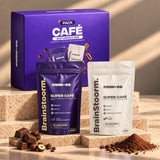
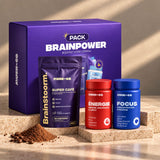
These ingredients come together, with saffron, in Focus, our capsule formula to take as a 30-day course. For those who prefer a cup, Brainstoorm combines Lion's Mane, Cordyceps and Chaga at 1,000 mg each and 3,000 mg of maca, with only 20 mg of microencapsulated caffeine. And the BrainPower Pack brings the two together, with Energy. To compare ingredients, see our guide to natural nootropics.
"More mental clarity, more energy, and the famous 4 pm slump... gone!"
★★★★★ Virginie L., 29 August 2026, about Brainstoorm (translated from French)
"I feel more focused and much less jittery"
★★★★★ Roxane T., 24 October 2025, about Brainstoorm (translated from French)
A food supplement does not replace a varied, balanced diet or a healthy lifestyle. Ask your doctor or pharmacist for advice if you are on medication, particularly anticoagulants.
Memory loss: when to see a doctor
Memory loss: the signs not to ignore.
Forgetting where you put your keys, a name on the tip of your tongue, walking into a room without knowing why: these small lapses are normal, and they increase with tiredness, stress and mental overload. Food doesn't fix them; rest and fewer distractions do.
Some memory loss, however, should lead you to see your doctor, who can look for a specific cause: vitamin B12 deficiency, a thyroid disorder, depression, a side effect of medication, sleep problems such as apnoea, or a neurological disease.
- Forgetfulness increases clearly over a few months.
- You forget important recent events, or repeat the same questions.
- You get lost in a familiar place.
- You struggle with usual tasks, such as managing money or following a familiar recipe.
- Those close to you are worried about changes you don't notice yourself.
- The problems appear after a head injury or a new treatment, or come with other symptoms.
Your questions
Everything people ask us about foods for memory.
What is the best food for memory?
There is no single food. Oily fish, for their DHA, and leafy greens, for their folate and polyphenols, have the most research behind them. What counts is eating them regularly as part of a Mediterranean-style diet.
Which foods should you avoid for memory?
Excess alcohol, sugary drinks, ultra-processed foods and frequent fried food. Coffee drunk too late also weighs indirectly, by shortening sleep, during which memory is consolidated.
Which fruit is good for memory?
Berries, with blueberries in the lead, are the most studied for their anthocyanins. Citrus fruit, apples and grapes also provide polyphenols. What matters is eating them every day, fresh or frozen.
Which vitamin is good for memory?
No vitamin improves memory on its own, but some are essential: B12 contributes to normal functioning of the nervous system and folate to normal psychological function. Iodine, iron and zinc contribute to normal cognitive function.
Are walnuts good for the brain?
Yes, they provide plant omega-3s, vitamin E and magnesium. In the Spanish PREDIMED trial, a Mediterranean diet supplemented with nuts was associated with better cognitive scores. A small handful a day is enough.
What is the MIND diet?
It is a diet designed by American researchers that combines the Mediterranean diet and the DASH diet. It emphasises leafy greens, berries, nuts, pulses, fish, poultry and olive oil, and limits butter, cheese, pastries and fried food.
Can memory loss be caused by a deficiency?
Yes, a deficiency in vitamin B12, folate or iron can affect memory and energy. Vegans and older people are more at risk. Only a blood test can check this: talk to your doctor.
Sources
- Morris M. C. et al. (2015). MIND diet associated with reduced incidence of Alzheimer's disease. Alzheimer's & Dementia, 11(9).
- Valls-Pedret C. et al. (2015). Mediterranean diet and age-related cognitive decline: a randomized clinical trial. JAMA Internal Medicine, 175(7).
- Morris M. C. et al. (2018). Nutrients and bioactives in green leafy vegetables and cognitive decline: prospective study. Neurology, 90(3).
- Barnes L. L. et al. (2023). Trial of the MIND diet for prevention of cognitive decline in older persons. New England Journal of Medicine, 389(7).
- Commission Regulation (EU) No 432/2012 establishing a list of permitted health claims made on foods.
Keep reading
Go further.
Memory is also built through sleep, stress management and focus. Discover our other guides, or browse the page of all our active ingredients.

Discover our mushroom and adaptogenic plant supplements
Our vegan formulas, made in Toulouse by a French manufacturer.