











Coffee and cortisol: should you wait before your first cup?
By the Mush n Go editorial team - 30 September 2026
By the Mush n Go editorial teamPublished on 30 September 202611 min read
Coffee and cortisol
Yes, caffeine raises cortisol, especially in people who drink little coffee; in regular drinkers the effect fades without disappearing. The “wait 90 minutes before your first coffee” rule builds on the natural cortisol peak that follows waking, but no study has shown that it changes your energy over the day. What matters more: the dose, the time of your last coffee and how sensitive you are. If coffee makes you jittery, switching to a cup with less caffeine is the simplest thing to try.

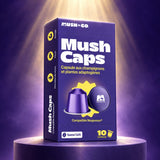
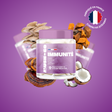
Mush Caps
A coffee-flavour capsule with 17 mg of microencapsulated caffeine, plus lion's mane, cordyceps, chaga, maca and ashwagandha. Available from 2 October.
Reserve my Mush Caps →
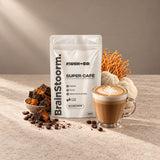
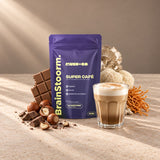
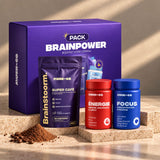
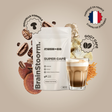
Brainstoorm
The mushroom coffee you make by the spoonful: hot or iced, 20 mg of NewCaff® caffeine per cup and no mushroom taste at all.
Discover Brainstoorm →The short answer
Coffee raises cortisol, but not in the same way for everyone.
Cortisol is not an enemy. It is the hormone that helps you get up in the morning, draw on your energy and respond to an effort or a setback. The problem is not that it rises: it is that it rises too much, too often, or at the wrong time. Coffee nudges that setting, and its effect depends mostly on your habits.
- You rarely drink coffee: one cup raises your cortisol markedly. This is where the effect is strongest.
- You drink it every day: your body has partly got used to it and the rise is smaller, but it does not disappear entirely.
- You are under pressure and drinking one coffee after another: caffeine can amplify the stress response. This is the profile that gains most from a lighter cup.
Morning cortisol
Your body already has its own wake-up call.
In the half hour after you wake, your cortisol level climbs markedly, then comes back down over the course of the morning. Researchers call this peak the cortisol awakening response. It has been measured since the late 1990s and it returns in most people, every morning, without them doing anything.
This peak is where the idea of waiting before your first coffee comes from: if the body is already producing its own boost, why add caffeine at the same moment? The idea makes sense. That does not make it proven, and we come back to it below.
On waking
Cortisol starts to rise. It is what pulls you out of sleep, together with daylight.
30 to 45 minutes later
The peak. The level may have risen by half compared with waking, according to the reference studies.
The rest of the day
A gradual descent until the evening, when it is at its lowest to let sleep come.
What caffeine changes
A real rise, which wears off with habit.
Caffeine stimulates cortisol production. The work of William Lovallo's team in the United States has measured this several times: in volunteers who consumed little caffeine, repeated doses raised cortisol throughout the day. In heavy coffee drinkers the rise was smaller, a sign of tolerance, but it could still be measured.
The same team observed something else, more useful day to day: caffeine amplifies the cortisol response to mental stress. In other words, coffee does not create stress, but it can make its echo louder. A tense day and four espressos do not add up; they multiply a little.
| Your profile | What happens with coffee | What to try |
|---|---|---|
| Occasional drinker | A clear rise in cortisol after one cup, often felt as jitteriness. | A small dose, not on an empty stomach |
| Regular drinker | Partial tolerance: the rise is there, but more discreet. | Keep an eye on the number of cups |
| High-pressure days | Caffeine can amplify the stress response. | Cut the caffeine, not the ritual |
| Fragile sleep | A late coffee delays falling asleep, which weighs on the next day's cortisol. | No more caffeine after 2 pm |
To measure your own intake, our article on how many cups of coffee a day does the sums cup by cup.
What the studies say
Four reference points, and what they are worth.
There are many studies on caffeine and cortisol, but they are often carried out on small groups and with high doses. Here are the ones used as references, with their limits.
Pruessner et al., 1997 · Germany
A description of the cortisol awakening response: a clear rise in the 30 minutes after getting up, reproducible from one day to the next in the same person. This is the study behind the “morning peak”.
Lovallo et al., 2005 · United States
Repeated doses of caffeine raise cortisol over the course of the day in people who consume little. In habitual consumers, the rise is reduced without being abolished.
Lovallo et al., 2006 · United States
Taken before a mental effort, caffeine strengthens the cortisol response to that stress, in men and women alike. The doses tested are equivalent to several cups.
EFSA, 2015 · Europe
For a healthy adult, up to 400 mg of caffeine a day and 200 mg in a single dose raise no safety concerns. For a pregnant woman, the benchmark is 200 mg a day.
What none of these studies says: that you should give up coffee. They describe an effect that depends on dose and habit, which leaves room to adjust rather than go without.
The 90-minute rule
Waiting before your coffee: a sensible idea, not proof.
The advice to wait 60 to 90 minutes after waking is widely shared. The reasoning holds up: let the natural cortisol peak pass, then drink your coffee as it comes back down. But to date, no trial has compared two groups, one that waits and one that does not, to measure a difference in energy, concentration or stress over the day.
What we know
Cortisol peaks after waking. Caffeine raises it. A very early coffee therefore comes on top of an already high level.
What we don't know
Whether delaying your coffee improves anything measurable. The rule remains a hypothesis, not a result.
What to do with it
If waiting suits you, wait. If you feel better with an early coffee, nothing says you have to change: the dose matters more than the time.
If it is coffee on an empty stomach that bothers you rather than the time, our article on coffee on an empty stomach sets out the right habits.
When coffee works against you
The signs that it is time to lighten your cup.
Cortisol cannot be measured day to day, but its effects can be noticed. If several of these signs sound familiar, it is often the amount of caffeine that needs rethinking, before the timing:
- Shaky hands or a racing heart after your morning coffee.
- Jitters that build towards 10 am, then a real slump in the early afternoon.
- Two or three coffees needed to keep going, and more trouble falling asleep at night.
We look at this link in detail in coffee and anxiety, and at the well-known afternoon dip in the 4 pm slump.
Not to be confused: persistent palpitations, tiredness that does not lift despite rest, or unexplained weight gain are not solved by changing coffee. Talk to your doctor, who can check your cortisol level with a blood test or a saliva test.
A routine that goes easy on your morning
Keep the ritual, change what is in the cup.
You do not need to give up your morning coffee. Three adjustments are often enough to make it gentler on your body, without losing the pleasure of the ritual.
A glass of water first
You have just gone a whole night without drinking. A large glass of water on waking, before anything else, and daylight as soon as possible.
Less caffeine per cup
Rather than a double espresso, a cup with less caffeine in it. This is the lever that acts most directly on the rise in cortisol.
A cut-off time
No more caffeine after 2 pm. Better sleep is the best ally of a cortisol level that comes down in the evening.
On waking
A large glass of water, then ten minutes of natural light if you can.
At breakfast
Your cup, with something to eat. A capsule that is light on caffeine if regular coffee makes you jittery.
Around 2 pm
The last caffeine of the day. After that, water, a herbal tea or a decaf.
In the evening
Soft lighting and screens kept at a distance: this is when cortisol should be at its lowest.
Slow-release caffeine
The same caffeine, released more slowly.
Part of the jitteriness of coffee comes from speed: the caffeine in an espresso reaches the bloodstream within a few tens of minutes, all at once. Microencapsulated caffeine, known as slow-release caffeine, is coated so that it is released more gradually. That is the principle behind NewCaff®, the caffeine used in our drinks.
According to the manufacturer's data, measured in vitro, around 24% of NewCaff® caffeine is released after 30 minutes, compared with all of it for regular caffeine. The rest is released over the course of the morning. This is not a magic effect on cortisol: it is a less abrupt caffeine, at a dose that is already low.
| For one cup | An espresso | A Mush Caps capsule |
|---|---|---|
| Caffeine | Around 80 mg | 17 mg |
| Form | Caffeine from the bean, released all at once | NewCaff®, microencapsulated |
| Released at 30 min | All of it | Around 24%, manufacturer's in vitro data |
| The rest of the cup | Ground coffee | Roasted chicory, mushrooms, maca, ashwagandha |
Mush Caps in detail
A capsule designed for calmer mornings.
Mush Caps takes the recipe of Brainstoorm, our mushroom coffee powder, measured out for one cup and slipped into a Nespresso® Original compatible capsule. Same machine, same routine, and a coffee flavour with its crema, with no mushroom taste.
*dry equivalent. Other ingredients: xylitol, coffee flavouring. Contains caffeine (17 mg per capsule).
Vitamin B5 contributes to the reduction of tiredness and fatigue and to normal mental performance. Ashwagandha is the plant of calm in the Ayurvedic tradition, and roasted chicory brings the roundness and bitterness of a coffee, without its caffeine. Mush Caps is available from 2 October, never on subscription, with a 60-day money-back guarantee.

Your questions
All about coffee and cortisol.
Does coffee raise cortisol?
Yes. Caffeine stimulates cortisol production, especially in people who consume little of it. In regular drinkers, the body partly gets used to it and the rise is smaller, without disappearing entirely.
Should you wait before drinking coffee in the morning?
It is a sensible idea, since cortisol naturally peaks 30 to 45 minutes after waking. But no study has shown that waiting 90 minutes improves energy or concentration. Reducing the dose of caffeine has a more direct effect than shifting the time.
Does decaf coffee raise cortisol?
It is caffeine that stimulates cortisol. Decaf contains very little, so its effect is far smaller. It does, however, keep the acidity of coffee, which can bother a sensitive stomach.
How much caffeine can you have a day?
For a healthy adult, EFSA sets the benchmark at up to 400 mg a day and 200 mg in a single dose, or around five espressos spread over the day. For a pregnant woman, the benchmark is 200 mg a day.
What is slow-release caffeine?
It is microencapsulated caffeine, coated so that it is released more gradually than regular caffeine. For NewCaff®, the manufacturer states that around 24% of the caffeine is released at 30 minutes, measured in vitro, and the rest over the course of the morning.
How much caffeine is in a Mush Caps capsule?
17 mg of NewCaff® microencapsulated caffeine per capsule, compared with around 80 mg for an espresso. Mush Caps is compatible with Nespresso® Original machines, not with Vertuo machines.
Sources
- Pruessner J. C., Wolf O. T., Hellhammer D. H. et al. (1997). Free cortisol levels after awakening: a reliable biological marker for the assessment of adrenocortical activity. Life Sciences, 61(26).
- Clow A., Hucklebridge F., Stalder T., Evans P., Thorn L. (2010). The cortisol awakening response: more than a measure of HPA axis function. Neuroscience & Biobehavioral Reviews, 35(1).
- Lovallo W. R., Whitsett T. L., al'Absi M., Sung B. H., Vincent A. S., Wilson M. F. (2005). Caffeine stimulation of cortisol secretion across the waking hours in relation to caffeine intake levels. Psychosomatic Medicine, 67(5).
- Lovallo W. R., Farag N. H., Vincent A. S., Thomas T. L., Wilson M. F. (2006). Cortisol responses to mental stress, exercise, and meals following caffeine intake in men and women. Pharmacology Biochemistry and Behavior, 83(3).
- EFSA Panel on Dietetic Products, Nutrition and Allergies (2015). Scientific Opinion on the safety of caffeine. EFSA Journal, 13(5):4102.
- Commission Regulation (EU) No 432/2012 establishing a list of permitted health claims made on foods (vitamin B5).
Keep reading
More on the subject.
Cortisol is rarely settled by a single habit. Explore our articles on stress, morning coffee and tiredness, or our full mushroom coffee range.
Nespresso® is a registered trademark of a third party, with no connection to Mush n Go.

Discover our mushroom and adaptogenic plant supplements
Our vegan formulas, made in Toulouse by a French manufacturer.